Politics
Appointing APC members as RECs will compromise INEC’s integrity, HURIWA tells Buhari

President Muhammadu Buhari has been accused of compromising the integrity of the Independent National Electoral Commission, INEC, for appointing card-carrying members of the All Progressives Congress, APC, as Resident Electoral Commissioners.
Human Rights Writers Association of Nigeria, HURIWA, through a statement by its National Coordinator, Comrade Emmanuel Onwubiko, described the recent nominations of someone it describes as a questionable character with known political affiliation and record of alleged corruption, as unconstitutional, insisting that such nominees should not be confirmed by the Senate.

Recall that the President had on July 26 forwarded the names of 19 INEC REC nominees to the red chamber for confirmation. Five of the nominees were reappointed for a second term of five years while 14 others had new appointments.

However, a coalition of Civil Society Organisations including the Director, International Press Centre, said the nominee from Sokoto was an APC governorship aspirant in 2015 whilst the nominee for Enugu is alleged to be the younger sister of the APC Deputy National Chairman, South-East.

Likewise, the CSOs said the nominee for Imo, a former Head of ICT at INEC in Imo, is infamous for alleged corruption and connivance with politicians to undermine elections whilst the nominee for Ebonyi, a former Accountant-General in Ebonyi State, was suspended on allegations of incompetence and corruption in 2016.
Commenting, HURIWA said, “We align with the positions of our brother CSOs that these persons are unworthy to hold a sensitive position such as Resident Electoral Commissioners of the Independent National Electoral Commission unless the Federal Government is trying to reward politically prejudiced and allegedly corrupt individuals with sensitive and prestigious appointments.
“The APC government should be reminded of Section 14(2a) of the Third Schedule of the 1999 Constitution as amended which states that ‘a member of the commission shall be non-partisan and a person of unquestionable integrity.’
“Also, Section 14(3b) of the same Schedule states that ‘there shall be for each state of the federation and the Federal Capital Territory of Abuja, a Resident Electoral Commissioner who shall be a person of unquestionable integrity and shall not be a member of any political party.’
“Similarly, Section 156(1(a) of the same Schedule prohibits the appointment of such individuals with questionable character.
“This is not the first time the President will politicise the appointment of INEC officials. In 2020, the President nominated his aide on social media, Lauretta Onochie, as an INEC commissioner to represent Delta State. He later replaced her after an outrage condemning his decision.
“Also, in October 2019, a self-confessed APC member in Osun State, Olalekan Raheem, was nominated as a resident electoral commissioner by the President though the Senate later rejected the nominee.
“The President must not compromise INEC’s integrity as Nigeria goes into an election year in 2023. INEC as an electoral umpire must be an apolitical institution with objective individuals with no record of political allegiance.
“Nigerians are watching to see how the APC government intends to smuggle its members into INEC top organs to allegedly circumvent the process in favour of the ruling party which intends to perpetuate itself into power after failing Nigerians in all ramifications.”













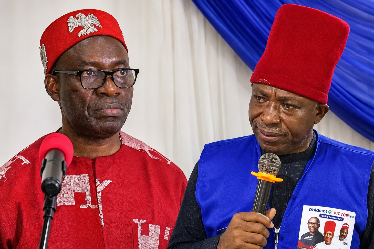
Senator representing Anambra Central, Victor Umeh, has apologised to the people of Anambra State for his role in the emergence of Governor Chukwuma Soludo, saying he deeply regrets supporting his election.
Umeh tendered the apology in Awka on Thursday, expressing disappointment with Soludo’s leadership and accusing him of working against the political interests of Anambra State and the wider Igbo nation.
The senator recalled that he served as Director-General of Soludo’s first governorship campaign alongside other prominent political figures, including Chief Primus Odili, who served as Chief of Staff to former Governor Willie Obiano.
He said he and other members of the campaign team worked tirelessly to secure Soludo’s victory, disclosing that the governor personally approached him during the campaign to seek financial assistance after admitting that he lacked the resources to prosecute the election.
According to Umeh, he subsequently contacted wealthy Anambra indigenes to raise funds for the campaign, with three prominent industrialists responding with donations of N1 billion, N100 million and $100,000, respectively.
He further alleged that the N1 billion contribution made by one of the businessmen had yet to be refunded, although he maintained that the outstanding money was not his major source of disappointment.
Rather, Umeh said his greatest concern was Soludo’s opposition to the presidential ambition of former Anambra State Governor, Peter Obi.
The senator accused Soludo of acting against the interests of his people by opposing Obi, arguing that the governor’s position amounted to working against the political aspirations of Anambra State and the wider Igbo nation.
Expressing regret over his role in Soludo’s emergence, Umeh said he never imagined that the governor would turn out the way he has.
“I am sorry for bringing him. I did not know he would turn out like this.
“Soludo is working against Ndigbo. You can’t be the governor of Anambra State and work against its interests,” he said.
• APC chairman says Tinubu is building a safer Nigeria, urges continuity ahead of 2027 presidential election
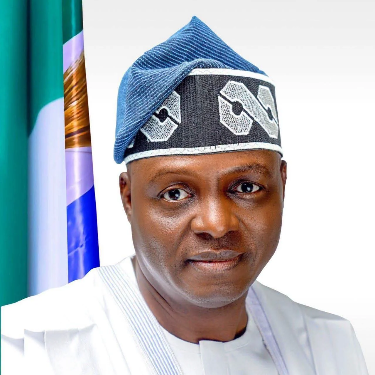
The National Chairman of the All Progressives Congress (APC), Prof. Nentawe Goshwe Yilwatda, has commended the 36 state governors and all 36 State Houses of Assembly for their unanimous support for the proposed constitutional amendment to establish State Police Services in Nigeria.
Yilwatda described the development as a landmark achievement in the country’s democratic evolution and a demonstration of political maturity, national consensus and constructive cooperation among the different tiers of government.
In a statement issued by his Special Adviser on Media and Information Strategy, Mr Abimbola Tooki, the APC chairman said the unanimous endorsement by the 36 State Houses of Assembly represented an unprecedented collective commitment to addressing one of Nigeria’s most pressing challenges: the security of lives and property.
Speaking during a meeting with party stakeholders in Abuja, Yilwatda particularly applauded the governors for their positive disposition, constructive engagement and support for the initiative.
He also commended the Speakers and members of the various State Houses of Assembly for recognising the urgency and importance of the proposed security reform.
According to him, the willingness of all states, irrespective of political affiliations and differences, to support the constitutional amendment demonstrates that national security transcends partisan considerations and remains a collective responsibility.
“This development is a powerful affirmation that when the national interest is placed above political differences, our democratic institutions can work together to deliver meaningful solutions to the challenges confronting our country,” he said.
Yilwatda described the proposed establishment of State Police Services as a major component of President Bola Tinubu’s broader reform agenda aimed at building a more responsive, effective and practical security architecture for Nigeria.
He argued that the country’s security challenges had exposed the limitations of an overly centralised policing structure in responding adequately to the peculiar security realities of different communities and geographical locations.
According to him, State Police would provide an additional layer of policing, bringing security administration closer to the people and enabling authorities to respond more promptly to threats within their jurisdictions.
He said the proposed framework would give state governments greater institutional capacity to complement the Federal Police Service in crime prevention, intelligence gathering, maintenance of law and order, and protection of communities.
Among the anticipated benefits, he listed improved grassroots intelligence gathering, faster response to security emergencies, more effective community policing, better understanding of local security threats and stronger collaboration between federal and state security institutions.
He added that the reform would strengthen efforts to tackle kidnapping, banditry, communal violence, armed robbery, terrorism and other criminal activities threatening the safety and economic wellbeing of Nigerians.
“Most importantly, State Police will enhance the capacity of government to identify emerging security threats before they escalate into major security emergencies,” he said.
However, the APC chairman stressed that the success of the initiative must be anchored on professionalism, adequate training, accountability, respect for fundamental human rights and strict adherence to constitutional provisions.
He warned that State Police Services must be established to protect citizens and enforce the law, rather than serve as instruments of political intimidation or partisan interests.
Yilwatda also commended President Tinubu for what he described as his courage, determination and commitment to addressing the country’s security challenges through institutional reforms and practical solutions.
He said the President’s approach was driven by the understanding that the primary responsibility of government was the protection of lives and property and that every Nigerian deserved to live in safety, dignity and peace, irrespective of geographical location, ethnic background, religious affiliation or political persuasion.
“The President’s determination to advance the State Police initiative demonstrates his willingness to take difficult but necessary decisions in the overriding interest of national security,” he said.
Yilwatda maintained that security should not be treated as a privilege reserved for residents of particular cities or regions, insisting that Nigerians in metropolitan centres, rural communities, farming settlements and border towns all deserved adequate protection.
He expressed confidence that, with the necessary constitutional processes and implementation safeguards, the State Police framework would become an important instrument for strengthening national security and restoring public confidence in the country’s policing system.
The APC chairman further argued that the proposed State Police reform, alongside other ongoing institutional and economic reforms, underscored the need for continuity in leadership under President Tinubu.
He urged Nigerians to look beyond political rhetoric and assess the country’s direction based on the policies, decisions, institutional reforms and measurable commitments of the present administration.
According to him, nation-building requires courage, consistency, experience and the willingness to confront difficult challenges rather than abandon necessary reforms whenever they become politically inconvenient.
“Nigeria cannot afford to repeatedly interrupt its reform journey or return to the uncertainties of leadership approaches that have failed to deliver sustainable solutions to the country’s fundamental challenges,” he said.
As the country approaches the January 16, 2027 presidential election, Yilwatda called on Nigerians across the 36 states and the Federal Capital Territory to vote for President Tinubu’s re-election.
He said continuity would provide an opportunity to consolidate ongoing reforms, strengthen the security architecture, deepen economic recovery, improve infrastructure, expand opportunities for young Nigerians and build on the foundations already being established for a more prosperous country.
The APC chairman said the forthcoming election presented Nigerians with an important choice between sustaining an ongoing reform programme and embracing political alternatives whose records in public office should be critically assessed.
He cautioned Nigerians against entrusting the country’s future to political actors whose overriding ambition, according to him, was to occupy the highest political office rather than present credible, practical and sustainable solutions to national challenges.
Yilwatda noted that the ambition to become President did not, in itself, qualify anyone for leadership, stressing that what mattered was the capacity to lead, clarity of vision, courage to make difficult decisions and a demonstrable record of responsible governance.
“It would be dangerous for the country to surrender its future to individuals whose previous opportunities to serve in positions of authority did not produce the economic stability, institutional strength and national development they now promise Nigerians,” he said.
He further argued that some politicians seeking a return to power had been part of previous administrations whose economic policies and governance decisions contributed to the difficulties the country subsequently faced.
He urged Nigerians to critically examine the records of presidential aspirants by asking what they achieved when they had the opportunity to govern, the lasting institutions they built and the solutions they provided to the economic and security challenges of their time.
Yilwatda insisted that Nigeria’s future must not become an experiment in political nostalgia, personal ambition or desperation for power.

The African Democratic Congress (ADC) has approached the Court of Appeal, seeking to overturn the judgment that nullified the leadership of the party led by former Senate President, David Mark.
The party is also asking the appellate court to restrain the Independent National Electoral Commission (INEC) from altering its leadership records or tampering with the names and nomination details of its presidential and governorship candidates pending the determination of its appeal.
The ADC argued that the judgment delivered by Justice Lifu was based on an amended court process that was already the subject of a pending appeal.
It faulted the trial court for delivering its ruling before the earlier appeal had been determined, describing the development as a matter requiring the intervention of the appellate court.
According to the party, allowing INEC to implement the judgment at this stage could trigger changes that might be difficult to reverse, even if the appeal eventually succeeds.
The party is therefore seeking an order directing INEC to maintain the status quo that existed before the November 5 judgment, to safeguard its candidates’ participation in the 2027 general elections.
It urged the electoral commission to refrain from taking any action that could undermine the appellate court’s eventual decision or jeopardise the political interests of its candidates while the appeal and related applications remain pending.
The ADC further argued that the Court of Appeal must preserve the subject matter of the dispute to ensure that its eventual judgment is not rendered ineffective by any intervening action.
“These are serious questions before the Court of Appeal,” the party said.
-
 News2 days ago
BREAKING: Enugu Billionaire, Ferotex Boss Festus Oshaba-Onuh Feared Dead in Road Accident
-
News1 day ago
Gunmen Machete Football Legend Segun Odegbami in Abeokuta Home Attack
-
News2 days ago
Festus Onu’s Death: Enugu APC Campaign Council Suspends Activities
-
News2 days ago
Anambra Billboard Saga: Onyima Challenges Soludo Govt to Cite Law Behind Umeh’s Billboard Removal
-
News1 day ago
2027: Obi Urges Nigerians to ‘Sacrifice One Day for Nigeria to Be Good Again’
-
News2 days ago
EFCC Arraigns Socialite Over Alleged ₦603.4m NNPC Appointment Scam
-
Editorial1 day ago
FAKE DRUGS: Nigeria’s Deadly Trade in Human Lives Must End
-
News2 days ago
Rev Chidi Okorafor Emerges New Assemblies of God General Superintendent