News
More hardship for Nigerians as petrol, diesel prices rise again

• Dangote notifies customers of 6.7% increase
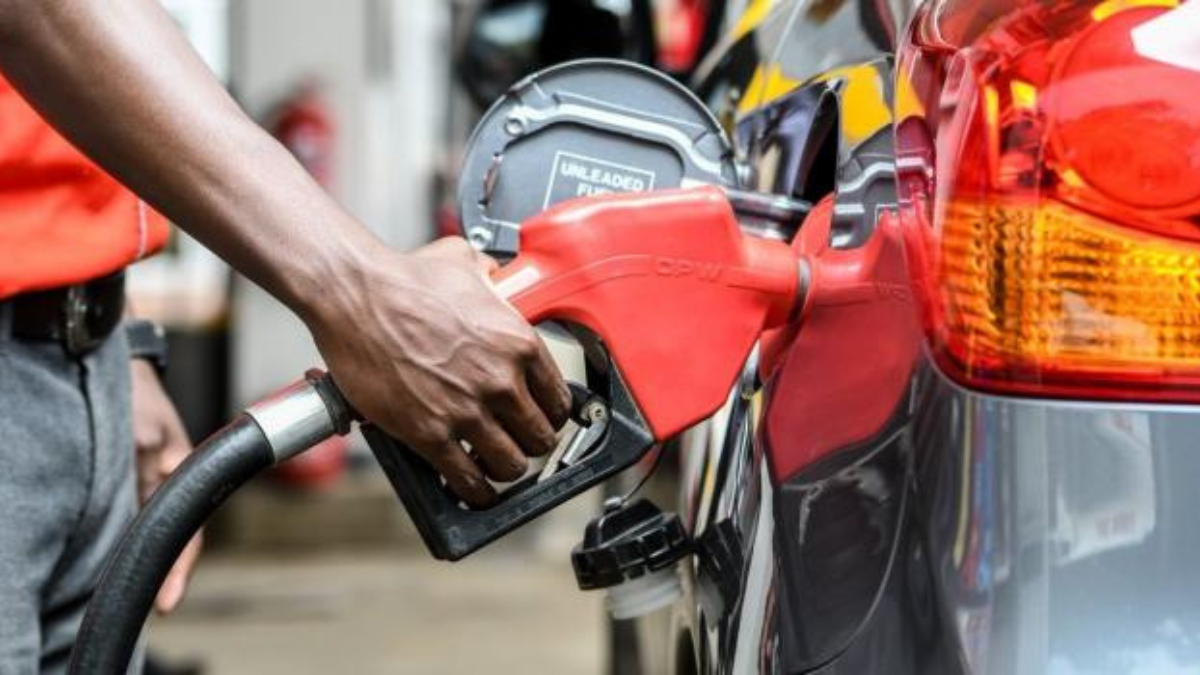
Nigerians are poised for fresh hardship as the increase in petrol and diesel prices threatens to trigger another wave of higher costs across the economy.
Specifically, Abuja and other northern cities are set to face prices as rising crude oil prices and transportation costs increase the cost of supplying petroleum products to inland markets.

This followed the decision of Dangote Petroleum Refinery to raise its Premium Motor Spirit, PMS, also known as petrol, gantry price by 6.7 per cent to N1,350 per litre from N1,265, effective September 12, 2026.
In a memo to customers, the refinery said: “Dear valued customer, please find below the revised DPRP PMS gantry and coastal price, which is effective September 12th, 2026.”
It also directed customers with existing loading arrangements to return their Automated Truck Certificates, ATCs, for repricing.

It said: “You are advised to return all ATCs for repricing and a new volume contract will be issued for immediate loading resumption.”
The increase is expected to raise acquisition costs for marketers sourcing petrol from the refinery and could trigger further pump-price adjustments.
The latest Energy Bulletin by the Industry Competency Centre, Lagos, showed that the seven-day average Brent crude price stood at $98.74 per barrel, while Bonny Light averaged $104.65. The seven-day average exchange rate was N1,323.12/$.
The bulletin put the seven-day average domestic petrol price at N1,308.33 per litre and diesel at N1,855.97 per litre.
With coastal ex-depot petrol prices currently ranging from N1,265.50 to N1,285 per litre, inland markets are expected to record higher prices because of additional trucking and distribution costs.
Industry estimates indicate that petrol could sell for N1,400-N1,500 per litre in Abuja, with prices potentially exceeding N1,500 at some filling stations, depending on supply costs and marketers’ margins.
The impact could be greater in northern cities farther from coastal supply centres. Petrol prices in Kano, Kaduna, Jos and other inland markets could rise to between N1,450 and N1,600 per litre, depending on availability, transportation costs and supply routes.
Diesel prices are also expected to remain elevated. The bulletin showed Lagos diesel ex-depot prices ranging between N1,790 and N2,100 per litre, suggesting that inland prices could reach N2,100-N2,400 per litre or higher after transportation and other distribution costs.
The widening gap between coastal and inland prices highlights the impact of logistics on Nigeria’s deregulated downstream petroleum market.
While Lagos, Port Harcourt and Warri have relatively close access to refineries, terminals and other supply centres, Abuja and northern markets depend heavily on products transported over longer distances.
The pressure could intensify if crude oil remains above $100 per barrel, the naira weakens or transportation costs rise. Conversely, lower crude prices, a stronger naira and reduced logistics costs could ease pressure on consumers.
Oil price, freight rate spikes challenge refineries — Expert
Reacting in an interview with Sunday Vanguard, Olatide Jeremiah, Chief Executive Officer, Petroleumprice.ng, said the increase reflected developments in the international oil market.
He said: “Oil price and freight rate spikes are universal challenges for refineries, except where the Federal Government intervenes. Gantry and pump prices will ultimately be determined by the impact of the Middle East crisis.
“The upward review of petrol prices to N1,350 per litre by the Dangote Refinery is expected as oil prices approach $110 per barrel.
“Pump prices could hit N1,500 per litre in major cities across Nigeria if the crisis persists.”
High fuel prices mean hardship for Nigerians — OGSPAN
Also speaking, Lawal Kamaldeen, Vice President, Oil and Gas Service Providers Association of Nigeria, OGSPAN, said the latest increase would further pressure households and businesses.
He said: “The ¦ 85 increase represents approximately 6.7 per cent, while the refinery’s cumulative increase since August 21 has reached ¦ 185 per litre, representing about 15.9 per cent. The latest adjustment comes at a particularly difficult time for Nigerian households and businesses, which are already facing significant increases in the cost of living and doing business.
“We recognise that Dangote Refinery is operating in a market increasingly affected by international crude oil prices, product replacement costs and geopolitical disruptions arising from the conflict involving Iran and the United States. Recent developments in the international oil market have created genuine cost pressures for refiners and petroleum marketers.
“However, from the perspective of the domestic economy, we are concerned about the likely consequences of another increase in the cost of petrol.”
Kamaldeen said higher petrol prices would affect transportation, distribution, agriculture, small businesses and other economic activities.
“Petrol remains a major input for transportation, distribution, agriculture, small businesses and general economic activity in Nigeria. An increase in the wholesale price will inevitably create pressure across the downstream petroleum value chain,” he said.
According to him, the impact could include higher transportation and logistics costs, food and agricultural distribution costs, prices of essential goods and services, operating costs for small and medium-sized businesses, school transportation expenses and broader inflationary pressure.
He said OGSPAN was proposing a targeted, production-based support mechanism for locally refined petroleum products rather than a return to broad, import-based fuel subsidy.
“Such an intervention could include increasing the allocation of crude oil to qualified domestic refineries at competitive terms, particularly during periods of exceptional international price volatility,” he said.
He also called for a review of applicable taxes, levies and government charges on locally refined petroleum products, where necessary, as well as a transparent and time-bound domestic refining support framework linked to actual production and supply.
Kamaldeen added that any government intervention should be independently monitored and subject to clear performance benchmarks.
FG urged to tackle rising transport, food costs — S4C, Economist
Also, Executive Director, Victoria Ibezim-Ohaeri, Spaces for Change, warned that sustained increases in fuel prices could deepen pressure on households and businesses.
She said: “For households, the most immediate concern is likely to be higher transportation and food costs. Higher fuel and logistics costs can raise the cost of moving people and goods, while households and businesses that rely on petrol- or diesel-powered generators may face additional energy expenses.
“These pressures could further reduce purchasing power, particularly for low- and middle-income households. Nigeria’s headline inflation rate currently stands at 15.43%, while food inflation is 20.31%, according to the National Bureau of Statistics.
“Businesses across manufacturing, agriculture, construction, retail and logistics are similarly exposed to higher energy, transportation and input costs.
If the shock persists, firms may pass additional costs on to consumers, absorb lower profit margins, postpone investment or reduce employment. Consequently, a prolonged oil-price shock could constrain the recovery of the non-oil economy even as the oil sector benefits from higher crude prices.
“In the coming weeks, volatility is likely to remain the central concern. Continued conflict and disruption to major shipping routes could keep crude and refined petroleum prices elevated. Recent disruptions have already reduced oil flows through the Strait of Hormuz and contributed to higher shipping and fuel costs.”
She added: “Nigeria should therefore avoid treating the current price increase simply as a revenue windfall. First, government should preserve part of any additional oil revenue as fiscal and external buffers rather than immediately expanding recurrent expenditure.
“Second, support should be targeted at households and sectors most exposed to the shock. This could include temporary expansion of well-targeted cash transfers, transport support and measures that reduce the cost of moving food from farms to markets. Support for agricultural production, storage, irrigation and affordable financing should also be prioritised to reduce the risk that higher energy and transport costs translate into further food-price increases.
“Third, government should accelerate measures that reduce Nigeria’s exposure to petroleum-price volatility. Greater domestic gas utilisation, more reliable electricity, renewable energy, efficient transport systems and improved logistics can reduce the cost of energy across the wider economy.”
Earlier, an economist and communications expert, Clifford Egbomeade, said the immediate effect of higher crude prices would be a cost shock across the economy.
“The immediate effect on Nigeria is a cost shock. Higher crude prices will raise the cost of diesel, transport, freight and other energy-intensive inputs, putting pressure on business margins and household incomes,” he said. (Vanguard)













Four people were reportedly shot when a convoy of the National Democratic Congress (NDC) came under attack in Ebonyi State, with one of the campaign vehicles set ablaze.
The incident occurred during a campaign movement in the state, according to sources familiar with the development.
The identities and conditions of those injured were not immediately available at the time of filing this report.
The motive for the attack remained unclear, while the attackers had yet to be identified.
Security agencies were expected to investigate the incident and determine the circumstances surrounding the shooting and burning of the campaign vehicle.
Further details were awaited from the NDC, the Ebonyi State Government and the relevant security authorities.

The Anambra State Police Command has arrested a man, identified as Chima Ofoeke, over the suspected murder of 23-year-old Mmesoma Umeorini in Uga, Aguata Local Government Area of the state.
The arrest followed a report by the deceased’s mother to the Divisional Police Officer (DPO) of Umuchu Division that her daughter had been missing since October 16, 2026, despite efforts to locate her.

According to the police, operatives, working with members of the Agunechemba security outfit in Uga, apprehended the suspect following intelligence-led information.
The suspect was identified as the deceased’s alleged former boyfriend.
During preliminary interrogation, Ofoeke allegedly confessed to killing the young woman following the breakdown of their relationship. He reportedly led detectives to the location where her remains were discovered and recovered.
Following the development, the Commissioner of Police in Anambra State, CP Nnanna Oji Ama, has directed that the case be transferred to the State Criminal Investigation Department (SCID), Awka, for a thorough investigation.
The police said the investigation would establish the full circumstances surrounding the incident and ensure that justice was served.
The command reiterated its commitment to protecting lives and property, urging residents to promptly report missing persons and suspicious activities to the appropriate authorities.
It added that further information would be made available as the investigation progresses.
…Assures defects will be addressed
…Threatens to blacklist contractors over defects
Enugu State Governor, Dr Peter Mbah, has defended the construction of 268 smart green schools across the state, assuring residents that structural defects and other challenges identified in some facilities will be addressed.
Mbah gave the assurance during a town hall meeting, where he explained that the state government deliberately adopted an accelerated approach to the construction of the schools to ensure that every child in Enugu had access to quality education.
According to the governor, the scale of the projects delivered within three years would ordinarily take between 10 and 20 years to accomplish under conventional implementation timelines.
He acknowledged that the speed of execution had resulted in some teething problems, including defects in certain buildings and roofing challenges, but maintained that the government was committed to ensuring that all the facilities were fit for purpose.
“When you have fast-tracked projects at that scale, you are bound to have teething problems, and we are not oblivious of it,” he said, adding that the government was resolved to address the identified shortcomings.
Mbah explained that the decision to build 268 smart green schools was driven by the administration’s determination to expand access to quality education rather than concentrate resources on a few model institutions.

Participants at the Town Hall meeting
He said the government could have opted to construct only three smart schools, one in each senatorial zone, or 17 schools across the state, but chose a broader approach to reach more children.
“We said every child in this state must have access to quality learning, and we did 268 smart green schools,” the governor stated.
He stressed that the administration would not abandon the projects because of the defects identified, adding that corrective measures were already part of the government’s response.
The governor’s remarks come amid concerns over defects reported in some of the newly constructed school facilities.
He maintained that the administration remained committed to ensuring that the projects delivered their intended educational benefits to pupils across Enugu State.
Mbah Threatens to Blacklist Contractors Over Defective School Projects
Governor Mbah also warned contractors handling the state’s smart green school projects that they will face consequences for failing to address defects in their work.
Mbah gave the warning while responding to questions about structural defects and other problems reported in some of the 268 smart green schools constructed by his administration.
The governor said the government had records of the contractors responsible for the projects and would require those whose work was found defective to return to their sites and carry out necessary repairs.

He, however, warned that contractors who refused to comply with the government’s directives would be blacklisted.
“For those that have been recalcitrant, we blacklist. And there are consequences for that,” he said.
Mbah explained that although the projects were executed on an accelerated timeline to expand access to quality education, the fast-tracked approach did not absolve contractors of responsibility for the quality of their work.
He also disclosed that the government obtained advance payment guarantees from the contractors, providing an additional mechanism for enforcing compliance where necessary.
“We do have an option to call those up if it becomes necessary,” the governor said, referring to the guarantees.
The administration has come under scrutiny over reported defects in some of the newly constructed school buildings, including roofing and other structural concerns.
Mbah acknowledged the existence of such challenges but described them as issues the government was determined to resolve.
He said the overriding objective was to ensure that all the smart green schools were fit for purpose and capable of providing the learning environment intended by the state government.
The governor’s comments signal the administration’s intention to hold contractors accountable while continuing its investment in education infrastructure across Enugu State.
-
 Features2 days ago
Kogi’s Kidnapping Crisis: Why Do Forests Remain Safe Havens for Criminals Under Ododo’s Watch?
-
News3 days ago
“It’s not debatable, we can’t go back,” Mbah Backs Tinubu on Fuel Subsidy Removal
-
News2 days ago
Kidnappers kill seven-year-old boy after ransom demand
-
News3 days ago
Mbah: Enugu Now Produces 120 Million Litres of Water Daily, Expands Agricultural Investment
-
News24 hours ago
Macron Postpones Planned Visit to Nigeria Until 2027
-
News22 hours ago
Enugu CP Orders Probe into Death of Izuchukwu During Police Raid
-
Politics1 day ago
2027: Atiku, Obi, Duke, Others in Talks on Single Opposition Candidate – Coalition
-
News18 hours ago
UBA Commences Contempt Proceedings Against WEMPCO Directors over Alleged Disobidence of Court Order