News
NDLEA Operatives Injured in Bayelsa Road Crash During Drug Raid, Suspect Dies in Hospital

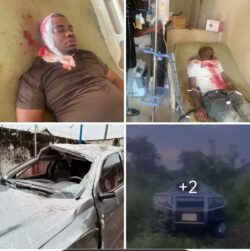
Several operatives of the National Drug Law Enforcement Agency (NDLEA) sustained varying degrees of injuries in a road accident while returning from a drug raid in Bayelsa State, while a suspect arrested during the operation later died in hospital.
The accident occurred at about 4:30 a.m. on November 12, 2026, along the Ebedebiri Community axis, as the operatives were returning to Yenagoa from a follow-up raid in Aleibiri Community.

The NDLEA Bayelsa State Command said the operation led to the arrest of a patent medicine dealer identified as Funakpo, who was allegedly found in possession of and dealing in Diazepam, a psychotropic substance.

According to a statement by the Command’s Media and Advocacy Officer, Daniel Howells Obah, one of the vehicles conveying the operatives and two suspects was involved in the accident, leaving both officers and suspects with varying degrees of injuries.

The victims were initially taken to the University of Africa Clinic, Toru-Orua, before being referred to the Bayelsa State Specialist Hospital and the Federal Medical Centre, Yenagoa, for further medical attention.
The statement disclosed that Funakpo, who sustained severe injuries in the accident, later died at the Bayelsa State Specialist Hospital shortly after returning from a brain scan at the Bayelsa Medical University Teaching Hospital.
The agency explained that the raid was a follow-up to an earlier operation conducted on July 17, 2026, during which the deceased’s 19-year-old son, Blessed Funakpo, was arrested after quantities of psychotropic substances were allegedly discovered in the same shop.
Reacting to the incident, the Bayelsa State Commander of the NDLEA, Kanu Sunny Chukwuemeka, commiserated with the family of the deceased and the community over the loss.
He described the incident as a wake-up call for collective action against drug abuse and urged well-meaning individuals to support efforts to tackle the menace.
The commander also dismissed allegations of torture in connection with the suspect’s death, insisting that the agency remained committed to respecting human rights and protecting lives.



The African Democratic Congress Presidential Campaign Council (ADC-PCC) has challenged President Bola Ahmed Tinubu to explain the reported payment of $4.5 million to an American lobbyist, Diana London, allegedly by the National Security Adviser (NSA), Nuhu Ribadu.
The Council described the reported expenditure as disturbing and wasteful, questioning why such a huge sum would allegedly be committed to foreign image management at a time Nigerians are grappling with economic hardship, insecurity, unemployment and a rising cost of living.
In a statement issued in Abuja on Wednesday and signed by its Director of Media and Publicity, Kola Ologbondiyan, the ADC-PCC said the reported payment raised serious questions about the priorities of the Tinubu administration and its commitment to accountability and transparency.
The Council also expressed concern over allegations surrounding the lobbyist, claiming that London had reportedly faced accusations and a conviction for theft in North Carolina, United States.
According to the ADC-PCC, spending $4.5 million, an amount running into billions of naira, on foreign lobbying while millions of Nigerians struggle to afford food, healthcare, education and other basic necessities reflects misplaced priorities.
It insisted that Nigerians deserved to know why such resources would allegedly be committed to improving the government’s international image instead of addressing pressing domestic challenges.
“This is not merely a public relations issue. It is a matter of accountability, transparency and responsible governance,” the statement said.
The Council argued that no amount of lobbying or media management could conceal the economic difficulties and security challenges confronting the country, insisting that the government’s performance should be judged by the living conditions of Nigerians rather than its international image.
“You cannot polish failure. You cannot lobby away hunger. And you cannot buy credibility abroad when you have lost the trust of your own people at home,” it added.
The ADC-PCC consequently called on President Tinubu to explain who authorised the reported payment, the source of the funds, whether public money was involved, the contractual purpose of the engagement and the specific services rendered by the lobbyist.
It also urged the National Assembly, the Economic and Financial Crimes Commission (EFCC) and the Auditor-General of the Federation to investigate the allegation and make their findings public.
The Council maintained that Nigerians deserved clear answers rather than official silence, stressing that propaganda and foreign public relations engagements could not substitute for good governance.
On the political front, the ADC-PCC rejected what it described as attempts to intimidate Nigerians over their right to freedom of expression, saying public criticism of the government reflected growing frustration and disillusionment.
It specifically defended the growing “BAMAYI” chorus, describing it as an expression of citizens’ dissatisfaction with the All Progressives Congress (APC) administration.
The Council warned that threats, propaganda and political intimidation would not silence Nigerians or reverse what it described as growing public discontent against the ruling party.
Reaffirming its commitment to peaceful political engagement, the ADC-PCC said it remained focused on presenting Nigerians with a credible political alternative.
“We will not be intimidated, and we will not be silenced,” the statement declared.
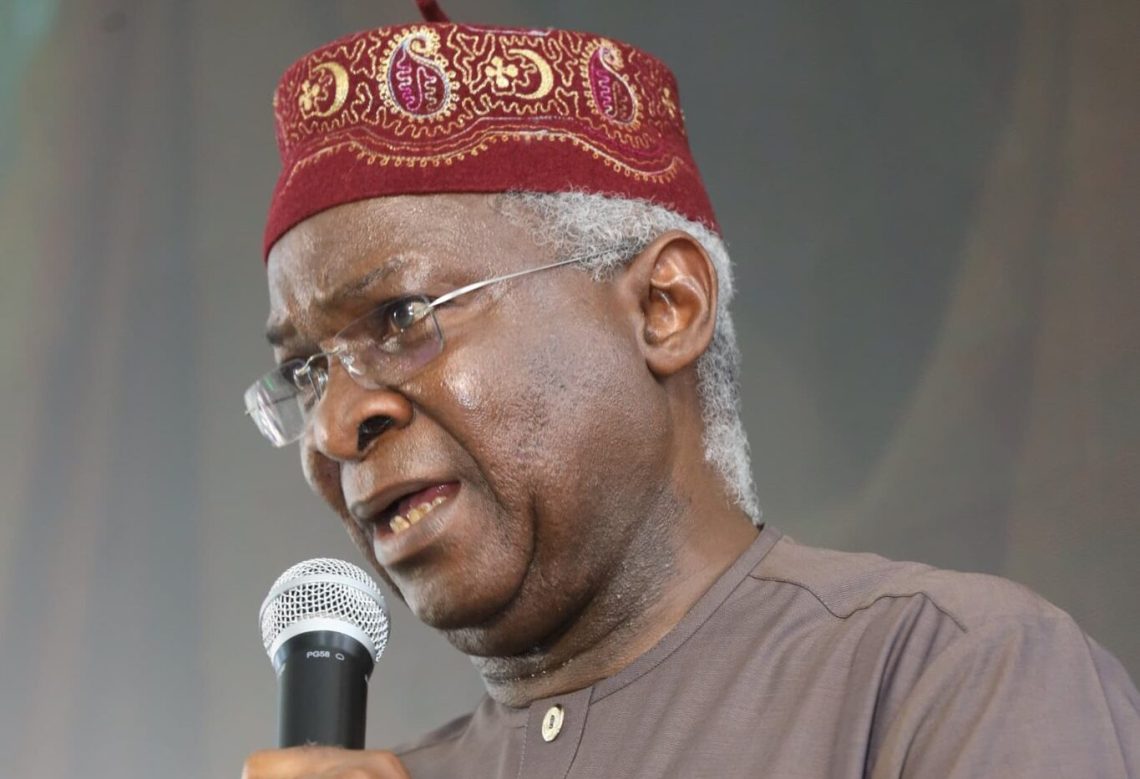
Former Minister of Works and Housing, Babatunde Fashola, has said Nigerians should assess President Bola Tinubu’s performance in the power sector based on their individual experiences, claiming that electricity supply has improved in his area in recent months.
Fashola spoke during an interview on Channels Television on Tuesday night while responding to questions about Tinubu’s 2023 campaign promise that Nigerians should not re-elect him if he failed to improve electricity supply and end estimated billing.
During the interview, the presenter played a recording of Tinubu telling voters that they should not vote for him for a second term if he failed to fulfil his electricity pledge.
In the recording, Tinubu said: “You must have electricity. And you will not pay for estimated bills anymore. A promise made will be a promise kept. If I couldn’t keep the promise and you and I come back for a second term, don’t vote for me.”
Responding, Fashola, who said he was present when Tinubu made the statement, argued that the recording should have been played to the end because the President had included a qualification.
“First of all, I think you should have let the tape run completely. Because he then said, ‘Unless I give you adequate reasons,’ and you shut it down,” he said.
Fashola explained that the pledge had two components: improving electricity supply and ending estimated billing. He argued that Nigerians who had experienced improved power supply or received prepaid meters after previously relying on estimated bills could consider the President’s promise fulfilled in those areas.
“For those who are not paying estimated billing again, they will say promise kept and they will vote for him. For those whose electricity has improved, where it has improved, they will vote for him,” he said.
He added that Nigerians who had yet to experience any improvement were entitled to ask the President to explain why the promise had not been fully delivered.
“Perhaps they are entitled to now ask Mr President, maybe you should give us the caveat. What are the reasons why you haven’t reached the end of your journey? And perhaps the reason is that I just need more time. Give me this second term, let me close on my promise,” Fashola said.
When the interviewer suggested that Tinubu had specifically promised 24-hour electricity, Fashola disputed the interpretation, insisting that he did not hear the President make such a commitment in the recording.
“He said adequate. We can replay it again. Replay it. I didn’t hear 24,” he said.
After the clip was replayed, Fashola maintained that the assessment should focus on the extent of improvement in electricity supply and access to prepaid meters.
“Everybody wants electricity all day. Okay, everybody wants that. I am not going to be avoiding very clear issues. But has it improved in some cases? If it has, those voters will say that this man is true to his word,” he said.
To illustrate his position, the former minister cited his personal experience with the Eko Electricity Distribution Company (Eko Disco), saying he had contacted the company earlier in the year to commend its service.
“So, one day, I think it was earlier this year. I called my service provider, Eko Disco. And I said, today, I’m not complaining. I want to commend you, because oftentimes when you hear me complain, when you hear my call, it’s because I have issues. But for the last few months, I am fine,” he said.
However, Fashola cautioned against generalising his experience, noting that electricity consumers could have different experiences depending on their locations.
“I don’t live in other people’s houses, so their experiences may be different from mine. And people should vote from their experience,” he added.
Tinubu made the electricity pledge in December 2022 while campaigning for the 2023 presidential election at a meeting with members of the Organised Private Sector in Lagos.
He promised that Nigerians would have electricity and would no longer pay estimated bills, warning that voters should not re-elect him if he failed to deliver, unless he provided adequate reasons for the failure.
The pledge came under renewed scrutiny in November 2026 after the APC Presidential Campaign Council spokesperson, Dele Alake, argued that Tinubu’s remarks had been quoted without the concluding qualification that he would provide Nigerians with adequate reasons if he failed to deliver.
Alake cited the administration’s efforts, including the Electricity Act 2023, the Presidential Metering Initiative and plans to address debts in the power sector, as part of its interventions.
He, however, acknowledged that resolving Nigeria’s electricity crisis remained a work in progress.
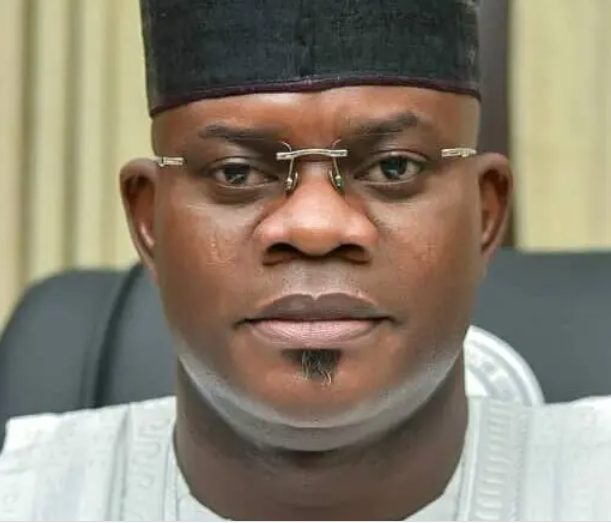
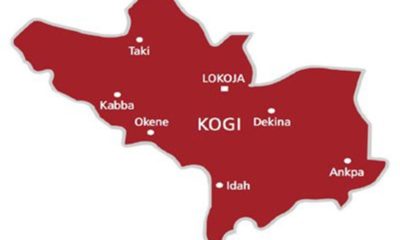
The ongoing ₦80.2 billion fraud trial involving former Kogi State Governor, Yahaya Bello, is set for a fresh start following the elevation of the presiding judge, Justice Emeka Nwite, to the Court of Appeal.
Justice Nwite was among 12 newly appointed justices of the Court of Appeal sworn in on Tuesday by the Chief Justice of Nigeria (CJN), Justice Kudirat Kekere-Ekun, at a ceremony in Abuja.
His elevation means that the high-profile corruption case involving Bello, who is being prosecuted by the Economic and Financial Crimes Commission (EFCC), will be reassigned to another judge of the Federal High Court.
The case is also expected to commence afresh, a legal process known as trial de novo, under which proceedings begin anew before a different judge.
Bello is facing prosecution over allegations of money laundering and financial fraud involving ₦80.2 billion. He has pleaded not guilty to the charges.
The development is expected to have significant implications for the prosecution and defence, as the new judge will have to take over the matter and conduct proceedings afresh in accordance with the law.
Justice Nwite’s elevation also affects other criminal cases previously assigned to him, while those handled by Justice James Omotosho, who was equally elevated to the appellate court, will undergo similar reassignment.
Justice Omotosho had presided over the terrorism-related trial of the detained leader of the Indigenous People of Biafra (IPOB), Nnamdi Kanu, who was sentenced to life imprisonment in November 2025.
The 12 appellate court justices were recommended for appointment by the National Judicial Council (NJC) at its meeting on May 13, 2026.
Their elevation is expected to trigger the reassignment of pending criminal matters previously handled by them to other judges for fresh hearings.
-
 News2 days ago
Nigerian Pastor Dies Aboard Flight From US
-
News3 days ago
BREAKING: Kwankwaso’s Convoy Attacked by Suspected Thugs in Kano, Vehicles Damaged
-
Faith3 days ago
‘Many Wrote Us Off, But God Proved Them Wrong’ – Enenche Celebrates Dunamis @ 30
-
News1 day ago
Enugu Assembly Passes Bill Capping Rent Increase at 2%, Restricts Hikes to Four Years
-
News2 days ago
2027: Obaze Alleges Plot to Use Judiciary to Stop Obi, Kwankwaso, NDC Candidates
-
News2 days ago
Tinubu Orders Release of 78 Suspects Arrested Over Attack on His Convoy in Abuja
-
News1 day ago
Nursing Students Shut Down School, Protest Colleague’s Death
-
News2 days ago
Mbah’s Manifesto Scorecard: From Promises to Projects, Enugu’s Journey of Transformation