Politics
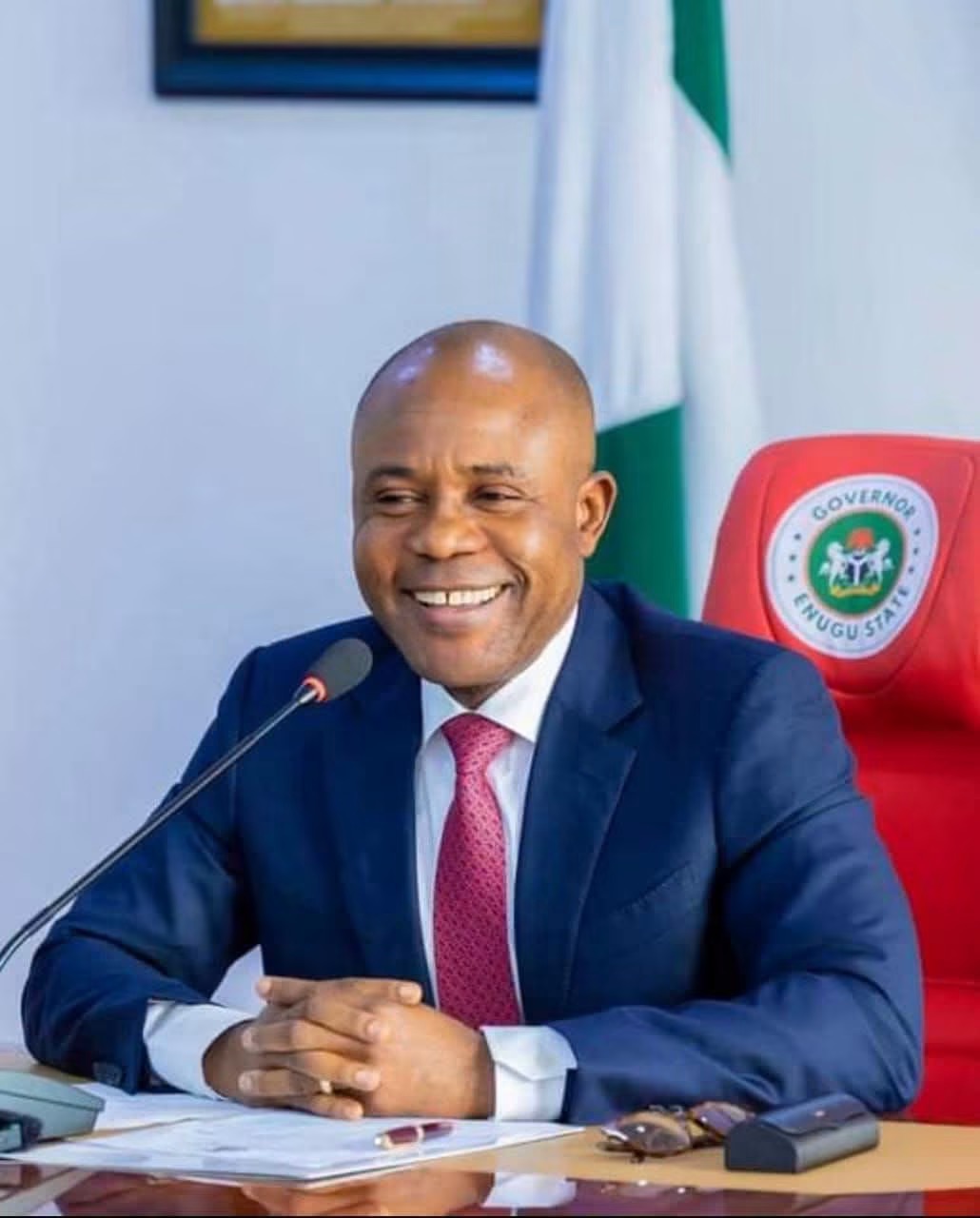
The History of Gov. Peter Ndubuisi Mbah: A Response to Uche Nnaji

By Nnamani Arinze Darlington
Uche Nnaji,

Your recent political attack video demanding the history of Governor Peter Ndubuisi Mbah is noted. Since you have asked, let us examine the history, the journey, the business background, and the record of the man currently entrusted with the leadership of Enugu State.

But before we begin, let us establish one fundamental truth: *it is easy to criticise a governor; it is considerably more difficult to demonstrate that you possess the competence, character, experience, and vision to govern better.*

It is public knowledge that you are currently facing serious allegations of certificate forgery involving the University of Nigeria, Nsukka (UNN) degree certificate and NYSC discharge certificate that you presented during your ministerial screening. Both institutions have disowned the documents. An investigative panel set up by the Federal Ministry of Education found the certificates to be forged. The Independent Corrupt Practices and Other Related Offences Commission (ICPC) is prosecuting the matter in court, with charges that also touch on related issues of fraud and abuse of office. You have pleaded not guilty, and the trial is ongoing. These are not political fabrications; they are matters of public record currently before the courts and the Nigerian people.
Until you fully clear your name on these historic and serious allegations of fraudulent activity and certificate forgery, your attempts to distract Ndi Enugu with personal attacks on the Governor only raise further questions about your own credibility and fitness for public office.
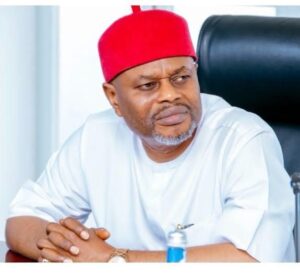
Uche Nnaji
The people of Enugu State deserve a political conversation built on facts, ideas, accountability, and measurable results, not a contest of personal attacks.
If your ambition is to lead Enugu State, Ndi Enugu deserve to know what you intend to do differently.
What is your economic blueprint for Enugu State?
How will you create sustainable employment for our young people?
What is your plan for education, healthcare, agriculture, infrastructure, security, and industrial development?
How will you improve the standard of living of ordinary citizens while strengthening the state’s economic capacity?
And what concrete policies would you implement to deliver better results than those you criticise?
These are the questions that matter.
*Political ambition is not a development plan. Criticism is not competence. And the desire to occupy Government House is not proof of the capacity to govern.*
Since you have demanded Peter Mbah’s history, let us put his background and public record into perspective.
MBAH’S HUMBLE BEGINNINGS
Peter Ndubuisi Mbah was born on 17 March 1972 to Chief Gilbert Ekete Mbah and his wife in Owo, Nkanu East Local Government Area of Enugu State. He grew up in a modest family that instilled hard work, integrity, and service. His primary education was at Army Children’s School, Bori Camp, Port Harcourt, where he obtained his First School Leaving Certificate with distinction and even skipped a class due to outstanding performance. Secondary education was completed at Owode High School, Owode Egba, Ogun State, where he obtained his Senior Secondary School Certificate in 1992.
At about age 12, when family finances were strained and further education for him risked interrupting his siblings’ schooling, he chose to leave school temporarily. He was sent to Lagos to apprentice as an electronics trader at Alaba Market. He started small, trading, saving, and learning the discipline of business from the ground up. He later imported Mercedes-Benz parts from Germany, became sole representative for a Turkish company, and built a reputation for reliability and trust in international trade long before any political office.
His Educational Background
Recognising the value of formal education while trading, he pursued law at the University of East London (UEL), United Kingdom, graduating with a Bachelor of Laws (LL.B) in the Upper Division in 2000. At UEL he was President of the Students’ Law Society (1998–99), transforming it into the university’s Most Productive Society of the Year; he served on the Students’ Representative Council and School of Law Board, won the university’s Mooting Competition, and represented UEL at the International Negotiation Competition.
He returned to Nigeria, attended the Nigerian Law School, and was called to the Nigerian Bar. He earned a Master’s degree in Maritime and Commercial Law from Lagos State University in 2004. He further obtained an MBA from IESE Business School, University of Navarra (Barcelona, Spain), a Postgraduate Diploma in Strategy and Innovation from Saïd Business School, University of Oxford, and completed the Chief Executive Programme at Lagos Business School, along with executive programmes at institutions including Harvard and Stanford. In 2021 Godfrey Okoye University awarded him an honorary Doctorate in Political Science; more recently his alma mater, the University of East London, conferred an honorary Doctor of Laws.
The significance of this background is straightforward: Peter Mbah’s professional journey did not begin when he became governor. His involvement in business and public administration preceded his emergence as the chief executive of Enugu State.
That history deserves to be examined through evidence, not reduced to political rhetoric.
2. HE WAS A BUSINESSMAN BEFORE GOVERNOR
His wealth was built through legitimate entrepreneurship over decades:
In 1992 he founded Peter Mbah Investments Limited, a trading and oil-and-gas services firm that became the Nigerian representative/sole agent for International Oil Corporation (IOC) of Fresno, California.
Between 1993 and 1997 he founded GILPEL Industries Ltd., importing and distributing general goods and domestic electrical appliances (with significant turnover).
He established Focus International Schools in Lagos — a quality primary and secondary institution reflecting his belief in education.
In 2004 he registered, and in 2008 began full operations of, Pinnacle Oil and Gas Ltd. from a modest one-room office with minimal capital and a tiny staff. Through innovation in petroleum product handling, storage, logistics, and customer focus, Pinnacle grew into a major indigenous player in Nigeria’s downstream sector. It developed significant infrastructure, including an ultra-modern offshore petroleum products intake and off-take facility (SPM/CBM and large storage) in the Lekki Free Trade Zone, one of the notable liquid bulk terminals of its kind in the region plus facilities in Warri, a fleet of trucks, and a network of retail stations across Nigeria.
This is the source of his business success: starting as an apprentice trader, building import businesses, representing international partners with integrity, and then scaling an indigenous oil-and-gas company through hard work, innovation, and corporate governance not through any public office.
Of course, every claim about business success must withstand scrutiny. Questions about ownership, investments, corporate performance, and the origins of wealth are legitimate in a democracy.
But scrutiny must be based on evidence.
*If you want to challenge a man’s record, bring evidence. If you want to replace his leadership, bring a better plan.*
That is the standard Ndi Enugu should demand of every politician seeking their confidence.
3. HIS GOVERNANCE EXPERIENCE
Before becoming governor, Peter Mbah served as Chief of Staff to former Governor Chimaroke Nnamani and later as Commissioner for Finance and Economic Development in Enugu State.
These positions exposed him to government administration, public finance, economic planning, and the challenges of managing state resources.
His subsequent election as governor marked another chapter in that professional journey.
In 2003, after contesting an elective position, he was appointed Chief of Staff to then-Governor Chimaroke Nnamani. He later served as Commissioner for Finance and Economic Development. In those roles he chaired the State Tenders Board, sat on the Executive Council and State Security Council, and contributed to fiscal reforms and strategy documents that guided state development programmes. NewsWatch magazine in 2006 described him as “a man ahead of his time” for his work on the state’s fiscal operations.
Since assuming office on 29 May 2023 under the _Tomorrow Is Here_ vision, Governor Mbah has pursued a results-driven agenda focused on growing Enugu’s economy from approximately $4.4 billion toward a $30 billion target, eradicating poverty, and positioning the state as a preferred destination for investment, tourism, business, and living. Key verifiable milestones (as documented in the administration’s September 2026 scorecard and subsequent updates) include:
A. Infrastructure and Road Development
Over 1,521 kilometres of roads constructed or reconstructed across urban and rural areas, including strategic corridors such as the Owo-Ubahu-Amankanu-Ikem dual carriageway (a new gateway linking the state northward). Multiple phases of urban roads, gateway roads, and rural connectivity projects continue. The New Enugu Smart City (approximately 10,000 hectares spanning several LGAs) is under development with integrated underground infrastructure for roads, water, power, telecommunications, and sewerage.
B. Education and the Smart Green Schools Initiative
A state that invests in education invests in its future.
The administration’s Smart Green Schools initiative seeks to modernise basic education through improved classrooms, digital learning resources, ICT facilities, and other educational infrastructure.
Construction and equipping of 260–268 Smart Green Schools (one per political ward), delivering over 7,000 classrooms. These feature digital classrooms, ICT centres, robotics and AI labs, e-libraries, solar power, smart farms for practical agriculture, free uniforms, books, tablets, and daily meals for pupils. Roughly 33% of recent budgets has been allocated to education. Teacher training is ongoing through the Centre for Experiential Learning and Innovation. The schools began full transition for the 2025/2026 academic session.
C. Healthcare and the Welfare of Citizens
260 Type-2 Primary Healthcare Centres built and equipped across all wards, with recruitment of over 2,250–2,500 health personnel to ensure 24/7 service. Construction and equipping of the 300-bed Enugu International Hospital is advancing to reduce medical tourism outflows. Secondary facilities and related investments continue.
D. Water Supply
Significant restoration of pipe-borne water: daily production capacity raised dramatically (from low single-digit millions of litres to over 120 million litres in the municipal area through interventions including the 9th Mile scheme and supporting power generation). Reticulation and further expansion remain ongoing priorities.
E. Agriculture and Economic Revival
Development of over 260 farm estates (one per ward) supporting more than 18,000 smallholder farmers with mechanisation, storage, aggregation, and processing. Land banking of hundreds of thousands of hectares. Revitalisation of United Palm Products Limited (major investment, replanting, and resumption of commercial production), Sunrise Flour Mills, Nigergas (oxygen and industrial gases), and other moribund assets. Partnerships for agro-processing and value chains.
F. Transportation and Aviation
Launch and expansion of Enugu Air (growing fleet and routes). Increase in daily flights into Enugu from roughly 2 to 15–20. Construction of modern transport terminals (Holy Ghost, Abakpa, Nsukka, and others). Deployment of over 100 CNG buses (with more planned) and plans for additional eco-friendly taxis. Progress on the concession of Akanu Ibiam International Airport.
G. Security, Tourism, and Other Reforms
Improved security architecture enabling freer movement and business activity. Tourism projects including plans for a major zipline, cable car system, religious tourism sites, resorts, and repositioning of assets such as Hotel Presidential (major renovation advancing) and the International Conference Centre complex (including a new 5-star hotel component). Fiscal reforms have driven strong IGR growth (from around ₦26–37 billion range pre/early term to over ₦180 billion in 2024 and reports exceeding ₦400 billion in 2025). High capital expenditure ratios in successive budgets (often 80%+), Citizens’ Charter (Executive Order 001) for transparency, and institutional reforms including revenue automation and Treasury Single Account.
These are not campaign promises; they are documented deliveries and ongoing projects that the people of Enugu can see and experience. A comprehensive compendium of over 10,000 milestones was publicly presented in September 2026.
The strongest defence of any administration is not propaganda. It is a record that can withstand scrutiny.
5. UCHE NNAJI, WHERE IS YOUR ALTERNATIVE VISION?
This is the central question.
If you believe Peter Mbah’s approach to governance is wrong, what is your alternative?
If you believe Enugu’s economy should grow faster, present your economic model.
If you believe the administration’s education policies are inadequate, explain what you would change and how you would finance those changes.
If you believe the state’s infrastructure priorities are misplaced, identify the projects you would prioritise and explain why.
If you believe unemployment remains a serious challenge, present a credible job-creation strategy.
If you believe Enugu can be governed more effectively, demonstrate how your policies, institutions, and implementation plans would produce better outcomes.
The people deserve specifics, not slogans.
They deserve a vision supported by practical policies, realistic financing, measurable targets, and a credible implementation strategy.
*A serious political contender does not merely explain why another person should not lead. A serious contender demonstrates why the people should trust him to lead instead.*
That is the challenge before every politician seeking the confidence of Ndi Enugu.
6. ACCOUNTABILITY MUST APPLY TO EVERYONE
The public controversy surrounding Uche Nnaji’s educational credentials is also part of the wider conversation about accountability in public life.
The allegations involving his university degree and NYSC certificate have resulted in legal proceedings. Nnaji has pleaded not guilty, and the case remains subject to the judicial process.
The appropriate institutions and courts must determine the matters before them in accordance with the law.
Nevertheless, the broader democratic principle is clear: anyone seeking public trust must be prepared to answer legitimate questions about their record.
Accountability cannot be demanded selectively.
A politician who calls for scrutiny of another public figure must also accept scrutiny of his own background, decisions, and public conduct.
No politician should demand accountability from others while suggesting that his own record is beyond examination.
FINALLY: THE PEOPLE DESERVE SUBSTANCE, NOT NOISE
Uche Nnaji, your demand for the history of Peter Mbah presents an opportunity to have a serious conversation about leadership, accountability, and the development of Enugu State.
Peter Mbah’s professional journey encompasses business, formal education, public administration, and his current responsibilities as governor.
His administration has embarked on an ambitious programme spanning infrastructure, education, healthcare, agriculture, transportation, and economic reform. These initiatives deserve careful examination, independent verification, and continued public scrutiny.
Where the administration has delivered results, those results should be acknowledged. Where shortcomings exist, they should be identified and addressed. Where claims are made, evidence should be available.
That is how responsible political accountability works.
But the same standard must apply to every politician.
If you have a better vision for Enugu State, present it.
If you have evidence supporting your criticisms, provide it.
If you believe the people deserve a different direction, explain precisely what that direction looks like and how you intend to achieve it.
Ndi Enugu deserve more than a politician who can criticize. They deserve leaders who can think, plan, build, deliver, and account for their stewardship.
The future of Enugu State cannot be determined by who produces the loudest political video, launches the sharpest personal attack, or commands the most attention on social media.
It must be determined by the quality of leadership offered to its people.
The people deserve competence over theatrics, substance over sensationalism, accountability over empty promises, and results over rhetoric.
Governor Peter Mbah has continued to demonstrate that his administration’s promises are translating into meaningful progress. Those who seek to challenge him must demonstrate that they possess a credible alternative.
That is the standard of leadership Enugu deserves.
That is the standard Ndi Enugu should demand.
And that is the standard by which history will judge every politician who seeks their trust.
Ndi Enugu are watching. Let the facts speak, let the ideas compete, let accountability prevail, and let substance prevail over noise.



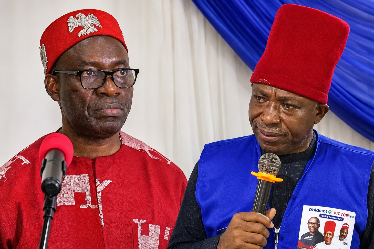
Senator representing Anambra Central, Victor Umeh, has apologised to the people of Anambra State for his role in the emergence of Governor Chukwuma Soludo, saying he deeply regrets supporting his election.
Umeh tendered the apology in Awka on Thursday, expressing disappointment with Soludo’s leadership and accusing him of working against the political interests of Anambra State and the wider Igbo nation.
The senator recalled that he served as Director-General of Soludo’s first governorship campaign alongside other prominent political figures, including Chief Primus Odili, who served as Chief of Staff to former Governor Willie Obiano.
He said he and other members of the campaign team worked tirelessly to secure Soludo’s victory, disclosing that the governor personally approached him during the campaign to seek financial assistance after admitting that he lacked the resources to prosecute the election.
According to Umeh, he subsequently contacted wealthy Anambra indigenes to raise funds for the campaign, with three prominent industrialists responding with donations of N1 billion, N100 million and $100,000, respectively.
He further alleged that the N1 billion contribution made by one of the businessmen had yet to be refunded, although he maintained that the outstanding money was not his major source of disappointment.
Rather, Umeh said his greatest concern was Soludo’s opposition to the presidential ambition of former Anambra State Governor, Peter Obi.
The senator accused Soludo of acting against the interests of his people by opposing Obi, arguing that the governor’s position amounted to working against the political aspirations of Anambra State and the wider Igbo nation.
Expressing regret over his role in Soludo’s emergence, Umeh said he never imagined that the governor would turn out the way he has.
“I am sorry for bringing him. I did not know he would turn out like this.
“Soludo is working against Ndigbo. You can’t be the governor of Anambra State and work against its interests,” he said.
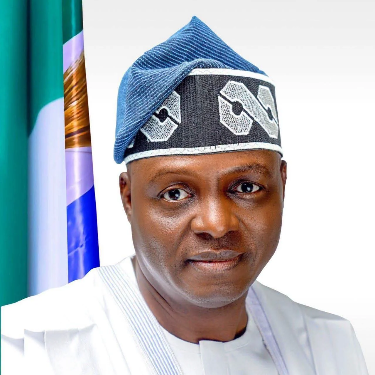
• APC chairman says Tinubu is building a safer Nigeria, urges continuity ahead of 2027 presidential election
The National Chairman of the All Progressives Congress (APC), Prof. Nentawe Goshwe Yilwatda, has commended the 36 state governors and all 36 State Houses of Assembly for their unanimous support for the proposed constitutional amendment to establish State Police Services in Nigeria.
Yilwatda described the development as a landmark achievement in the country’s democratic evolution and a demonstration of political maturity, national consensus and constructive cooperation among the different tiers of government.
In a statement issued by his Special Adviser on Media and Information Strategy, Mr Abimbola Tooki, the APC chairman said the unanimous endorsement by the 36 State Houses of Assembly represented an unprecedented collective commitment to addressing one of Nigeria’s most pressing challenges: the security of lives and property.
Speaking during a meeting with party stakeholders in Abuja, Yilwatda particularly applauded the governors for their positive disposition, constructive engagement and support for the initiative.
He also commended the Speakers and members of the various State Houses of Assembly for recognising the urgency and importance of the proposed security reform.
According to him, the willingness of all states, irrespective of political affiliations and differences, to support the constitutional amendment demonstrates that national security transcends partisan considerations and remains a collective responsibility.
“This development is a powerful affirmation that when the national interest is placed above political differences, our democratic institutions can work together to deliver meaningful solutions to the challenges confronting our country,” he said.
Yilwatda described the proposed establishment of State Police Services as a major component of President Bola Tinubu’s broader reform agenda aimed at building a more responsive, effective and practical security architecture for Nigeria.
He argued that the country’s security challenges had exposed the limitations of an overly centralised policing structure in responding adequately to the peculiar security realities of different communities and geographical locations.
According to him, State Police would provide an additional layer of policing, bringing security administration closer to the people and enabling authorities to respond more promptly to threats within their jurisdictions.
He said the proposed framework would give state governments greater institutional capacity to complement the Federal Police Service in crime prevention, intelligence gathering, maintenance of law and order, and protection of communities.
Among the anticipated benefits, he listed improved grassroots intelligence gathering, faster response to security emergencies, more effective community policing, better understanding of local security threats and stronger collaboration between federal and state security institutions.
He added that the reform would strengthen efforts to tackle kidnapping, banditry, communal violence, armed robbery, terrorism and other criminal activities threatening the safety and economic wellbeing of Nigerians.
“Most importantly, State Police will enhance the capacity of government to identify emerging security threats before they escalate into major security emergencies,” he said.
However, the APC chairman stressed that the success of the initiative must be anchored on professionalism, adequate training, accountability, respect for fundamental human rights and strict adherence to constitutional provisions.
He warned that State Police Services must be established to protect citizens and enforce the law, rather than serve as instruments of political intimidation or partisan interests.
Yilwatda also commended President Tinubu for what he described as his courage, determination and commitment to addressing the country’s security challenges through institutional reforms and practical solutions.
He said the President’s approach was driven by the understanding that the primary responsibility of government was the protection of lives and property and that every Nigerian deserved to live in safety, dignity and peace, irrespective of geographical location, ethnic background, religious affiliation or political persuasion.
“The President’s determination to advance the State Police initiative demonstrates his willingness to take difficult but necessary decisions in the overriding interest of national security,” he said.
Yilwatda maintained that security should not be treated as a privilege reserved for residents of particular cities or regions, insisting that Nigerians in metropolitan centres, rural communities, farming settlements and border towns all deserved adequate protection.
He expressed confidence that, with the necessary constitutional processes and implementation safeguards, the State Police framework would become an important instrument for strengthening national security and restoring public confidence in the country’s policing system.
The APC chairman further argued that the proposed State Police reform, alongside other ongoing institutional and economic reforms, underscored the need for continuity in leadership under President Tinubu.
He urged Nigerians to look beyond political rhetoric and assess the country’s direction based on the policies, decisions, institutional reforms and measurable commitments of the present administration.
According to him, nation-building requires courage, consistency, experience and the willingness to confront difficult challenges rather than abandon necessary reforms whenever they become politically inconvenient.
“Nigeria cannot afford to repeatedly interrupt its reform journey or return to the uncertainties of leadership approaches that have failed to deliver sustainable solutions to the country’s fundamental challenges,” he said.
As the country approaches the January 16, 2027 presidential election, Yilwatda called on Nigerians across the 36 states and the Federal Capital Territory to vote for President Tinubu’s re-election.
He said continuity would provide an opportunity to consolidate ongoing reforms, strengthen the security architecture, deepen economic recovery, improve infrastructure, expand opportunities for young Nigerians and build on the foundations already being established for a more prosperous country.
The APC chairman said the forthcoming election presented Nigerians with an important choice between sustaining an ongoing reform programme and embracing political alternatives whose records in public office should be critically assessed.
He cautioned Nigerians against entrusting the country’s future to political actors whose overriding ambition, according to him, was to occupy the highest political office rather than present credible, practical and sustainable solutions to national challenges.
Yilwatda noted that the ambition to become President did not, in itself, qualify anyone for leadership, stressing that what mattered was the capacity to lead, clarity of vision, courage to make difficult decisions and a demonstrable record of responsible governance.
“It would be dangerous for the country to surrender its future to individuals whose previous opportunities to serve in positions of authority did not produce the economic stability, institutional strength and national development they now promise Nigerians,” he said.
He further argued that some politicians seeking a return to power had been part of previous administrations whose economic policies and governance decisions contributed to the difficulties the country subsequently faced.
He urged Nigerians to critically examine the records of presidential aspirants by asking what they achieved when they had the opportunity to govern, the lasting institutions they built and the solutions they provided to the economic and security challenges of their time.
Yilwatda insisted that Nigeria’s future must not become an experiment in political nostalgia, personal ambition or desperation for power.
The African Democratic Congress (ADC) has approached the Court of Appeal, seeking to overturn the judgment that nullified the leadership of the party led by former Senate President, David Mark.
The party is also asking the appellate court to restrain the Independent National Electoral Commission (INEC) from altering its leadership records or tampering with the names and nomination details of its presidential and governorship candidates pending the determination of its appeal.
The ADC argued that the judgment delivered by Justice Lifu was based on an amended court process that was already the subject of a pending appeal.
It faulted the trial court for delivering its ruling before the earlier appeal had been determined, describing the development as a matter requiring the intervention of the appellate court.
According to the party, allowing INEC to implement the judgment at this stage could trigger changes that might be difficult to reverse, even if the appeal eventually succeeds.
The party is therefore seeking an order directing INEC to maintain the status quo that existed before the November 5 judgment, to safeguard its candidates’ participation in the 2027 general elections.
It urged the electoral commission to refrain from taking any action that could undermine the appellate court’s eventual decision or jeopardise the political interests of its candidates while the appeal and related applications remain pending.
The ADC further argued that the Court of Appeal must preserve the subject matter of the dispute to ensure that its eventual judgment is not rendered ineffective by any intervening action.
“These are serious questions before the Court of Appeal,” the party said.
-
 News2 days ago
Gunmen Machete Football Legend Segun Odegbami in Abeokuta Home Attack
-
News2 days ago
2027: Obi Urges Nigerians to ‘Sacrifice One Day for Nigeria to Be Good Again’
-
Editorial2 days ago
FAKE DRUGS: Nigeria’s Deadly Trade in Human Lives Must End
-
News3 days ago
“We’ve Lost a Great Son,” Mbah Mourns Ferotex CEO, Oshaba-Onuh
-
Politics2 days ago
Umeh Apologises to Anambra People for Supporting Soludo’s Emergence as Governor
-
News16 hours ago
Pomp, Pageantry as 37th NAFEST Opens in Enugu; Mbah Champions Cultural Economy
-
News1 day ago
2027: ‘I’ll Defeat Natasha Without Spending a Dime,’ Yahaya Bello Boasts, Calls Dino Melaye Noise Maker
-
News1 day ago
Abductions: 640 Nigerians Still in Captivity as Families Cry Out Over Government Silence