News
Senate passes Electoral Act Amendment Bill after row over e-transmission of election results


The Senate on Tuesday passed the Electoral Act, 2022 (Repeal and Re-Enactment) Bill 2026, following tense deliberations and a contentious debate over Clause 60.
The upper chamber resumed proceedings with a demand for a division on Clause 60 raised by Senator Enyinnaya Abaribe (ADC/Abia South), prompting a rowdy session.

As reported by Channels TV, Senate President Godswill Akpabio stated that he believed the demand had been previously withdrawn, but several opposition senators immediately objected.

Deputy Senate President Barau Jibrin, citing Order 52(6) of the Senate Standing Orders, argued that it would be out of order to revisit any provision already ruled on by the Senate President.

The submission sparked another uproar in the chamber, during which Senator Sunday Karimi briefly confronted Abaribe.
Senate Leader Opeyemi Bamidele reminded lawmakers that he had sponsored the motion for rescission, underscoring that prior decisions by the Senate were no longer valid.
He maintained that Senator Abaribe’s demand was consistent with the motion.
Akpabio suggested that the call for division was a move by Abaribe to publicly demonstrate his stance to Nigerians.
The Senate President sustained the point of order, after which Abaribe rose in protest and was urged to formally move his motion.
Rising under Order 72(1), Abaribe called for a division on Clause 60(3), specifically regarding the provision that if electronic transmission of results fails, Form EC8A should not serve as the sole basis.
He proposed removing the provision that allows for manual transmission of results in the event of network failure.
During the division, Akpabio directed senators supporting the caveat to stand, then asked those opposed to rise. Fifteen opposition senators stood in opposition. When the votes were counted, 55 senators voted in favor of the proviso, while 15 opposed it.
Meanwhile, earlier in the session, proceedings were temporarily stalled as lawmakers began clause-by-clause consideration of the bill, following a motion to rescind the earlier amendment.
The motion was formally seconded, paving the way for the Senate to move into the Committee of the Whole for detailed reconsideration and re-enactment of the proposed legislation.
Senate President Akpabio read the clauses for deliberation, but at Clause 60, Senator Abaribe raised a point of order, drawing immediate attention.
This led to murmurs across the chamber and consultations at the Senate President’s desk, after which the session moved into a closed-door meeting.
Before rescinding the Electoral Act, senators raised concerns over the timing of the 2027 general elections and technical inconsistencies in the legislation.
Rising under Order 52(6), Senate Leader Bamidele moved to reverse the earlier passage of the bill and return it to the Committee of the Whole. He explained that the motion followed the Independent National Electoral Commission (INEC)’s announcement fixing the 2027 general elections for February 2027, after consultations with National Assembly leadership.
Bamidele noted that stakeholders raised concerns that the proposed election date conflicted with the law’s requirement that elections be scheduled at least 360 days before the expiration of tenure, as stipulated in Clause 28. He added that elections during Ramadan could affect voter turnout, logistics, stakeholder participation, and the overall inclusiveness and credibility of the process.
The motion also highlighted discrepancies in the bill’s Long Title and multiple clauses, including Clauses 6, 9, 10, 22, 23, 28, 29, 32, 42, 47, 51, 60, 62, 64, 65, 73, 77, 86, 87, 89, 93, and 143.
These issues reportedly affected cross-referencing, serial numbering, and internal consistency within the legislation.










Education
Covenant University Retains Africa’s Top Spot as Nigeria Records 27 Varsities in 2027 THE Rankings
Covenant University, Ota, Ogun State, has retained its position as Africa’s highest-ranked institution in the 2027 Times Higher Education (THE) Interdisciplinary Science Rankings, as Nigeria recorded its highest-ever number of universities in the global ranking.
The 2027 edition, released on Wednesday, November 18, featured 27 Nigerian universities, representing a 50 per cent increase from the 18 institutions ranked in 2026.
Covenant University placed joint 49th globally, retaining its position as the only African university among the world’s top 50 for the second consecutive year.
The private institution ranked ahead of Egypt’s Cairo University, which placed joint 52nd globally.
Chairman of the Nigerian Tertiary Education Ranking Advisory Committee (NiTERAC), Professor Emeritus Peter Okebukola, disclosed the figures in a statement issued in Abuja on Wednesday.
He said Nigeria’s performance represented an improvement from the 19 universities ranked in the maiden 2025 edition, while another seven institutions were accorded Reporter status after submitting their data.
This brought the total number of Nigerian universities participating in the 2027 exercise to 34, compared with 30 in 2026 and 27 in 2025.
Okebukola, a former Executive Secretary of the National Universities Commission (NUC), said Nigeria had moved from 16th to 11th position globally in terms of the number of ranked universities, while retaining its second position in Africa behind Egypt, which has 37 institutions.
The ranking, produced by THE in partnership with Schmidt Science Fellows, assessed 1,058 universities across 102 countries and territories.
It evaluates universities’ capacity to fund, support and deliver research cutting across scientific disciplines, using 11 performance indicators grouped into three categories: inputs, processes and outputs.
Inputs account for 19 per cent of the assessment, processes 16 per cent, while outputs carry the highest weight at 65 per cent.
The Massachusetts Institute of Technology retained the global first position for the third consecutive year.
In Nigeria, Landmark University, Omu-Aran, emerged as the second-highest ranked institution, placing in the 251–300 band, while Ahmadu Bello University, Zaria, and the University of Ilorin occupied the 351–400 band.
The University of Calabar, University of Lagos and University of Nigeria, Nsukka, were placed in the 401–500 band.
Ladoke Akintola University of Technology, Obafemi Awolowo University and the University of Benin completed Nigeria’s top 10, placing in the 501–600 band.
Okebukola, a former Chairman of the Governing Board of the National Open University of Nigeria (NOUN), particularly commended Ahmadu Bello University and the University of Calabar for their significant improvements in the latest edition.
According to him, ABU moved from the 601–800 band in 2026 to the 351–400 band, while the University of Calabar improved from the 601–800 band to the 401–500 category.
Eight universities made their debut in the ranking. They are the Federal University of Technology, Minna; Michael Okpara University of Agriculture, Umudike; Joseph Sarwuan Tarka University, Makurdi; University of Jos; Rivers State University; Babcock University; Bells University of Technology; and Nile University of Nigeria.
Osun State University also returned to the ranking after a year’s absence.
Of the 27 Nigerian universities ranked, 14 are federal institutions, seven are state-owned, while six are privately owned.
Reacting to the performance, Okebukola described the growing number of Nigerian universities participating in the exercise as encouraging, particularly with Covenant University maintaining its continental leadership.
He, however, cautioned that increased participation must be matched with improved performance, noting that Nigeria had two universities in the global top 300 in 2027, compared with five in the previous edition.
Similarly, seven Nigerian universities featured in the top 500, against eight in 2026.
The former NUC boss identified inadequate funding for interdisciplinary science research, limited dedicated research facilities, insufficient administrative support and weak institutional policies as some of the areas requiring urgent attention.
According to him, many Nigerian universities recorded low scores in the inputs and processes categories, which assess funding for interdisciplinary research and institutional structures supporting collaboration across scientific disciplines.
He said universities could improve their rankings through proper reporting of research grants, income from industry partnerships and the adoption of clear institutional policies that encourage interdisciplinary research.
Okebukola commended the Minister of Education, Dr Tunji Alausa, for prioritising the global competitiveness of Nigerian tertiary institutions and establishing NiTERAC to drive the agenda.
He disclosed that the committee had submitted a comprehensive report on the latest ranking, alongside recommendations, to the minister.
He added that NiTERAC, working through the League of Directors of Academic Planning and the Virtual Institute for Capacity Building in Higher Education, would support participating universities and prospective entrants in preparing stronger submissions for the 2028 edition.
The chairman also urged research-intensive Nigerian universities yet to participate in the exercise to take advantage of the opportunity.
He further disclosed that the 2026 national ranking of universities, polytechnics and colleges of education was nearing completion, with the results scheduled for unveiling at a national conference on December 15, 2026.
He expressed optimism that the national ranking exercise would strengthen institutional data management and healthy competition, ultimately improving the performance of Nigerian tertiary institutions in international rankings.
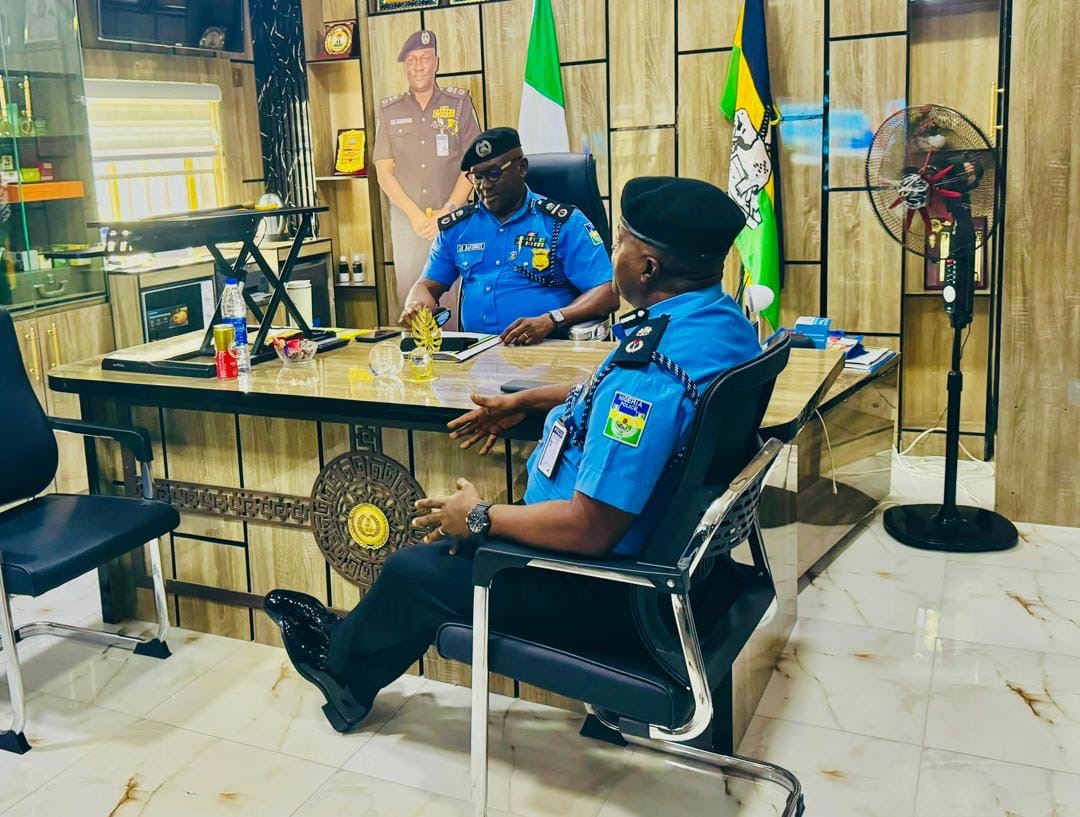
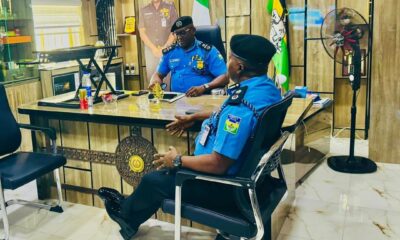
The Commissioner of Police in Enugu State, CP Fidelis Ndubuisi Ogarabe, has intensified efforts to strengthen security and inter-agency collaboration following separate meetings with the Assistant Inspector-General of Police (AIG), Zone 13, Miller Gajere Dantawaye, and the Vice Chancellor of Enugu State University of Science and Technology (ESUT), Professor Aloysius-Michaels Nnabugwu Okolie.
Ogarabe, who recently assumed duty as the 30th Commissioner of Police in Enugu State, held the meetings on Wednesday, November 18, 2026, as part of engagements aimed at strengthening policing and security cooperation in the state.
During a courtesy visit to AIG Dantawaye at his office in Ukpo, Dunukofia Local Government Area of Anambra State, the commissioner formally notified his supervising officer of his assumption of duty.
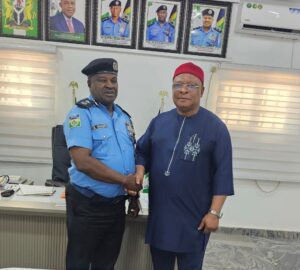
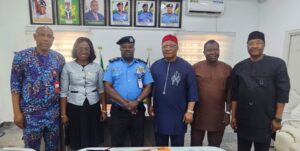
CP Ogarabe and ESUT Vice, Michaels Okolie
In response, the AIG congratulated him and wished him success in his new assignment, charging him to sustain professional, disciplined, proactive and effective community-driven policing in Enugu State.
In a related development, Ogarabe received the ESUT Vice Chancellor, Professor Okolie, alongside other principal officers of the university, at the Police Command Headquarters in GRA, Enugu.
The commissioner, an alumnus of ESUT, expressed appreciation to the university management for the visit and assured it of the command’s commitment to strengthening the existing partnership between the police and the institution.
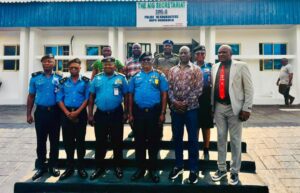
He particularly pledged enhanced security within the university and its surrounding communities, with emphasis on tackling cultism and other related criminal activities.
Earlier, Professor Okolie congratulated Ogarabe on his deployment as Commissioner of Police in Enugu State and assured him of the university’s support in advancing security and public safety.
The Vice Chancellor also called for stronger collaboration between the university and the police to address security concerns within the institution and its environs.
He further extended a formal invitation to the police commissioner to attend the university’s forthcoming 22nd Convocation Ceremony.
The engagements underscore the new police commissioner’s focus on strengthening institutional relationships and community-based security partnerships as he begins his tenure in Enugu State.
The Commissioner of Police in Enugu State, CP Fidelis Ndubuisi Ogarabe, has intensified efforts to strengthen security and inter-agency collaboration following separate meetings with the Assistant Inspector-General of Police (AIG), Zone 13, Miller Gajere Dantawaye, and the Vice Chancellor of Enugu State University of Science and Technology (ESUT), Professor Aloysius-Michaels Nnabugwu Okolie.
Ogarabe, who recently assumed duty as the 30th Commissioner of Police in Enugu State, held the meetings on Wednesday, November 18, 2026, as part of engagements aimed at strengthening policing and security cooperation in the state.
During a courtesy visit to AIG Dantawaye at his office in Ukpo, Dunukofia Local Government Area of Anambra State, the commissioner formally notified his supervising officer of his assumption of duty.
In response, the AIG congratulated him and wished him success in his new assignment, charging him to sustain professional, disciplined, proactive and effective community-driven policing in Enugu State.
In a related development, Ogarabe received the ESUT Vice Chancellor, Professor Okolie, alongside other principal officers of the university, at the Police Command Headquarters in GRA, Enugu.
The commissioner, an alumnus of ESUT, expressed appreciation to the university management for the visit and assured it of the command’s commitment to strengthening the existing partnership between the police and the institution.
He particularly pledged enhanced security within the university and its surrounding communities, with emphasis on tackling cultism and other related criminal activities.
Earlier, Professor Okolie congratulated Ogarabe on his deployment as Commissioner of Police in Enugu State and assured him of the university’s support in advancing security and public safety.
The Vice Chancellor also called for stronger collaboration between the university and the police to address security concerns within the institution and its environs.
He further extended a formal invitation to the police commissioner to attend the university’s forthcoming 22nd Convocation Ceremony.
The engagements underscore the new police commissioner’s focus on strengthening institutional relationships and community-based security partnerships as he begins his tenure in Enugu State.
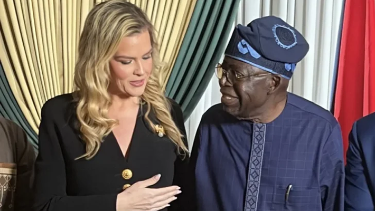
American political strategist and media personality, Diana London, has deleted posts on her X account relating to her recent engagement with President Bola Ahmed Tinubu and comments on Nigeria-United States security cooperation.
London had earlier shared photographs taken at the Presidential Villa, Abuja, showing her alongside President Tinubu and his Chief of Staff, Femi Gbajabiamila.
In another post, which has since been deleted, she described the Nigeria-U.S. security partnership as one that was “delivering results”, attributing the progress to the commitment of President Tinubu and U.S. President Donald Trump to combating terrorism, as well as Nigeria’s cooperation with Washington.
She also noted that the strengthening relationship between the two countries could create broader economic and trade opportunities, describing Nigeria as America’s “greatest ally in Africa”.
In a separate post, London said it was an honour to work with individuals representing Nigeria in support of efforts to protect religious groups and strengthen relations between the Nigerian government and the Trump administration.
However, checks on her X account on Wednesday morning, November 18, showed that the posts were no longer available.
As of the time of filing this report, London had not offered any explanation for deleting the posts. It also remained unclear whether the decision followed official advice or was made independently.
The development has attracted public attention amid growing interest in Nigeria’s security partnership with the United States and questions surrounding London’s recent engagement with senior Nigerian government officials.
However, the deletion of the posts does not, in itself, indicate any change in the security cooperation between Abuja and Washington.
-
 News2 days ago
Nigerian Pastor Dies Aboard Flight From US
-
News3 days ago
BREAKING: Kwankwaso’s Convoy Attacked by Suspected Thugs in Kano, Vehicles Damaged
-
Faith3 days ago
‘Many Wrote Us Off, But God Proved Them Wrong’ – Enenche Celebrates Dunamis @ 30
-
News1 day ago
Enugu Assembly Passes Bill Capping Rent Increase at 2%, Restricts Hikes to Four Years
-
News2 days ago
2027: Obaze Alleges Plot to Use Judiciary to Stop Obi, Kwankwaso, NDC Candidates
-
News2 days ago
Tinubu Orders Release of 78 Suspects Arrested Over Attack on His Convoy in Abuja
-
News1 day ago
Nursing Students Shut Down School, Protest Colleague’s Death
-
News2 days ago
Mbah’s Manifesto Scorecard: From Promises to Projects, Enugu’s Journey of Transformation