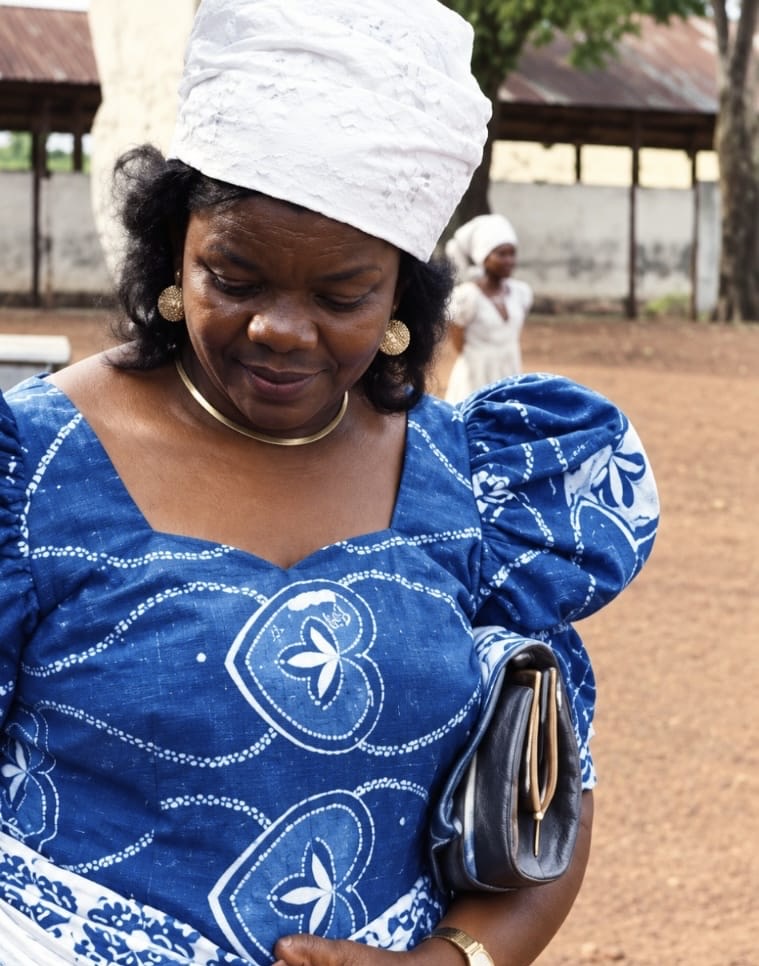
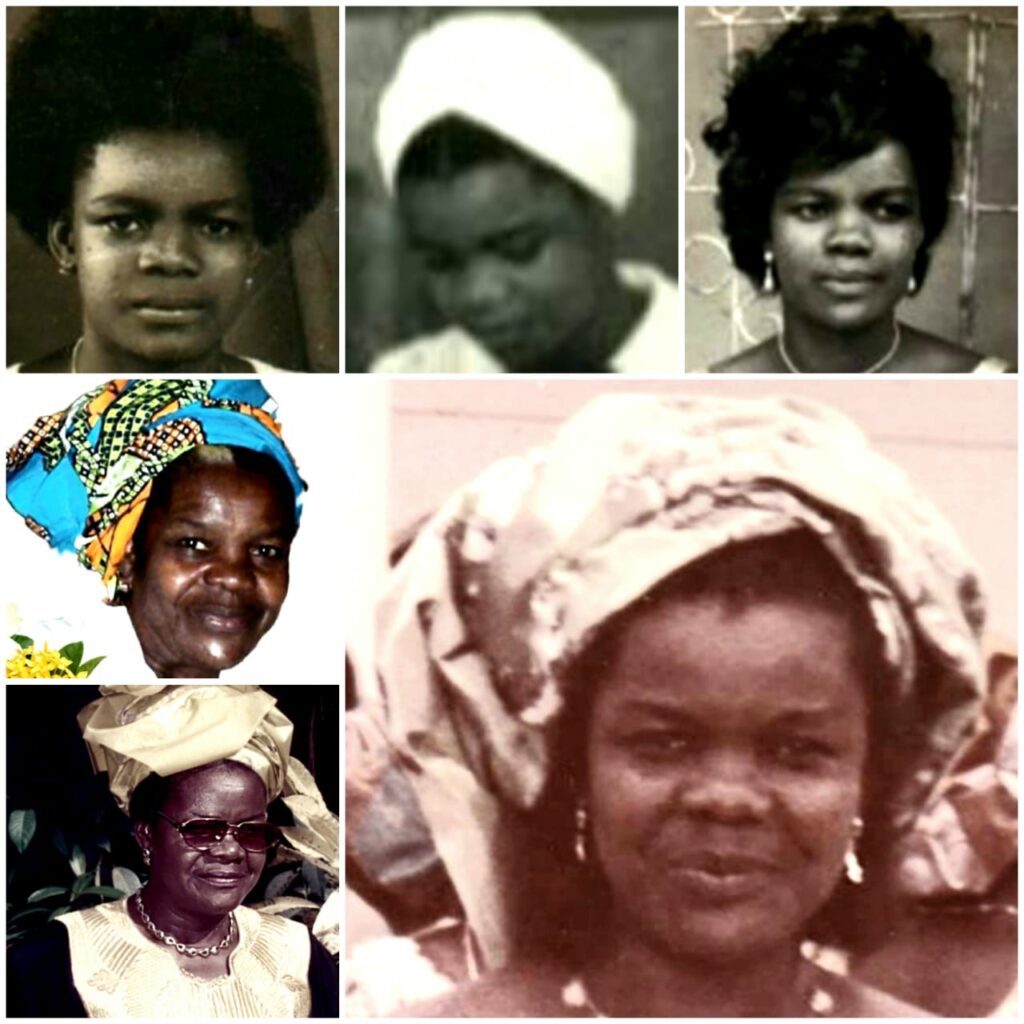
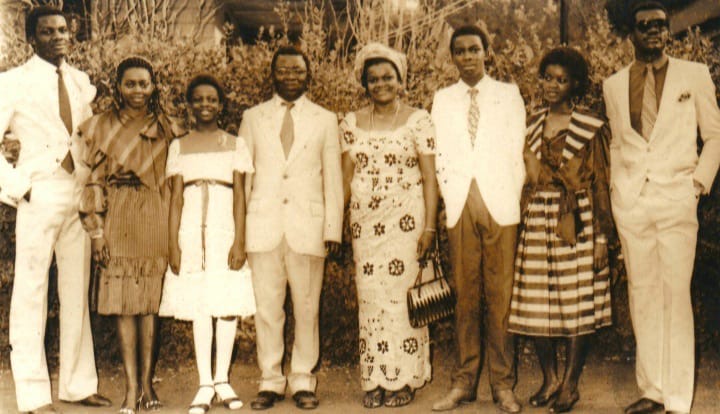
Ochechinyelu • Eziakpaka
3 December 1938 – 8 October 2006
Twenty years have passed, yet the memory remains remarkably fresh.
Twenty years after her passing, Maria Ukamaka Ifeoma Ojukwu (née Aghaji) remains deeply etched in the hearts of those who knew, loved and depended on her.
She was a woman of faith, courage, discipline, enterprise and uncommon family devotion. She was a mother, wife, sister, grandmother, homemaker and businesswoman whose life was shaped by duty and service to her family and community.

She died on Sunday, October 8, 2006, and was laid to rest in the family compound at Umudim, Nnewi.
Today, two decades later, her family remembers not merely the woman they lost, but the remarkable life she lived.
The daughter of teachers
Maria was born on December 3, 1938, the first of nine children of James and Matilda Aghaji—six girls and three boys.
Her siblings were Rose, Veronica, Emmanuel, Josephine, Bernadette, Martin, Aloysius and Chinweokwu.
Her parents were teachers and devout Catholics who raised their children in a home where dignity, integrity, morality, discipline and self-respect were regarded as non-negotiable values.
Because her father was a teacher who was frequently transferred, Maria attended schools in different places as the family moved from one posting to another. On occasions, her father was actually her teacher.
She grew up exceptionally close to her parents and was particularly attached to her mother, with whom she shared a relationship that was described as being almost that of younger sister and elder sister.
From an early age, she developed the characteristic that would define much of her life: she was an action woman.
She was deeply attached to her siblings and was prepared to sacrifice for them. That love was reciprocated by her brothers and sisters throughout her life.
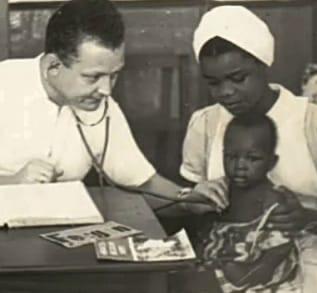
She later received nursing training at Our Lady of Lourdes Hospital, Ihiala, and subsequently undertook administrative and secretarial courses abroad.
In the early and mid-1960s, she worked at the African Continental Bank in Lagos, but as her family grew, her principal occupation became that of wife and mother, supplemented by several small business ventures.
A marriage into the Ojukwu family
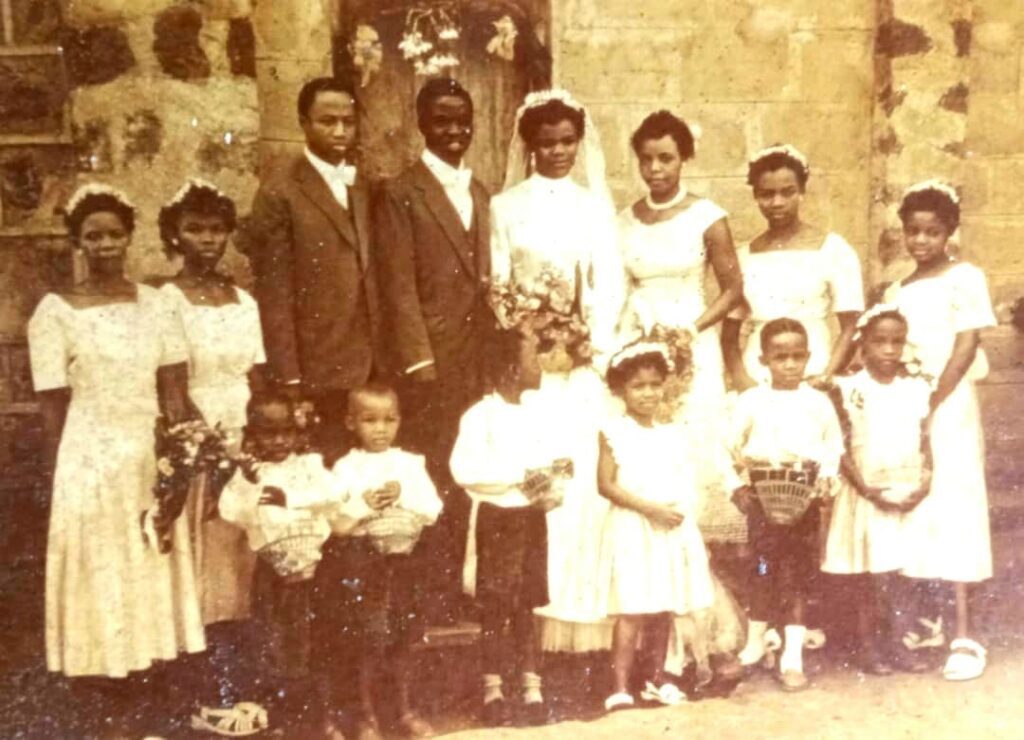
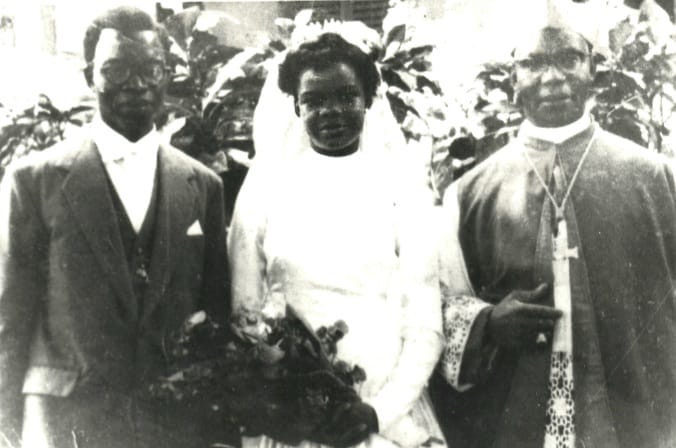
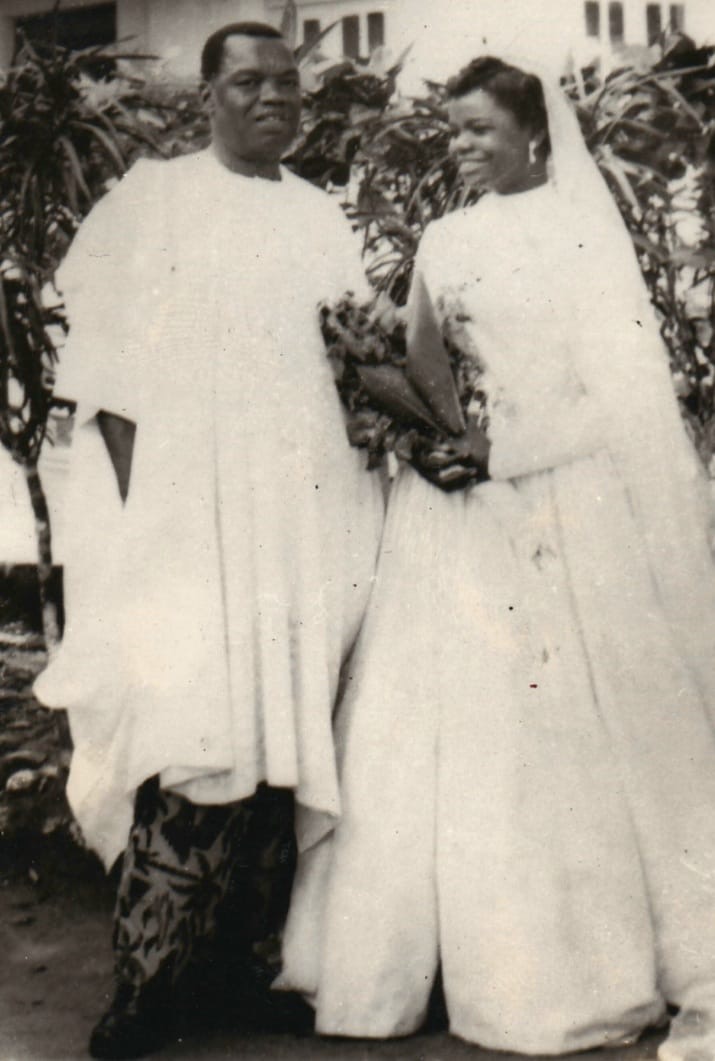
In 1957, at a young age, Maria married Dr Joseph Okwuabudike Ojukwu, a medical doctor and eldest son of Sir Louis Philip Odumegwu Ojukwu and Ogbenyeanu Janet Malize, daughter of Chief Edward, the Warrant Chief of Ukpor.
The marriage took place at St Michael’s Catholic Church, Umudim, Nnewi, with Bishop John Cross Anyogu officiating.
For the young Maria, the marriage represented a transition from the modest, disciplined world of a teachers’ family into one of Nigeria’s prominent and wealthy families.
It was not always an easy transition.
Yet she met the challenges of her new environment with determination.
She became fiercely protective of her husband and children and was never afraid to stand her ground.
Her children remember a mother who was determined that family relationships should be maintained, even where differences existed.
During visits to the East in the 1960s, she would insist that the young family visit her husband’s relatives—including those who were not particularly favourably disposed towards them.
Her father-in-law, Sir Odumegwu Ojukwu, developed a particularly strong affection for her.
He admired what he described as her initiative, loyalty and character, and considered her free of the traits he despised—avarice, dishonesty, jealousy, ingratitude and waywardness.
He supported her, encouraged her and even acquired shares in her name.
When she gained admission to further her studies while the family was abroad, Sir Odumegwu wrote to her, counselling that with three children under the age of five, the benefits of further studies or employment could be outweighed by the consequences of being away from the children.
His death in 1966 was a devastating blow to the family.
Motherhood as a calling
Maria was first and foremost a mother.
She and Joseph were blessed with children, and she devoted herself to their upbringing with remarkable energy.
She was the family’s disciplinarian.
Dr Joseph, occupied largely with his medical practice and patients, often played the role of the final court of appeal.
When he believed Maria had made her point, he would intervene with the familiar:
“Maria, ozugozie.”
Maria, it is enough.
But discipline never diminished affection.
Her children understood that punishment was usually connected to responsibility and consequences.
She supervised their schoolwork, arranged lessons and constantly checked their progress.
She encouraged them to work hard and repeatedly reminded them never to disgrace themselves or the family.
The children were also raised to be practical and responsible.
They washed and ironed their clothes and those of their parents, washed dishes and performed household chores whether or not there was domestic help.
Before they were allowed to drive, they were expected to learn how to wash a car, change a tyre and check the oil, engine and battery.
The boys spent time with mechanics and became familiar with Coal Camp and the business of sourcing spare parts.
For Maria, raising children was not simply about providing food and education. It was about preparing them for life.
The woman who could cook a feast in thirty minutes
Those who knew Maria remember her as an exceptional cook.
She could prepare a meal with remarkable speed and without drama.
She would sometimes joke:
“Good soup, na money make am.”
Yet the family remembers that the quality of her cooking often exceeded what the modest expenditure would suggest.
The children’s upbringing around food was equally disciplined.
They were expected to finish what was served to them, whether they liked it or not.
On days when meat was available, two small pieces were regarded as the normal allocation.
Anyone demanding more might hear the teasing question:
“Igolu ogo bee agu?”
Are you in-laws with the tiger or lion family?
Before the Nigerian Civil War, the family’s menu could include snails, crab, lobster, duck, lamb, pork, nchi, okporoko, fresh fish and ukwa, while garri, pounded yam and later semolina served as staples.
Turkey and goat were largely reserved for Christmas and Easter.
At other times, it could simply be beans and sardine.
The lesson was as important as the food: appreciate what you have.
War, hardship and courage
The Civil War tested Maria in ways few people could imagine.
The family moved from Lagos to the East in late 1966, stayed briefly in Onitsha and moved to Enugu in early 1967.
When Enugu fell to Federal forces later that year, the family moved to Nnewi and subsequently to Umuahia.
Maria was only 29, pregnant and caring for four children.
Yet she drove a small two-door Vauxhall Viva with her children to Umuahia.
In 1968, during the height of the war, her son Nnanna was born at Queen Elizabeth Hospital, Umuahia.
The war also brought profound personal losses to her own family.
Her 20-year-old younger brother, Emmanuel, went to the war front and never returned.
Another brother, Aloysius, who was only 15, lost an eye at the front.
Martin, the remaining middle brother, was fortunate to return.
For Maria, the war was not simply a historical event. It was hunger, fear, death, separation and uncertainty experienced at close quarters.
And yet, even amid scarcity, she remained generous.
She shared scarce salt and relief materials with people who needed them and visited and donated to refugee camps, including the camp at Akokwa, as well as the prison at Ekwulobia.
She gave even when she had little.
A bond with Njideka Ojukwu
During the war, Maria developed a particularly close relationship with Njideka Ojukwu, the wife of her husband’s brother, Chukwuemeka Odumegwu Ojukwu.
The two women were married to brothers from the same prominent family and found themselves living through extraordinary circumstances.
While one brother was deeply involved in the war effort and affairs of State and the other was occupied with medicine and the constant stream of wounded patients, the two women provided each other with companionship and emotional support.
They attended some functions together and helped each other navigate the psychological burden of the war.
On one occasion in Umuahia, Njideka came to pick Maria up to attend the funeral of the Biafran Air Force Chief, Colonel Chude-Sokei, whose death had been particularly painful.
The family also remembers that contrary to some assumptions, Maria, her husband and children visited the State House only three times throughout the war—once in Enugu and twice in Umuahia.
One of the children’s most vivid memories was the day their uncle, the Biafran Commander-in-Chief, visited their father at Umudike, Umuahia.
He arrived alone, driving a convertible sports Mercedes-Benz, dressed casually in slacks and a short-sleeved shirt.
There was no obvious motorcade.
It was only after the children welcomed him with their excited:
“Uncle Emeka has come! Uncle, welcome!”
that they noticed that the farm behind the building was filled with security and military personnel.
It was one of those childhood memories that remained vivid decades later.
Rebuilding after the war
The end of the war in 1970 brought another chapter.
The family lived in a one-and-a-half-bedroom flat in GRA, Enugu.
Her husband, employed at the Specialist Hospital, did not believe in private medical practice.
Maria, however, believed in enterprise.
She needed to supplement the family income.
She therefore acquired a second-hand Morris Minor and put it into taxi service.
It was not an easy business.
Drivers sometimes kept part of the daily proceeds for themselves, while maintenance and mechanical problems consumed time and money.
She eventually sold the Morris Minor and bought a second-hand Volkswagen Danfo.
Later came a Toyota Corolla taxi and two Peugeot 504 station wagons for long-distance transport.
At one point, a 12-year-old son was occasionally sent to work as a conductor on the Danfo so that he could see for himself what the day’s actual returns were.
Maria also secured distributorships for Nigercem cement and Golden Guinea Beer.
These ventures helped sustain the family during a difficult post-war period.
Her entrepreneurial spirit was unmistakable.
She was not content simply to complain about financial difficulties. She looked for ways to solve them.
A woman of faith
Underlying Maria’s life was an unwavering Catholic faith.
Morning Mass and Benediction were part of her routine.
She was proud of her association with the St Anthony’s Society, popularly known as Anto Padua.
She was also an active foundation member of Mater Medic and Mediatrix and belonged to several Umudim and Nnewi women’s associations.
Her faith was not merely ceremonial.
It was reflected in the way she raised her children, treated people and responded to hardship.
Her titles, Ochechinyelu and Eziakpaka, reflected the respect she earned within her community.
The “action woman”
Maria’s family remembers her as a woman who acted.
She was not easily intimidated.
On one occasion, she was dispossessed of the family Mercedes-Benz 200 by armed hoodlums near the expressway in Enugu.
Rather than simply surrendering the vehicle, she immediately flagged down a taxi, paid the driver and instructed him to pursue the fleeing criminals.
Rattled by the pursuit, the hoodlums eventually abandoned the Mercedes by the roadside and fled into the bush.
It was an incident that perfectly captured the character of Maria Ojukwu:
fearless, decisive and resourceful.
Grandmotherhood brought another joy
If motherhood occupied a central place in her life, grandmotherhood brought her another dimension of happiness.
She absolutely adored her grandchildren.
The woman who had spent decades disciplining her own children became a deeply affectionate grandmother.
Her family grew to include grandchildren, great-grandchildren and an extended network of relatives, friends and well-wishers.
The values she had received from James and Matilda Aghaji were passed to another generation.
Twenty years later
Maria Ukamaka Ifeoma Ojukwu died on October 8, 2006.
She was 67.
Twenty years have passed.
The world has changed.
The children she raised have grown into accomplished adults. Her grandchildren have grown. Great-grandchildren have arrived.
But certain things have not changed.
The lessons remain.
The memories remain.
The laughter remains.
The discipline remains.
The stories remain.
And above all, the love remains.
Her children remember a mother who could be firm but loving; disciplined but generous; deeply traditional yet enterprising; fiercely protective yet devoted to family reconciliation.
They remember a woman who could cook a feast in thirty minutes, run a taxi business, sell cement and beer, supervise schoolwork, attend Mass, raise children, care for relatives and still find time to help someone who had less than she did.
They remember the woman who insisted that her children visit their relatives.
They remember the mother who would say, in effect, do not disgrace yourself or your family.
They remember her courage during the Civil War.
They remember her generosity when food and relief materials were scarce.
They remember her love for her husband.
They remember her devotion to her grandchildren.
And they remember the woman who lived by action rather than words.
A legacy that refuses to die
A person’s life is ultimately measured not only by the years spent on earth but by what remains after those years have passed.
Maria’s legacy lives in her children:
Barrister Margaret-Mary Ogonna Nwagbo;
Dr Patrick Ike Ojukwu;
Dr John Chukwudi Ojukwu;
Dr Mary-Ann Ukonwa Ijeomah;
Engr. Nnanna Louis Philip Ojukwu; and
Miriam-Mary Chizoba Ojukwu.
It lives in her grandchildren and great-grandchildren.
It lives in her sisters, brother, nieces, nephews, cousins, in-laws, friends and the many people whose lives she touched.
It lives in the values she taught.
It lives in the family she built.
And it lives in the stories that continue to be told about her.
Twenty years after her departure, Maria Ukamaka Ifeoma Ojukwu remains loved, remembered and irreplaceable.
Her family does not remember her merely because she died.
They remember her because she lived—and lived meaningfully.
Forever missed.
Forever loved.
Forever irreplaceable.
Maria Ukamaka Ifeoma Ojukwu (née Aghaji)
“Ochechinyelu” • “Eziakpaka”
3 December 1938 – 8 October 2006
May her gentle soul continue to rest in perfect peace. Amen.