News
Ex-President Akufo-Addo, others Pay Tributes to Mathias Anohu in Abuja

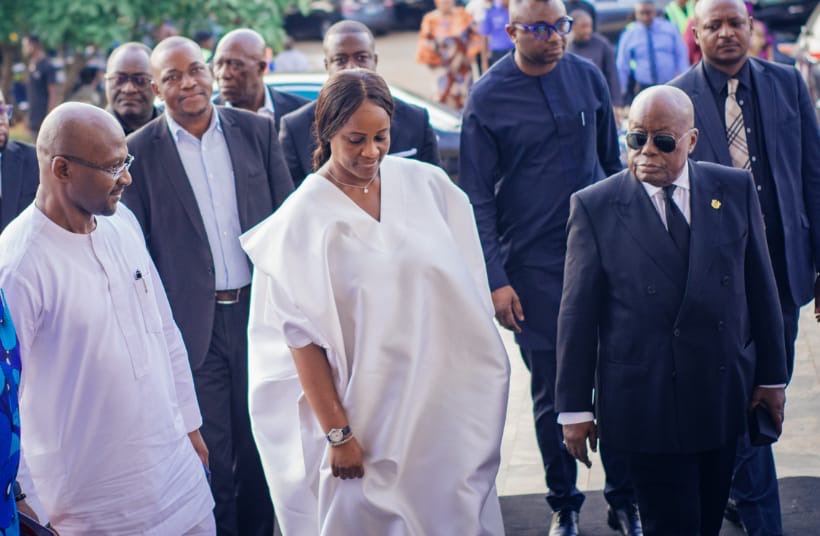
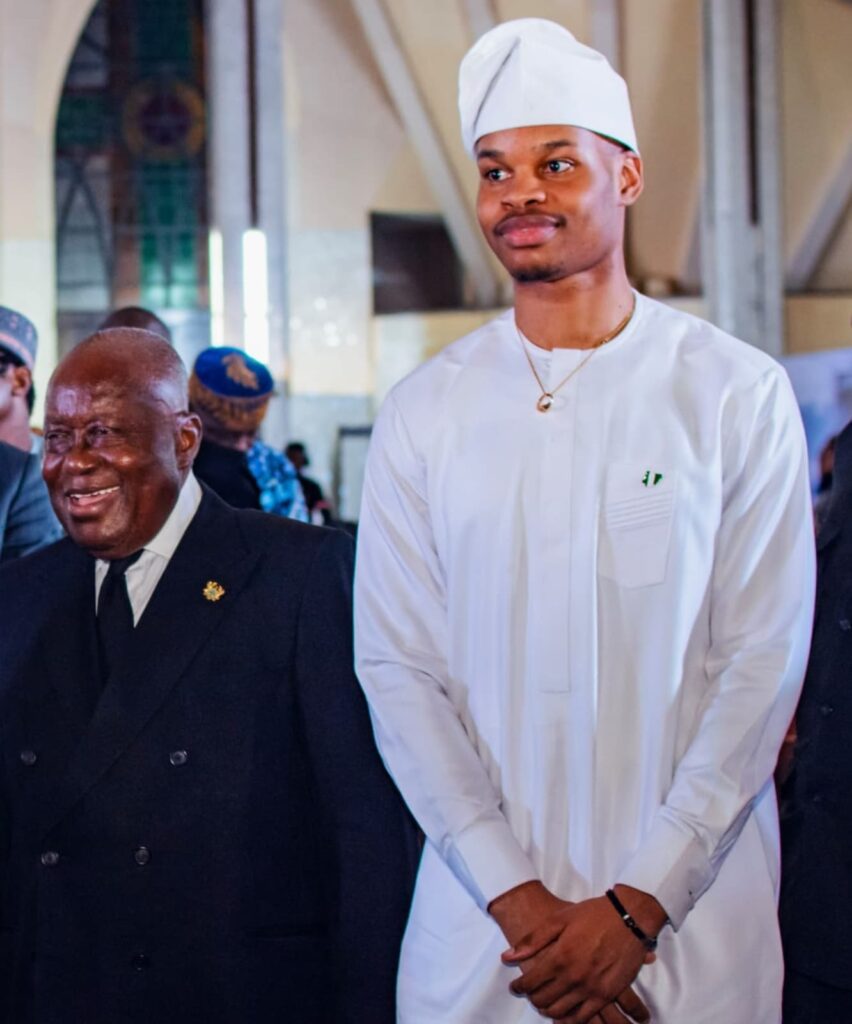
Former President of Ghana, Nana Akufo-Addo, and other well-meaning Nigerians and members of the international community, have called on African leaders to emulate the virtues of the late elder statesman and former Permanent Secretary in Anambra State Civil Service, Chief Mathias Anohu, describing him as a man whose life embodied selfless service, unwavering integrity, peace, and discipline.
They spoke during a solemn service of songs at the expansive National Ecumenical Centre, Abuja, where family members, friends, and dignitaries from around the world gathered to honour the patriarch of the Anohu family of Okija, Anambra State, urging his children to continue in their father’s footsteps.

The service was one of the series of events preceding the final funeral rites and interment of the remains of Chief Anohu at Okija on May 1.
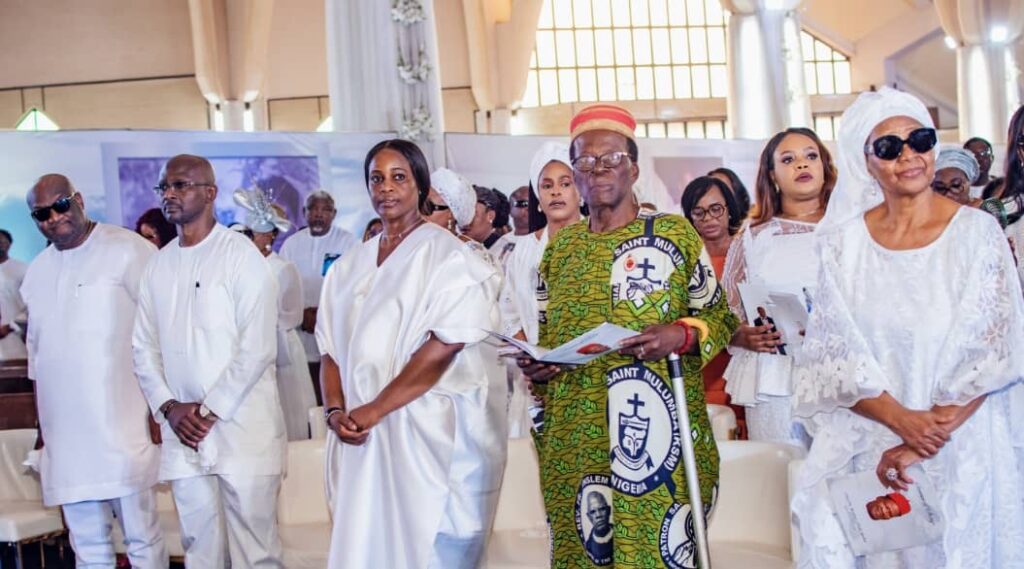
Extolling Anohu’s many virtues, Akufo-Addo said, “He lived a life of service and integrity; these are matters of relevance for all of us, leaders and the led. For the children, I enjoin them to continue on the path of their father, and uphold the virtues and principles that his life embodied.”

Also, renowned investment banker and economist, Atedo Peterside, as well as Chairperson of the Royal African Society, UK, and former Treasurer and Vice of President of the World Bank, Arunma Oteh, noted that the ceremony was a moving testimony to Chief Anohu’s exemplary life, saying he was a man with a clean spirit.
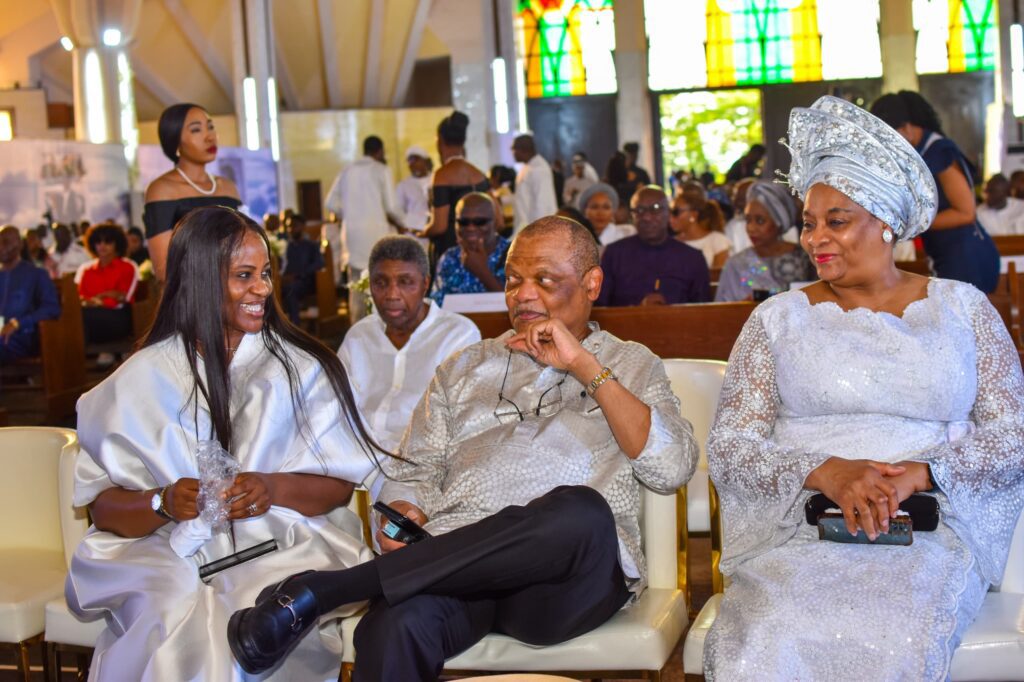
Atedo said, “You listen to the biography, listen to the tributes that came, you get the feel for the man; you get the feel of somebody who was disciplined, somebody who had integrity, a good family man; somebody who had impressive core values.
“I am happy that today, we are able to celebrate somebody like this with this large crowd because people think anyone can be glorified this way, but that is not true. In some events like this, even when they talk about the person, you will know something is wrong.
“Here, I came across a clean spirit, somebody you would want to emulate, somebody whose core values you want to pass onto your children and grandchildren.”
Speaking, Oteh said that Chief Anohu “personified the kind of person that we should all seek to be” and earnestly wished that someday soon, Nigeria would be able to unleash her potential as a nation.
In their tributes, the deceased’s first son, Engr. Victor Anohu as well as his second son and former Member of the House of Representatives, Hon. Emeka Anohu, described Chief Anohu as a humble and industrious man, who also taught his children to build quality relationships across creeds, regions, and tribes.
“Our father was a simple man, a man filled with integrity, humility, and the fear of God. He was a humble man and we pray to God to help us to keep exhibiting such characters in our lives.
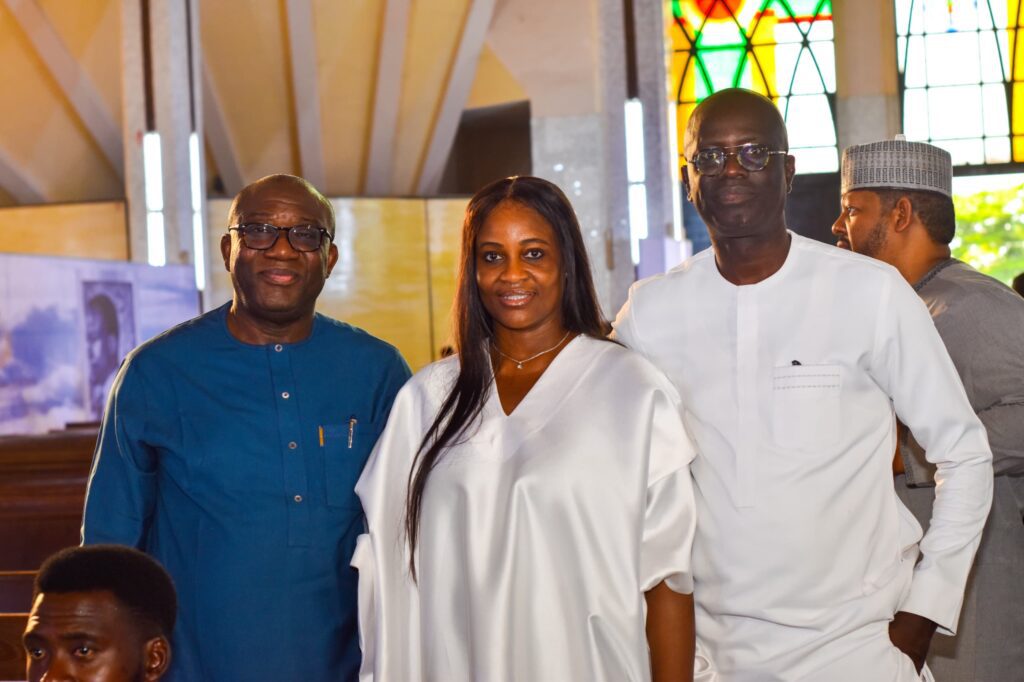
“The presence of international and national personalities here speaks to friendship across the Niger, across national boundaries and religion, which our father taught us,” Hon. Anohu stated.
According to the biography rendered by one of his daughters, Chioma, the late Chief Anohu was also a devout Catholic and distinguished community leader, whose life embodied his title, Ife Okija, meaning the light of Okija.
He is survived by his wife, Dr. Virgy Anohu; his sons, Engr. Victor Anohu and Hon. Emeka Anohu; his daughters Chinelo, Chinwe, Chinenye, and Chioma, as well as his brothers, sisters, and 16 grandchildren.
The event was attended by many dignitaries across all walks of life, including Africa’s foremost entrepreneur, Chair and CEO of PLOT Group of Companies, Ghana, Patricia Poku Diabi; former Governor of Ekiti State, Dr. Kayode Fayemi; Chairman, Folawiyo Group, Tunde Folawiyo; Managing Director, Access Bank PLC, Roosevelt Ogbonna, and the Catholic Bishop of Minna Diocese, Most Rev. Martin Uzoukwu.








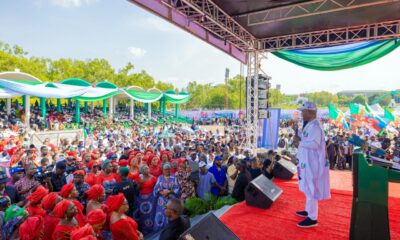

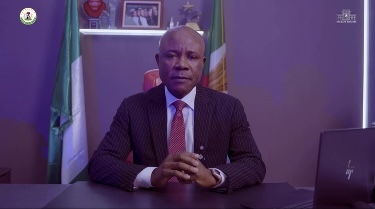
Enugu State Governor, Dr Peter Mbah, has called for a thorough and impartial police investigation into the recent violence surrounding a political gathering in the state, assuring that anyone found responsible will face the law regardless of political affiliation.
Mbah, in an address to the people of Enugu State, expressed concern over reports of violence, particularly a shooting incident that left a citizen injured.
The governor said his immediate concern was the welfare of those injured, residents who experienced fear during the incident, and families affected by the violence.
He assured the victims and affected residents that their safety and well-being remained a priority for his administration.
“I know how much our people value the peace and security we have worked so hard to establish in Enugu. Incidents such as these cause anxiety and deserve our full attention,” the governor said.
Mbah stressed that every citizen, irrespective of political affiliation, must be able to exercise their political rights without fear, intimidation or violence.
He reiterated the state government’s commitment to protecting lives, upholding the law and ensuring that justice was served without favour.
The governor also stated that, in view of the preliminary findings regarding the incident, he expected the police to conduct a comprehensive and impartial investigation to establish the circumstances surrounding the violence and identify those responsible.
According to him, anyone found culpable would be held accountable through the appropriate legal process, irrespective of their political connections.
“The Enugu State Government has made its position clear regarding allegations of involvement in this violence,” Mbah stated, reaffirming his administration’s responsibility to maintain peace and security across the state.
The incident has raised concerns over political tolerance and the safety of citizens participating in political activities in Enugu State.
The governor’s call for an impartial investigation underscores the need for the relevant security agencies to establish the facts surrounding the shooting and ensure that those responsible are brought to justice.
He concluded his address by thanking the people of Enugu State and praying for God’s continued blessings upon the state.
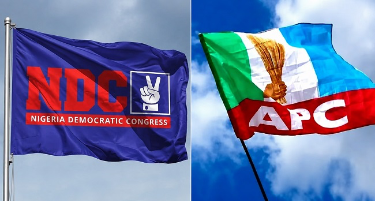
Enugu APC urges NDC to apologise for observing a minute silence
All Progressives Congress (APC) has picked holes in the reaction of the Nigeria Democratic Congress (NDC) to the position of the Enugu State Government on the airport and party secretariat incidents involving the NDC at the weekend.
The party said that “persons and institutions that lay claim to integrity should be able to admit their mistakes, confess their transgressions, and apologise to the people.”
The Enugu NDC had, at a press conference addressed by its State Party Chairman, Emmanuel Chukwujekwu Nebo, in Enugu faulted some of the positions of the Enugu State Government on the weekend incident as were marshalled by the Secretary to the Enugu State Government (SSG), Prof. Chidiebere Onyia, on Sunday.
Principally, the NDC claimed that it had only planned an airport reception for its governorship candidate, Chinyeaka Ohaa, not a ‘Grand Statewide Campaign Flag-off’ at the airport as stated by the government.
The party added that it notified various law enforcement agencies of its plans and made payments to the Federal Airports Authority of Nigeria (FAAN).
On the alleged shooting at NDC’s state secretariat, the party said that the NDC was “still verifying the final medical status of all injured persons.”
However, responding to NDC, the state Publicity Secretary of Enugu State chapter of the APC, Chief Uche Obute, insisted the NDC must tender unreserved apologies to the people of Enugu and Nigerians in general “for lying to them for political gains.”
“The question is: since the NDC was still verifying the final medical status of person or persons injured in their party fracas, how come they declared and observed a minute’s silence to mourn the living?
“The answer is simple: it was true to the factionalised Enugu NDC’s pattern to orchestrate violence among themselves and attribute it to Enugu APC to extract cheap political capital.
“It is also a validation of the commonly held view among the people that the Enugu State NDC and their governorship candidate, Chinyeaka Ohaa, would stop at nothing in their quest for power,” Obute said.
The party’s spokesman equally faulted NDC’s claim that it only planned to hold an airport reception, not a mega rally.
Supporting the party’s position with a screenshot of a Facebook post by NDC’s governorship candidate, Chinyeaka Ohaa, Obute said, “Promotional materials and posts by Ohaa clearly read, ‘Grand Statewide Campaign Flag-off 2026. Date: Saturday, 10th October 2026; Venue: Akanu Ibiam International Airport, Enugu; Time: 9:00am,’” he added.
The party commended the Governor Peter Mbah Administration for upholding the freedom and democratic rights of the good people of Enugu State, irrespective of political affiliation.
“Rather than stoking political tension to undermine the security and peace built by the Mbah Administration, we advise the Enugu opposition parties to present their manifestoes and campaign on them,” he stated.
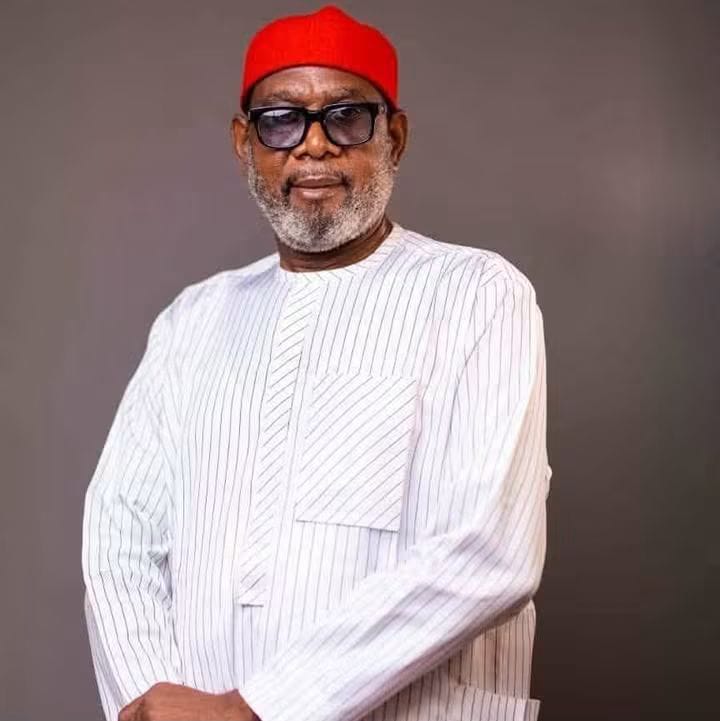
Hon. Chief Barrister Lucky Chukwu, Senior Special Assistant on Public Affairs to Enugu State Governor Peter Mbah, has died
His death was announced in October 2026 by the office of his younger brother, Senator Kelvin Chukwu, who represents Enugu East Senatorial District.
Lucky Chukwu was an elder brother of the late Labour Party senatorial candidate, Oyibo Chukwu, and Senator Kelvin Chukwu, a former member of the Enugu State House of Assembly.
He was appointed Senior Special Assistant on Public Affairs to Governor Mbah in August 2026, having previously been involved in political activities in the state.
Following his elder brother’s death, Senator Kelvin Chukwu suspended his political activities and engagements for one week to mourn the loss.
The senator’s office announced the temporary suspension in a statement issued on October 11, 2026.
The death is another loss for the Chukwu family, which had earlier lost Oyibo Chukwu, who was the Labour Party’s candidate for the Enugu East Senatorial District in the 2023 general election before he was assassinated during the campaign.
Following Oyibo Chukwu’s death, Kelvin Chukwu emerged as the Labour Party’s replacement candidate and went on to win the senatorial election.
-
 News2 days ago
Why UK varsities are cancelling Nigerians’ admission — Report
-
News2 days ago
2027: Enugu Accuses Opposition of Plotting to Import Armed Thugs, Bandits
-
News3 days ago
US asks American business executives to be wary of insecurity, corruption, detention risk in Nigeria
-
News2 days ago
Alleged Magistrate Court Order To Arrest Araraume, Okorocha Is Fake, Non-Existent — Imo First Group
-
News2 days ago
2027: Over 30,000 Enugu Teachers Endorse Mbah, Tinubu, List Welfare, Increased Education Funding
-
News2 days ago
Benue APC Delegation Involved in Ghastly Accident En Route to Rally
-
News2 days ago
Why men with braids, tattoos were banned from mosque, Ogun Chief Imam clarifies
-
News2 days ago
Man stabs wife in Anambra community, kills himself with poison