News
Kaduna Gov sacks Internal Security Commissioner Samuel Aruwan

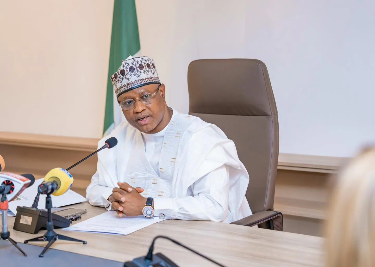
Governor Uba Sani of Kaduna State, in a major cabinet reshuffle, has sacked the pioneer Commissioner for Internal Security, Samuel Aruwan.
This was contained in a statement by the Chief Press Secretary to the governor, Ibrahim Musa, on Saturday in Kaduna.

The immediate past governor of the state, Nasir El-Rufai, appointed Aruwan in 2019 as the first Commissioner for Internal Security when the ministry was created.
Before his deployment to the security ministry, Aruwan was the Senior Special Assistant to the governor on media from 2015 to 2019.
Earlier in October, the Code of Conduct Tribunal, CCT, asked the state government to suspend Aruwan and three others for alleged breach of trust.

According to PR Nigeria, on November 8, Mr. Aruwan’s trial involved six charges centred on alleged false asset declaration involving omission and refusal to declare his accounts with certain Nigerian banks prior to his deployment to the security ministry.
In his place was appointed James Atung Kanyip as the new Commissioner for Internal Security and Home Affairs.
Other commissioners appointed by the governor are Ibrahim Mohammed as the new Commissioner for Finance; Ibrahim Tanko Mohammed as Commissioner for Finance; Barde Yunana Markus as Commissioner for Humanitarian Affairs; Farida Abubakar Ahmed as Executive Director (Radio), Kaduna State Media Corporation (KSMC); and Vitus Azuka Ewuzie as Senior Special Assistant, Legal Matters.
Others are Francis Damina as Senior Special Assistant, Research and Documentation; Victor Mathew Bobai as Senior Special Assistant, Public Affairs; Abdulmutallib Isah as Senior Special Assistant, Special Duties; and Abdulhaleem Ishaq Ringim as Special Assistant, Economic Matters.









News
2027: Over 30,000 Enugu Teachers Endorse Mbah, Tinubu, List Welfare, Increased Education Funding
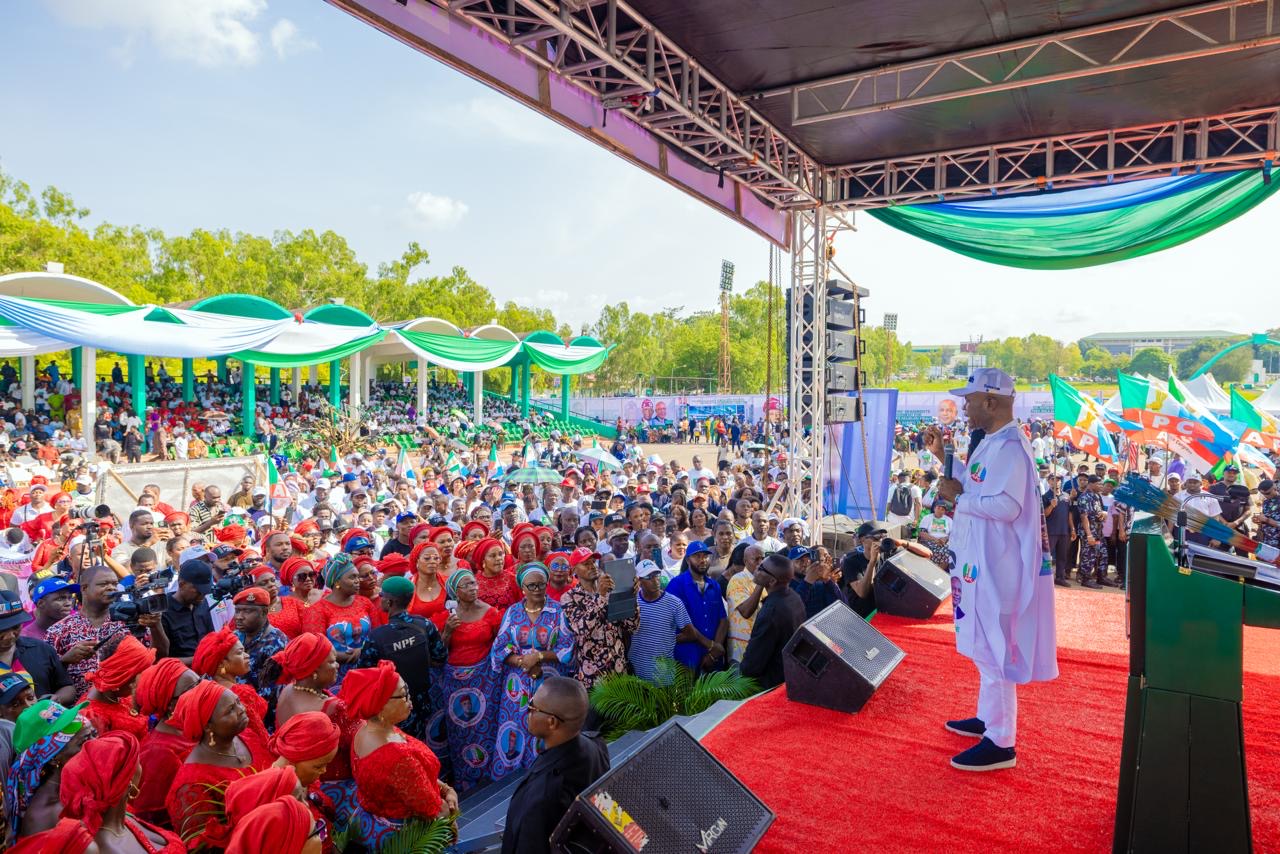
Teachers in both public and private schools in Enugu State have resoundingly endorsed the Governor of the state, Dr. Peter Mbah, for a second term, citing improved teachers’ welfare, increased education funding, promotions and other interventions.
The teachers also endorsed President Bola Ahmed Tinubu, whose economic reforms, Mbah said, had made more resources available to states to embark on massive projects such as the construction of over 267 Smart Green Schools across all the 260 political wards of Enugu State.
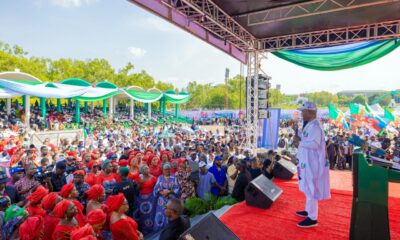
The teachers made their position known through over 12,000 of their members, who marched through parts of Enugu metropolis before holding an endorsement rally at Okpara Square, Enugu, on Saturday under the auspices of Teachers for Grassroots Movement (TGM).
In his address, the Chairman of the Enugu State chapter of the Nigeria Union of Teachers (NUT), Comrade Theophilus Odo, described Mbah as a Godsend, reeling out the concrete steps taken by the Governor to address the challenges that had bedevilled the education sector in the state before now.
“On behalf of the NUT, I want to say that we are happy today because God has given us a caring governor, Peter Mbah.
“He was instrumental to the domestication of the harmonised retirement benefits for the teachers even before he became governor.
“The building of over 260 Smart Green Schools is a very positive change. Our teachers and children can now compete favourably with their peers in other places.
“He has started recruiting thousands of teachers, and he is also building smart teachers by ensuring that they attend symposiums and other training programmes to gain more knowledge.
“There are no outstanding promotions, and our salaries are coming at the appropriate time.
“So, we, the teachers, are endorsing our governor for a second term in office. The votes of our teachers are only for Governor Mbah,” Odo stated.
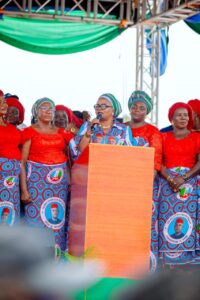
On his part, the Chairman of the National Association of Proprietors of Private Schools (NAPPS) in Enugu State, Nelson Agu, said private school teachers were joining such a rally in the state for the first time ever to encourage what he described as Mbah’s revolution in the education sector.
He noted that the introduction of Smart Green Schools had challenged private schools in the state to improve.
“When you came and started the idea of over 260 Smart Green Schools, we thought we were out of service. But we went and upgraded our schools to meet the required standards.
“Importantly, the idea of allocating 33 per cent of the budget to the education sector for three consecutive years is something to laud your administration for,” Agu told Mbah.
The Chairman of the Trade Union Congress (TUC) in the state, Simeon Akaeme, said the Mbah administration had restored the dignity of teachers and made life better through huge investments in infrastructure and social services.
The Director-General of the Teachers for Grassroots Movement, Dr. Nwakaego Aja, described education as a springboard to liberation, self-reliance and economic development amid the systemic collapse experienced by the nation.
Aja assured him of the total support of the over 30,000 teachers in the state.
“Through experiential learning and innovation, you brought answers to the quest by our nationalists, elevating education to a catalyst for economic development,” she asserted.
“We, the teachers, are not ingrates. We see what you are doing. You promised disruptive innovation, and you have delivered disruptive innovation. That is why we are here.
“We promise you this: we will take your good news to the communities, to the staff rooms, to every market, to every polling unit, and we will deliver. Our vote is for the All Progressives Congress (APC) from bottom to top,” she stressed.
The Commissioner for Education and patron of TGM, Prof. Ndubueze Mbah, said the endorsement by the teachers in their thousands was a tip of the iceberg of the support coming his way and that of the President ahead of the 2027 general election.
He added, “On behalf of every teacher gathered here today, I have one message, and that is to thank you for believing and investing in the vision that it is through education that Enugu State will attain greater heights. You have committed so many resources to giving every Enugu child a future.”
In his remarks, Governor Mbah said the endorsement meant so much to him beyond the 2027 polls, as the future his administration wanted to build for the state depended on education and the teachers.
“Today’s endorsement carries a particular significance, and that is because everything we do, all the promises we have made, all the projections we have made — growing Enugu’s economy, becoming one of the top three states in terms of GDP, making Enugu State the number one state in terms of investment, business, living and tourism — are in the hands of our teachers.
“That is why it appears as if we are insane about education when you consider what we are doing in the sector —building over 7,000 classrooms. And we are not talking about the details because we do not talk about 464 furniture items, we do not talk about 25,000 desktop computers, we do not talk about over 5,000 tablets or the free feeding and uniforms, among others.
“For us, it is about transformation —transforming an education system. And that whole transformation, whether we fail or succeed, would lie largely in your hands.
“That is why, when I say that I see you and I value you, it comes from the depths of my heart because I understand what you go through to inculcate this knowledge into our children so that we can become that great state. So, we love you and appreciate you dearly,” he emphasised.
The wife of the Governor, Mrs. Nkechinyere Mbah, who was represented by the Commissioner for Children, Gender Affairs and Social Development, Mrs. Ngozi Enih, said the endorsement was a great reward for a government that had made education the cornerstone of its development agenda.
The event attracted senior government officials, political and community leaders, among others.
News
Alleged Magistrate Court Order To Arrest Araraume, Okorocha Is Fake, Non-Existent — Imo First Group
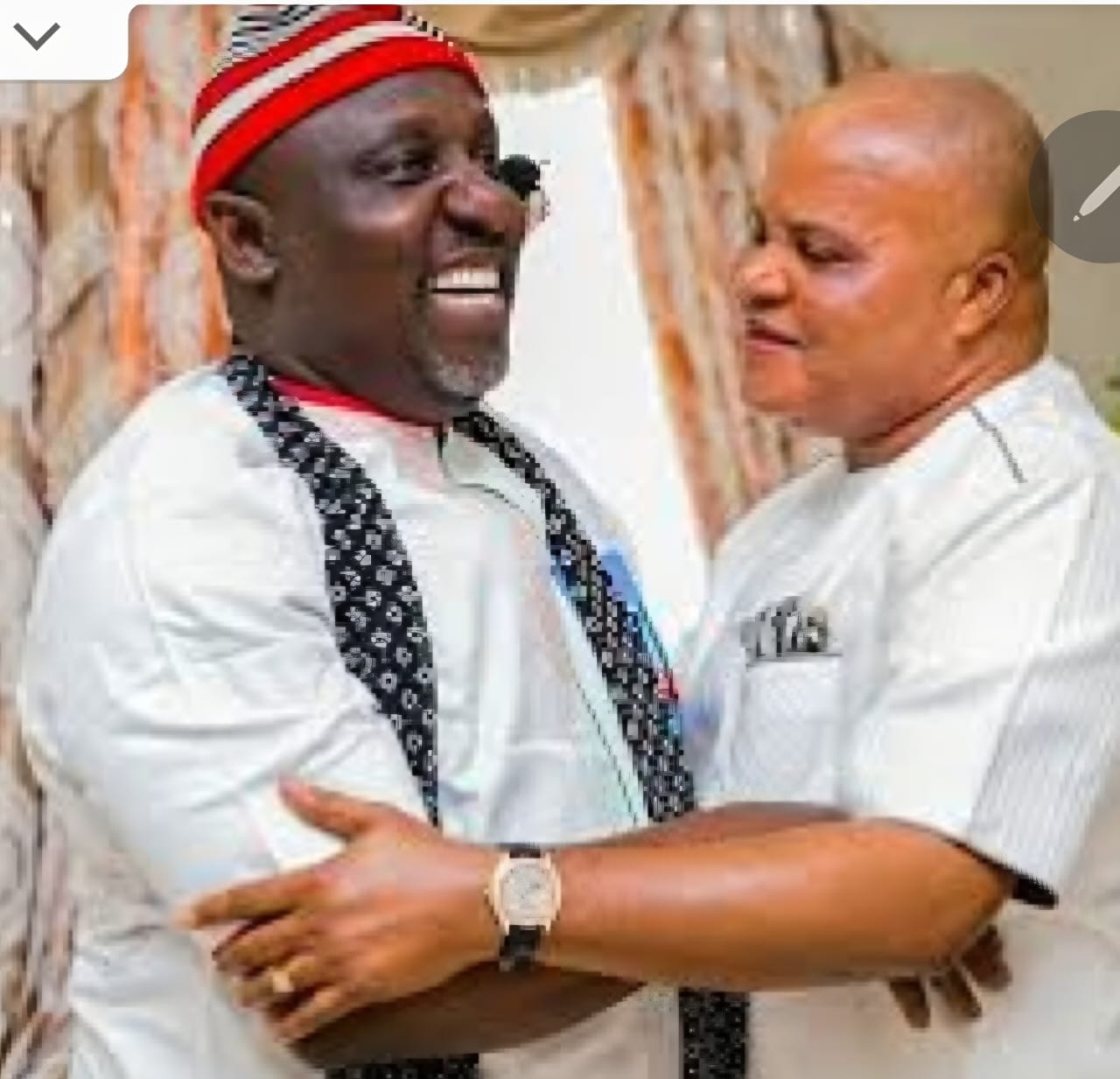
A group, Imo First Group, has described as total falsehood reports circulating online that a Magistrate Court in Abuja has issued an order to arrest Senators Ifeanyi Araraume and Rochas Okorocha.
The group said no such order was ever made, describing it as a hoax fabricated to blackmail two reputable sons of Imo State who have won elections clean and square.
“Purported Magistrate Court Order to arrest Senators Araraume and Rochas Okorocha is a hoax and never existed,” the group said in a statement.
It alleged that purveyors of the falsehood, in what it called their usual gutter politics, attempted to procure an ex parte order from a magistrate but met a brick wall.
“As usual, Imo politics, taken to the gutters, reared its head in a different dimension but was averted by a vigilant magistrate. The purveyors and harbinger of killing anyone who dares to speak the truth came in their guy man way to trick the magistrate via ex parte order but met a brick wall. The magistrate bluntly refused to grant their ex parte (motion) and threatened to arrest them, but yet they carried their falsehood about,” the statement said.
Imo First Group challenged those behind the report to produce the court order or warrant of arrest, insisting that none exists.
“We challenge anyone in this macabre dance to show the court order or warrant of arrest. It’s preposterous to blackmail decent Imo sons on the altar of dirty politics,” it said.
The group took a swipe at the current administration in Imo, questioning its democratic credentials and its record of political elevation.
“What’s the problem of occupants of office that never won free and fair elections before… Those whose palm kernel is cracked by benevolent chi (God) should never forget to be humble. Show us anyone in Imo who has seen light or political elevation in this almost past 7 years of this fraudulent Imo administration. Ask yourself this: Where are those who helped him to move from 4th position in 2019 guber elections to No.1? That issue will soon come up,” it stated.
It warned that the online publication of the fallacy has endangered the magistrate involved, disclosing that the FCT Chief Judge is considering suspending him over the false report circulating on social media.
“Now, the online publication of this fallacy has put the magistrate in danger of losing his job. FCT Chief Judge is about suspending the magistrate based on what is circulating in the social media space,” the group said.
Imo First Group warned that those peddling the falsehood will face prosecution and jail, stressing that politics should not be taken too far.
“Those carrying this falsehood will face prosecution…. People shouldn’t take politics too far. We are in civilised clime, and political matters shouldn’t be treated in a criminal manner. Imo people should be vigilant and say no to those derailing our democracy,” it added.
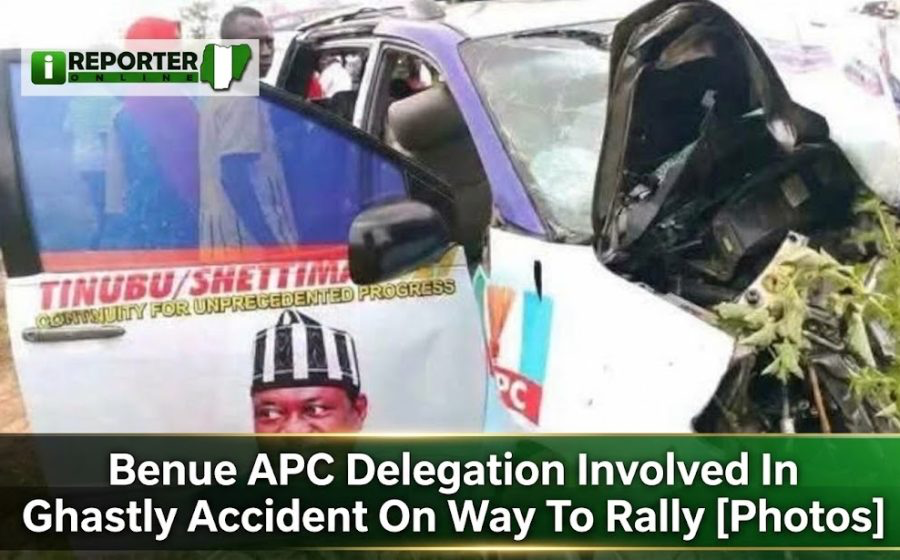
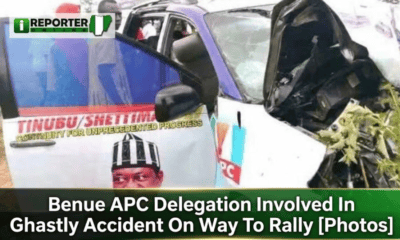
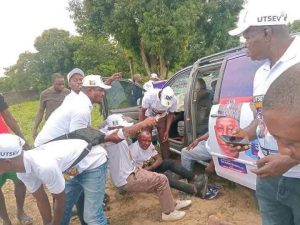
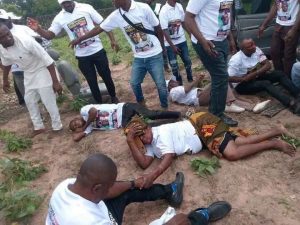
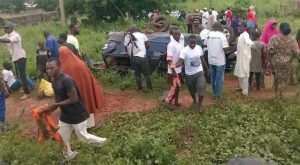
Several members of the All Progressives Congress (APC) from Benue State have reportedly sustained serious injuries following a road accident involving a bus conveying them to a party rally in Lafia, Nasarawa State.
The accident occurred in the early hours of Saturday, October 10, when the bus reportedly collided head-on with another vehicle a few kilometres from the rally venue.
According to reports, the injured party members were rushed to hospitals in Lafia for medical attention following the crash.
The incident was confirmed by Dan-Morgan Ihomun, publicity secretary of the Austin Agada-led faction of the APC in Benue State.
Ihomun reportedly stated that no lives were lost in the accident, although several occupants of the bus sustained injuries.
The circumstances surrounding the collision have not been fully disclosed as of the time of this report.
The incident comes as party members were travelling to attend the APC rally in Lafia, where political activities were scheduled to take place.
SEE MORE PHOTOS FROM THE SCENE…
-
 News1 day ago
US asks American business executives to be wary of insecurity, corruption, detention risk in Nigeria
-
News16 hours ago
Why UK varsities are cancelling Nigerians’ admission — Report
-
News2 days ago
GOCOP conference: Agbakoba urges media to test right to announce election results
-
News3 days ago
Enugu Secures $200m Investment for 100MW Solar Power
-
News3 days ago
How passenger died aboard Kenya Airways flight from Nairobi to Lagos
-
News2 days ago
Ihejirika lauds Mbah’s infrastructure drive as Coal City University inaugurates Governing Council
-
News3 days ago
Hardship: FG proposes N1,350 ceiling for petrol ex-gantry price
-
News1 day ago
Petrol hits N1,900/litre as depot prices surge despite NNPC cut