
Connect with us

Entertainment

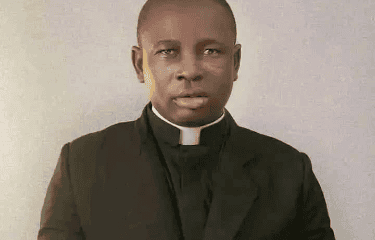
Envy, jealousy causing problems in South-East — Cubana Chief Priest

Published

on

Spread the love
Excerpts:

What can be blamed for the killings and insecurity in the South-East?

It is jealousy and envy that caused everything that is happening in the South-East. If you say you do not like a particular government, do you go and kill your brother because of that? No! You should rather wait for when it is time for election, then you can vote that person out. You should not go about hating or killing your brother, because you don’t like him, or because he is supporting a particular government, or the police. How can you kill your brother, because he is a policeman or a soldier? In a state without the police and military, who will maintain peace and order there?

Why did you relocate your business to Lagos State from Owerri (Imo State)?

I left the South-East, and relocated to Lagos State because some of our wealthy Igbo brothers are now scared of coming home. Usually, whenever they came home, my business was always flourishing. That is because those who live in Owerri usually buy just beer and little champagne. But, when the big boys who live in Lagos and Abuja come home during the weekends, they usually buy lots of drinks; and I will ultimately make so much money.

For instance, after Christmas in those days when business was booming in the South-East, after every Christmas sale, I would usually buy a new car or start a new business (because of the huge profit recorded). But, business has now become so slow. And, just like the Igbo saying, you will have to move around with your wares to be able to make sales. That was why I packed my bags and relocated.

Maduka College Advert

It is also a way of bringing the things that those who travel home come to enjoy at my place in Owerri here to them in Lagos State.

How has the rising insecurity in the South-East affected the drive of Igbo people?

All the bad Igbo people and kidnappers who are working to spoil Igboland are just foolish. In the area of real estate, things are no longer how they used to be. Before we started having insecurity issues in the South-East, people like Kennedy Okonkwo, the billionaire founder and CEO of Nedcomoaks Limited; and socialite, Emeka Okonkwo, aka E-Money, had mansions in their hometown, and that caused a lot of competition among us. Everyone was ‘pushed’, and there was a hunger in our hearts to go home and erect those kinds of edifice in our father’s compound. The Igbos like competition; we are each other’s inspiration.

What is the impact of the situation on the wealthy people who usually visit their hometowns?

What these evil people have succeeded in doing is to make sure that we no longer see the wealthy people at home (in the South-East).  When they see a wealthy person, they would kill him, and say he was a bad person. And, that has caused wealthy people to stay away from home. This has caused hunger in the land. There is great hunger in the South-East now.

What is your advice to people in the Diaspora on how to curb the tension in the South-East?

My appeal to my brothers (in the Diaspora) is this, “Let us not forget our home. We cannot run away from the evil people; they should run from us instead. You people should be coming home”. And, to our brothers at home, “You people are expected to protect the home, because it is the rat inside the house that tells the one in the bush or outside that there is fish in the kitchen”. So, it is some of those at home who burn down their brothers’ houses because of envy. We know that some people are not good, just like it is everywhere; even outside the country. But, it is something we should treat and approach with wisdom. It is not something that requires us to carry guns and machetes.

Our heritage is getting destroyed. We have our own culture, but we cannot project it from afar.

What are some of the things that used to make going home interesting?

Sometime ago, in my village, there was a festival called ‘Ofeke Day’, observed on January 1. It was the most interesting festival at that time. But, things like that no longer exist. We need to come together, and agree to bring the South-East back. There are a lot of great things in the South-East. You can imagine that people now host traditional marriages in event centres in Lagos State, or Owerri town. Is that good?  When there is a funeral, the dead would be buried like a thief, in a hurry, and the people will run to somewhere safe for the reception. That is not how we used to live. Before, whenever the corpse of a popular or wealthy person was coming home, there would be a lot of festivities, including gunshot salutes, and masquerade parades, with so much excitement. But, those days are gone and dead. We are gradually losing our heritage and culture.

What approach do you think can end these problems?

Let us go back to our roots and repair our states. Whatever is spoilt can be repaired. We should stop running, because running will not help us. Rather, running will spoil everything completely.


Entertainment

BREAKING: Temi Nkem wins BBNaija season 11

Published

on

BBNaija season 11 winner Temi Nkem
Spread the love

Temi Nkem has emerged as the winner of Big Brother Naija Season 11, taking home the ₦160m grand prize, while Aikou and Sheba emerged as the first and second runners-up, respectively.

Temi Nkem’s victory on Sunday brings the reality show’s latest edition to an end.

She was crowned winner during the grand finale on Sunday night after weeks of competition, evictions and intense drama among the housemates.

The victory sees Temi Nkem take home the ₦160 million prize package awarded to the winner of the season.

The season began with 24 housemates before the competition was gradually narrowed down to the finalists.

Maduka College Advert

The finalists were Temi Nkem, Barry, Tram, Oyin, Flora, Sheba, Aikou, Ricky and Bluethopia.

Things to know about BBNaija Season 11 winner Temi Nkem

1. Her real name and age

Temi Nkem’s real name is Temitope Chigbue. She is 21 years old.

2. Her background

She was born and raised in London, England. Her father is from Ibusa, Delta State, while her mother is from Ebute Metta, Lagos.

3. What she does

Temi is a student and lifestyle content creator. She is studying Accounting and Finance and has also developed an interest in treasury-related studies.

4. Her hobbies

See more Punch stories on Google.

Her official Big Brother Naija profile lists golfing, eating and walking as her hobbies.

5. She is single

Temi entered the Big Brother Naija house single and said she was not looking for a relationship.

6. How she describes herself

Before entering the house, Temi described herself as bold, vibrant and “impossible to ignore.” She also admitted that she is “very egotistical and arrogant” and said she does not shrink herself for anyone.

7. What she says about her temper

Temi said one habit that irritates people about her is that she can be “very revengeful” when someone hurts her ego.

8. Why she joined BBNaija

Temi said she joined the reality show to bring “luxury” and “spice,” adding that she believed she represented what the show needed.

9. Her journey in the house

Temi became one of the season’s most outspoken housemates, featuring in several heated exchanges and dramatic moments during the competition.

10. The fake eviction twist

She was among the housemates involved in a fake eviction twist in September, after which she returned to the house and continued competing.

11. She is now the winner

Temi survived the competition to emerge as the winner of Big Brother Naija Season 11, taking home the ₦160m grand prize.

With her victory, Temi joins the list of previous BBNaija winners, including Mercy Eke, Laycon, Whitemoney, Phyna, Ilebaye and Imisi.

Continue Reading

Entertainment

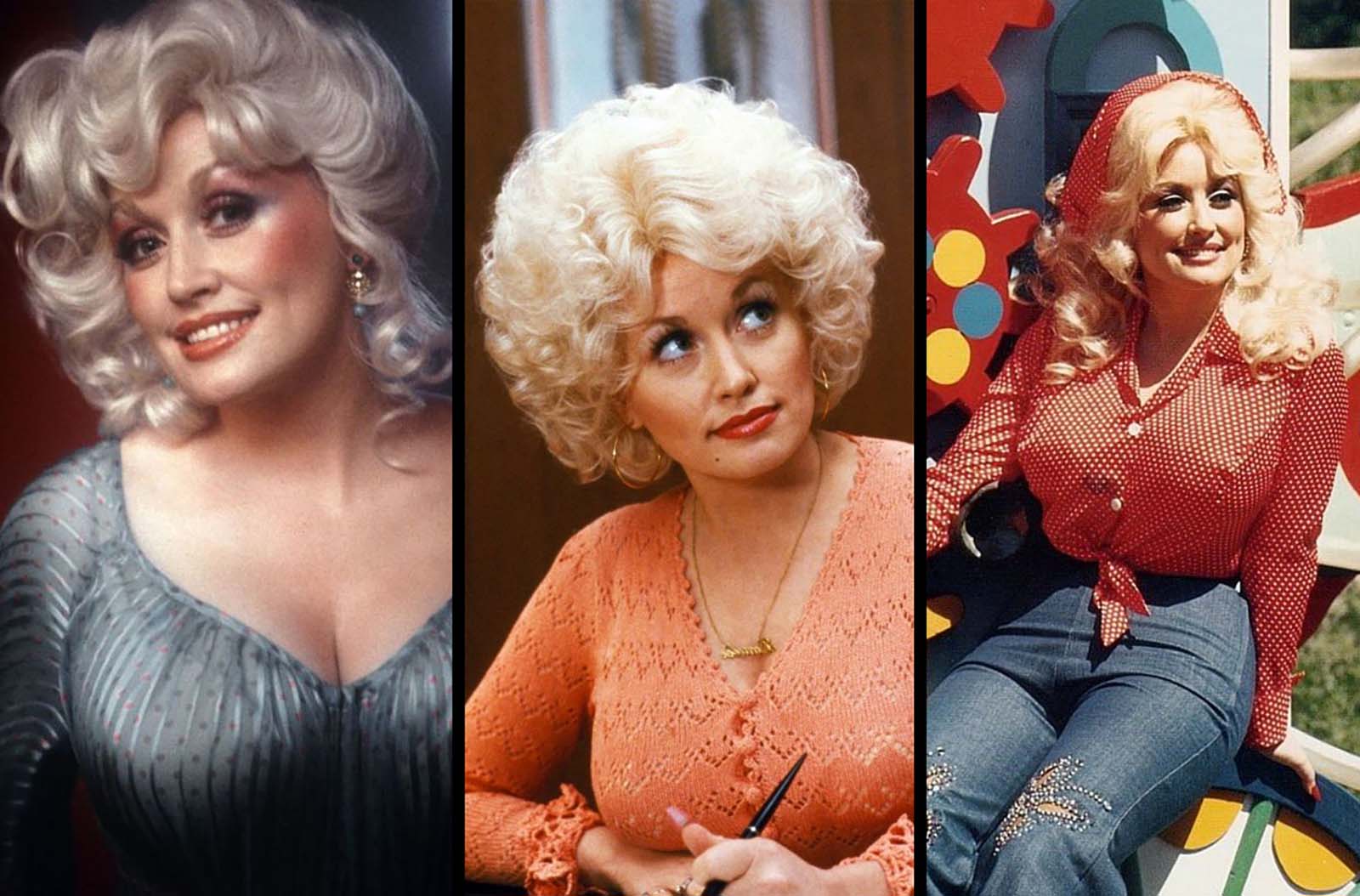
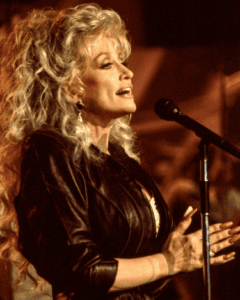
Dolly Parton: The Coat of Many Colors She Left for the World

Published

on

Queen of Country Music, Dolly Parton
Spread the love

By Tony Edike

A life stitched together with music, courage, generosity and the enduring lesson that love is worth more than wealth

Dolly Parton came from a place where there was not much money, but there was music, faith, family and love.

She left that place and became one of the most recognisable women in the world.

Yet, somehow, she never truly left it behind.

Dolly Parton, the country music legend, songwriter, actor, entrepreneur and philanthropist, died on 25 August 2026 at the age of 80 after a brief battle with cancer. Her death brought an outpouring of grief from admirers, fellow artists and generations of people whose lives had been touched by her music and generosity.

Maduka College Advert

But perhaps the best way to understand Dolly was not through the rhinestones, the fame, the awards or the fortune.

Perhaps it was through a coat.

A simple coat made by her mother.

In “Coat of Many Colors,” Dolly transformed a childhood memory into one of the most enduring lessons in popular music. Her mother, unable to afford an expensive coat, stitched together scraps of fabric to make one for her daughter. At school, the little girl was mocked because of what she wore.

Dolly Parton wearing her Coat of Many Colours

But Dolly did not remember that coat as a symbol of shame.

She remembered it as a symbol of love.

Her mother had made it for her.

And that distinction says almost everything about Dolly Parton.

The world saw rags.

Dolly saw love.

The world saw poverty.

Dolly saw the richness of having a mother who cared enough to make something with her own hands.

The world saw something to laugh at.

Dolly found a story worth singing.

That was her extraordinary gift: the ability to take the ordinary, the painful and the humble and turn it into something beautiful.

The lesson in the coat

There is a lesson in that song that reaches far beyond country music.

It tells us not to measure people by what they wear, what they own, where they come from or how much money they have.

It teaches us that humiliation does not have to become defeat.

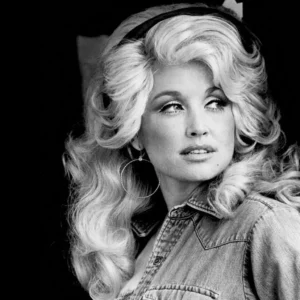
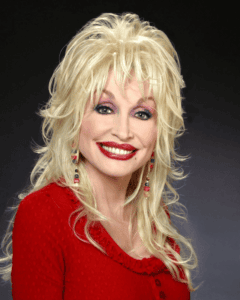
Dolly Parton

It teaches us that our beginnings do not have to determine our destination.

And, perhaps most importantly, it teaches us to recognise the value of the people who loved us when we had nothing to offer them.

Dolly never appeared ashamed of her humble beginnings. Instead, she carried them with her.

She remembered the mountains of Tennessee. She remembered her family. She remembered poverty. She remembered her mother’s hands.

And she turned those memories into songs that travelled around the world.

That is why her success was never simply about becoming famous.

It was about becoming something bigger than fame.

From the mountains to the world

Born into a large, poor family in rural Tennessee, Dolly Parton rose from circumstances that could easily have limited her ambitions. Instead, she became a prolific songwriter whose catalogue stretched into the thousands, a country music pioneer whose songs crossed genre and national boundaries, an actor whose performances became part of popular culture, and a formidable businesswoman.

Songs such as “Jolene,” “9 to 5” and “I Will Always Love You” became cultural landmarks.

But numbers alone cannot explain Dolly Parton’s impact.

She did something more difficult.

She made people feel understood.

She could sing about heartbreak without bitterness, ambition without arrogance and poverty without shame.

She could make millions laugh while reminding them of the struggles that millions quietly endure.

And beneath the wigs, sequins, humour and larger-than-life personality was a woman who understood the dignity of ordinary people.

She gave her success away

Dolly Parton’s generosity was not an accessory to her fame. It was part of her identity.

Dolly …gave her success away

Through the Dollywood Foundation and its Imagination Library, she helped put books into the hands of children around the world. The programme has distributed more than 300 million books, reflecting her lifelong belief in the transforming power of reading and education.

She also supported healthcare, education, disaster relief and medical research, including a $1 million donation toward COVID-19 vaccine research.

In that sense, the little girl in the coat of many colors never disappeared.

She simply grew up and acquired the means to make sure that other children had opportunities she had once lacked.

Dolly knew what it meant to have little.

And when she had much, she remembered.

That may be one of the greatest measures of a person’s character.

A legacy beyond music

Dolly Parton’s death leaves a remarkable space in American culture and in the wider world.

She was a country star, but she belonged to more than country music.

She was an actor, but her influence reached beyond film.

She was a businesswoman, but her greatest enterprise may have been the lives she changed.

She was a philanthropist, but she never seemed to regard generosity as a performance.

She was Dolly.

Funny. Glamorous. Sharp. Warm. Ambitious. Unapologetically herself.

And, beneath it all, deeply connected to the people and places that made her.

Her passing is therefore not simply the death of a celebrity.

It is the end of a remarkable human story.

A story that began in poverty and travelled through music to the whole world.

A story about a woman who refused to be defined by what she did not have.

A story about someone who understood that success is most meaningful when it becomes an opportunity to lift others.

The coat remains

In the end, perhaps Dolly Parton’s most important message was never complicated.

Love your people.

Remember where you came from.

Do not be ashamed of humble beginnings.

Do not measure human worth by possessions.

And when life gives you the opportunity to help someone else, do it.

The coat her mother made from scraps could easily have been remembered as an emblem of poverty.

Instead, Dolly turned it into an emblem of love.

She took something the world might have considered worthless and made it priceless.

Perhaps that is what she did with her entire life.

She took humble beginnings and made them beautiful.

She took pain and made music.

She took success and turned it into service.

She took her story and gave it to the world.

Dolly Parton has left the stage, but the music remains.

The books remain.

The kindness remains.

The lessons remain.

And somewhere, in the hearts of millions who heard her sing about a little girl wearing a coat her mother made for her, the colours remain bright.

A coat of many colors.

A life stitched together with love.

A legacy that will not wear out.

May God grant the soul of Dolly Parton eternal peace.

•  Edike is Publisher/CEO, The Advocate Newspaper Nigeria

Continue Reading

Entertainment

Dolly Parton, Queen of Country Music, dies at 80

Published

on

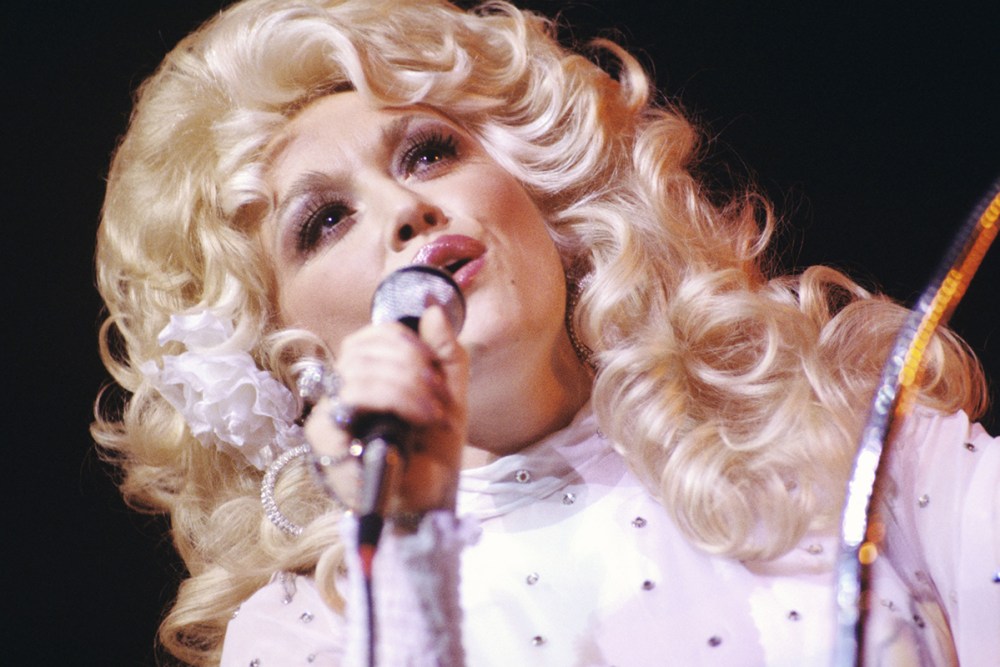
Dolly Parton dies at 80
Spread the love

Country music legend and Hollywood star, Dolly Parton, has died at the age of 80, her family has announced.

Parton’s nephew, Brian Seaver, announced her death on Tuesday in a video shared on her social media account, describing the moment as one of “absolute pride and great sadness”. The family did not immediately disclose the cause of death.

The Tennessee-born singer, songwriter, actress and philanthropist enjoyed a career spanning more than six decades and became one of the most recognisable figures in American popular culture.

Late Dolly Parton

Known as the “Queen of Country”, Parton sold more than 100 million records worldwide and earned numerous honours, including multiple Grammy Awards. Her enduring hits included “Jolene”, “I Will Always Love You”, “9 to 5” and “Coat of Many Colors”.

Maduka College Advert
Dolly Parton was around six when she wrote her first song: “Little Tiny Tasseltop,” an ode to her corncob doll with corn-silk hair. Her mother stored it preciously in a shoebox.
“I loved that little doll,” Parton wrote decades later. “I expressed myself and my feelings through writing – I’m sure what I was thinking was, ‘Well, Tasseltop has to have a song about her.'”

Her death came after a period of health challenges. In May, Parton announced the cancellation of a Las Vegas performance, revealing that she had been undergoing treatment for kidney stones and was also dealing with problems affecting her immune and digestive systems.

Just days before her death, Parton had indicated that she was still determined to work despite acknowledging that she had slowed down following the death of her husband, Carl Dean, in March 2025.

“Even though I’m still healin’, I’m still workin’!” she said, insisting that she still had many things she wanted to accomplish.

Parton was born on January 19, 1946, in Locust Ridge, Tennessee, the fourth of 12 children in a poor family. She grew up in the Appalachian region, where her mother’s love for traditional music helped nurture her passion for singing and songwriting.

She began performing as a child and moved to Nashville shortly after graduating from high school in 1964. Her songwriting talent soon earned her recognition, before she established herself as a major recording artiste.

Parton’s breakthrough included “Jolene”, which became one of her signature songs. Her composition “I Will Always Love You” later became a global hit for Whitney Houston after the singer recorded it for the 1992 film The Bodyguard.

Beyond music, Parton built a successful acting career, starring in films including 9 to 5, Steel Magnolias and The Best Little Whorehouse in Texas. She also became a prominent businesswoman through Dollywood, the theme park she established in Tennessee in 1986.

Her influence extended well beyond entertainment. Parton founded the Dollywood Foundation and its Imagination Library initiative, which provides free books to children, making childhood literacy one of the major causes associated with her name.

She also donated $1 million to coronavirus research at Vanderbilt University in 2020, funding that contributed to research that later helped in the development of Moderna’s COVID-19 vaccine.

Parton’s personal life also attracted public interest. She married Carl Dean in 1966, and the couple remained together for nearly six decades until his death in 2025. They had no children.

Despite her global fame, Parton remained closely connected to her Tennessee roots and used her success to support communities, education, healthcare and other charitable causes.

Her death brings to an end the life of an entertainer whose influence crossed generations, musical genres and national boundaries, leaving behind a vast catalogue of songs and a philanthropic legacy that extended far beyond country music.

Continue Reading

Trending

Maduka College Advert