Education
FG probes 107 varsities over fake degrees


The Federal Government has invited memoranda from the public as it begins the probe of private universities established in the last 15 years.
The Federal Government initiated the probe following an investigative report by Daily Nigerian journalist, Umar Audu, uncovering certificate racketeering in neighbouring Benin Republic and Togo.

Checks showed that no fewer than 107 private universities were established in the last 15 years.

The Inter-Ministerial Investigative Committee on Degree Certificate Milling set up by the Federal Government would be examining “whether or not private universities established in the last 15 years have in place prescribed facilities, appropriate management structure, adequate funding of programmes, requisite state, and nature of the staff – full-time, contract, adjunct, visiting and other types.”

The committee, in an advertorial published in The PUNCH of Tuesday, noted that the probe was “without prejudice to the periodic accreditation exercise of the National Universities Commission.”
“Memoranda from the general public are, therefore, solicited to provide information to the committee to help it make appropriate recommendations to address the menace in line with its terms of reference,” the committee said.
In his investigative report published late last year, Daily Nigerian journalist Audu had narrated how he obtained a degree within six weeks from Benin Republic and even proceeded to embark on the mandatory youth service under the National Youth Service Corps scheme in the country.
Reacting, the Federal Government, on January 9, 2024, said it would launch an investigation into private universities established in the last 15 years.
The Minister of Education, Prof. Tahir Mamman, made this known in Abuja while inaugurating the Inter-Ministerial Committee on fake degrees and activities of degree mills in the country.
The Committee Chairman, Jibrila Amin, noted that the inter-ministerial committee would “Review the role of any MDA or its officials (including identifying such officials) in the facilitation of the recognition and procurement of the fake certificate in question.”
The committee will also”examine the rules, procedures and processes for recognition and accreditation of foreign universities and programmes by the Federal Ministry of Education; Establish if unapproved foreign institutions (Degree Mills) exist or not in Nigeria in whatever form with their identities and locations if any.”
It is expected to “make appropriate recommendations for review of any rules, procedures, and processes to prevent re-occurrence and sanctions for identified erring officials.
“Make other recommendations that will strengthen the system of recognition, accreditations and quality assurance of degrees in Nigeria and examine the extant rules, procedures and processes for granting provisional licenses to new universities by the National Universities Commission.”
PUNCH



Education
Covenant University Retains Africa’s Top Spot as Nigeria Records 27 Varsities in 2027 THE Rankings
Covenant University, Ota, Ogun State, has retained its position as Africa’s highest-ranked institution in the 2027 Times Higher Education (THE) Interdisciplinary Science Rankings, as Nigeria recorded its highest-ever number of universities in the global ranking.
The 2027 edition, released on Wednesday, November 18, featured 27 Nigerian universities, representing a 50 per cent increase from the 18 institutions ranked in 2026.
Covenant University placed joint 49th globally, retaining its position as the only African university among the world’s top 50 for the second consecutive year.
The private institution ranked ahead of Egypt’s Cairo University, which placed joint 52nd globally.
Chairman of the Nigerian Tertiary Education Ranking Advisory Committee (NiTERAC), Professor Emeritus Peter Okebukola, disclosed the figures in a statement issued in Abuja on Wednesday.
He said Nigeria’s performance represented an improvement from the 19 universities ranked in the maiden 2025 edition, while another seven institutions were accorded Reporter status after submitting their data.
This brought the total number of Nigerian universities participating in the 2027 exercise to 34, compared with 30 in 2026 and 27 in 2025.
Okebukola, a former Executive Secretary of the National Universities Commission (NUC), said Nigeria had moved from 16th to 11th position globally in terms of the number of ranked universities, while retaining its second position in Africa behind Egypt, which has 37 institutions.
The ranking, produced by THE in partnership with Schmidt Science Fellows, assessed 1,058 universities across 102 countries and territories.
It evaluates universities’ capacity to fund, support and deliver research cutting across scientific disciplines, using 11 performance indicators grouped into three categories: inputs, processes and outputs.
Inputs account for 19 per cent of the assessment, processes 16 per cent, while outputs carry the highest weight at 65 per cent.
The Massachusetts Institute of Technology retained the global first position for the third consecutive year.
In Nigeria, Landmark University, Omu-Aran, emerged as the second-highest ranked institution, placing in the 251–300 band, while Ahmadu Bello University, Zaria, and the University of Ilorin occupied the 351–400 band.
The University of Calabar, University of Lagos and University of Nigeria, Nsukka, were placed in the 401–500 band.
Ladoke Akintola University of Technology, Obafemi Awolowo University and the University of Benin completed Nigeria’s top 10, placing in the 501–600 band.
Okebukola, a former Chairman of the Governing Board of the National Open University of Nigeria (NOUN), particularly commended Ahmadu Bello University and the University of Calabar for their significant improvements in the latest edition.
According to him, ABU moved from the 601–800 band in 2026 to the 351–400 band, while the University of Calabar improved from the 601–800 band to the 401–500 category.
Eight universities made their debut in the ranking. They are the Federal University of Technology, Minna; Michael Okpara University of Agriculture, Umudike; Joseph Sarwuan Tarka University, Makurdi; University of Jos; Rivers State University; Babcock University; Bells University of Technology; and Nile University of Nigeria.
Osun State University also returned to the ranking after a year’s absence.
Of the 27 Nigerian universities ranked, 14 are federal institutions, seven are state-owned, while six are privately owned.
Reacting to the performance, Okebukola described the growing number of Nigerian universities participating in the exercise as encouraging, particularly with Covenant University maintaining its continental leadership.
He, however, cautioned that increased participation must be matched with improved performance, noting that Nigeria had two universities in the global top 300 in 2027, compared with five in the previous edition.
Similarly, seven Nigerian universities featured in the top 500, against eight in 2026.
The former NUC boss identified inadequate funding for interdisciplinary science research, limited dedicated research facilities, insufficient administrative support and weak institutional policies as some of the areas requiring urgent attention.
According to him, many Nigerian universities recorded low scores in the inputs and processes categories, which assess funding for interdisciplinary research and institutional structures supporting collaboration across scientific disciplines.
He said universities could improve their rankings through proper reporting of research grants, income from industry partnerships and the adoption of clear institutional policies that encourage interdisciplinary research.
Okebukola commended the Minister of Education, Dr Tunji Alausa, for prioritising the global competitiveness of Nigerian tertiary institutions and establishing NiTERAC to drive the agenda.
He disclosed that the committee had submitted a comprehensive report on the latest ranking, alongside recommendations, to the minister.
He added that NiTERAC, working through the League of Directors of Academic Planning and the Virtual Institute for Capacity Building in Higher Education, would support participating universities and prospective entrants in preparing stronger submissions for the 2028 edition.
The chairman also urged research-intensive Nigerian universities yet to participate in the exercise to take advantage of the opportunity.
He further disclosed that the 2026 national ranking of universities, polytechnics and colleges of education was nearing completion, with the results scheduled for unveiling at a national conference on December 15, 2026.
He expressed optimism that the national ranking exercise would strengthen institutional data management and healthy competition, ultimately improving the performance of Nigerian tertiary institutions in international rankings.
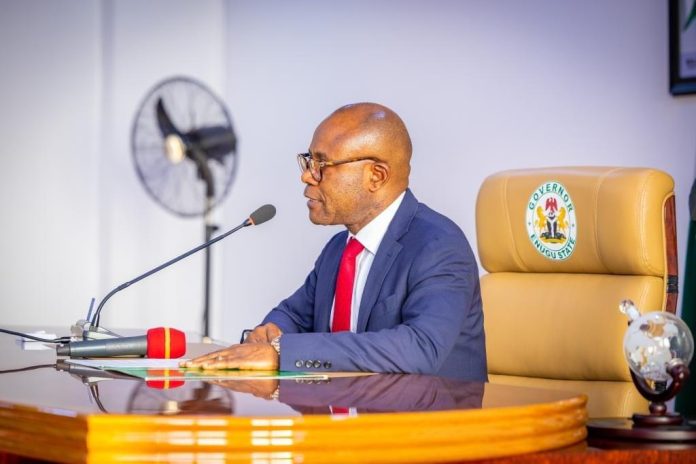
The approval was contained in a letter signed by the Secretary to the Enugu State Government, Prof. Chidiebere Onyia, dated August 11, 2026, and addressed to the Accountant General of the state.
According to the letter, the approval followed a report submitted by the Joint Action Committee on Trade Union (JACTU) in ESUT over issues surrounding a one-month strike ultimatum issued by the university’s unions.
The government also approved an across-the-board increase of N50,000 for all other categories of staff of the university.
The SSG directed the Accountant General to fully implement the approval of Governor Peter Ndubuisi Mbah.
The directive referenced an earlier Government House letter dated August 7, 2026, on the matter.
The letter, which was copied to the Vice-Chancellor of ESUT, Professor Aloysius-Michaels Okolie, for information and necessary action, is expected to take effect from September 1, 2026.
Education
Digital Economy Boost: NCC Leases Digital Industrial Park, Learning Centre to Enugu State Gov’t

…NCC’s CEO lauds Mbah’s Smart Schools, infrastructural, digital capacity initiatives
In a major boost to President Bola Tinubu’s digital economy agenda, the Nigerian Communications Commission (NCC) and the Enugu State Government, on Tuesday, sealed a strategic 15-year lease of the agency’s Digital Industrial Park and Learning Centre to the Enugu State Government.
The move would see the Enugu State Government take over and optimise the facilities located in the state capital as the Enugu Talent City and Artificial Intelligence (AI) Institute in line with the digital economy drive of the Governor Peter Mbah Administration.
Speaking during the lease agreement signing ceremony at Government House, Enugu, the Executive Vice Chairman/CEO of NCC, Dr. Aminu Maida, said the arrangement fully aligned with the Renewed Hope Agenda of the President Bola Tinubu Administration, and its ambition to grow Nigeria into a $1 trillion economy driven by productivity, innovation and private sector growth.

Maida stressed that Mbah had shown a clear agenda to build Enugu State into a digital economic powerhouse through deliberate investment in education, infrastructure, innovation and digital capacity, maintaining that the Mbah Administration was well positioned to advance the objectives for which these facilities were established.
“Our expectation is that this partnership will support Enugu’s ambition to become a leading destination for digital services, artificial intelligence, startup incubation, outsourcing, research and technology-enabled enterprise.
“We also expect these facilities to become spaces where young people acquire relevant skills, entrepreneurs transform ideas into viable businesses and local enterprises connect to opportunities beyond Enugu and Nigeria.
“These facilities were conceived as platforms for innovation, entrepreneurship and human capital development. They were designed to deepen digital skills, support startups, attract investment, create jobs and position Nigeria as a competitive destination for business process outsourcing, knowledge process outsourcing and other technology-enabled services.
“In essence, they were built not merely as physical assets, but as platforms for developing the people and enterprises that will power Nigeria’s digital economy.
“So, for us at the NCC, completing physical infrastructure is only the beginning. Buildings alone do not create innovation. People do. Ideas do. Entrepreneurs do. And partnerships bring all these elements together,” he said.
The NCC boss also commended Governor Mbah’s investment in Smart Green Schools, saying he was building an economy prepared for the future.
“Physical infrastructure is essential to development, but infrastructure alone cannot deliver lasting prosperity. This is what makes the Smart Green Schools initiative significant. It recognises that preparing our children for tomorrow must begin today. Technology-enabled schools, digital learning facilities, robotics and artificial intelligence laboratories demonstrate an understanding that education must evolve alongside technology. That is leadership with the future in mind.
“Investment in education and skills raises productivity, expands economic opportunity and strengthens the ability of individuals and businesses to create value.
“This is even more important today. Artificial Intelligence is reshaping industries. Automation is changing the nature of work. Digital technologies are transforming how governments serve citizens and how businesses operate,” he concluded.
Speaking, Governor Peter Mbah commended President Tinubu for recognising the centrality of the digital economy to the $1 trillion economy he seeks to build, as well as for understanding that much of that growth would come from the states.
He noted that AI would contribute about $20 trillion to the global economy by 2030, saying, “It is not a space you want your young ones to be missing.”
“We also believe that our talents, our brightest talents, should not be exported in person. We believe that they should export their talents outside the country from here, and that is why we see huge benefits in these assets in terms of job creation and opportunities for our young people.
“We are also looking at transforming the Digital Bridge Institute into a world-class AI institute. We will also transform the Digital Industrial Park. If you have followed the news, we have already taken steps, working with some teams from Qatar, to make sure that it becomes a certification centre for AI on the continent.
He said the NCC would not regret its decision to temporarily hand over the facilities to Enugu State.
“I am sure that a few years down the line, we can come back here and be very proud of the decision we made today to activate these assets and to make sure that they are productive,” he concluded.
Earlier in his remarks, the Special Adviser to the Enugu State Governor on Digital Economy and Micro, Small and Medium Scale Enterprises (MSMEs), Arinze Chilo-Ofia, thanked the FG and NCC for the confidence reposed in Enugu State to activate and optimise the two strategic assets and ensure the realisation of the objectives for which they were conceived and built.
-
 News2 days ago
Nigerian Pastor Dies Aboard Flight From US
-
News2 days ago
Enugu Assembly Passes Bill Capping Rent Increase at 2%, Restricts Hikes to Four Years
-
News2 days ago
2027: Obaze Alleges Plot to Use Judiciary to Stop Obi, Kwankwaso, NDC Candidates
-
News2 days ago
Tinubu Orders Release of 78 Suspects Arrested Over Attack on His Convoy in Abuja
-
News2 days ago
Nursing Students Shut Down School, Protest Colleague’s Death
-
News2 days ago
Mbah’s Manifesto Scorecard: From Promises to Projects, Enugu’s Journey of Transformation
-
News2 days ago
Gunmen Kill Security Guard, Abduct Businessman’s Family Members, Visitor in Zamfara
-
News2 days ago
₦17.58bn Cash Gifts: Ebonyi Stakeholders Beg Newspaper to Withhold Beneficiaries’ List