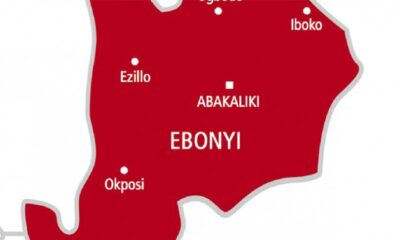
The Enugu State Government has renewed its demand for justice, historical recognition and reparations for the families of 21 coal miners killed by British colonial police during a protest at the Iva Valley coal mine on November 18, 1949.
The government restated its commitment on Wednesday, November 18, 2026, during the 77th anniversary commemoration of the massacre held at the International Conference Centre, Enugu, where families of the victims also renewed their calls for redress over the decades-old tragedy.
The event, attended by government officials, historians, cultural organisations, former coal miners, relatives of the victims and members of the public, featured a stage adaptation of IVA 21: The Incarnations, a book written by the Executive Secretary of the Enugu State Council for Arts and Culture, Laurence Ani.
Representing Governor Peter Mbah, the Secretary to the State Government, Prof. Chidiebere Onyia, said the anniversary should serve as more than an annual remembrance, stressing that the sacrifice of the slain miners deserved lasting recognition and justice.
Speaking on the theme, “Beyond Remembrance: Justice, Colonial Accountability and the Imperative of Reparations for the Iva Coal Mine Massacre,” Onyia said the commemoration was a moral obligation to preserve history and pursue justice.
“For this administration, this anniversary is not an event to be held merely as an annual ritual. It is an obligation to history,” he said.
He described the 21 victims as fathers, husbands, brothers and members of their communities whose lives were cut short while demanding improved working conditions and payment of their legitimate wages.
According to him, the Mbah administration provided substantial support for the commemoration because the massacre represents a defining chapter in Enugu’s history and Nigeria’s broader struggle for human dignity, workers’ rights and justice.
Onyia urged young people to take a deeper interest in the state’s history, warning that the passage of time must not be allowed to erase unresolved historical injustices from public consciousness.
Delivering the keynote address, a lecturer in Arts and Culture at Godfrey Okoye University, Dr Ozo Ferdinand Aniekwe, traced European colonial expansion in Africa to economic interests, arguing that the pursuit of wealth and control of natural resources, rather than a purported civilising mission, largely shaped imperial activities on the continent.
He examined the connections between capitalism, colonialism and imperialism, calling for more deliberate efforts to document African history and challenge the dominance of European perspectives in historical records.
Aniekwe also urged Nigerians to seek justice for historical wrongs while ensuring that past grievances did not hinder constructive relationships or efforts to address their enduring consequences.
Meanwhile, the Governor’s Special Adviser on Soil, Mineral Resources and Mining, Hon. Samuel Onyinye Okoro, said the anniversary had renewed discussions on compensation for the victims’ families and environmental reparations for communities affected by mining activities.
Okoro stressed that the consequences of colonial-era mining extended beyond the 1949 killings, citing abandoned underground tunnels, structural deterioration and the dangers confronting residents of communities built around former mining sites.
He said the state and federal governments were aware of the risks and that efforts were underway to conduct a comprehensive audit of abandoned mining locations to determine appropriate remediation measures.
The special adviser explained that the government was also examining ways to address the dangers without unnecessarily demolishing homes and other structures built over the abandoned tunnels.
On plans to establish a school of mining in Enugu, Okoro disclosed that discussions were ongoing, describing the proposed institution as crucial to reviving the state’s mining industry and equipping young people with the technical skills required to participate in the sector.
In his remarks, Ani said the stage production was designed to preserve the tragedy through creative storytelling and introduce its historical significance to a wider audience.
He explained that IVA 21: The Incarnations sought to portray the miners beyond their identities as coal workers by bringing to life their humanity, family relationships, personal ambitions and aspirations before their untimely deaths.
Ani also disclosed that the production was being developed into an international motion picture in collaboration with German filmmakers, with Nigerian and German professionals expected to participate.
According to him, preparations for the film, including visits to the old mining sites, would commence shortly, while the production was expected to be completed within 18 months and premiered in Enugu.
Also speaking, a representative of the Coal Miners Foundation, Hyacinth Ohagwu, said efforts were being made to document families affected by the massacre and preserve the history of Enugu’s underground mining industry.
Ohagwu warned that abandoned mining tunnels remained a serious threat to communities, particularly in areas where residential buildings had been erected over hollow underground passages.
He called for the identification of vulnerable locations and urgent preventive measures to avert possible tunnel collapses. He also proposed the restoration of the old mining school and the preservation of mining-era structures as archives and exhibition centres.
The foundation representative further advocated the introduction of mining history into the state’s school curriculum to ensure that future generations understood the contribution of coal mining to Enugu’s development and the sacrifices made by the workers.
Speaking on behalf of the victims’ families, Ihedube Chima and Steven Agu recounted the lasting impact of the massacre on their respective families.
Chima said he gradually came to understand the tragedy through accounts passed down by older members of his family, while Agu called for fairness in the treatment of miners and expressed satisfaction with the government’s recognition of the victims.
Other relatives also shared testimonies about the massacre and its enduring consequences across generations.
The commemoration came against the backdrop of an earlier landmark judgment by an Enugu State High Court concerning compensation and reparations for the families of the slain miners.
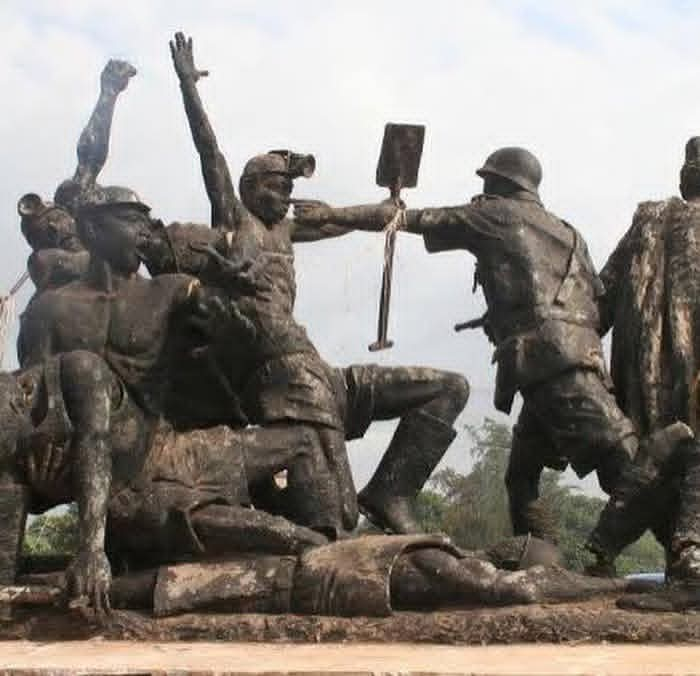
The Iva Valley massacre occurred on November 18, 1949, when British colonial police opened fire on coal miners protesting harsh working conditions and unpaid wages at the Iva Valley mine, killing 21 workers.
Seventy-seven years later, the tragedy remains a painful reminder of colonial exploitation and the sacrifices made by Nigerian workers in the struggle for dignity, fair treatment and justice.