Opinion
Peter Mbah’s Political Sophistication and his Credo of One Enugu

By Dr Chukwuemeka Aroh
God has ultimately blessed us in Enugu state with what we have relentlessly prayed and cast about for. Our dear Governor-elect is the best thing that has happened for us this season. Permit me to call him “Peter God-sent Ndubuisi Mbah”.

“Tomorrow is Here”! we shout with great joy, but the haters of tomorrow frown at us and wish Enugu a permanent seat in auld lang syne. We respond loud and clear to them “we have bid farewell to the years of yore in Enugu”. We are already in a tomorrow that is loaded with state transformational goodies; Integrated sector-based productivity growth, inclusive and transparent governance, cross-cutting programmes and social services, expecting water to drop for Enugu residents in a trice. If wishes were horses beggars would ride they say. Wawa! haters of tomorrow your wishes shall not materialize, we can’t go back to yesterday. Enugu state is unstoppable now and on autopilot towards building a peaceful and secure, highly developed and prosperous state for all.
Why? Because:
“Peter is Here”
“Tomorrow is Here”
“Nothing can stop Enugu State, we are all the way up”
Barr. Mbah’s, first step in this dance of governance portrays a good omen and a harbinger of better times to come. A step that reinforces what we had always known about him which motivated us into evangelists for him and of course voting massively for him. We didn’t stop there, we also defended our votes especially when we sensed a ruination of justice was in the offing at the collation centre.
Just as we know a good dancer from their first step, we know good leaders from their leadoff decision. Our Governor-elect has displayed his leadership mastery, compassion and selflessness once again. This attitude and path has calmed down an Enugu that was at the height of it’s volatility ever in many years. This situation which erupted from desperate political rattle sabres who introduced sharp divisions and do or die politics into Enugu state just few months ago. Most painful is the awakening of the premordial moribund caste sentiment, an unimaginable straw just to whip up sentiments to influence the politics. All these done for their own selfish ambitions. Ignorantly, because of their narrow lopsided world view, thinking that these antediluvian, tribal sentiments and violence was going to help them win. Thank goodness they lost, as we the people of Enugu were smarter than all these.

Against this backdrop, the story I have is that of Peter Mbah’s jaw-dropping, virtuosic, avuncular, altruistic, humanistic and unifying acceptance speech. A speech that has vellicated breathing a sigh of relief to the general Enugu populace and has broken down the nay sayers into sober and remorseful reflections. I can personally classify it as the best acceptance speech by a Governor-elect. I will liken it to the Gettysburg Address by Abraham Lincoln where he committed post-Civil War America to “a new birth of freedom.” Lincoln’s speech carried a message that ideals are worth dying for and that it is up to the living to carry on the work of those who died to protect ideals. Studies in American history shows us how this singular speech changed the country. Here in Enugu, Barr Peter has made one of such speeches that will impact the histroy of Enugu state and be remembered for a very long time if not forever.
The main thrust of the speech being that he called for a New Enugu, One Enugu and an Enugu that we can all call our own irrespective of who we are, Our Enugu. Peter Mbah, a man who like the children of Issachar in chronicles of the holy bible has a perfect understanding of the times, driven by sensitivity for the people he understood that what Enugu needed most was healing. A palliate from the bedlam and pandemonium by balkanizers who with their hate speeches and hate actions attempted to divide Enugu for their narcissistic reasons but failed. In the words of the great Governor- elect “let’s restate that ours will not be government of any section of the state. It is your government ndi Enugu” … “We are all brothers and sisters, those who attempted to create a wedge between us failed woefully” Inter alia.
The significance of this speech is heightened as it is coming at a post election period. An election where the opposition completely went full scale dirty but instead of standing on understandable animosity to make a divisive and vindictive acceptance speech he chooses to call for love and unity. This is very impressive and a reflection of the true colour of the man who has just acquired by popular mandate the number one citizen of the state. The simple interpretation of this speech is; Come to me, I am your governor, a governor for all, even those that opposed and are still opposing me presently. I hold nothing against anybody and I bear no grudges. Let what happened during the elections stay with the elections which is already in the past despite how low, painful and embarrassing. This is the voice of a father, the governor we have been waiting for and we are proud of him.
This acceptance speech weeks after is still the talk of the town: amongst scholars, social gatherings, churches, village squares, beer parlours, everywhere people gather. People are amazed at his response, they are flabbergasted by his approach and grossly impressed by his maturity. One could attempt also to liken him as a person just like a preacher will do to Jesus who we just celebrated this easter, few days ago. Who said about those that crucified him ” father forgive them for they know not what they are doing” in the book of Luke of the holy bible. Don’t mind me if I am sounding religious, my apologies, but I have for weeks thought about what to equate Enugu’s Governor-elect’s acceptance speech and political body language to, that’s exactly how I got here. The reason being that it was heavy and mind blowing to me knowing the blackmails, castigations, false witnessing, sabotage and even assasination of his impaccable character, name it, all he had to deal and put up with in the name of politics. Must politics be dirty, filled with evil propaganda and falsehood? Do we even ignore the inec collation center drama that turned it into a tribunal, the votes that where eliminated, the negligence of PDP’s concerns about a particular local government, the military suppression, rigging during the elections and the padding. Which do I mention and which do I leave really? All these done to hoodwink and delude ndi Enugu and even at the last count INEC but after all Peter Mbah of PDP still won.
Dr Mbah has proceeded on the journey of the New Enugu in love, without umbrage. He beckoned on ndi Enugu to move on together, stating clearly what his sole goal is and I quote “Only one obligation, to devote every tissue of my flesh, the totality of my mind and spirit to the task of greatness of Enugu”. This I like to call PFDIM( People Focused Disruptive Innovation Model) of governance. Completely represented in his well articulated manifesto which has become the new Enugu’s political bible and an anchor of our development expectations.
That’s the hallmark of great leadership, he never bothered to fire back for one day form day one or even look back. What manner of man is this? I must say his a true child of God who understands vengeance is of God who never fails to pay each man back in their own coin. We wouldn’t be overflogging to keep repeating that Barr Peter Mbah is God sent to Enugu state . His attitude of no grudges and loving people from all places, all religions and political divides is unparalleled. He wears a political lense I like to call “One Enugu”.
We are very optmistic in Enugu because our Governor-elect has started well. The bedrock of development in any clime emanates from the non-polarization of the people. This implies that unity is the bedrock of development. This is simply why in our Nigerian coat of arm as a nation we have : “unity and faith” and “peace and progress”. Enugu state being a microcosm of Nigeria, therefore this represents us. Our governor-elect has said in every form let us unite and have faith in each other and the system as well so there shall be peace and progress in Enugu. This is the genesis of the pinnacle miracle and anticipated eldorado in Enugu, stay tuned Enugu is coming.
Dr Chukwuemeka Aroh writes from Enugu



By TOM CHIAHEMEN
There is something profoundly unsettling about a government announcing a policy ostensibly designed to resolve one of Nigeria’s most intractable security and agricultural problems, only to discover that the announcement itself has become another source of anxiety.
That, increasingly, appears to be the predicament of the Federal Government’s proposed National Ranching Policy.
On paper, few would quarrel with the idea of modernising Nigeria’s livestock industry. A country struggling with farmer-herder violence, cattle rustling, dwindling agricultural productivity and an increasingly stressed food system ought to be thinking seriously about how to move livestock production away from open grazing and an increasingly unsustainable nomadic model.
Indeed, the Federal Government’s argument is straightforward. According to the Minister of Livestock Development, Alhaji Idi Maiha, the government plans to pilot the National Ranching Policy in Adamawa, Benue, Kaduna, Nasarawa and Plateau states, as well as the Federal Capital Territory, with the Wase Grazing Reserve in Plateau State serving as the test model.
The rationale, he explained, is that these areas have experienced high levels of farmer-herder violence partly because traditional grazing routes have been swallowed by expanding towns and farms.
The proposed programme also includes livestock tracking, under which four-legged animals would be tagged to curb cattle theft and establish a national livestock database.
And the broader objective is to move Nigeria away from cattle mobility and nomadism, which the minister says is no longer safe or sustainable.
All of that sounds reasonable.
But then comes the question that the government must not dodge:
Whose land?
And immediately behind it come several others:
Ranches for whom? Who owns them? Who occupies them? Who benefits from them? And what happens to the communities whose land is required to establish them?
Those are not rhetorical questions. They are the questions that may determine whether the policy becomes a historic solution to Nigeria’s livestock crisis or another trigger for a fresh round of conflict.
The reactions from the Middle Belt since the minister’s August 12 announcement have been swift and unusually emphatic.
In Benue, the three major ethnic socio-cultural organisations—Mdzough-U-Tiv, Ochetoha k’Idoma and Omi Ny’Igede—have not rejected modern ranching as an idea. Far from it.
Their objection is to what they perceive as an attempt to impose the policy from Abuja without adequate consultation with the communities, traditional institutions and state authorities whose lands and livelihoods would inevitably be affected.
Their message is perhaps best captured in the phrase: “peace must precede policy.”
That distinction is important.
For years, Nigeria’s public conversation about the farmer-herder crisis has been reduced to the convenient phrase “farmer-herder conflict”. But many communities in Benue and elsewhere in the Middle Belt strongly reject that characterisation.
They insist that what they have experienced is not merely a quarrel between farmers and wandering cattle rearers but sustained attacks, killings, destruction of homes and farms, and mass displacement.
That perception matters because public policy is rarely successful when it begins by dismissing the lived experience of the people it is supposed to serve.
The Benue socio-cultural organisations say more than 500,000 displaced citizens remain in IDP camps after losing their homes and farms.
And here lies perhaps the most emotionally and politically potent objection to the ranching proposal:
How does a government explain allocating land for a new federal livestock project while the original owners of land in parts of the state remain refugees?
That is a question Abuja must answer convincingly.
The Middle Belt Forum has gone even further, describing the proposed policy as a potential “forceful land-grabbing scheme” dressed up as livestock development.
The Forum argues that states such as Adamawa, Plateau, Southern Kaduna, Benue, Taraba and the FCT—areas it identifies as Middle Belt territories—have suffered some of the worst violence associated with herder militias.
It therefore questions why these same territories should now become the principal theatre for a ranching programme.
The Forum’s argument is brutally simple: if the primary objective is livestock development, why concentrate the pilot in areas where land ownership, security and community relations are already so combustible?
It points to large expanses of unused land in parts of northern Nigeria and asks why states such as Jigawa, Kano, Sokoto, Bauchi, Zamfara and northern Kebbi are not being considered.
The Forum also raises questions about the changing composition of the proposed pilot locations. Kano, which was reportedly among the locations announced earlier in the year, has now given way to Nasarawa.
Whether that change is simply a matter of policy design or something more fundamental, the government owes Nigerians an explanation.
Because once suspicion enters a policy of this magnitude, silence becomes an accomplice to conspiracy theories.
The Wase model has also become controversial.
The Middle Belt Forum says ordinary farmers and Plateau indigenes have opposed the model, arguing that support for the allocation of large areas of land comes principally from sections of the political and traditional elite who may benefit from it.
Whether that allegation is entirely fair is another matter. But it cannot simply be dismissed.
The government must demonstrate that the proposed ranching programme enjoys genuine grassroots consent—not merely endorsements from politicians, officials or selected traditional rulers.
And this is where the intervention of Christian leaders in Benue adds another dimension.
The Nigeria Catholic Diocesan Priests Association, Makurdi Diocese, has also rejected the proposed pilot scheme, arguing that the immediate priority should be the safe return and resettlement of displaced citizens.
Their position is anchored on a simple moral proposition: land should not be allocated for new settlements while citizens who originally occupied and cultivated that land remain homeless in camps.
They also insist that the Federal Government must respect Benue’s existing Open Grazing Prohibition and Ranches Establishment Law.
This raises another constitutional and policy question that Abuja cannot wish away: how does a federal ranching initiative interface with state laws governing land use and open grazing?
But perhaps the most useful intervention in this increasingly polarised debate comes from an individual voice that refuses to choose between modern livestock development and protection of indigenous land rights.
Gideon Inyom, a visionary leader, innovation strategist and transformational thinker, asks the question that perhaps ought to have been at the heart of the government’s consultation process from the beginning:
“Ranches for whom, on whose land, under what ownership structure, and with what long-term consequences?”
That is the real conversation.
Suppose the Federal Government’s ranching programme is designed to empower Benue farmers themselves to enter commercial livestock production.
Suppose Tiv, Idoma, Igede, Etulo and other Benue citizens who want to diversify from crops into cattle, sheep, goats, poultry, dairy production, animal-feed manufacturing, veterinary services and meat processing can access finance, improved breeds, veterinary support, water infrastructure, processing facilities and markets.
Would that not be an opportunity worth embracing?
Of course it would.
There is no compelling reason why Benue should remain merely the “Food Basket of the Nation” on the strength of crops while other Nigerians dominate the economic opportunities in the livestock value chain.
Indeed, if ranching is to be the future of livestock production in Nigeria, the people of the Middle Belt should not merely be expected to provide the land.
They should be among the principal beneficiaries.
This is why the government must clearly identify the intended beneficiaries of the programme.
Are the ranches to belong to existing Nigerian livestock farmers?
Will Benue farmers have access to them?
Will participation be voluntary?
Who will own the land?
Who will own the ranches?
Will government acquire community land?
What rights will existing landowners retain?
Will beneficiaries acquire ownership rights, leases or merely occupancy rights?
And, most importantly, what safeguards will prevent a livestock-development initiative from quietly transforming into a permanent settlement programme?
These are not anti-development questions.
They are the questions of responsible development.
There is a world of difference between establishing a modern ranch on voluntarily acquired or properly leased land for Nigerian livestock entrepreneurs and acquiring vast stretches of ancestral community land for permanent settlement of populations from elsewhere.
The former is an agricultural policy.
The latter could become a demographic and territorial policy.
And once permanent settlements are created, reversing the consequences may be virtually impossible.
That is why the Federal Government should resist the temptation to sell ranching as a simple technical solution to a problem that is fundamentally also about land, identity, security, justice and trust.
Nigeria has been here before.
Policies imposed from Abuja without sufficient consultation with the communities expected to live with their consequences have often produced resistance, suspicion and, eventually, conflict.
The irony would be tragic if a policy designed to end farmer-herder violence ended up generating another dispute over land.
The government therefore needs to slow down—not necessarily abandon—the ranching initiative.
There is nothing wrong with the concept of ranching. In fact, Nigeria urgently needs a modern livestock economy.
But modernisation must not mean dispossession.
Agricultural transformation must not become an excuse for land alienation.
And livestock development must not become a euphemism for permanent resettlement.
The first step should be an exhaustive consultation involving state governments, traditional institutions, local communities, farmers’ organisations, livestock producers, displaced persons, security agencies, civil society and other relevant stakeholders.
The government must also publish the ownership, financing, land acquisition and beneficiary framework of the programme.
Let Nigerians see the map.
Let them know whose land is involved.
Let them know who will own what.
Let them know who will benefit.
Let them know whether participation is voluntary.
And let them know what happens to the indigenous communities whose ancestral lands may be required.
Above all, let the government first resolve the security crisis that has displaced hundreds of thousands of citizens.
There is a moral absurdity in creating new ranches while old homes remain abandoned and old farms remain inaccessible because their owners are afraid to return.
The Middle Belt does not need to reject development in order to defend its land.
Nor should Abuja interpret legitimate concerns about land and security as opposition to livestock modernisation.
There is a middle ground—and that is precisely where sensible policy should live.
Let Benue people participate in livestock.
Let Plateau people participate.
Let Nasarawa, Kaduna and Adamawa communities participate.
Let Nigerian farmers across the country enter the entire livestock value chain.
Let the government provide finance, technology, veterinary infrastructure, water, processing facilities, markets and security.
But let Nigerians also retain the right to determine what happens to their ancestral land in accordance with the law.
The lesson from this controversy should therefore not be that ranching is impossible.
It should be that ranching without trust is impossible.
Nigeria can modernise its livestock industry without surrendering the land rights, security and dignity of the communities that have already paid an enormous price for the country’s failure to resolve the farmer-herder crisis.
The Federal Government has an opportunity here to demonstrate that development does not have to be a zero-sum game.
But it must first answer the questions that are already echoing across the Middle Belt:
Ranches for whom? On whose land? Who owns them? Who benefits? And what happens to the people who are already there?
Until those questions are answered convincingly, the proposed National Ranching Policy will remain less a solution than another controversy waiting to happen.
As Inyom aptly puts it, Nigeria can embrace economic opportunity without abandoning institutional memory.
That may ultimately be
By Michael Owhoko, Ph.D
For how long shall the rest of the country look on while Fulani ethnic militia trouble the peace of Nigeria? Why are Fulaniterror groups spreading fear, causing pains and inflicting psychological trauma on Nigerians through deliberate, calculated and organised acts of kidnapping, torture, rape and killings? What exactly do they want, and for how long will Nigeria endure this malevolence? Nigeria’s current despicable image as fifth-most-violent country in the world, is largely due to this jihadist voyage.
Of over 250 ethnic groups in Nigeria, why is the Fulani the only tribe that has chosen this nefarious and cold-hearted path of violating rights of fellow citizens with impunity? If all other ethnic groups resolved to embark on similar acts of violence, will the country be safe and conducive for them to live in? Or do they think they have exclusive capacity for violence? Who will call them and their sponsors to order? Painfully, all other ethnic groups had been in existence in Nigeria before the adventof Fulani in 1800.
Ironically, these lawless and violent extremists constitute a handful of the larger Fulani population who transact and go about their businesses peacefully without links to criminal and armed banditry gangs across the country. Actions and demeanors of these sadistic minority are already rubbing off on the image and reputation of the entire Fulani ethnic nationality, who are being perceived as risky to live with, particularly by victims and Nigerians whose peace and safety have been breached.
In the African tradition, when a group of miscreants deviatefrom accepted norms, society looks up to leaders and prominent members of such ethnic group to use their authority to prevail on them. In Nigeria, there are influential Fulani leaders who can call these Fulani criminals to order. We have the Sultan of Sokoto, Alhaji Muhammadu Sa’ad Abubakar III, the Emir of Kano, Muhammadu Sanusi II, Alhaji Atiku Abubakar, Engr. Rabiu Kwankwanso, Alhaji Abdulsamad Rabiu, NSA MallamNuhu Ribadu, Mallam El Ru’Fai, Sheikh Ahmad Gumi, Alhaji Abdullahi Gaduje, Alhaji Dikko Umar Radda, Alhaji Bala Mohammed, Alhaji Abdullahi Sule, Alhaji Nasir Idris, and so on. They can exert their influence on them to stop the carnage.
The Emir of Kano had demonstrated this possibility previously. As the spiritual leader (khalifa) of the Tijanniyah Sufi order in Nigeria and also leader of Tabital Pulaaku International, a cultural organization of the Fulani, Sanusi is revered among the Fulanis. He had travelled to Ghana in the past to intercede when Ghana threatened to expel Fulani over alleged criminal activitieswhich had fueled public anger and tension in the country.
The Nigerian Fulani is part of Tabital Pulaaku International. Therefore, Sanusi, in his capacity as leader of this cultural organization, can call these Fulani Islamic extremists to order. Besides, prominent Kaduna-based Islamic scholar, Sheikh Ahmad Gumi, who had interfaced, negotiated and brokered peace with Fulani terror groups in the past, can also deploy his contacts and influence to rein in their activities. Gumi is notableand commands their respect. This is important because of the growing adverse public emotions against Fulani militia, which is slowly but steadily, impacting negatively on the Fulani people.
Furthermore, the Arewa Consultative Forum (ACF) and Northern Elders’ Forum (NEF) can also mediate by emulating Afenifere and Pan-Niger Delta Forum (PANDEF). Afenifereintervened when the Oodua People’s Congress (OPC) was going to extremities, just as PANDEF doused tension when Niger Delta Avengers (NDA) exceeded their course, though their mission differed fundamentally from the Fulani jihadists. While the philosophy of the Fulani ethnic militia is based on forceful territorial acquisition driven by jihadism and violent conflict, the struggle of OPC and NDA were based on protection of Yoruba identity and resource control, in that order.
The silence of Fulani leadership is unhelpful and widening public suspicion. Their intervention will not only go a long way to control the damaged reputation of the Fulani ethnic nationality; it will curtail growing tendencies to label Fulani as untrustworthy people with behavioural red flag. This perception is gradually gaining ground, with danger of isolation by other ethnic nationalities in the face of continued threat to peace and safety.
This emerging reality played out recently when a video of a Fulani man went virile. In the video, the man who is of Fulani heritage, expressed frustration when he was refused by other passengers from boarding same commercial bus with them from Lagos to Calabar. Ground of refusal was his ethnic identity asFulani, whom they considered unsafe to travel with. As a result, his transport fare was refunded and forced by the transport company to disembark.
In the light of this experience, I venture to predict that this is going to be the trend in the coming years. Also, there is high probability of counterattacks over the Fulani menace soon, as endurance capacity of other ethnic groups is nearing dangerous limit. When a man is pushed to the wall with his life threatened, he will be forced to push back, not with smile, but with propelled astronomic anger. Put differently, self-defence will become inevitable and unstoppable, except there is a 180-degree turn by Fulani insurgents.
The Fulani terror groups are overstepping their bounds. This is not the time to keep mute. It is high time prominent Fulani leaders spoke out in unison to condemn and call these miscreants to order. A stitch in time saves nine. Martin Luther King Jnr, said “We must learn to live together as brothers or perish together as fools.” But we all cannot be fools at the same time, hence cannot perish together. It is better to defend oneselfthan to foolishly yield to unprovoked assaults.
Currently, there is no part of Nigeria that is not under attack by armed Fulani extremists. They have infiltrated all six geo-political areas, occupying farmlands and bushes of ancestral communities of other ethnic nationalities, from where they launch unwarranted onslaughts on innocent citizens. This is unacceptable. These killings must stop before they set the country on fire.
Fulani history of lethal proclivity initially informed the classification of Fulani armed militia as fourth deadliest terror group in the world by the Global Terrorism Index (GTI) in 2015. But somehow, this label later disappeared from the international terrorism rankings, perhaps, due to confusion created by the Nigerian public in recurrently describing armed Fulani terror groups as “bandits” and “gun men”, same way armed herders’ offensives on farmers, are wrongly depicted as “farmers-herders clash”.
From the report of The Observatory for Religious Freedom in Africa (ORFA) released this year, 2026, it is scary to note that a total of 79,323 people were killed between 2020 and 2025 across Nigeria, including 42,000 innocent civilians. According to the report, Fulani terror groups alone killed 44 percent of the 42,000, while Boko Haram murdered 8 percent and Islamic State West Africa Province (ISWAP) was responsible for 4 percent.
This shows that Fulani ethnic militia are deadlier than Boko Harm, ISWAP, Ansaru, Mahmuda and Lakurawa. This status isaptly captured in the Agatu massacre of 2016 where between 300 and 500 people were killed; the Christmas Eve mayhem at Bokkos and Barkin Ladi local government areas of Plateau State in 2023 where about 200 people were slaughtered; and the Yelwata bloodbath of 2025 which claimed approximately 150 lives. This is exclusive of other killings across the six geo-political areas of the country.
Nigeria cannot continue in this circle. It is a secular country and belongs to all. The various ethnic nationalities that make up Nigeria are historically and culturally different with varied values, dreams and aspirations. They only ceded their sovereignty for Nigeria, and so, no one ethnic group has the right to kill and make life unbearable for others. Citizens should be able to live peacefully in a country where their future and thatof their children are guaranteed.
The Fulani leadership should therefore cooperate and work closely with government to stop to this bloodbath, otherwise, a process for peaceful dismemberment of the country should be initiated. It is important to be reminded that ethnic discontent and national injustice were what triggered the quest for regional autonomy and agitation for self-determination as epitomized by Yoruba Nation/Oduduwa Republic, Biafra Republic and Niger Delta Republic. The fire was only put out; the smoke is still raging.
Dr. Mike Owhoko, Lagos-based public policy analyst, author, and journalist, can be reached at www.mikeowhoko.com, and followed on X {formerly Twitter} @michaelowhoko.
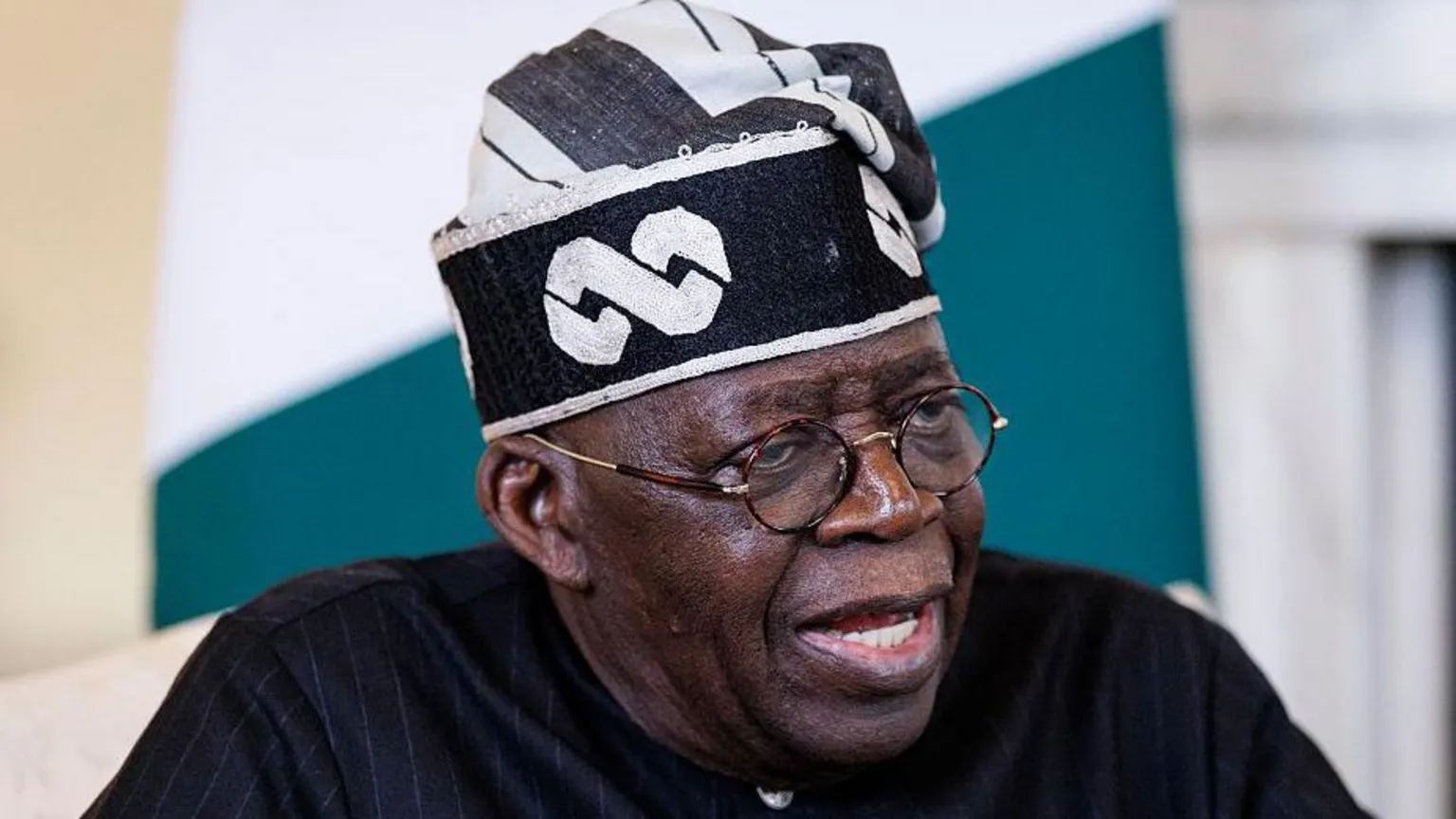
By Segun Adeleye
To ask whether Bola Tinubu has lived up to expectations since he stepped into office as Nigeria’s President three years ago will definitely attract mixed reactions.
Having started with a series titled “If I were Tinubu” before the president took the oath of office in 2023, which culminated in my book ‘Tinubu: Audacity to Hope’, foreworded by the Afenifere leader, Pa Reuben Fasoranti, one perspective through which I can review his third year is to reflect on questions that can also serve as warnings, for our country not to allow ‘stomach infrastructure’ dictate to the conscience and the purpose that has been denied, challenged, and continues to be resisted by some known and unknown internal and global forces.
TIME AND PURPOSE
The cycle of life teaches us to appreciate every stage of our journey. Life is constantly changing, with every experience, whether joyful or painful, contributing to who we are.
We can’t seem to get away from the culture that keeps the name of the current ruler on our lips as the architect of our misfortunes. Can this be traced to the history of dashed hopes and lack of opportunities?
There is time and season for every purpose in life. A few years ago, Buhari was like the most hated name that many Nigerian could ever wished for. We had similar experience with those before him like Obasanjo, Yar’Adua and Abacha. In fact, when the news of Abacha death broke out on June 8, 1998, there was jubilation across the country with a sense of relief that nothing as worse could ever befall the country again. It will be interesting to see the result we will get if we should tabulate a question that, which of the past administrations had brought most severe pain and anguish on the people? It has always been a case of lamenting with our current pains that our yesterday was better.
While social media has amplified the capacity of people to criticize their leaders more than at any other time in history, the Tinubu era has witnessed a dangerous dimension with a reported coup plot against his government in January this year. The alleged plot involved a clandestine network of military officers, with an Army Colonel identified as the coordinator. Six former security officials were later charged with treason, terrorism, and terrorism financing in April 2026.
The first question to reflect on in this piece is: what are the things critics say President Tinubu should have done in his three years in power? The areas where they believe he has fallen short include inadequate social intervention programs, with the argument that palliatives aren’t enough to address poverty and food insecurity. There was criticism of the lack of meaningful relief for citizens, with many Nigerians still struggling with rising food prices, inflation, and declining purchasing power despite economic reforms.
While criticism about insufficient job creation and security measures has been strong, one of the opposition parties claimed that worsening inflation and rising food prices have made daily life increasingly difficult for citizens, while the government failed to address job creation, electricity supply, and security concerns.
The government’s responses to criticisms have been varied but mostly draw attention to several reforms and initiatives in the country. Some notable achievements it showcased include:Removing fuel subsidies and unifying FX windows; Improving tax administration, digital revenue systems, and expanding the non-oil tax base; Increasing the tax-to-GDP ratio and easing debt-service pressure; Infrastructure development with projects like the Lagos-Calabar Coastal Highway, Abuja-Kaduna Road reconstruction, Kaduna-Birnin Gwari Road revival, and the Bonny-Bodo Road; Energy independence with Nigeria transitioning from being Africa’s largest petrol importer to West Africa’s largest exporter within two years; Improved security funding that supported efforts to combat oil theft, with incidents dropping to a 16-year low; and Student loan scheme to support indigent students in government tertiary institutions.
No doubt, President Tinubu’s economic reforms have had mixed impacts. On the positive side, they’ve strengthened economic stability and investor confidence, with foreign exchange reserves hitting $50 billion, the highest in 17 years. The reforms have also improved macroeconomic management, rebuilt buffers, and attracted portfolio inflows while reducing risk premiums. However, despite these gains, poverty and food insecurity still persist, with 63% of Nigerians said to be living in poverty and millions facing food insecurity. Inflation remains a challenge, easing slightly to 15.91% in June 2026 from 15.93% in May. The reforms have also contributed to social strain, with many businesses, especially MSMEs, struggling with operational challenges, increased production costs, and declining consumer purchasing power.
While the government has acknowledged these challenges, insisting that the reforms were necessary for long-term growth and stability, it has not provided a specific time-frame for when relief will start easing the pains. Critics of the infrastructure projects have raised questions like ‘Is it road that we go chop?’ Many have suggested alternative approaches to the reforms, including gradual subsidy phase-out, implementation of more targeted social safety nets, prioritizing economic diversification, and exploring debt restructuring options.
These alternatives seem like work in progress, with differences in implementation timelines and challenges
THE ENEMIES WITHIN AND WITHOUT
While rationalizing the questions of what has been done and what ought to have been done, my take is that it’s important not to forget Nigeria’s peculiarity, which seems to have stemmed from the defect in its creation in 1914, ignoring ethnic and cultural differences. This artificial union has contributed to post-independence governance challenges and regional tensions. The theory of conspiracies against Nigeria becoming a global economic powerhouse cannot be ignored. The neo-colonialism theory, which suggests that external forces, including former colonial powers and international financial institutions, are working to maintain Nigeria’s dependence and exploit its resources, is also relevant.
The failure of past leaders to understand the hypocrisy in the global order, which encouraged them to prioritize power and external validation over development, perpetuating inequality and poverty, is the bane of the country. Past leaders can be remembered for their wonderful campaign promises until they gained power, only to realize the depth of the problems and the complexity of achieving results in one or two terms. They then succumbed to self-preservation at all costs, including running the government on overdrafts and paying workers with loans, as witnessed during the Buhari regime. The locust years of military rule cannot be forgotten.
The leader who will transform Nigeria must understand that the problems confronting the country are not ordinary. A prosperous Nigeria will be a victory for the most oppressed people on earth and a loss to those who want it to remain dependent. That leader must be fearless and ready to give everything.
LIKE TINUBU, LIKE KING DAVID
President Tinubu seems to have cut the picture of someone who can go far if he remains stubbornly focused on what matters. It’s interesting that he described himself as a “very stubborn politician” who won’t be swayed by criticism or insecurity challenges. Imo State Governor, Hope Uzodimma, recently compared him to the late Lee Kuan Yew of Singapore. He may be right. But behind this posture should be concerns about how really tough and how far Tinubu can go? How irreversible are his reforms? After all, only one who stands firm to the end can be counted as victorious.
Tinubu is a peculiar Nigerian, toughened through exposure to different ways of living at home and abroad in search of a purpose, and the journey has thrown him opportunities and challenges. He is street and politics smart. His journey shares similarities with that of King David of old Israel. Despite all past mistakes that should have ruled him out of leadership, he made it. That is mercy. Despite all opposition to his candidacy, including from his ruling party, he made it. That is grace.
Like King David, if mercy and grace can bring Tinubu this far, then lessons from history show that he can do anything he sets his mind to. Removing fuel subsidies, unifying the naira, enacting sustainable tax laws, ending financial hemorrhaging through NNPC, simultaneously building superhighways across the country, appointing professionals including young women to head strategic government institutions that were once reserved for aristocrats, and contemplating state police are unprecedented, which leaders before him could not dabble into.
Tinubu is enjoying such mercy and grace that some could argue he is not qualified for, nor worked for. He can face and tell anyone in his party that no one made him. He can dare greater things and survive them. It’s one chance. But he must understand that they will not last forever. They lasted throughout David’s life, but his son who ruled after him, King Solomon, squandered them.
King David’s story showed how he received grace and favor despite his enemies’ plans. In one of his writings, he said God made his enemies become his allies. “You prepare a table before me in the presence of my enemies”. It’s interesting to say that grace has also turned Tinubu’s enemies into his allies, given the defections of governors from opposition parties to the ruling All Progressives Congress (APC). With almost all governors crossing to the ruling party, his re-election bid is in overdrive.
A PRAYER FOR THE LAND
Besides politics, for the sake of Nigeria, the country, irrespective of the leadership, will need all the support and prayers of it to succeed. History has shown us how Africans with strong convictions for change were cut down at their prime. We have examples like Thomas Sankara, Muritala Mohammed, MKO Abiola, Patrice Lumumba, Samora Machel, and Chris Hani, who died in the process of trying to make a change. Citizens should pray for the peace of the land so that it will be well with them.
In the world today, there are countries that seem to have no soul, no conscience, and no God. They are in perpetual crises, fighting wars that have deferred solutions. People are dying every day, while innocent souls are perishing with every attack. Even the United States, looked up to as an advanced democracy, along with Israel, is at war with Iran, with leaders who seem to have run out of ideas on how to end bloodshed.
Nigeria once had its own taste of violence following the massacres and attacks on Igbos, particularly in the north in 1966, which led to the Civil War. Up till now, many Igbos have not summoned the courage to forgive the country, as cries of injustice and marginalization continue to divide the country. To move forward and end the cycle of hatred, people need to reflect on the wisdom that humans and perpetrators of violence are always products and victims of society, either through ignorance or diverse factors. The simple challenge for those still harboring perceptual anger and grievance is the ageless riddle that those without sin should cast the first stone.
Now, this is the one chance. Tinubu is not young. He has been favored by the country and God. He has tasted the ugly, bad, and good parts of the land. He can resolve and declare that if he perishes, he perishes. This is the one opportunity for him to change the world.
• Segun Adeleye is a media-entrepreneur, the President/CEO World Stage Limited (WorldStage) and author of books including “Tinubu the Audacity to Hope.
-
 News24 hours ago
NOUN bursar shot dead in Zamfara
-
News1 day ago
Gumi took my Moroccan wife from me, Kaduna man alleges
-
News1 day ago
Enugu CP receives Best Crime Bursting police chief award , SP Ndukwe best PRO
-
Health2 days ago
My wife had headaches from oranges preserved with chemicals – Osinbajo
-
News1 day ago
Atiku’s lobbyist deletes Trump appointment claim as White House keeps mum
-
News2 days ago
Enugu Youths unite against terror, declare support for FG, Mbah’s War on Insecurity