Politics
OBI: A LETTER TO THE G5 GOVERNORS
• It is important to endorse Peter Obi for President, urges ETIM ETIM
Happy New Year, Your Excellencies!
Let me begin by acknowledging that your public statements and political activities in the last few months have enraptured national attention and kept us in suspense. The formation of the G5 Governors is one of the biggest political events of 2022. The fact that the five of you collectively govern no fewer than 35 million Nigerians and some 12 million registered voters makes you the single most powerful political bloc in this election season. When G5 speaks, the nation listens and the PDP shivers! Your leader, Governor Nyesom Wike, has been particularly inspiring and audacious. His achievements in Rivers State and personal charm have excited many and put off many others as well.
Among the agenda of the G5 Governors, the push to have the next president of Nigeria come from the southern part of the country, excites me. Our polity and democracy would be further strengthened if our union is more inclusive and embracing of the nation’s diversity. The Southern Governors Forum had met in Asaba in May last year and unanimously canvassed for the presidency to shift to the South after eight years of the Buhari administration. Your Excellencies, history will vindicate you for the principled position you have taken to insist on the presidency coming to the South. It would be a travesty of our multiplicity as a federation to have two presidents of Fulani origin back-to-back in a pluralistic country of over 250 ethnic nationalities.
As I write, the G5 Governors are meeting in London to take a final decision on which of the Presidential candidates they would endorse, and there are speculations that their choice would be announced early in the new year, presumably on Thursday, January 5. Of the four main candidates, two are Southerners, and that means the choice before the G5 is between Peter Obi and Bola Tinubu. I wish to respectfully call on the G5 governors to support Peter Obi for President. I have my reasons. Obi is the only one of the main contenders who has never been associated with any case of corruption and theft of public funds; and in a country where graft is a major problem, this is significant. As we all know, corruption erodes the trust we have in the public sector and drains the resources that would have been used to build a better society and enhance the quality of living. Development economists have over the years established a nexus between corruption and underdevelopment, insecurity, poverty and unemployment. Peter Obi and his running mate, Senator Datti Yusuf Baba-Ahmed, stand out as the cleanest pair in this presidential race and they hold out trust, confidence and hope for millions of our people.
The health and physical stamina of the candidates is another important criterion that the G5 governors should pay a particular attention to in making their choice. In our recent history, we have seen cases of Nigerian Presidents whose performance in office has been hampered by ill health. President Yar’Adua died in office; and even before that, he was clearly not a healthy man. President Buhari battled ill health soon after he took office and was hospitalized for seven months only two years after he was sworn in. The costs of taking care of a sick president are enormous, both in direct expenses on the treasury and in the frauds, abuse of office and national paralysis that transpire in his absence. The polity goes into some kind of palsy when the president goes abroad on a medical trip, and speculations, intrigues and rumors that play out daily in the corridors of power suck the energy out of the administration. Obi and Baba-Ahmed are the youngest and the fittest pair in this race; they are educated and possess the energy level that is required to tackle our huge problems. In addition, the Obi candidacy has inspired and drawn a lot of youthful Nigerians into politics this season – over 40 million new voters, mostly those aged 30 and below, have registered to vote. For them, Obi offers an alternative to the old, corrupt, incompetent and decrepit order that has held the nation down for 60 years.

Your Excellencies, I am usually not persuaded by ethnic bias in most of our national issues, but I believe in the strong need to strengthen our bond of unity as a federation and respect our diversity as a complex and pluralistic country. But I don’t ever want competence to be compromised on the platter of inclusiveness. I am a proud Ibibio man, but I will never choose an incompetent Ibibio fellow over a more competent and capable compatriot from another ethnic group. In this race, I believe that Peter Obi is as competent and capable as the other contenders, if not better, and at the same time, his ethnicity makes a compelling case for his election. It is time to have a competent, capable and well-prepared President from the South East for all the right reasons. The fabric of our nationhood would be further strengthened.
In 1999, this nation bent over backwards and chose a President from the South West, just to assuage the anxiety, apprehensions and tensions of those days. It is now time to act to prove that no part of this country is less important than others. If I were not convinced that Obi was a knowledgeable and capable Igbo man, believe you me, I wouldn’t support him. If Obi had been as little as accused of corruption in the past; suspected of engaging in illegal bunkering or theft of our crude oil; or accused of dealing in narcotics or any illegal or immoral activities, I would never support him, and would never recommend him to the G5. He is one of the most decent politicians in this country, and one of the few former governors who have never been accused or convicted of any crime. Peter Obi is not a saint, and I am actually not looking for one. But compared to the others in the race, he looks like an angel. Even his opponents have not found anything to tar him with. I therefore appeal to the G5 Governors to endorse Peter Obi for President and together, we shall fight to restore the glory of our country.
• Etim is a Journalist and member of the APC
(THISDAY)
Politics
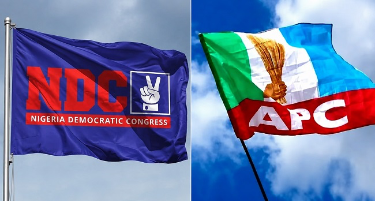
NDC disowns purported OK Movement PCC, moves to sanction John Ugulu
The Nigeria Democratic Congress (NDC) has disowned a purported announcement of a Presidential Campaign Council (PCC) under the name “OK Movement”, saying the publication credited to one John Ugulu did not emanate from the party.
The National Chairman of the party, Senator Cleopas Moses, made the position known in a statement on Saturday, stressing that only the party’s leadership has the authority to constitute and announce a Presidential Campaign Council.
Moses said the NDC “dissociates itself in totality” from the purported announcement and urged members of the public and the media to disregard it.
According to him, all candidates contesting under the platform of the NDC must recognise that they are not independent candidates but products of the party and are therefore subject to its authority and discipline.
“The party wishes to state categorically that only the party’s leadership can constitute and announce a Presidential Campaign Council, PCC,” he said.

The NDC chairman warned that no member, candidate or support group should take actions capable of undermining or demarketing the party, adding that no individual or group was authorised to announce, constitute or publish any campaign council, structure or organ in the name of the party without prior approval from the National Working Committee (NWC).
Moses acknowledged the contributions of support groups to the party, saying the NDC appreciated their efforts and remained open to welcoming more groups committed to its mission of “rescuing Nigeria”.
He, however, cautioned support groups against presenting themselves as alternative structures or parallel organs of the party.
The chairman also urged members and support groups with grievances against the party to use established internal channels rather than resorting to public attacks.
“We expect a stop to unnecessary attacks against the party on whose platform our candidates are running. If there are any differences or grievances, support groups and members are advised to refer such matters to the party through appropriate internal channels for resolution rather than resorting to public attacks,” Moses said.
On Ugulu, the NDC chairman said the party had decided to refer him to its appropriate disciplinary organ over what he described as “this act of affront and his excesses during the primary election in Lagos State” as well as his alleged repeated disregard for party authority.
He said the disciplinary action would be taken in accordance with the provisions of the party’s constitution.
Moses reaffirmed the NDC’s commitment to its issue-based campaign, saying the party remained focused on delivering what it described as “a New Nigeria that is Possible.”
Politics
2027: Tinubu, Atiku, Obi, 15 others make INEC final presidential candidates’ list
Independent National Electoral Commission (INEC) has published the final list of presidential candidates and their running mates for the January 2027 general elections.
The list, signed by the Secretary to the Commission, Rose Oriaran-Anthony, released on Saturday in Abuja, featured candidates sponsored by 18 political parties competing for the office.
The News Agency of Nigeria (NAN) reports that the gender distribution of the list showed that out of the 18 presidential flag bearers, 16 are male, representing 88.9 per cent, while two are female.
NAN also reports that the male contenders on the list include: Bola Tinubu of All Progressives Congress (APC), Abubakar Atiku of African Democratic Congress (ADC), and Peter Obi of Nigerian Democratic Congress (NDC).
Others are: Adewole Adebayo of Social Democratic Party (SDP), Oluseyi Makinde of Allied People’s Movement (APM), Donald Duke of People’s Redemption Party (PRP), Chibuzor Okereke of Labour Party (LP) and Omoyele Sowore of African Action Congress (AAC).

The only two female presidential candidates, which constitute 11.1 per cent of the number, are: Okwori Fredrick of National Democratic Party (NDP) and Dr Esther Okereke of National Redemption Party (NRM).News
The gender statistics of the vice-presidential candidates also shows that a total of 14 running mates are male, representing 77.8 per cent, while only four, representing 22.2 per cent, are female.
The female vice-presidential candidates are: Ofordile Egobia (APP), Abubakar Usaku (DLA), Konto Bintu (LP) and Patience Ndidi (YPP).
NAN reports that the commission also released the final list of candidates for the senate and the House of Representatives.(NAN)
Editorial
60 Years After: The Enduring Legacy Of Sir Odumegwu Ojukwu
How a pioneering businessman, philanthropist and education advocate continues to live on through family, enterprise and institutions
By Tony Edike
Sixty years after his death, the name Sir Louis Philip Odumegwu Ojukwu still evokes memories of enterprise, discipline, philanthropy and an uncommon commitment to education.
He died at Nkalagu in the then Eastern Region on September 13, 1966, leaving behind a legacy that has continued to endure across generations.
Born in 1909 at Umudim, Nnewi, Sir Odumegwu was the sixth of the 10 sons of Ojukwu Eze Okigbo and the only son of his mother, Ukonwa, among her four children.

Sir Odumegwu Ojukwu with Dr Nnamdi Azikiwe

From humble beginnings, he rose to become one of Nigeria’s foremost businessmen and industrialists of his generation, while also making significant contributions to public institutions and the development of the then Eastern Region.
Six decades after his passing, his family, friends, associates and Ojukwu Transport Limited — the company he founded — are preparing to commemorate his life and legacy.
The anniversary will not, however, be marked with elaborate festivities.

Sir Odumegwu Ojukwu
According to his grandson, Dr P. Ike Ojukwu, an Obstetrician and Gynaecologist and a Director of Ojukwu Transport Limited, the family intends to keep the activities low-key, with events spread across the year.
“Sixty years is a long time,” Dr Ojukwu said, explaining that the commemoration would take place in different forms throughout the year.
A special Mass has been arranged in his memory, while other activities are being planned to honour the late business mogul and philanthropist.
A LEGACY THAT TRANSCENDS BUSINESS
Perhaps nowhere is Sir Odumegwu’s enduring influence more evident than in the continued activities of Ojukwu Transport Limited.
The company, which he founded, remains part of the family’s effort to preserve his ideals and memory.
One of the initiatives being sustained is the annual Sir LP Odumegwu Ojukwu Prize, awarded to the best graduating students in the Faculty of Business Administration and the Department of Estate Management/Surveying at the University of Nigeria.

Sir Ojukwu with nephew, Emmanuel and sons Joseph and Emeka
For the current winners, there is additional reason to celebrate.
The prizes have been revised upwards, and the beneficiaries have been urged to contact Ojukwu Transport Limited to receive their awards. The University authorities have already been notified.
The Sir Odumegwu Ojukwu Hall at the Enugu Campus of the University of Nigeria will also feature in the anniversary remembrance.
Beyond these existing commitments, the family is addressing plans for a proposed memorial hospital, scholarships and other charitable initiatives.
THE BUSINESSMAN WHO SERVED HIS REGION
Sir Odumegwu Ojukwu’s business achievements were matched by his involvement in public affairs.
He served as Chairman or Director of several government agencies and was also Chairman of the African Continental Bank, one of the prominent financial institutions of the period.

Sir Odumegwu with hos wife, Virginia
His influence extended into the establishment and development of the University of Nigeria.
The university was the brainchild of the late Right Honourable Dr Nnamdi Azikiwe, the Owelle of Onitsha, who was a close friend of Sir Odumegwu.
The Eastern Regional Government provided the principal funding for the establishment of the institution, but men such as Sir Odumegwu played important roles in mobilising support and resources for the ambitious project.
His contributions did not go unnoticed.
In the early 1960s, the University of Nigeria conferred an honorary Doctor of Laws (LLD) degree on him in recognition of his accomplishments.
It was an appropriate honour for a man whose own life had demonstrated the transformative power of education.
FROM “LP” TO “SIR ODUMEGWU”
To many Nigerians of his generation, he was initially known simply as LP Ojukwu — the initials standing for Louis Philip.
But following his knighthood by the Queen in the early 1960s, he chose to be known by his Igbo name, Odumegwu.

Sir Odumegwu Ojukwu with friend,
Sir Mobolaji Bank-Anthony.
The decision was also influenced by his friendship with the then Chief Justice, Sir Louis Mbanefo. Rather than have two prominent men carrying the same first name and title, he elected to use Odumegwu.
Thus, LP Ojukwu became Sir Odumegwu Ojukwu.
The name would subsequently become synonymous with business, philanthropy and public service.
“DIOKPALA NNEM”
Behind the public figure was a deeply committed family man.
Those who knew him remember his affection for his sisters — Mrs Nwosu, Mrs Okoli and Mrs Obi — and for their children.
To them, he was affectionately known as “Diokpala Nnem”, meaning “my mother’s first son.”
The relationship was reciprocal. He loved and supported his siblings, while remaining deeply attached to their families.
His philosophy was not simply to provide assistance, but to create a chain of responsibility.
He sponsored and trained at least one of his brothers’ children. But when the beneficiary completed the training, Sir Odumegwu insisted that the person should support their mother and, in turn, train another relative.
For him, assistance was meant to produce independence — and independence was expected to create another opportunity for someone else.
EDUCATION AS A FAMILY RESPONSIBILITY
His commitment to education developed early.
Still in his late twenties when his parents died, the young LP suddenly found himself shouldering responsibility for the education of his younger sisters.
When one of his younger sisters performed exceptionally well in her annual examinations, he reportedly wrote to her principal requesting double promotion.
The request was not merely a recognition of her brilliance. It was also intended to shorten the period of schooling and reduce the financial burden on him.
That episode captured something fundamental about his character: he valued excellence, but he also understood the sacrifice required to create it.
Even though he was known to be strict and careful with his hard-earned money, he was generous towards people placed under his care.
He instructed that his wards should be supported until “Ubulu fa emechie” — a traditional expression meaning, in essence, until the brain closes or intellectual development is complete.
Education, in his view, was therefore not a luxury. It was an obligation.
STRICT WITH HIS CHILDREN, PROUD OF THEIR SUCCESS
His philosophy of education was particularly evident in the upbringing of his own children.
A poor report card could provoke his anger, but academic success brought overwhelming joy and pride.
Although his sons lived and attended primary and secondary schools in Lagos Island, he insisted that they spend their holidays with members of the extended family in Nnewi, Onitsha or Port Harcourt.
At other times, they stayed with his cousin, Felix Okonkwo, popularly known as Okonkwo Kano, in Kano.
The arrangement ensured that despite growing up in Lagos, the children remained connected to their extended family and their roots.
SIX DECADES, BUT THE MEMORY REMAINS
For a man who died in 1966, Sir Odumegwu Ojukwu’s name has proved remarkably resilient.
His family continues to preserve his memory. His company continues to honour academic excellence in his name. Institutions continue to bear his name. Plans for scholarships and other charitable projects seek to extend the values he espoused to another generation.
And those who knew him continue to remember the man behind the achievements.
They describe him as a man of honesty, integrity, boundless energy, kindness, discipline, generosity and an unwavering belief in education.
His story is therefore not simply that of a wealthy businessman who lived and died six decades ago.
It is the story of a man who understood that wealth could be used to build people, institutions and opportunities.
It is the story of a businessman who became a philanthropist, a family patriarch who became a mentor, and a public-spirited citizen whose influence extended beyond his immediate commercial interests.
As the 60th anniversary of his death is commemorated, the central question is not merely how Sir Odumegwu Ojukwu should be remembered.
Rather, it is what should be done with the values he left behind.
For his family and associates, the answer appears clear: keep the legacy alive — through education, enterprise, service and giving.
A solid and unapologetic Igbo man, he was, nevertheless, completely detribalised in his outlook. Sir Odumegwu placed competence, loyalty and integrity above ethnicity, and Nelson Oyesiku’s appointment to the National Shipping Line in 1964 was just one example of this philosophy. He was an extremely family-oriented and down-to-earth man, yet he had a refined taste for Savile Row suits, shoes from Harrods, and choice traditional attire, some of which came courtesy of Alhaji Razaq Okoya’s father and others. At the time of his death, his principal residence was ‘Eastern House’ on Hawksworth Road, Ikoyi, Lagos.
His taste extended to his vehicles, although his impressive fleet never altered his simple and adventurous habits. LA 1 was a Rolls-Royce Silver Wraith, while LC 1 was a Cadillac. The fleet also included an Armstrong Siddeley, Oldsmobile, Pontiac, Rover and Land Rover, ably handled by Mensah and Clement. Despite having such a fleet, he was known to travel from Lagos to the East, often at night, sometimes alone with a trusted driver, a firearm cradled close at hand. The household services were handled by Oriuwa in the kitchen and Bernard, while his beloved pets included two Great Danes, Hector and Flash.
Sixty years after Nkalagu, Sir Odumegwu Ojukwu may be gone, but the ideals associated with his name continue to find expression in the lives of those he touched and in the institutions that still bear his imprint.
PHOTOS OF SIR OJUKWU FROM THE ARCHIVES


-
Uncategorized2 days agoSoludo vs Obi: What the records say about Anambra’s loans
-
News1 day agoSoludo frees jailed Akwa Okuko tiwara aki
-
Uncategorized2 days agoIbaji and the Politics of the Perpetual Road Promise
-
News2 days agoFraud tops offences as 134 Nigerians face US deportation
-
Uncategorized2 days agoGunmen kill popular politician
-
News1 day agoAppeal Court upholds NDC registration, overturns Lokoja ruling
-
Health3 days agoPoisonous Drinks: Ondo Govt confirms 49 deaths, 170 affected as new cases are recorded
-
Uncategorized2 days agoNSCDC orders probe as 40 illegal miners die in custody