News
Lafarge cement convicted of financing terrorism operations


Lafarge has been found guilty by a French court of financing terrorism after it paid millions of dollars to jihadist groups, including the Islamic State, to sustain its operations in Syria during the civil war.
The Paris court according to a report by the Cable Nigeria, said the company made payments of about $6.5 million between 2013 and 2014 to armed groups in northern Syria to secure staff movement, maintain access to raw materials and keep its cement plant in Jalabiya operating.

The court found that the payments extended to the Islamic State and the Nusra Front, an al-Qaeda-linked organisation designated as a terrorist group.

Presiding judge Isabelle Prevost-Desprez said the arrangement enabled proscribed organisations to obtain financial resources used to support attacks across the Middle East and Europe.

“The payments were essential in enabling terrorist organisations to gain control of resources and finance attacks within the region and abroad,” she said.
Eight former employees were also convicted. Former chief executive Bruno Lafont was sentenced to six years in prison, while former deputy managing director Christian Herrault received a five-year sentence. Syrian former employee Firas Tlass was sentenced in absentia to seven years.
Lafarge, now owned by Swiss group Holcim, said it accepted the ruling, describing the case as a legacy matter involving conduct that occurred more than a decade ago and in breach of its code of conduct.
“We acknowledge the court’s findings. These actions, which date back more than a decade, were in flagrant violation of Lafarge’s code of conduct,” the company said.
The company acquired the Jalabiya plant in northern Syria in 2008 and began operations in 2010, shortly before the outbreak of the Syrian civil war. Payments continued until September 2014. (Guardian)



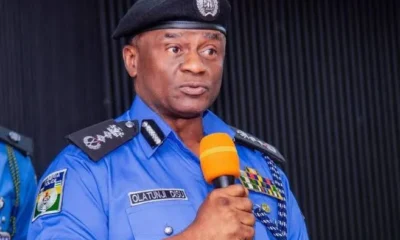







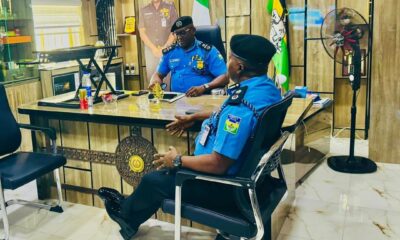

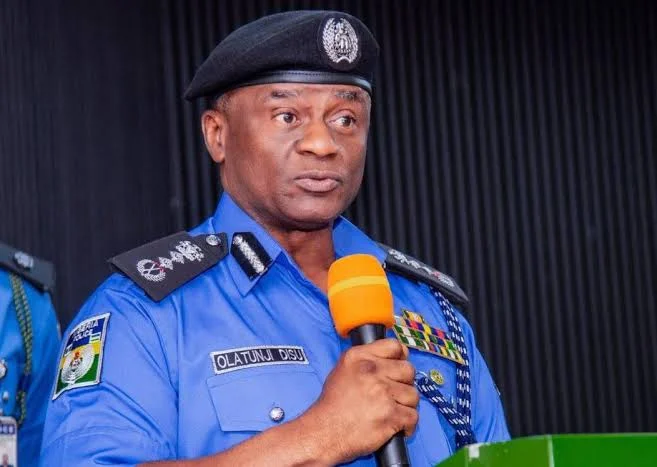
The Inspector-General of Police (IGP), Olatunji Disu, has directed hospitals and medical personnel across Nigeria to provide immediate medical attention to gunshot victims without demanding a police report as a precondition for treatment.
The directive, contained in a statement published on the official X handle of the Nigeria Police Force on Thursday, emphasises the need to prioritise saving lives over administrative procedures during medical emergencies.
Disu described the issue as a matter of life and death, warning that delays in attending to gunshot victims could lead to avoidable deaths.
He clarified that the law does not require victims of gunshot injuries to obtain or present a police report before receiving medical attention at any hospital.
“When a gunshot victim is brought to any hospital, the law does not require a police report before treatment,” the IGP stated.
The police chief specifically appealed to doctors, nurses and other healthcare professionals to ensure that injured persons receive prompt medical attention without waiting for police documentation.
He also reassured Nigerians that the primary responsibility of the police is to protect lives and ensure public safety, rather than create fear or discourage members of the public from assisting people in distress.
Addressing members of the public, Disu urged Nigerians not to hesitate to assist injured persons during emergencies, assuring them that they would not face punishment for offering help.
“To members of the public, if you see someone injured, do not hesitate to help. You will not be punished for helping,” he said.
The IGP further charged police officers and healthcare workers to uphold the law and ensure that administrative requirements do not become obstacles to emergency medical intervention.
Reiterating the urgency of the directive, Disu delivered a clear message to hospitals and emergency responders: “Treat first, save lives.”
News
Anambra Billboard Saga: Onyima Challenges Soludo Govt to Cite Law Behind Umeh’s Billboard Removal
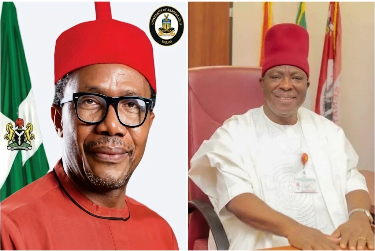
• Billboard Controversy Deepens As Critics Faults Soludo Govt’s Action
The controversy surrounding the removal of a campaign billboard belonging to Senator Victor Umeh in Anambra State has deepened, following criticism of the state government’s explanation by prominent Nigerian journalist, Dr Tony Onyima.
The Anambra State Government had dismissed allegations that the billboard was removed because it featured the image of former Governor Peter Obi, insisting that the action was based on an alleged violation of the Anambra State Signage Act, 2010.
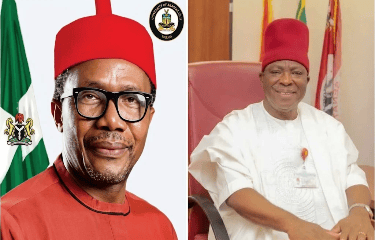
The billboard, which reportedly featured Senator Umeh, who represents Anambra Central Senatorial District, alongside Peter Obi, the presidential candidate of the National Democratic Congress (NDC), was defaced by officials of the Anambra State Signage and Advertisement Agency (ANSAA).
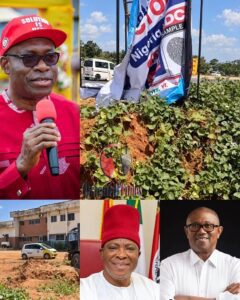
The incident generated widespread reactions after a video showing officials defacing the billboard was shared on social media by Charles Ifeanyi Obi, an aide to Senator Umeh.
The aide questioned the action, particularly as the senator had allegedly fulfilled his financial obligations to the agency. He also shared a photograph purportedly showing representatives of the senator making a payment of N20 million as statutory political advertising fees.
Reacting to the controversy, the Commissioner for Information and Value Reformation, Dr Law Mefor, said the enforcement action had nothing to do with Peter Obi’s image or political affiliation.
In a statement issued in Awka on Thursday, November 19, 2026, Mefor acknowledged that Senator Umeh had paid the required signage fee but alleged that Peter Obi had not fulfilled the relevant payment requirements.
According to him, featuring the NDC presidential candidate on the billboard without meeting the statutory obligations constituted a violation of the state’s signage regulations.
Mefor further explained that the law being enforced was enacted in 2010 during Peter Obi’s administration as governor of Anambra State.
He warned that any combined billboard campaign featuring political candidates who had failed to meet their signage obligations would attract similar enforcement, irrespective of their political status or party affiliation.
However, Onyima, in a reaction titled, ‘Mefor’s Explanation Raises More Questions Than Answers’, faulted the government’s position, describing its justification as contradictory and raising questions about the legal basis for removing a billboard sponsored by someone who had reportedly paid the required fees.
He argued that if the removal had nothing to do with Peter Obi’s image, the government should explain why the former governor’s alleged failure to pay signage fees formed the central justification for the action.
Onyima also questioned whether the Anambra State Signage Act, 2010, permits the removal of a billboard sponsored by an advertiser who has fulfilled his financial obligations simply because another person featured in the advertisement allegedly failed to pay the required fees.
He challenged the commissioner to identify the specific provision of the law that authorises such enforcement.
The journalist further suggested that the controversy had a political dimension, arguing that the growing public appeal and political influence of Peter Obi could not be diminished through the removal of billboards.
He maintained that the fact that the signage law was enacted during Obi’s administration did not automatically justify its application, insisting that what mattered was whether the legislation was being enforced fairly and consistently.
“Nobody is suggesting that Peter Obi or anyone else should be exempt from applicable signage fees. The issue is simple: Senator Umeh paid for his billboard. On what specific legal grounds, therefore, was it removed?” Onyima queried.
He urged the Soludo administration to provide the statutory provisions supporting its action rather than rely on political arguments.
Onyima warned that the rule of law must not become an instrument of political intimidation, adding that while a billboard could be pulled down, the political influence and public image of Peter Obi among his supporters could not be demolished.
The incident has continued to generate debate over the regulation of political advertising in Anambra State, with questions emerging about the responsibilities of advertisers, candidates featured in campaign materials and the extent of enforcement powers available to ANSAA.
The controversy is also unfolding against the backdrop of increasing political activities ahead of the 2027 general elections, with the state government’s insistence on regulatory compliance facing scrutiny from critics who want greater clarity on the legal basis for the enforcement action.

The Economic and Financial Crimes Commission (EFCC) has arraigned Lagos socialite, Halimat Adenike Tejuosho, over an alleged ₦603.4 million fraud involving a promise to secure the appointment of a woman as Group Managing Director of the Nigerian National Petroleum Corporation (NNPC).
Tejuosho was arraigned on Wednesday, November 18, 2026, before Justice A.S. Adepoju of the Federal Capital Territory High Court sitting in Gwagwalada, Abuja, on a five-count charge bordering on advance fee fraud, obtaining money by false pretence and receiving proceeds of crime.
The charge, marked FCT/CR/473/2026, accused Tejuosho and her co-defendant, Gidado Ibrahim, of allegedly collecting ₦603.4 million from one Oluseye Yomi-Sholoye between August and October 2024.
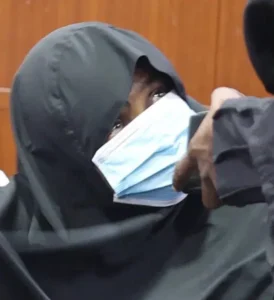
According to the EFCC, the defendants allegedly obtained the money under the pretence that they could facilitate Yomi-Sholoye’s appointment as the Group Managing Director of the NNPC, knowing that the representation was false.
The anti-graft agency further alleged that Tejuosho received ₦259.9 million into her Access Bank account between August and October 2024.
She was also accused of receiving an additional ₦50 million on September 30, 2024, into an account belonging to Haleems Integrated Services Limited, allegedly knowing that the funds were proceeds of criminal activity.
When the five-count charge was read to her, Tejuosho pleaded not guilty to all the allegations.
Following her plea, her counsel, Chuks Ugwuru, applied for bail on liberal terms, arguing that the offences were bailable.
The defence lawyer also relied on his client’s health condition, presenting a medical report which he said indicated that she was critically ill.
He urged the court to consider her medical condition as a special circumstance warranting the grant of bail.
However, EFCC prosecution counsel, Yahaya Tarfa, opposed the application, informing the court that the commission had filed a 12-paragraph counter-affidavit, alongside an exhibit and written address.
Tarfa urged the court to impose appropriate conditions to ensure that the defendant would be available throughout the trial.
In her ruling, Justice Adepoju granted Tejuosho bail in the sum of ₦100 million, with one surety in the same amount.
The court directed that the surety must reside within the court’s jurisdiction and own landed property in the Federal Capital Territory.
The judge further ordered that the property’s title documents be verified by the FCT Land Registry, with a copy deposited with the court registrar.
Tejuosho was also directed to surrender her international passport to the court registrar pending the hearing and determination of the case.
The court ordered that she remain at the Kuje Correctional Centre until she fulfils the bail conditions.
The case was subsequently adjourned until February 1, 2027, for trial.
Meanwhile, reports have linked Tejuosho to the City Boy Movement, a political support group associated with President Bola Tinubu. However, the group reportedly distanced itself from her on the day of her arraignment, insisting that she was not its member.
The EFCC had earlier declared her wanted in April 2026 over an alleged case of obtaining money by false pretence.
The allegations are yet to be established in court.
-
 News3 days ago
Nigerian Pastor Dies Aboard Flight From US
-
News2 days ago
Enugu Assembly Passes Bill Capping Rent Increase at 2%, Restricts Hikes to Four Years
-
News24 hours ago
U.S. Strategist Diana London Deletes Posts on Tinubu, Nigeria-U.S. Security Partnership
-
News2 days ago
Nursing Students Shut Down School, Protest Colleague’s Death
-
News3 days ago
Mbah’s Manifesto Scorecard: From Promises to Projects, Enugu’s Journey of Transformation
-
News2 days ago
Gunmen Kill Security Guard, Abduct Businessman’s Family Members, Visitor in Zamfara
-
News2 days ago
₦17.58bn Cash Gifts: Ebonyi Stakeholders Beg Newspaper to Withhold Beneficiaries’ List
-
News2 days ago
CP Ogarabe Assumes Duty as Enugu Police Commissioner, Pledges Intelligence-Led Policing