
Features
Ebonyi Will Rise Again: Odii’s Vision of Economic Renewal, Jobs and Inclusive Development


By Tony Edike
• As PDP governorship candidate unveils 180,000-job target, promises free education, industrialisation, agricultural transformation and a new approach to governance
The future of Ebonyi State is once again at the centre of an important political conversation as the race for the 2027 governorship election gathers momentum. At the heart of this conversation is Chief Dr Ifeanyi Chukwuma Odii, the Peoples Democratic Party (PDP) governorship candidate, who says his ambition is driven by a desire to rebuild the state’s economy, expand opportunities for its people and place Ebonyi on a new path of sustainable development.
With the declaration, “Ebonyi will rise again,” Odii is presenting his aspiration as more than a quest for political power. He is seeking to sell a vision of economic recovery, social inclusion and institutional transformation, anchored on the belief that Ebonyi has the human resources, natural endowments and entrepreneurial capacity to become a stronger economic player in the South-East and Nigeria.

His message, delivered during a media parley in Enugu on Wednesday, November 25, 2026, and reinforced by his manifesto, Anyi G’emeya: A Promise of Possibility, is built around a central proposition: that Ebonyi can achieve more if its enormous economic potential is properly harnessed and governance is directed towards the needs of ordinary citizens.


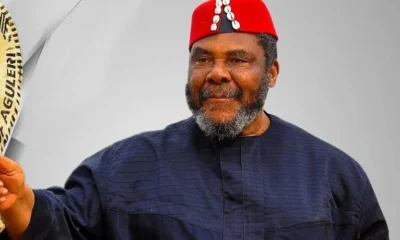
Dr Ifeanyi Odii

For a state blessed with agricultural land, solid mineral resources, a hardworking population and a strategic position in the South-East, the question of how to translate these advantages into prosperity remains fundamental.
Odii believes the answer lies in moving beyond an economy largely dependent on federal allocations towards one driven by productive industries, agriculture, private investment, entrepreneurship and value addition.
Beyond political promises: An economy driven by productivity
One of the most ambitious proposals in Odii’s manifesto is the creation of more than 180,000 jobs if elected governor.
The proposal reflects an understanding of one of the most pressing challenges confronting Ebonyi and Nigeria at large: the need to create sustainable employment opportunities for a growing population of young people.
Rather than relying exclusively on government recruitment, the PDP candidate is proposing an economic structure in which agriculture, manufacturing, mining, trade, quarrying and tourism become major sources of employment and revenue.
The thinking is that government should not only employ people directly but also create an environment in which businesses can grow, industries can operate and private investors can generate jobs.
This approach, if properly implemented, could provide opportunities for graduates, artisans, farmers, technicians, traders and entrepreneurs across the state’s 13 local government areas.
However, the 180,000-job target will require more than political commitment. It will demand a clear implementation framework, investment mobilisation, sector-by-sector employment targets and a transparent monitoring mechanism to establish how many sustainable jobs are actually created.
The strength of the proposal will ultimately be measured not by the number announced during campaigns but by the number of Ebonyi residents who secure decent and lasting employment.
Agriculture: Turning Ebonyi’s strength into economic wealth
Agriculture remains one of Ebonyi’s greatest economic advantages. Yet, for many farmers, production is still constrained by limited access to modern equipment, improved seedlings, irrigation, financing, storage facilities and reliable markets.
Odii’s proposed agricultural transformation seeks to address these challenges by moving farmers from subsistence production to commercial and technology-driven agriculture.
His manifesto proposes mechanisation, improved agricultural inputs, irrigation systems, accessible financing and stronger market connections.
It also envisages specialised agro-industrial processing zones across strategic locations in the state, where agricultural produce can be processed, packaged and prepared for wider markets.
This is particularly important because the economic value of agriculture does not end with harvesting. The real opportunity lies in processing, packaging, preservation, distribution and export.
For instance, rather than allowing farmers to sell their produce at low prices because of limited storage or processing facilities, an agro-industrial system could create opportunities for food processing companies, transporters, packaging businesses and other supporting enterprises.
Odii also proposes identifying between 400 and 500 hectares of suitable land for commercial agriculture and agro-industrial investments, subject to feasibility studies and consultations with host communities.
Smallholder farmers would be integrated into larger investments through outgrower arrangements, allowing them to benefit from commercial agricultural operations without necessarily losing their independence.
If implemented with transparency and adequate protection of community interests, such a model could help improve agricultural productivity, strengthen rural economies and make farming more attractive to young people.
Solid minerals: An opportunity beyond agriculture
Perhaps one of the most significant areas of opportunity highlighted by Odii is the solid minerals sector.
Ebonyi is endowed with mineral resources that, if properly explored and developed within the applicable legal framework, could contribute substantially to its economic growth.
The PDP candidate believes the sector can become a major source of investment, employment and revenue.
During the Enugu media parley, he estimated the potential value of the state’s solid mineral resources at more than $20 trillion. This is his assessment, however, and would require independent geological verification and economic evaluation.
Importantly, mineral resources fall under the exclusive control of the Federal Government, but state governments can play important facilitating roles through infrastructure, land administration, investment promotion, environmental oversight within their jurisdiction and partnerships that benefit host communities.
Odii says his proposed administration would develop a framework for attracting credible mining investors while ensuring that local communities and young people benefit from the economic opportunities generated.
The objective should be to move beyond the extraction of raw minerals towards value addition, local processing and the development of supporting industries.
For Ebonyi, this could mean more employment for skilled and unskilled workers, new business opportunities and increased economic activities in mineral-producing communities.
However, environmental protection, community consent, responsible mining and strict regulatory compliance must remain central to any such development strategy.
Industrialisation and electricity: Building the foundation for businesses
No modern economy can achieve meaningful industrial growth without reliable electricity, functional infrastructure and a business-friendly environment.
Odii’s manifesto recognises these requirements and proposes the establishment of industrial clusters and production hubs equipped with electricity, roads and water supply.
The proposed clusters are intended to attract manufacturing companies, encourage small and medium-scale enterprises and provide a platform for local businesses to expand their operations.
His electricity proposal is particularly noteworthy.
With the opportunities created by the Electricity Act 2023, which provides a framework for greater participation by states and private investors in the electricity market, Odii says his administration would explore alternative power-generation and distribution arrangements.
These include solar mini-grids, biomass, gas-powered electricity solutions and other renewable energy sources.
The idea is to develop energy solutions that can serve industrial clusters, commercial centres and underserved communities.
For a state seeking to attract manufacturers and industrial investors, reliable electricity could make a significant difference in production costs, business competitiveness and job creation.
The proposed reforms to simplify business registration and permit procedures, while eliminating multiple and arbitrary levies within the state’s jurisdiction, also point towards an effort to make Ebonyi more attractive to investors.
Ultimately, the success of this agenda will depend on whether businesses can operate with greater confidence, predictability and reasonable operating costs.
Free education: Investing in the next generation
Perhaps the proposal with the most direct impact on ordinary families is Odii’s promise to introduce free public primary and secondary education across Ebonyi State.

For parents struggling with the rising cost of living, education expenses can constitute a significant financial burden.
The proposed policy seeks to remove the financial barriers preventing children from accessing basic education and ensure that indigent pupils are not denied opportunities because of their economic circumstances.
But Odii’s education agenda goes beyond the payment of school fees.
His manifesto also proposes improved school infrastructure, better teaching standards and expanded access to vocational and technical education.
He intends to promote partnerships between educational institutions, manufacturers and industry associations to equip young people with practical skills relevant to the demands of modern industries.
This is an important consideration because the future of education must be linked to the realities of the economy.
As Ebonyi seeks to develop its manufacturing, agricultural processing, mining and technology sectors, it will require a workforce with the necessary technical knowledge and practical skills.
Free education, therefore, could become an investment in human capital, provided the policy is supported by adequate funding, qualified teachers, functional classrooms, instructional materials and effective supervision.
The proposed policy will also require a clear financial plan to guarantee that free education does not compromise the quality of teaching and learning.
Healthcare and social protection
A prosperous society must also be a healthy society.
Odii’s manifesto proposes strengthening the healthcare system through improved medical facilities, increased capacity for healthcare personnel, access to essential medicines and expanded primary healthcare services.
Particular attention is expected to be given to underserved communities where access to quality healthcare remains a challenge.
The emphasis on primary healthcare is significant because many preventable illnesses can be addressed through functional health centres, qualified personnel, maternal and child healthcare services, immunisation and timely access to essential medicines.
For rural residents, access to healthcare should not depend on how far they live from major urban centres.
The proposed improvements, if delivered, could strengthen the healthcare system and reduce the burden on families who often travel considerable distances to access medical services.
Security and peaceful communities
Economic development cannot thrive in an atmosphere of insecurity.
Odii has therefore identified security as a major component of his proposed administration, promising a community-based and intelligence-driven approach to addressing kidnapping, communal disputes, cultism, drug abuse and other criminal activities.
His manifesto specifically identifies longstanding communal conflicts involving Abaomege and Ishinkwo, Ezza and Ezilo, Ezza and Effium, as well as Ngbo and Agila communities, as areas requiring sustained government attention.
These conflicts have, over the years, affected relationships among communities, disrupted economic activities and created humanitarian challenges for affected populations.
The candidate proposes stronger cooperation among security agencies, traditional rulers, local government authorities and community organisations.
He also advocates improved intelligence gathering, surveillance and emergency response systems.

Beyond security operations, however, lasting peace will require dialogue, justice, reconciliation, respect for traditional institutions and equitable development.
The government must also address the underlying factors that allow communal disputes to persist, including land disagreements, boundary disputes and competition over resources.
Governance that measures performance by results
One of the most important elements of Odii’s proposals is his emphasis on institutional reforms and accountability.
His manifesto promises reforms in land administration, right-of-way permits, civil service operations and judicial administration, with the objective of simplifying government procedures and improving efficiency.
He also proposes strengthening internally generated revenue without imposing unnecessary financial pressure on residents and businesses.
This is an important distinction because sustainable revenue generation should be driven by economic expansion, improved tax administration and the formalisation of business activities rather than arbitrary levies.
To strengthen transparency, Odii proposes digital budgeting, open procurement processes, expenditure monitoring and regular publication of government revenue and spending reports.
He also intends to establish a dedicated delivery unit to monitor government commitments and assess performance against measurable targets.
The proposed delivery unit could provide an important mechanism for ensuring that campaign promises do not disappear after elections.
His promise to pursue visible development within the first 200 days in office is another indication of the emphasis he wants to place on measurable results.
However, the effectiveness of such a structure will depend on its independence, access to reliable information and the willingness of government institutions to submit themselves to performance evaluation.
The private-sector experience and the challenge of public leadership
In making a case for his candidacy, Odii has repeatedly drawn attention to his experience in the private sector and his philanthropic interventions in Ebonyi communities.
During the media parley, he cited the construction of more than 120 houses, the provision of over 2,000 basic education scholarships, and support for orphanages and other community facilities among his interventions.
He argued that these efforts demonstrate his commitment to improving people’s lives and his capacity to mobilise resources for development.
He also disclosed that he had identified more than 100 business associates with the capacity to invest up to ₦1 billion each in Ebonyi, adding that the number of prospective investors willing to visit the state had increased to more than 300.
If these relationships translate into actual investments, they could provide an important foundation for private-sector participation in the state’s economic development.

Nevertheless, there is a fundamental difference between managing private businesses and governing a state.
Public leadership requires accountability to millions of citizens, respect for due process, prudent management of public resources and the ability to coordinate institutions with competing responsibilities.
Odii himself acknowledged this distinction when he said that he could not transform the state alone and would require the support of the people and the institutional capacity available to an elected governor.
His statement, “Only me cannot do it,” captures an important reality about governance: sustainable development requires collective participation.
A campaign built around issues and possibilities
Another feature of Odii’s political message is his stated preference for issue-based campaigning.
He said his campaign would avoid personal attacks and focus on policies, development priorities and verifiable records of performance.
His slogan, “Anyi G’emeya” — We will do it — is intended to communicate confidence, collective responsibility and the possibility of achieving a better future.
Explaining the philosophy behind the slogan, he said it represented a commitment to delivering on promises, remembering the poor, uplifting vulnerable citizens, returning indigent students to school and empowering young people.
The message is directed at a broad constituency: farmers seeking better opportunities, parents concerned about education, young people searching for employment, business owners looking for a supportive environment and communities demanding infrastructure and security.
As his statewide campaign begins, the challenge will be to translate these broad aspirations into practical engagements with residents across the 13 local government areas.
The questions that must be answered
While the manifesto presents an ambitious development agenda, its proposals also raise important questions that deserve detailed answers.
How will the proposed 180,000 jobs be distributed across the different sectors of the economy? What will be the estimated annual cost of free public education? How much investment will be required to establish the proposed industrial clusters? What is the implementation timeline for the agricultural and electricity projects?
There is also the question of how the administration intends to balance its development priorities with recurrent expenditure, debt obligations and other statutory responsibilities.
The manifesto, as presented, does not provide a detailed financial breakdown of these major commitments.
These are not reasons to dismiss the proposals. Rather, they are essential issues that voters, development experts, civil society organisations and the media should examine as the campaign progresses.
Ebonyi deserves a political conversation that goes beyond campaign slogans to the practical details of governance.
The bigger question: What future does Ebonyi deserve?
At the heart of Odii’s declaration that Ebonyi will rise again is a broader question about the future the people of the state want.
Can Ebonyi become a major agricultural processing destination in the South-East? Can its mineral resources support a stronger industrial economy? Can its young people find meaningful employment without having to migrate in search of opportunities? Can its public schools provide quality education regardless of the economic circumstances of parents?
These are questions that extend beyond party politics and should form the foundation of the 2027 governorship debate.
Odii is offering his answers through a manifesto that places employment, education, industrialisation, agriculture, infrastructure, healthcare and security at the centre of his proposed administration.
His statewide campaign will provide an opportunity for residents to interrogate these proposals, demand further explanations and assess the credibility of the commitments being made.
For the PDP candidate, the ambition is to rescue, rebuild and reposition Ebonyi.
For the people, the ultimate consideration should be which vision offers the most realistic pathway to economic prosperity, social development, peace and accountable leadership.
Beyond the promises, Ebonyi’s rise must be measured by what changes in the lives of its people — the jobs created, children educated, businesses established, communities connected, families lifted out of poverty and institutions strengthened. That is the real test of any promise of possibility.
The Advocate Newspapers | Special Political Feature











The booming trade in counterfeit and substandard medicines exposes dangerous gaps in Nigeria’s drug regulatory system, border security and law enforcement. Until those who manufacture, import and distribute fake drugs face the full weight of the law, innocent Nigerians will continue to pay for the greed of unscrupulous merchants with their lives.
By Tony Edike
There is perhaps no more dangerous form of commercial greed than making money from products that can kill the very people who buy them in the hope of saving their lives.
Yet, this is the disturbing reality of Nigeria’s pharmaceutical market, where counterfeit and substandard medicines continue to find their way into drug shops, pharmacies, hospitals and other distribution channels, despite years of government interventions and the efforts of the National Agency for Food and Drug Administration and Control (NAFDAC).
For millions of Nigerians, buying medicine is an act of trust. A patient who purchases antibiotics to fight an infection, malaria drugs to treat fever or medication to manage a chronic illness expects the product to work. The buyer does not ordinarily have the technical knowledge or laboratory equipment to determine whether the medicine contains the correct active ingredients, whether it was properly manufactured or whether it has been stored under appropriate conditions.
That trust is being dangerously exploited.
The business of counterfeit medicines is not simply an economic crime. It is an attack on public health, a threat to national security and, in many cases, a calculated assault on the right to life.

Fake drugs seized and destroyed by NAFDAC
The recent discovery of suspected counterfeit pharmaceutical packaging materials at the Trade Fair Complex in Lagos should therefore serve as another wake-up call to the Federal Government, NAFDAC, security agencies, pharmaceutical manufacturers and the entire healthcare system.
According to the information released by NAFDAC, the agency, acting on credible intelligence, raided a warehouse on the top floor of the Tools and Hardware section of the complex over the weekend.
During the operation, officers reportedly recovered packaging materials and leaflets bearing the names of two widely used antibiotics, Augmentin and Ampiclox. The agency said the materials were not from the original manufacturers.
Bottle caps bearing the Gordon’s Gin brand were also reportedly recovered, alongside unlabelled and unregistered cosmetic products.
Although the discovery of packaging materials does not, by itself, establish that finished counterfeit medicines were being manufactured or distributed at the location, it raises serious questions about the activities of those behind the operation and the possible destinations of such materials.
Why would anyone stockpile packaging materials bearing the identities of established pharmaceutical brands if not for purposes that require urgent investigation?
The possibility that counterfeiters are attempting to reproduce the packaging of trusted pharmaceutical products is particularly alarming. Once fake medicines are packaged to resemble genuine products, unsuspecting consumers may find it almost impossible to distinguish between them.

Impounded fake drugs
The implications are grave. A patient could purchase what appears to be a genuine antibiotic, take it faithfully and yet receive little or no therapeutic benefit because the product is fake, substandard or improperly formulated.
In cases of serious infections, such deception could mean the difference between recovery and death.
Why does the fake drugs business continue to thrive?
This is the fundamental question Nigerians must demand answers to.
NAFDAC has, over the years, conducted raids, destroyed seized products, shut down illegal facilities, intercepted suspicious consignments and prosecuted offenders. Its public enlightenment campaigns have also helped raise awareness about the dangers of counterfeit medicines.
Yet, the trade persists.
This suggests that the problem is deeper than occasional enforcement operations. It points to weaknesses in the pharmaceutical supply chain, inadequate surveillance, possible corruption, insufficient deterrence and the ability of criminal networks to adapt their operations whenever regulatory pressure increases.
A raid that uncovers counterfeit packaging materials is commendable. But the bigger question is whether investigators can trace the suppliers, identify the financiers, establish the intended buyers and dismantle the entire criminal network.
Destroying seized products without dismantling the business structures behind them will not solve the problem.
Are Nigeria’s borders and ports adequately protected?
One of the most troubling areas requiring urgent attention is the country’s porous borders and the effectiveness of surveillance at seaports, airports and land entry points.
Nigeria has major international seaports, airports and numerous land borders through which legitimate commercial goods enter the country. Pharmaceutical products, active pharmaceutical ingredients, packaging materials and other regulated substances may pass through these channels.
The question is whether the relevant agencies have the personnel, technology, intelligence and institutional discipline required to detect illegal pharmaceutical consignments.
Are all imported medicines subjected to adequate regulatory scrutiny? Are suspicious consignments properly profiled and inspected? Are there effective mechanisms for tracking pharmaceutical imports from their points of entry to their final destinations?
More importantly, are some unscrupulous importers exploiting weaknesses in the system, possibly with the cooperation of compromised officials?
These questions must not be dismissed as mere speculation. They require independent investigations and evidence-based answers.
The Nigeria Customs Service, NAFDAC, the Nigeria Police Force and other relevant security agencies must strengthen their collaboration to ensure that the country’s ports and borders do not become easy entry points for counterfeit medicines.
Where there is evidence of official complicity, those involved must be investigated and prosecuted. No individual should be protected because of their position or influence.
Does NAFDAC have the capacity to win this battle?
Another critical issue is the operational capacity of NAFDAC itself.
The agency has a statutory responsibility to regulate and control the manufacture, importation, exportation, distribution, advertisement and sale of drugs and other regulated products in Nigeria.
However, the scale of the Nigerian pharmaceutical market is enormous. It is therefore legitimate to ask whether the agency has enough qualified personnel, functional laboratories, modern surveillance equipment, operational vehicles and funding to effectively monitor the country’s pharmaceutical supply chain.
How many pharmaceutical inspectors does NAFDAC have nationwide? How many are deployed to monitor drug manufacturers, importers, wholesale distributors, retail pharmacies and open drug markets?
How frequently are pharmaceutical warehouses inspected? How many samples are collected and subjected to laboratory analysis every year? Are there sufficient laboratories to test suspicious medicines promptly?
These are important questions that NAFDAC should answer publicly.
The agency’s 2024 annual report documented routine inspections of 153 pharmaceutical manufacturing facilities and the sampling of 112 products for laboratory analysis. These activities demonstrate that regulatory work is ongoing, but they also underline the need for greater surveillance and transparency about the scale of the challenge. NAFDAC
NAFDAC cannot effectively police a pharmaceutical market of Nigeria’s size if its manpower, funding, laboratory infrastructure and technology are inadequate.
The Federal Government must therefore invest more in the agency, recruit additional pharmaceutical inspectors, strengthen its zonal offices and equip its laboratories with modern testing technology.
There must also be a system of continuous monitoring rather than relying heavily on intelligence-led raids after counterfeiters have established their operations.
Are imported drugs the problem, or are locally manufactured medicines equally vulnerable?
Nigeria’s dependence on imported medicines is another dimension of the problem.
NAFDAC, in a May 2026 publication, acknowledged that Nigeria historically depended on imported medicines for about 70 per cent of its pharmaceutical needs. The agency explained that this dependence exposes the country to global supply chain disruptions and the possible influx of substandard and falsified medicines.
However, it would be wrong to conclude that every imported drug is fake or that medicines manufactured locally are automatically safe.
There are genuine, internationally recognised pharmaceutical manufacturers producing quality medicines in Nigeria. Many operate under regulatory supervision and are expected to comply with Good Manufacturing Practice (GMP) standards.
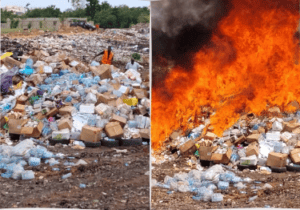
Banned sachet alcohol, drugs seized from hawkers, fake chemicals, unwholesome products and expired items
NAFDAC’s regulations require pharmaceutical manufacturing facilities to undergo inspection and demonstrate compliance with applicable GMP requirements before receiving authorisation to manufacture medicines. NAFDAC
The real challenge is ensuring that these standards are consistently maintained, independently verified and enforced.
Imported medicines must undergo proper registration, verification of manufacturing facilities, risk-based inspection and quality testing. The same standards must apply to locally manufactured products.
NAFDAC must also pay particular attention to the quality of active pharmaceutical ingredients, which are the substances responsible for the therapeutic effects of medicines.
A drug may have attractive packaging, a familiar brand name and an apparently genuine registration number but still contain insufficient active ingredients, harmful contaminants or substances that are not declared on its label.
There is also the danger of medicines that have been poorly stored during transportation and distribution. Some pharmaceutical products require strict temperature control. When the cold chain is compromised, the medicine may lose its effectiveness even if it was originally manufactured to the required standard.
This is why quality assurance must extend beyond the manufacturing factory to the entire distribution chain.
Are the penalties for counterfeit drug merchants sufficient?
Perhaps one of the most troubling aspects of Nigeria’s fight against counterfeit medicines is the question of punishment.
The Counterfeit and Fake Drugs and Unwholesome Processed Foods Act prohibits the production, importation, manufacture, sale, distribution and possession of counterfeit, adulterated, banned, fake, substandard or expired drugs.
Under the Act, a person convicted of offences covered by Section 1 faces imprisonment of between five and 15 years, a fine of up to N500,000, or both. The law also provides for penalties against those who illegally hawk or sell drugs in unlicensed premises.
The question is whether these penalties, particularly the financial component, reflect the realities of today’s economy and the enormous profits that can be generated from the illegal pharmaceutical trade.
A fine of N500,000 is grossly inadequate as a deterrent against a criminal enterprise capable of generating millions or even billions of naira.
Where counterfeit medicines are involved, the consequences can extend beyond financial losses. People may suffer prolonged illnesses, treatment failure, permanent complications and death.
The law must reflect the seriousness of the offence.
The Federal Government and the National Assembly should review the existing legal framework, particularly the financial penalties, to ensure that punishment is proportionate to the scale of the crime and the harm caused.
Beyond imprisonment and fines, convicted offenders should face confiscation of assets proven to have been acquired through criminal activities, closure of illegal manufacturing facilities and disqualification from operating pharmaceutical businesses.
Corporate directors, financiers, suppliers and distributors who knowingly participate in the trade must also be held accountable.
The prosecution of offenders must be swift, transparent and consistent. There should be no sacred cows.
What must Nigeria do to end the menace?
The fight against counterfeit medicines requires more than occasional raids and public announcements. It demands a comprehensive national strategy involving government institutions, pharmaceutical manufacturers, healthcare professionals, security agencies and ordinary citizens.
The Advocate believes the following measures are necessary:
1. Strengthen security at all ports of entry
NAFDAC, the Nigeria Customs Service, the Nigerian Immigration Service and other security agencies must establish a more effective joint surveillance system at seaports, airports and land borders.
All pharmaceutical imports should undergo proper documentation, risk assessment and verification. Suspicious consignments must be subjected to laboratory testing before they are released into the Nigerian market.
There should also be investigations into allegations of corruption or complicity by officials responsible for inspecting imported goods.
2. Increase NAFDAC’s funding and manpower
The Federal Government must provide NAFDAC with adequate funding to recruit more pharmacists, pharmaceutical scientists, laboratory technologists, inspectors and enforcement officers.
The agency also needs modern testing laboratories, mobile inspection facilities and digital surveillance systems capable of tracking suspicious pharmaceutical products across the country.
Its presence must be strengthened in all states, particularly in major commercial centres and areas known for pharmaceutical trading.
3. Introduce nationwide pharmaceutical traceability
Every registered medicine should have a verifiable identification system that allows consumers, pharmacists and regulators to establish its authenticity.
NAFDAC should accelerate the deployment of digital product authentication systems, including secure barcodes, serialisation and traceability technology.
Consumers should be able to scan a medicine’s code with their mobile phones to verify its registration, manufacturer, batch number and authenticity.
This would make it more difficult for counterfeiters to reproduce trusted pharmaceutical brands.
4. Strengthen regulation of pharmaceutical markets
Open drug markets and wholesale distribution centres must be subjected to stricter supervision.
Only properly licensed operators should be permitted to distribute pharmaceutical products. NAFDAC and the Pharmacy Council of Nigeria must work together to enforce professional standards and ensure that medicines are sold through authorised channels.
Warehouses, pharmacies and wholesale outlets should undergo regular and unannounced inspections.
5. Review and strengthen existing laws
The National Assembly should review the penalties for manufacturing, importing and distributing counterfeit medicines.
Financial penalties must reflect the enormous profits associated with the illegal trade. Offenders should face substantial fines, lengthy imprisonment and confiscation of proceeds from proven criminal activities.
The government should also establish specialised prosecution mechanisms to ensure that cases involving counterfeit medicines are not allowed to linger indefinitely in the courts.
6. Support genuine local pharmaceutical manufacturers
Nigeria must deliberately strengthen its domestic pharmaceutical industry.
The government should provide incentives, affordable financing, improved infrastructure and a more favourable operating environment for genuine pharmaceutical manufacturers.
Local production will reduce excessive dependence on imported medicines, improve national drug security and create employment opportunities.
However, promoting local manufacturing must not mean compromising quality. Every manufacturer, regardless of ownership or investment size, must comply with strict regulatory standards.
7. Establish stronger intelligence and whistle-blower mechanisms
NAFDAC should strengthen its intelligence-gathering operations by working with pharmaceutical associations, community leaders, healthcare professionals, journalists and members of the public.
People who provide credible information leading to the discovery of counterfeit drug operations should be protected.
There should also be a confidential reporting mechanism through which suspicious warehouses, manufacturers, distributors and retailers can be reported without fear of intimidation.
8. Intensify public enlightenment
Nigerians must understand that buying medicines from unlicensed vendors and roadside hawkers can be dangerous.
NAFDAC should intensify public education through radio, television, newspapers, social media, churches, mosques, schools and community organisations.
Consumers should be encouraged to purchase medicines from licensed pharmacies and report suspicious products.
Pharmacists and healthcare professionals must also educate patients about the dangers of self-medication and the importance of obtaining medicines from legitimate sources.
9. Make pharmaceutical enforcement more transparent
NAFDAC should regularly publish reports detailing the number of counterfeit drug operations uncovered, products seized, suspects arrested, prosecutions initiated and convictions secured.
The public deserves to know whether those arrested are eventually prosecuted and whether their criminal networks have been dismantled.
A raid should not end with the publication of photographs and videos of seized products. Nigerians need to see the outcome of investigations.
The Federal Government must act before more lives are lost
The Lagos Trade Fair discovery is a disturbing reminder that the counterfeit drug business may be operating through organised networks with access to sophisticated packaging materials and distribution channels.
The investigation must therefore go beyond the warehouse and its immediate operators.
Who supplied the packaging materials? Who financed the operation? Where were the intended products supposed to be distributed? Were there existing customers and distribution networks? Were any registered pharmaceutical businesses involved?
These questions must be answered.
NAFDAC deserves commendation whenever it uncovers illegal pharmaceutical operations. Its officers should be encouraged and adequately supported to do more. However, the agency must also be prepared to confront the possibility that some counterfeit drug networks are larger, better organised and more sophisticated than individual enforcement operations can handle.
The Federal Government must recognise that the fight against fake medicines is not an ordinary regulatory exercise. It is a battle to protect the lives of millions of Nigerians.
There is no justification for allowing criminal merchants to turn human suffering into a profitable business.
A country that cannot guarantee the authenticity and safety of medicines available to its citizens is exposing its healthcare system to a dangerous contradiction: hospitals may diagnose illnesses correctly and prescribe appropriate treatments, but patients could still die because the medicines they purchase are fake.
That is unacceptable.
The government must move from raids to sustained enforcement, from public warnings to effective prosecutions, and from promises of regulation to measurable results.
NAFDAC must be strengthened, border security must be tightened, the laws must be enforced and every individual involved in the manufacture and distribution of counterfeit medicines must be made to face the consequences.
The lives of Nigerians must be worth more than the profits of fake drug merchants.
Nigeria must not surrender its pharmaceutical market to criminals. The time to end this deadly trade is now.
The Advocate
Features
Why Igbos Celebrate New Yam Festival Worldwide: The History, Cultural Significance and Lessons For The Younger Generation

ADVOCATE SUNDAY DISCOURSE
By Tony Edike
Every year, as the rainy season gradually gives way to the harvest period, communities across Igboland come alive with colourful celebrations, traditional music, cultural dances, masquerades, family reunions and the sharing of food. At the centre of this celebration is one of the most cherished crops in Igbo history: yam.
Known variously as Iri Ji Ọhụrụ, Iwa Ji, Ike Ji or the New Yam Festival, depending on the community, the annual celebration is far more than a festival of food. It is a declaration of gratitude, a celebration of hard work, a renewal of communal bonds and a reaffirmation of the identity of the Igbo people.
From the villages of Enugu, Anambra, Imo, Abia and Ebonyi states to Igbo communities in Lagos, Abuja, Ghana, the United Kingdom, the United States, Australia and other parts of the world, the festival continues to demonstrate that cultural identity is not necessarily limited by geography.
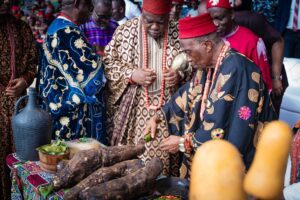
Celebration of Igbo traditional New Yam Festival
For Ndigbo, the New Yam Festival is a reminder of where they come from, the values that shaped their ancestors and the heritage they must preserve for generations yet unborn.
But why does yam occupy such an important position in Igbo culture? How did the festival originate? Why do Igbo people continue to celebrate it even when many no longer engage in farming? And what lessons should the younger generation learn from this enduring tradition?
The historical roots of the New Yam Festival
To understand the New Yam Festival, one must first understand the place of agriculture in the traditional Igbo society.
Before the expansion of modern industries, commercial enterprises and urban employment, farming was a major occupation across many Igbo communities. Families cultivated yam, cassava, cocoyam, vegetables and other crops to feed their households and support their livelihoods.
Among these crops, yam gradually acquired a particularly distinguished position. It was not merely a source of food; it also represented prosperity, industry, social standing and the ability of a farmer to provide for his family.
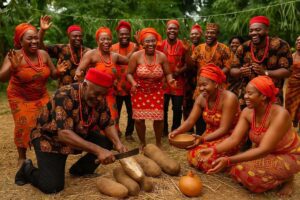
In many traditional communities, a successful yam harvest was a source of pride. The size of a farmer’s yam barn could reflect the outcome of months of labour, planning and dedication. Yam also featured prominently in hospitality, marriage-related customs, communal feasting and other important social occasions.
This historical importance explains the enduring Igbo expression, Ji bụ eze — yam is king.
The New Yam Festival developed from this agricultural reality. It marked the arrival of a new harvest and provided an occasion for communities to express gratitude for the food produced from the land, recognise the efforts of farmers and prepare for another farming season.
Historical and scholarly studies of the festival describe its close connection with the agricultural calendar, traditional religious beliefs and community life. In many communities, the consumption of newly harvested yam was traditionally preceded by prescribed ceremonies or the approval of community elders. The practice reinforced the understanding that food production was a collective blessing deserving gratitude and respect.

However, there is no single universally documented date or account establishing the exact beginning of the festival throughout Igboland. Its customs evolved differently across communities, reflecting local histories, agricultural conditions and religious traditions.
A study published in the Nordic Journal of African Studies in 2007 examined the sacred dimensions of Iri Ji Ọhụrụ, while a 2021 study in the UZU Journal of History and International Studies documented the festival’s continuing role in Igbo identity and social integration.
The evidence points to a tradition that has developed over generations and adapted to changing social conditions without losing its central significance.
Why yam is called the king of crops in Igbo culture
The cultural significance of yam goes beyond its nutritional value.
In traditional Igbo society, yam symbolised hard work, patience, discipline and prosperity. Its cultivation required farmers to prepare the land, plant at the appropriate time, provide support for growing vines, maintain the farm and protect the crop until harvest.
Unlike the instant gratification often associated with modern life, yam farming required sustained effort before its rewards could be enjoyed.

This made yam a powerful symbol of the relationship between labour and achievement.
A farmer who produced a good harvest demonstrated not only agricultural skill but also the capacity to plan, persevere and provide for others. Yam barns were important stores of wealth and food security, helping families prepare for future needs.
Yam also occupied an important place in traditional social relations. It was offered to visitors as a sign of hospitality and featured in various ceremonies and communal gatherings. Its presence at important occasions reflected its status within the society.
The New Yam Festival therefore became an occasion to honour more than a crop. It celebrated the farmer, the family, the community and the natural environment upon which human survival depended.
This symbolism remains relevant today, even as many Igbo people have moved from farming into business, public service, technology, education, medicine and other professions.
The fundamental message remains the same: meaningful achievement requires effort, patience, discipline and the responsible use of one’s opportunities.
A festival of thanksgiving and gratitude
One of the central purposes of the New Yam Festival is thanksgiving.
In traditional Igbo religious life, many communities understood the harvest through their relationship with the land, spiritual beliefs and the forces they associated with fertility and protection. Ceremonies could include prayers, offerings and other customary observances intended to express gratitude and seek blessings for future harvests.
These practices differed across communities and have changed over time, particularly with the spread of Christianity, Islam in some settings, formal education and urbanisation.
Today, many Igbo communities celebrate the festival primarily as a cultural occasion, with Christian prayers, thanksgiving services and other contemporary expressions of gratitude featuring prominently in some celebrations.
The common thread is appreciation for the blessings of life, the rewards of labour and the opportunity to begin another season.
In a society where people are often preoccupied with competition, material possessions and the pursuit of success, the festival offers a valuable reminder that achievements should not be taken for granted.
It encourages people to appreciate the contribution of farmers, workers, families and communities to their well-being.
It also teaches that success should be celebrated with humility rather than arrogance.
New Yam Festival as a symbol of Igbo unity
Although Igbo communities share the broad tradition of celebrating the new yam, the festival is not organised in exactly the same way everywhere.
Different communities have their own names, dates, rituals, dances, songs and customary procedures. Some organise elaborate palace celebrations under the leadership of traditional rulers, while others hold village gatherings, family ceremonies or community-wide feasts.
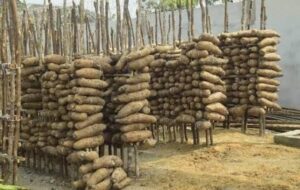
A Yam Barn
In some places, the festival includes masquerade performances, traditional wrestling, cultural exhibitions, public lectures and awards recognising distinguished sons and daughters of the community.
In others, the emphasis is on family reunions, prayers, food sharing and the preservation of local customs.
These differences do not diminish the festival’s unifying power. Rather, they demonstrate the diversity within Igbo cultural life.
A person from Nsukka may celebrate according to the customs of his or her community, while someone from Nkanu, Mbaise, Orlu, Awka, Abakaliki or another Igbo area may observe the occasion differently. Yet the shared recognition of the yam harvest provides a common cultural reference point.
During the festival, people who have lived in distant cities or abroad often return to their ancestral communities. They reconnect with relatives, visit elders, meet childhood friends and participate in communal activities.
Such gatherings strengthen relationships that might otherwise weaken under the pressures of work, migration and modern living.
The festival also creates opportunities for communities to discuss development, recognise achievements, address shared challenges and encourage members to contribute to local progress.
In this sense, the New Yam Festival is not simply a remembrance of the past. It is a social institution through which communities can build relationships and organise for the future.
Why Igbos celebrate New Yam Festival worldwide
The spread of the New Yam Festival beyond Igboland reflects the migration, enterprise and global presence of the Igbo people.
Ndigbo are found in many Nigerian cities and in countries across Africa, Europe, North America, Asia and Oceania. As people relocate for education, employment, business and other opportunities, they often establish town unions, cultural associations, age-grade organisations and other community networks to maintain connections with their places of origin.
The New Yam Festival has become one of the important occasions through which these associations preserve their heritage.

New Yam Celebrations in Anambra State
Igbo communities in countries such as Ghana and the United Kingdom, as well as in the United States and Australia, organise cultural celebrations that bring together families, professionals, businesspeople, students and younger members of the diaspora.
Reports of celebrations outside Nigeria have documented the use of traditional attire, Igbo music, dances, yam dishes, cultural displays and speeches by community leaders.
In many places, the festival is organised in community halls, event centres or other public venues. Where locally harvested yam is unavailable, organisers may obtain it from African food markets or adapt the menu to local circumstances.
The setting may change, but the cultural purpose remains recognisable.
For an Igbo child born in London, Toronto, Sydney or New York, participation in the festival can provide an opportunity to encounter traditions that might otherwise remain distant or unfamiliar.
The child learns the meaning of family names, hears the Igbo language spoken in a communal setting, sees traditional clothing and discovers the significance of customs inherited from earlier generations.
For adults, the festival offers an opportunity to reconnect with their roots and share their heritage with their children.
It also introduces Igbo culture to neighbours, friends and other communities, creating opportunities for cultural exchange and mutual understanding.
The worldwide celebration is therefore a statement that migration does not have to mean cultural disconnection.
An Igbo person can live, work and succeed anywhere in the world while maintaining a meaningful relationship with his or her cultural heritage.
Indeed, the festival has become a cultural bridge connecting the ancestral homeland with the global Igbo community.
The economic and tourism potential of the festival
Beyond its cultural significance, the New Yam Festival has considerable economic potential.
When properly organised, it can attract visitors, stimulate hospitality businesses, support local food vendors and create opportunities for artists, musicians, fashion designers, farmers, transport operators and other service providers.
Traditional dances, masquerades, crafts, indigenous cuisine and cultural exhibitions can also attract tourists interested in learning about the history and customs of the Igbo people.
For states such as Enugu, Anambra, Imo, Abia and Ebonyi, the festival can form part of a wider strategy for cultural tourism and local economic development.
Community organisers can collaborate with tourism agencies, hospitality businesses, cultural institutions and private investors to improve facilities, promote local attractions and document traditional practices.
The festival can also provide a platform for showcasing agricultural products, encouraging modern farming and promoting value addition in the yam industry.
However, realising this potential requires thoughtful planning. Security, sanitation, traffic management, proper organisation, publicity and the preservation of cultural authenticity must receive adequate attention.
Cultural events should also provide opportunities for young people and local businesses rather than becoming occasions in which only a small number of individuals benefit.
With the right approach, the New Yam Festival can simultaneously preserve heritage and contribute to community development.
What lessons should the younger generation learn?
The New Yam Festival will retain its relevance only if the younger generation understands the values behind the celebration.
It is not enough for young people to wear traditional clothes, attend parties, dance to cultural music and take photographs for social media. They must understand the history and principles that make the festival meaningful.
Several important lessons deserve attention.
1. Hard work remains the foundation of meaningful success
Yam does not grow into a successful harvest without preparation, care and sustained effort. The farmer must work through different stages of cultivation before enjoying the reward.
Young people can apply this lesson to education, business, professional development and other ambitions.
Success rarely comes from appearance alone. It requires commitment, preparation, patience and the willingness to learn from failure.
In an age when social media often presents wealth and success without showing the years of effort behind them, the yam harvest offers a powerful counter-message: lasting achievements are built through consistent work.
2. Young people must preserve their cultural identity
Globalisation has opened opportunities for education, travel, business and cultural exchange. These opportunities should be welcomed, but they need not require young people to abandon their heritage.
The younger generation should learn to speak and understand the Igbo language, know the histories of their communities, appreciate indigenous music and understand the significance of important customs.
Parents, schools, traditional institutions and cultural associations all have a role to play in passing this knowledge to children.
A culture that is not taught, practised or documented risks becoming unfamiliar to the generations that follow.
Preserving Igbo identity does not mean rejecting other cultures. It means engaging with the wider world while understanding one’s own origins.
3. Respect for elders must go hand in hand with learning
The New Yam Festival provides opportunities for young people to listen to elders who possess knowledge of family histories, customary practices, proverbs, traditional farming methods and community development.
Such knowledge should not be dismissed simply because it was passed down orally.
At the same time, respect for elders should encourage constructive dialogue between generations. Younger people can ask questions, document what they learn and help adapt useful traditions to contemporary circumstances.
The objective should be continuity through understanding, not the unquestioning repetition of every past practice.
4. Unity is stronger than division
The festival brings together people who may disagree on politics, religion, social status or personal interests.
For the duration of the celebration, they have an opportunity to recognise their shared ancestry and community responsibilities.
Young people should learn that cultural identity can serve as a basis for cooperation rather than hostility towards other groups.
Igbo communities can preserve their traditions while respecting their neighbours and contributing positively to Nigeria’s wider national life.
The spirit of communal celebration should encourage peaceful coexistence, mutual respect and a willingness to work together on common problems.
5. Agriculture deserves renewed attention
One of the contradictions of modern life is that a festival built around an important agricultural crop can be celebrated enthusiastically even as many young people show little interest in farming.
Agriculture should not be viewed only as a traditional occupation or an option for people who lack other opportunities.
Modern farming can involve improved planting materials, mechanisation, irrigation, storage, processing, packaging, transportation, marketing and digital technology.
Young entrepreneurs can explore opportunities in yam production, flour processing, food distribution, agricultural equipment and export markets, subject to applicable quality and trade requirements.
The festival should therefore inspire more than admiration for the finished harvest. It should encourage renewed interest in the production systems that make food available.
If the younger generation celebrates yam but neglects the economic opportunities associated with agriculture, an important lesson of the tradition will have been missed.
6. Gratitude should be accompanied by generosity
The New Yam Festival is traditionally associated with food sharing, hospitality and communal participation.
These practices remind people that prosperity has a social dimension.
Young people who achieve success should learn to support their families, mentor others, create employment and contribute to the development of their communities.
Giving back does not always require large financial donations. It can involve volunteering, teaching a skill, supporting a local school, helping a struggling family or participating in community projects.
The spirit of the festival encourages people to see success not only as a personal accomplishment but also as an opportunity to improve the lives of others.
7. Culture must evolve without losing its meaning
Traditions survive when communities understand what should be preserved and what can reasonably change.
The New Yam Festival has already adapted to urbanisation, Christianity, migration, formal education and modern forms of communication.
Young people can contribute to this evolution by recording oral histories, producing documentaries, creating educational content in Igbo, organising cultural exhibitions and using digital platforms to teach others about their heritage.
However, the festival should not become merely an expensive display of wealth, political influence or elaborate entertainment.
Its deeper values — gratitude, hard work, identity, community and respect for heritage — must remain central.
Cultural preservation is most effective when it combines respect for the past with the creativity needed to make traditions meaningful in the present.
8. Community development must accompany cultural celebration
A community’s progress cannot be measured only by the size of its festival or the number of dignitaries who attend.
The celebration should also encourage conversations about roads, schools, healthcare, agriculture, youth employment, security and opportunities for vulnerable members of society.
Young professionals and entrepreneurs returning home for the festival can share knowledge, identify areas for investment and establish partnerships with community organisations.
Traditional rulers, town unions and development associations can use the gathering to encourage practical projects with clear objectives and accountability.
In this way, the New Yam Festival can become an occasion for both cultural celebration and meaningful development.
Preserving the festival for generations yet unborn
The responsibility for preserving the New Yam Festival rests with the entire community.
Parents must teach their children its meaning. Elders must document oral traditions and explain the histories of local customs. Traditional rulers and community leaders must encourage inclusive celebrations. Schools and cultural institutions can introduce young people to Igbo history, literature, music and indigenous knowledge.
The media also has an important responsibility.
Rather than reporting only the arrival of dignitaries, the display of expensive clothes or the entertainment at the event, journalists can tell the stories of farmers, traditional custodians, families and young people who are keeping the heritage alive.
They can investigate the historical origins of particular customs, document variations between communities and highlight the festival’s economic and educational possibilities.
Digital platforms offer additional opportunities to preserve photographs, recordings, interviews, proverbs, songs and explanations of cultural practices for future generations.
Such efforts would ensure that the festival is understood as more than an annual gathering.
They would also help correct misconceptions about Igbo culture by presenting its diversity and historical development with accuracy and respect.
Conclusion: More than yam, a heritage of identity and continuity
The Igbo New Yam Festival has endured because it speaks to values that remain relevant across generations: gratitude for life, the dignity of labour, the importance of family, respect for community and pride in one’s heritage.
Its journey from ancestral villages to cities around the world demonstrates the resilience of a people determined to maintain their cultural identity while participating in an increasingly interconnected world.
For Ndigbo at home and in the diaspora, the festival provides an opportunity to reconnect with their roots, celebrate their achievements and strengthen the relationships that bind their communities together.
For the younger generation, its message is particularly important. They must understand that cultural heritage is not preserved by celebration alone. It survives when people learn its history, practise its positive values, teach it to their children and adapt it responsibly to changing times.
The yam at the centre of the celebration is a reminder that every harvest has a history of preparation, labour and patience behind it.
Likewise, the future of Igbo culture depends on what the present generation chooses to plant, nurture and pass on.
As Ndigbo continue to celebrate the New Yam Festival across the world, the greatest achievement will not simply be the number of people who gather or the grandeur of the ceremonies. It will be the extent to which the celebration strengthens cultural knowledge, encourages productive enterprise, promotes unity and inspires the next generation to value its heritage.
For as long as the Igbo people remember the meaning of Ji bụ eze, the New Yam Festival will remain a powerful expression of who they are, where they come from and the legacy they intend to leave behind.

The gruesome killing of 23-year-old Mmesoma Umeorini in Anambra State has sparked outrage, reigniting conversations about possessiveness, relationship violence, women’s right to walk away from failed relationships, and the dangerous belief that financial investment in love confers ownership over another person’s life.
By Our Correspondent
The news of the gruesome murder of 23-year-old Mmesoma Umeorini has sent shock waves across Anambra State and beyond, leaving a community in mourning and raising disturbing questions about the nature of love, the limits of emotional attachment, and the growing concern over violence against women.
Mmesoma, a young woman from Uga, in Aguata Local Government Area of Anambra State, reportedly lost her life in circumstances that have provoked widespread condemnation and renewed calls for stronger action against gender-based violence.

Chima with Mmesoma’s body in a sack after he was caught
The police have arrested Chima Ofoeke, her alleged former boyfriend, in connection with the killing. The suspect is native of Ebonyi state. According to the Anambra State Police Command, the suspect allegedly confessed during preliminary investigations that he murdered Mmesoma because she ended their romantic relationship.
The allegation, if established in court, represents a particularly disturbing manifestation of relationship violence: the transformation of rejection into a perceived justification for taking another person’s life.
For a young woman who should have had years ahead of her to pursue her ambitions, build relationships, contribute to society and determine the direction of her future, the circumstances surrounding Mmesoma’s death have become a painful reminder of the consequences that can follow when possessiveness overwhelms respect for another person’s freedom.
Beyond the immediate outrage, her death presents society with difficult but necessary questions. Why should a person lose their life for ending a relationship? When does affection become an obsession? And what must families, communities, religious institutions and government do to prevent similar tragedies?
These questions deserve more than temporary outrage on social media. They demand honest reflection and practical action.
A Disappearance That Ended in Tragedy
According to the police, the case began when Mmesoma’s mother reported to the Divisional Police Officer in Umuchu that her daughter had been missing since October 16.
The report prompted an investigation that eventually led to the arrest of Ofoeke, who was identified as the deceased’s alleged former boyfriend.
The police spokesperson in Anambra State, Superintendent of Police Tochukwu Ikenga, disclosed that operatives, acting on intelligence and working with members of the Agunechemba security outfit in Uga, apprehended the suspect.
During preliminary investigations, the police said, the suspect allegedly admitted killing Mmesoma because she had ended their romantic relationship.
He reportedly led detectives to the location where her remains were recovered.

Chima in handcuffs
A video circulating on social media has further intensified public anger. In the footage, the suspect is seen being questioned by security operatives while holding a sack said to contain the victim’s body. He allegedly explained that he strangled her with her clothing until she collapsed.
The footage, and the allegations surrounding the circumstances of the killing, have left many people struggling to comprehend the reported brutality of the incident.
However, while the public has a legitimate interest in the case, the circulation of disturbing images and videos raises additional concerns about the dignity of the deceased and the privacy of her grieving family.
Mmesoma should not be remembered merely through the horrifying circumstances of her death. She was a human being whose life had value beyond the tragedy that ended it.
Her family deserves compassion, privacy and justice, not repeated exposure to distressing material circulating online.
The Anambra State Commissioner of Police, Nnanna Ama, has directed that the case be transferred to the State Criminal Investigation Department in Awka for comprehensive and diligent investigation.
The investigation and subsequent judicial proceedings will be essential in establishing the facts and determining criminal responsibility.
The Dangerous Belief That Rejection Is an Offence
At the centre of the outrage surrounding Mmesoma’s death is a troubling question: why would the end of a romantic relationship allegedly provoke such a violent response?
Relationships can involve deep emotional attachment, financial sacrifices, shared ambitions and expectations about marriage. When they end, one or both partners may experience disappointment, anger, grief or a sense of betrayal.
These emotions can be painful, but they do not give anyone the right to threaten, assault or kill another person.
The decision to end a romantic relationship is a personal choice. It does not require the other party’s permission, nor does it create an obligation to remain with someone against one’s wishes.
A relationship is sustained by mutual consent. When that consent is withdrawn, the other person must respect the decision, however painful it may be.
The alleged motive in Mmesoma’s killing, as reported by the police, therefore strikes at a fundamental principle of human relationships: love does not confer ownership, and heartbreak does not justify violence.

Murdered Mmesoma
No person owns a partner simply because they have shared years together, made promises about marriage or provided financial assistance.
The idea that a former partner must remain in a relationship because the other person is emotionally attached, financially invested or unwilling to accept rejection is dangerous.
It turns affection into entitlement and treats the other person’s freedom as a personal possession.
Such attitudes can create the conditions for coercive behaviour, including intimidation, stalking, threats and physical violence.
Not every difficult breakup results in violence, and disappointment alone does not make a person dangerous. Nevertheless, society must take threats, controlling behaviour and attempts to prevent a partner from leaving seriously.
The warning signs should not be dismissed as evidence of excessive love or romantic passion.
Financial Support Is Not Ownership
One of the issues raised in public discussions following Mmesoma’s death is the suggestion that the suspect may have contributed significantly to her education and welfare while hoping to marry her.
This claim appeared in a social media commentary by Nonso Ezechi. It remains an allegation circulating online and should not be treated as an established fact unless supported by credible evidence.
Nevertheless, the discussion highlights a recurring problem in some romantic relationships: the belief that financial investment creates an entitlement to marriage, continued affection or permanent access to another person’s life.
Financial support can be a meaningful expression of care. Partners may help one another pay school fees, meet living expenses, develop businesses or pursue educational opportunities.
Such assistance can strengthen a relationship when it is freely given and accompanied by mutual respect.
Problems arise, however, when support is treated as a transaction that obliges the recipient to surrender personal freedom.
A person who pays another person’s school fees does not acquire ownership of that person’s future. Someone who supports a partner financially does not automatically earn the right to determine whom that partner marries or whether the relationship continues.
If money was freely given as assistance or a gift, it cannot reasonably become a justification for violence when a relationship ends.

Where there is a genuine financial dispute, the appropriate response is dialogue, mediation or lawful civil action, depending on the circumstances.
Violence is never a legitimate means of recovering money, enforcing romantic expectations or punishing disappointment.
This distinction is important for both men and women.
Those entering relationships should communicate honestly about their expectations, particularly where financial support, marriage plans and long-term commitments are involved.
At the same time, people providing assistance must understand that generosity does not create an entitlement to another person’s affection.
A relationship is not a debt contract, and a human being is not collateral.
Even where one partner believes that the other has acted dishonestly, that grievance must be addressed through lawful means. No perceived betrayal can justify taking a life.
What Mmesoma’s Death Says About Women’s Safety
The circumstances surrounding the killing have also renewed concerns about the safety of women in romantic relationships, particularly when they decide to leave partners who refuse to accept the separation.
Women should be able to end relationships without fearing that the decision could cost them their lives.
This is not a demand for special privileges. It is a basic expectation of personal safety and human dignity.
A woman does not have to prove that her reasons for ending a relationship are sufficiently important before she is entitled to leave.
She may decide that the relationship is no longer healthy, that her feelings have changed, that her future lies elsewhere or that she simply no longer wishes to continue.
Whatever her reason, the decision must be respected.
The same principle applies to men. Nobody should be threatened, assaulted or killed because they have chosen to end a relationship.
However, where women face threats or violence associated with separation, the risks must be taken seriously by their families, friends, communities and law enforcement agencies.
One of the challenges in preventing relationship-related violence is that controlling behaviour can initially be mistaken for affection.
A partner who demands constant updates, restricts friendships, monitors movements, insists on controlling personal decisions or threatens harm when challenged may be exhibiting behaviour that deserves serious attention.
Jealousy is not proof of love. Constant surveillance is not necessarily care, and threats are not expressions of devotion.
When a partner responds to disagreement with intimidation, or repeatedly threatens violence if the relationship ends, the situation should not be romanticised.
Families and friends can play an important role by listening without judgement, taking concerns seriously and helping an endangered person seek appropriate assistance.
Where there is an immediate threat, the priority should be safety and prompt contact with the police or other appropriate emergency services.
No one should have to remain in a dangerous relationship merely because they fear the consequences of leaving.
The Social Media Reactions: Outrage, Grief and Calls for Reflection
The killing has generated emotional responses from people who have condemned the reported act and called for greater awareness of the value of human life.
Among those who reacted was Dr Uche Nworah, who described the incident in a Facebook post as a crime of passion.
Dr Nworah expressed sadness over the reported circumstances of Mmesoma’s death, stressing that no disagreement, rejection or heartbreak could justify taking another person’s life.
He also expressed relief over the suspect’s reported arrest while acknowledging that the development could not restore the young woman’s life.
His message was accompanied by condolences to Mmesoma’s family, friends and loved ones.
The expression “crime of passion”, however, requires careful consideration. Although it is sometimes used to describe violence arising from intense emotions, it should not obscure personal responsibility or suggest that violent conduct is an inevitable consequence of heartbreak.
Strong emotions do not remove an individual’s obligation to respect the life and safety of another person.
Describing violence as passion can also unintentionally romanticise conduct that should instead be recognised as a serious violation of another human being’s rights.
The essential lesson is that emotional distress must be managed without harming others.
Another reaction came from Nonso Ezechi, who condemned the alleged killing and questioned the idea that financial assistance or emotional investment could justify violence against a former partner.
Ezechi urged young women to exercise care when entering relationships and encouraged partners to be honest about their intentions.
His commentary also contained an important qualification: spending money on another person does not confer ownership over that person’s life or freedom to choose a partner.
Both reactions reflect widespread grief and anger over the tragedy. They also point towards a broader conversation about the expectations people bring into relationships and the importance of understanding that romantic commitment must be voluntary.
However, caution is necessary when discussing the victim’s conduct or the alleged circumstances of the relationship.
Advice about honesty, financial boundaries and responsible relationships may be useful, but it must never shift responsibility for violence onto the person who is killed.
Even if a relationship ends painfully, even if promises are broken, and even if one partner believes that they have made significant sacrifices, the responsibility for an alleged act of violence rests with the person who commits it.
Mmesoma had the right to make decisions about her relationship. Her decision to leave, if that was the motive for the killing as alleged, cannot be treated as an offence deserving punishment.
A Message to Young People: Learn to Accept Rejection
For young people navigating romantic relationships, Mmesoma’s death offers painful lessons about emotional maturity, personal boundaries and the responsibility that accompanies affection.
First, young people must understand that relationships do not always end in marriage.
Two people may begin a relationship with sincere intentions and later discover that they are incompatible. Their feelings may change, their priorities may differ, or circumstances may make continuing the relationship impossible.
Such outcomes can be disappointing, but they are part of human relationships.
The ability to accept an unwanted outcome without threatening or harming another person is a sign of emotional maturity.
Second, young people should learn to distinguish love from possession.
A healthy relationship allows both partners to retain their dignity, personal identity and freedom to make decisions. It does not depend on fear, coercion or the threat of punishment.
Third, financial support should be discussed honestly.
Partners should be clear about whether money is being provided as a gift, a loan or an agreed contribution to shared expenses. Financial arrangements should not be used to pressure anyone into marriage or continued romantic involvement.
Fourth, young people must learn to seek help when emotions become overwhelming.
Rejection can cause genuine distress. People experiencing intense anger, despair or an inability to cope with a breakup should seek support from trusted friends, family members or qualified mental health professionals.
Anyone who feels tempted to harm a former partner should immediately create distance from that person and seek urgent professional assistance.
Threats of violence must never be dismissed as empty words simply because the people involved once loved each other.
Finally, young people should understand that ending a relationship is not an invitation to revenge.
The appropriate response to heartbreak is acceptance, reflection and, where necessary, seeking support to move forward.
No relationship is worth destroying another person’s future or one’s own.
What Parents, Schools, Churches and Communities Must Do
Preventing relationship-related violence requires more than condemning individual incidents after lives have been lost.
Families, educational institutions, religious organisations, community leaders and government agencies must help young people develop healthier attitudes towards relationships.
Parents should create environments in which children can discuss emotional difficulties without fear of ridicule or punishment.
Young people who feel safe speaking to trusted adults may be more willing to seek help when they encounter controlling or threatening partners.
Schools and tertiary institutions should also incorporate practical discussions about consent, emotional regulation, healthy relationships, conflict resolution and the dangers of gender-based violence into relevant educational and counselling programmes.
These discussions should involve both male and female students.
Boys and young men must be taught that masculinity does not depend on controlling women, retaliating against rejection or proving authority through aggression.
Girls and young women should be equipped with information about recognising abusive behaviour, setting boundaries and accessing support.
Religious leaders also have an important responsibility.
In communities where religious institutions influence social attitudes, sermons and counselling sessions can reinforce the principles of mutual respect, non-violence and personal freedom.
Marriage should not be presented as an obligation that a woman must fulfil because a man has spent money on her. Nor should men be encouraged to regard financial provision as a licence to exercise control over their partners.
Community leaders and local security organisations must also respond appropriately to credible threats and reports of violence.
The objective should be prevention, early intervention and accountability, rather than waiting until a situation ends in tragedy.
Justice Must Follow Due Process
Murder is a grave criminal offence under Nigerian law, and the circumstances surrounding Mmesoma’s death warrant a thorough investigation.
The police have said that the suspect was arrested following an investigation and that the case has been referred to the State Criminal Investigation Department in Awka.
The next steps should include the careful gathering of evidence, proper documentation of forensic findings, witness interviews and other investigative procedures necessary to establish what happened.
Any prosecution must be conducted in accordance with the law, with the evidence tested before a competent court.
Section 315 of the Criminal Code Act addresses the offence of murder, while Section 319(1) provides for the death penalty upon conviction for murder in cases governed by that provision.
The precise applicable law and any relevant legal issues must be determined in the context of the case and the jurisdiction.
Public anger is understandable, but the administration of justice must be guided by evidence and due process.
The suspect is entitled to a fair trial, while Mmesoma and her family are entitled to a diligent investigation and the lawful pursuit of justice.
An arrest and an alleged confession are important developments, but they do not replace the need for the prosecution to establish its case before the court.
The police and other relevant authorities must therefore ensure that the investigation is comprehensive, credible and free from avoidable delays.
Justice in this case should not be reduced to public demands for punishment alone. It must also demonstrate that allegations of serious violence are investigated properly and that the law is applied through established judicial procedures.
Beyond Outrage: Remembering the Life That Was Lost
Public outrage following violent incidents is often intense, but it can fade as attention shifts to other news.
The challenge is to ensure that Mmesoma’s death does not become another disturbing headline that generates temporary anger without producing meaningful reflection or change.
Behind the name Mmesoma Umeorini is a family that has lost a daughter, relatives who have lost a loved one, and friends who must now confront an absence they may struggle to understand.
For them, the tragedy is not a social media discussion or a passing news story. It is a painful reality that will remain long after public attention has moved elsewhere.
Their grief deserves compassion.
The dignity of the deceased must also be protected. Graphic footage, unverified allegations and sensational descriptions should not be allowed to turn her suffering into a spectacle.
Responsible journalism requires the public to be informed about the circumstances of a serious crime while avoiding unnecessary details that may retraumatise the family or compromise the investigation.
Mmesoma’s story should be told in a manner that honours her humanity and reinforces the importance of protecting life.
Her death should also encourage more people to recognise that the warning signs of relationship violence must be taken seriously.
Where there are threats, intimidation or attempts to control another person’s movements and choices, intervention may be necessary before the situation escalates.
Families should listen. Friends should pay attention. Institutions should respond. Law enforcement agencies should investigate credible reports promptly.
Above all, society must reject the notion that a person’s refusal to continue a relationship is a provocation that warrants punishment.
Conclusion: Love Must Never Become a Death Sentence
The killing of Mmesoma Umeorini, as alleged by the police, is a painful reminder of the devastating consequences that can follow when a relationship is treated as a claim of ownership rather than a bond between two people who remain free to make their own choices.
Her death has left a community mourning and a wider public asking questions about relationships, rejection, financial expectations and the safety of women.
The answers must begin with a simple principle: nobody has the right to take another person’s life because a relationship has ended.
Love may involve sacrifice, but sacrifice does not create ownership. Financial support may express commitment, but it does not purchase another person’s freedom. Emotional pain may be real, but it cannot excuse violence.
For young people, the lesson is to build relationships on mutual respect, honest communication and consent.
For families and communities, the lesson is to take threats and controlling behaviour seriously.
For government and law enforcement agencies, the responsibility is to strengthen prevention, protect those at risk and ensure that allegations of serious violence receive diligent investigation.
And for society as a whole, the duty is to move beyond outrage towards a culture in which rejection is accepted without violence and every person is free to leave a relationship without fearing for their life.
Mmesoma deserved the opportunity to determine her own future. She deserved safety, dignity and the freedom to make personal choices.
Her life cannot be restored, but her death must not be allowed to pass without lessons being learnt and action being taken.
May her family find the strength to bear their loss, and may justice be pursued through the lawful process.
No heartbreak is worth a human life. No financial sacrifice grants ownership over another person. And no woman should have to die because she chooses to walk away.
-
 Entertainment2 days ago
BREAKING: Veteran Nollywood Actor Pete Edochie Dies at 79 After Battle With Prostate Cancer
-
News2 days ago
Gunshots as Obi, Kwankwaso Arrive Benin for NDC Town Hall Meeting
-
News2 days ago
‘We’ve Lost a Titan, Legend, an Icon’, Gov Mbah Mourns Pete Edochie
-
Politics3 days ago
‘Tinubu Must Go’ Chants As Atiku Takes Campaign To Kogi
-
News3 days ago
APC Mourns Members Killed in Zamfara Road Accident, Condoles with Governor, Families
-
News3 days ago
Mbah Makes Christmas Homecoming Easier, Offers Enugu Indigenes Free Transport
-
International3 days ago
Togolese Caregiver, 24, Shot Dead in US Weeks Before Starting Nursing School
-
News1 day ago
‘They Shot Me Five Times’ — NDC Supporter Recounts Attack on Omo-Agege’s Campaign Team in Delta