

Business
CBN sets new location rule for Opay, Moniepoint, PalmPay PoS Operators, mandates terminal tracking

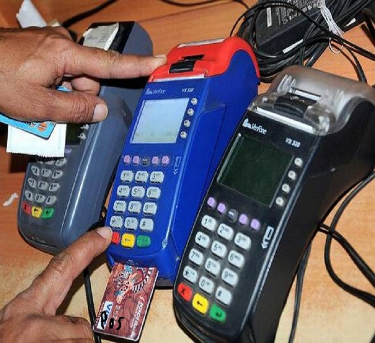
The Central Bank of Nigeria (CBN) has issued a sweeping directive that will shut down Point-of-Sale (PoS) devices used outside a merchant’s registered business address.
In a circular released on August 25, 2025, the apex bank ordered all licensed operators—including Moniepoint, OPay, PalmPay, and commercial banks—to geo-tag every PoS terminal in their network within 60 days.
This new policy means that the millions of PoS devices currently in circulation must now be registered with exact GPS coordinates indicating where each machine is being used.

CBN
According to the CBN, the measure is designed to curb fraud, prevent the use of cloned or “ghost” terminals, and make it easier to track transactions in real time.
The regulator further explained that all existing PoS machines must be upgraded with built-in GPS systems and connected to the National Central Switch, which will monitor their locations through a special software development kit (SDK).

Under the new rule, merchants will only be allowed to process payments within a 10-metre radius of their registered business address. Any terminal that is not geo-tagged before the deadline will be deactivated.
The directive also covers newly deployed devices, which must be geo-tagged before they can be activated. Responsibility for ensuring compliance will fall on operators such as Payment Terminal Service Providers (PTSPs) and mobile money companies.
The CBN stressed that the initiative aims to reduce fraud and eliminate unauthorised PoS activities by ensuring that every device’s location is verified and continuously monitored.
Compliance checks will commence on October 20, 2025, giving operators just two months to upgrade what could amount to more than 4 million active PoS terminals across the country.
The growth of Nigeria’s PoS industry partly explains the new restrictions. As of 2023, the country had 1.5 million registered PoS agents—equivalent to one agent for every 80 people. A recent Bloomberg report also highlighted the density of operators, noting there are as many as 1,600 PoS terminals per square kilometre.
This surge in adoption is one of the main reasons the CBN has introduced tougher oversight rules.
In 2024, the apex bank mandated that all PoS transactions be routed through licensed Payment Terminal Service Aggregators (PTSA) to boost transparency. That same year, operators were required to register their devices with the Corporate Affairs Commission (CAC).
The latest geo-tagging directive, analysts say, underscores the CBN’s determination to tighten its grip on Nigeria’s booming PoS industry while clamping down on fraud and unauthorised usage.









Anambra State Governor, Professor Chukwuma Soludo, has ordered the closure of the Onitsha Main Market for one week following traders’ failure to comply with the state government’s directive to disregard the Monday sit-at-home order.
The governor gave the directive on Monday during an on-site visit to the market, along with some of his aides and other government officials.
Soludo warned that the closure could be extended if traders fail to comply with the directive, adding that security agencies have sealed the market to enforce the order.

Anambra state governor, Chukwuma Soludo
The governor described the development as the latest—and perhaps most drastic—salvo in a protracted struggle over control of economic life in the South-East on Monday.
Soludo said that despite repeated assurances of enhanced security and appeals to reclaim public spaces, many traders at the iconic market once again chose to keep their stalls locked.
According to him, their absence amounted to a quiet rebellion that nonetheless spoke volumes about the lingering climate of fear.
Soludo said, “The government cannot stand by while a few individuals willfully undermine public safety and disregard official directives meant to restore normalcy. This is plain economic sabotage.
“We are not going to allow this. The closure is a protective measure for law-abiding citizens.”
He, however, issued a stern warning that if the market fails to reopen after the one-week shutdown, it will be sealed for one month.
Related News
Monday sit-at-home peaceful civil protest, not a crime, IPOB tells Soludo
Nigeria in safe hands under Tinubu, says Ekwunife
Anambra to deduct workers’ salaries over IPOB sit-at-home
“You either decide that you are going to trade here or you go elsewhere. I am very serious about this,” the governor added.
The scene at the market on Monday was marked by tense enforcement, as a joint task force comprising police, army, and other security agencies was seen securing the perimeter.
As the gates remain locked this week, the standoff in Onitsha highlights the broader struggle to abolish the Monday sit-at-home.
When the market is scheduled to reopen next Monday, attention will be on the traders—whether they will return to their stalls following the state’s show of force, or whether empty aisles will deliver a different verdict.
The outcome may determine not just the fate of the market, but the rhythm of economic life in Anambra State on Mondays.
The state government had earlier directed traders and businesses to continue normal activities on Mondays as part of efforts to restore economic stability and end disruptions caused by recurring sit-at-home observances.
Meanwhile, PUNCH Online had reported on Saturday that the state government would begin pro-rata salary payments for workers across the state as part of efforts to end the Monday sit-at-home.
The state Commissioner for Information, Law Mefor, disclosed this to journalists in Awka, noting that effective February 2026, civil servants’ salaries would be paid according to attendance on Mondays.
Mefor said the decision was reached during the end-of-tenure retreat of the Anambra State Executive Council held in Awka, which reviewed the administration’s activities over its concluding four-year tenure and outlined priorities for the new term beginning on March 17, 2026.
According to government sources, the shutdown will initially last one week. However, authorities warned that if the market fails to fully reopen by next Monday, the closure will be extended to one month, a move that could have far-reaching economic consequences for traders and supply chains across the South-East and beyond.
“This is no longer about fear or compliance under duress. It is about restoring law, order, and economic sanity,” a senior government official said.
Onitsha Main Market serves as a commercial nerve centre for millions of traders and consumers nationwide.
The state government insists that continued observance of sit-at-home undermines public safety efforts, emboldens criminal elements, and projects Anambra as unsafe for business and investment.
The government also issued a stern warning to market unions, transport operators, and individuals suspected of enforcing or promoting the sit-at-home order, stating that anyone found aiding or abetting the practice would face legal and regulatory sanctions.
Security agencies have reportedly been placed on alert to ensure compliance and protect traders willing to open their shops.
While some traders welcomed the government’s firm stance, describing it as long overdue, others expressed fear and uncertainty, citing security concerns and past incidents of violence linked to defiance of sit-at-home orders.
The Anambra State Government, however, reassured residents that adequate security measures are being put in place to protect lives and property, urging traders to cooperate in the interest of collective economic survival.
As the countdown to next Monday begins, all eyes are now on Onitsha Main Market—where the decision to reopen or remain shut could shape the economic direction of Anambra State in the weeks ahead.

Renowned writer Chimamanda Adichie has accused a Lagos hospital of medical negligence over the death of her 21-month-old son, Nkanu Nnamdi.
The novelist’s son died on Wednesday, January 7, 2026, after a brief illness.
In a statement on Saturday posted on social media, Adichie said her son was taken to Euracare Hospital for an MRI scan and the insertion of a central line. He was sedated for the procedures but, according to her, was not properly monitored after being given propofol, which led to complications including loss of responsiveness, seizures and eventual cardiac arrest.
She said her son “would be alive today if not for an incident at Euracare Hospital on January 6th,” where he had gone for the procedures.
Adichie explained that the family had travelled to Lagos for Christmas when her son fell ill with what they initially thought was a cold, but which later “turned into a very serious infection.”
“We were in Lagos for Christmas. Nkanu had what we first thought was just a cold, but soon turned into a very serious infection, and he was admitted to Atlantis Hospital.
“He was to travel to the US the next day, January 7th, accompanied by travelling doctors. A team at Johns Hopkins was waiting to receive him in Baltimore. The Hopkins team had asked for a lumbar puncture test and an MRI,” she said.
Adichie noted that Atlantis Hospital referred them to Euracare, “which was said to be the best place to have the procedures done.”
“The Nigerian team had also decided to put in a ‘central line’ (used to administer IV medications) in preparation for Nkanu’s flight. The morning of the 6th, we left Atlantis Hospital for Euracare, Nkanu carried in his father’s arms.
“We were told he would need to be sedated to prevent him from moving during the MRI and the ‘central line’ procedure. I was waiting just outside the theatre. I saw people, including Dr M, rushing into the theatre and immediately knew something had happened,” she stated.
According to Adichie, she was later informed that the anesthesiologist had given her son an excessive dose of propofol.
“A short time later, Dr M came out and told me Nkanu had been given too much propofol by the anesthesiologist, had become unresponsive and was quickly resuscitated,” she said.
She added that her son was placed on a ventilator, intubated and taken to the intensive care unit, where his condition deteriorated.
“But suddenly, Nkanu was on a ventilator; he was intubated and placed in the ICU. The next thing I heard was that he had seizures. Cardiac arrest. All these had never happened before. Some hours later, Nkanu was gone,” she said.
Adichie further alleged that her son was not monitored after sedation and described the anesthesiologist’s conduct as criminally negligent.
“It turns out that Nkanu was never monitored after being given too much propofol. The anesthesiologist had just casually carried Nkanu on his shoulder to the theatre, so nobody knows when exactly Nkanu became unresponsive.
“How can you sedate a sick child and neglect to monitor him? Later, after the ‘central line’ procedure, the anesthesiologist casually switched off Nkanu’s oxygen and again decided to carry him on his shoulder to the ICU!
“The anesthesiologist was CRIMINALLY negligent. He was fatally casual and careless with the precious life of a child. No proper protocol was followed.”
She said the family had brought in “a child who was unwell but stable and scheduled to travel the next day” for what she described as routine procedures, but lost him unexpectedly.
“And suddenly, our beautiful little boy was gone forever. It is like living your worst nightmare. I will never survive the loss of my child,” she said.
Adichie also alleged that the family later learned of similar incidents involving the same anesthesiologist.
“We have now heard about two previous cases of this same anesthesiologist overdosing children. Why did Euracare allow him to keep working?” she asked, adding, “This must never happen to another child.”

First HoldCo Plc (“FirstHoldCo” or “the Group”) has announced that its commercial banking subsidiary, First Bank of Nigeria (FirstBank), has successfully met the Central Bank of Nigeria’s (CBN) minimum capital requirement of ₦500 billion. This milestone was achieved following the completion of a series of strategic capital initiatives, including a Rights Issue, a Private Placement, and the injection of proceeds from the divestment of the Group’s merchant banking subsidiary.
This successful capitalisation underscores strong market confidence in FirstHoldCo Group’s business model, long-term strategy, and growth prospects. With a fortified capital base, FirstBank is positioned to accelerate its support for the real sector, enhance financial inclusion, and deliver innovative, digitally driven customer experiences.
The recapitalisation strengthens the Group’s overall financial resilience, providing a robust platform for earnings growth through business expansion, technological innovation, and the pursuit of new opportunities.
In March 2024, the CBN directed commercial banks to raise their capital base to a minimum of ₦500 billion within a 24-month period to bolster the Nigerian banking sector’s stability and capacity. FirstBank has now fulfilled this requirement well ahead of the regulatory deadline.
In a related development, FirstHoldCo have expressed its desire to raise fresh funding and inject additional capital into the Group’s existing subsidiaries and new business adjacencies in 2026. This forward-looking commitment is aimed at further enhancing service offerings and facilitating strategic expansion.
Commenting on the achievement, Mr. Femi Otedola, CON, Chairman of First HoldCo Plc, said:
“On behalf of the Board, I extend our profound gratitude to our shareholders for their trust and unwavering support throughout this capitalisation programme. From the oversubscribed Rights Issue to the seamless Private Placement, investors have demonstrated resounding confidence in our strategic direction. Securing FirstBank’s capital base ahead of schedule is a testament to our collective commitment and positions us firmly for our next growth phase. We also appreciate the professional guidance of the CBN and SEC throughout this process.”
Mr. Wale Oyedeji, Group Managing Director of First HoldCo Plc, added: “This successful capital raise is a pivotal milestone for FirstHoldCo. It provides us with the financial strength to execute our core strategic priorities: driving innovation, delivering superior customer value, and enhancing sustainable profitability. With this solid foundation, we are focused on accelerating performance, improving competitive returns, and delivering lasting value to all our stakeholders.”
-
 News3 days ago
DSS nabs Media figure for allegedly threatening fresh attacks on Peter Obi following Edo incident
-
News3 days ago
Five security officers detained over alleged airport security breach linked to El-Rufai
-
Politics3 days ago
Chukwunweike, 36 others elected Enugu APC Exco members, as Mbah lists gains of connecting to the centre
-
International3 days ago
‘Depart Now’, U.S. citizens told to leave 14 Middle Eastern countries including Israel
-
News3 days ago
Enugu APC united, says outgoing caretaker chairman Nwoye
-
News3 days ago
Rivers: Fubara forwards nine commissioner nominees to state assembly
-
News14 hours ago
I must be involved in picking Iran’s next leader – Trump
-
News3 hours ago
Bandits kill abducted NYSC member after collecting N10 million ransom


