News
FG warns of five-day flooding in 19 states


The Federal Government has forecasted heavy rainfall over a five-day period that may trigger flooding across 19 states and 76 locations.
The warning, issued on Tuesday by the National Flood Early Warning Systems Centre of the Federal Ministry of Environment, called on stakeholders and residents to take urgent precautionary measures.

This comes as devastating floods struck Ogun and Gombe states on Tuesday, with other states — including Lagos, Plateau, Anambra, and Delta — also affected by the disaster.
According to the centre’s flood prediction obtained by our correspondent, the affected areas are expected to experience rainfall likely to cause flooding from August 5 to August 9, 2025.
The predicted states and locations are Akwa-Ibom (Edor, Eket, Ikom, Oron, Upenekang); Bauchi (Tafawa-Balewa, Azare, Jama’are, Kari, Misau, Jama’a); Ebonyi (Abakaliki, Echara, Ezilo); Cross-River (Ogoja Edor, Obubra); Nasarawa (Keana, Keffi, Wamba); Benue (Agaku, Buruku, Gboko, Igumale, Ito, Katsina-Ala, Ugba, Vande-Ikya); Kaduna (Jaji, Kafancha, Birnin-Gwari, Zaria) and Katsina (Bindawa, Bakori, Daura, Funtua).

Others are Kebbi (Bagudo, Birnin-Kebbi, Bunza, Gwandu, Jega, Kalgo, Kamba, Kangiwa, Shanga, Ribah, Sakaba, Saminaka, Yelwa, Gauri-Banza); Kano (Bebeji, Gezawa, Gwarzo, Kano, Karaye, Tundun-wada, Wudil, Kunchi); Niger (Kontagora, Rijau, Ringim); Plateau (Mangu); Taraba (Donga, Takum); Jigawa (Diginsa, Gumel, Dutse, Gwaram, Hadejia, Miga); Yobe (Machina, Potiskum); Zamfara (Anka); Sokoto (Sokoto, Wamakko); Borno (Biu); and Gombe (Bajoga).
Flooding in Nigeria has become a yearly occurrence that claims lives and destroys many properties. Last year, 31 states were reportedly affected by flooding, causing hundreds of deaths, injuring thousands of others and affecting 1.2 million.
On September 10, 2024 the Alau Dam collapsed, causing floods in Borno State, killing at least 150 people, displacing 419,000 others and causing the community to submerge 70 per cent.
The country has experienced a series of flooding events that caused property damage, fatalities, injuries and displacement this year. The deadliest flood so far this year was in May that reportedly killed at least 200 people with thousands displaced in Mokwa, Niger State.
The floods, triggered by intense rainfall and exacerbated by a dam collapse, caused widespread destruction and severely impacted the community’s access to essential services.
While Mokwa was the most severely affected area, other parts of Nigeria also experienced flooding in 2025. The flooding affected multiple states, including Rivers State – where torrential rains caused floods and landslides that buried homes and swept people away in the city of Okrika, killing at least 25 people – and put millions of people at risk.
In April, at least 13 people were killed in Kwara State and Mokwa, including three people on a canoe that capsized on a flooded river, and rice fields were destroyed after flooding triggered by the routine water release from the Jebba Hydroelectric Power Station dam affected 30 communities.
Recently, the National Economic Council approved the release of intervention funds to support nationwide flood mitigation and response efforts.
NEC approved the disbursements of N3bn each to the 36 states and the Federal Capital Territory; N1.5bn to the Federal Ministry of Budget and National Planning; N1.5bn to the Federal Ministry of Environment; N1.5bn to the Federal Ministry of Water Resources and Sanitation; and N10bn to the National Emergency Management Agency.
In a dashboard released last Friday by NEMA, it showed that no fewer than 165 persons have died, 82 missing and 119,791 persons have been affected by this year’s flooding.
The agency also stated that 138 persons sustained various degrees of injuries, 43,936 displaced, 8,594 houses affected and 8,278 farmlands destroyed across 43 Local Government Areas in 19 States.
According to the agency, children and women were mostly affected.
191 dead – NEMA
Meanwhile, a new report from the National Emergency Management Agency has revealed that in 2025, no fewer than 191 lives have been lost to the floods that have ravaged parts of the country, while 94 people remain missing.
The report obtained by our correspondent on Tuesday showed that Niger State recorded the highest number of fatalities, with 163 deaths, followed by Adamawa State, where 26 people lost their lives. One death each was reported in Borno and Gombe states.
The data further indicated that, so far this year, the floods have affected 134,435 people across 20 states and 47 local government areas.
The affected states include Abia, the Federal Capital Territory (Abuja), Adamawa, Akwa Ibom, Anambra, Bayelsa, Borno, Delta, Edo, Gombe, Imo, Jigawa, and Kaduna. Others are Kano, Kogi, Kwara, Niger, Ondo, Rivers, and Sokoto.
Additionally, 48,056 people have been displaced, while 239 injuries have been reported. The floods have also damaged 9,499 houses and affected 9,450 farmlands.
NEMA’s dashboard also revealed that among those affected are 27,121 men, 41,539 women, 60,071 children, 5,704 elderly persons, and 1,874 persons with disabilities.
In 2024, the floods affected 5,264,097 individuals, displacing 1,243,638 people across 35 states and 401 local government areas. The disaster resulted in 1,237 deaths and left 16,469 individuals injured.
Also, 116,172 houses were destroyed, and 1,439,296 hectares of farmlands were affected, further worsening the economic and humanitarian impact of the flooding across the country.



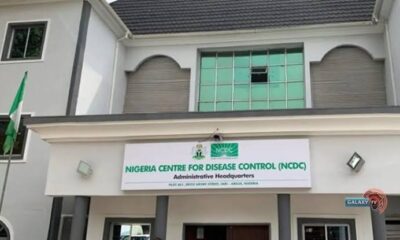









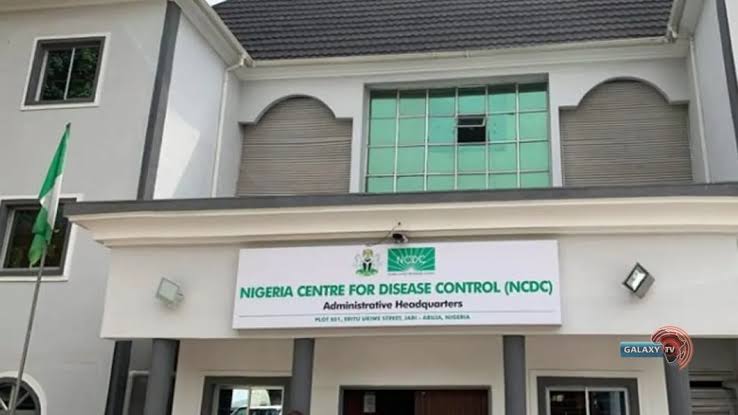
The Nigeria Centre for Disease Control and Prevention (NCDC) has reported two suspected Ebola cases as the number of people being monitored following the country’s confirmed infection rises to 53.
The development has heightened the urgency of efforts to contain the virus and prevent further transmission.
The Director-General of the NCDC, Dr Jide Idris, disclosed this on Sunday, October 25, 2026, during a press briefing in Abuja, where he provided an update on the country’s surveillance and response measures.
“We have established two additional suspected cases and 53 primary contact links. They are primary contacts. We have an isolation centre and a quarantine centre,” Idris said.
However, details surrounding the two suspected cases remained unclear, as other accounts of the briefing indicated that authorities had investigated two cases, including the confirmed infection in Abuja and a suspected case in Rivers State that subsequently tested negative.
The reported suspected cases should therefore not be interpreted as additional confirmed infections without laboratory confirmation.
Providing details of the contact-tracing exercise, Idris said the 53 contacts comprised 44 people linked to the healthcare facility where the confirmed patient received treatment and nine others identified through further investigations.
The additional contacts included three members of the patient’s household, three healthcare workers who attended to her at an earlier medical facility and three personnel involved in collecting samples.
According to the NCDC, the identified contacts had been classified according to their exposure risks and placed under monitoring. None had tested positive for Ebola or developed symptoms as of the briefing.
Idris explained that public health teams would monitor the exposed individuals for 21 days after their last possible exposure, in line with established protocols for detecting and responding promptly to potential infections.
He also disclosed that approximately 12 public and private laboratories were available to conduct Ebola testing in Nigeria as authorities continued to strengthen the country’s diagnostic capacity.
The NCDC director-general urged healthcare facilities nationwide to reinforce screening, patient assessment and infection prevention measures.
He stressed the need to provide healthcare workers with adequate personal protective equipment and ensure the prompt reporting of suspected infections.
Idris further appealed to individuals contacted by public health officials to cooperate with investigators and provide accurate information about their movements, possible exposure and symptoms.
Nigeria confirmed its first Ebola case in the current regional outbreak on October 20, 2026, after a woman with a recent travel history to Uganda tested positive for the Bundibugyo strain of the virus in Abuja.
According to the World Health Organisation, the woman developed symptoms on October 7 and sought treatment at a private health facility on October 11 before laboratory tests confirmed the infection.
The initial contact-tracing exercise identified 44 people, but the figure subsequently increased to 53 as investigations expanded.
The Federal Government has maintained heightened surveillance while strengthening laboratory testing, isolation arrangements and infection prevention protocols.
Health authorities have urged Nigerians to remain vigilant, cooperate with public health officials and avoid spreading unverified information as investigations and monitoring continue.

The Kogi State Police Command has commenced an investigation into the deaths of two individuals in Ajaokuta Local Government Area amid reports of an alleged murder-suicide involving two police officers.
The command’s Public Relations Officer, Afusat Saliu, confirmed the development in an interview with Sunday Punch on Saturday.
According to reports, a police corporal identified as Amos, attached to the Ajaokuta Division, allegedly shot his girlfriend, Grace, who was also a corporal, before turning the weapon on himself.
A source disclosed that Amos reported for night duty as a station guard at about 6 p.m. on Friday but allegedly left his duty post a few hours later.
He was said to have proceeded to Grace’s quarters at about 9 p.m., where he allegedly fired three shots at her, hitting her shoulder, lower abdomen and leg, before shooting himself with his AK-47 rifle.
The source attributed the incident to a lingering crisis in the couple’s relationship.
Reports indicated that the two officers had been dating for several years, but their relationship reportedly deteriorated in recent months amid allegations of infidelity and a breakdown of trust.
Their disagreements allegedly escalated into physical altercations and threats, prompting the Divisional Crime Officer (DCO) to detain them at one point and advise them to end the relationship.
“The two junior police officers had been dating for some years now, but a few months ago, they started having trust issues and cheating allegations. There had been physical fights and threats to the extent that they were detained at some point by the DCO, who later advised them to end the love relationship for the sake of peace,” the source said.
The source added that the disagreements persisted despite the DCO’s intervention.
Confirming the incident, Saliu said the command was investigating the circumstances surrounding the deaths and would provide further information when the investigation was concluded.
“We are aware of the incident, and the case is currently under investigation; we will update members of the public after the investigation is concluded,” she said.
However, the police spokesperson declined to immediately confirm whether the deceased were members of the command.
“I cannot confirm that to you right now, but we are investigating the circumstances that led to their death,” she stated.
Saliu also declined to categorically describe the incident as a murder-suicide, stressing that the police had yet to establish the circumstances surrounding the deaths.
“I cannot also tell you if the couple committed suicide or not until the investigation is concluded. We will release an official statement once I get a conclusive report on the matter,” she added.
The police are expected to provide further details after completing their investigation.
…ESMATA hails end of Monday sit-at-home, improved market infrastructure; governor announces cargo terminal, direct China imports plans
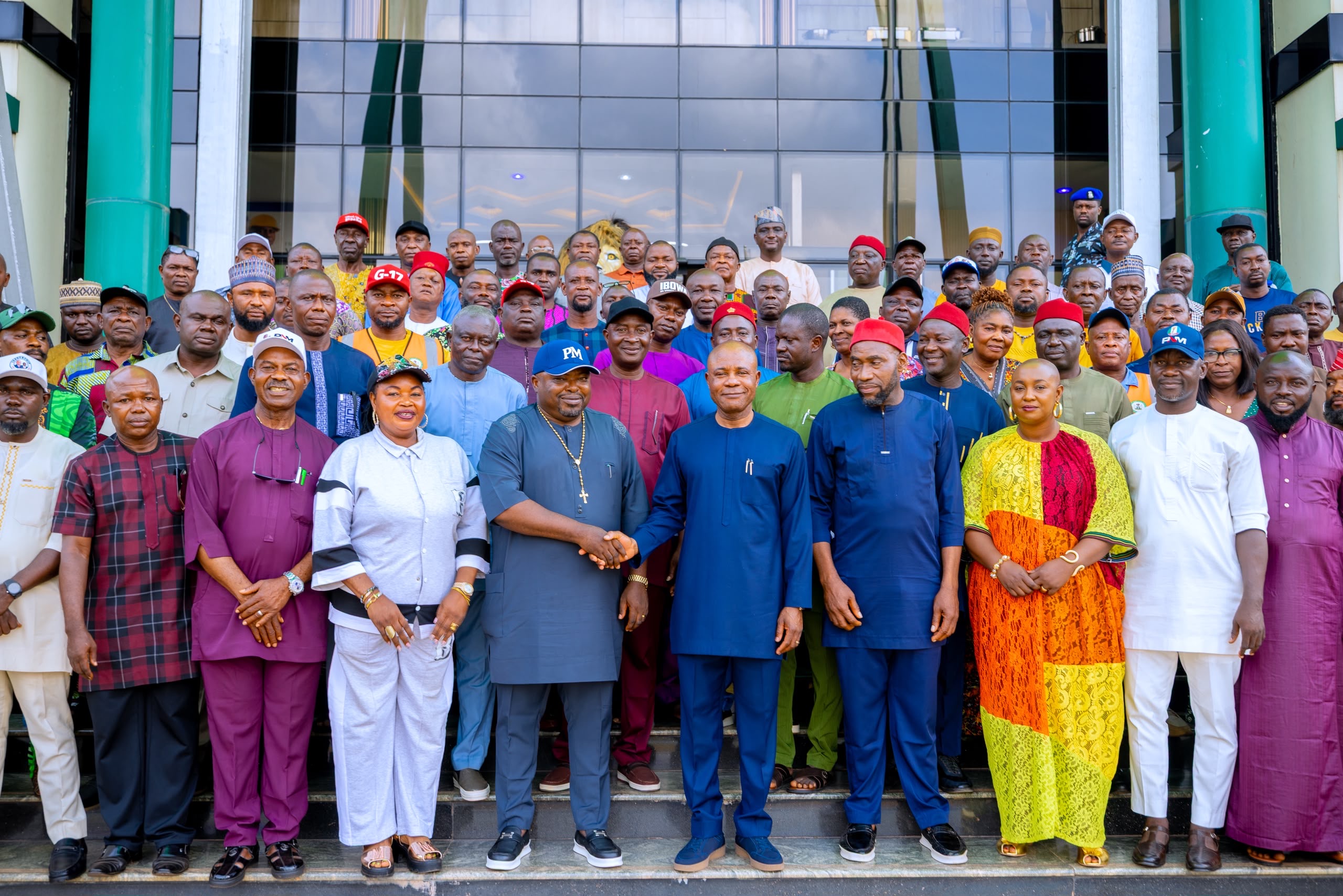
Market leaders across Enugu State have pledged their support for Governor Peter Mbah’s second-term ambition, citing improvements in market infrastructure, the restoration of Monday trading activities and policies aimed at strengthening commercial activities.
The traders, under the umbrella of the Enugu State Market Amalgamated Traders Association (ESMATA), made their position known during a meeting with the governor on Friday, October 23, attended by chairmen and secretaries representing more than 50 markets across the state.
Leading the delegation, ESMATA President, Chief Chinwuba Igwesi, said traders across the 17 local government areas of the state were satisfied with what he described as the administration’s commitment to improving their business environment and addressing challenges confronting the trading community.
Igwesi particularly commended Mbah for ending the Monday sit-at-home disruption, which he said had previously deprived traders of substantial income by forcing them to close their businesses at the beginning of each week.
He noted that the restoration of normal commercial activities on Mondays had enabled traders to operate throughout the week, recover lost business opportunities and improve their earnings.
The ESMATA president also praised the administration for providing transformers to markets experiencing electricity challenges, rehabilitating internal market roads, installing solar-powered streetlights and constructing toilet facilities.
He added that the government had provided utility vehicles to market leadership and appointed some market leaders to positions in the administration, describing the gestures as recognition of traders’ contributions to the state’s economic development.
Igwesi also expressed appreciation for pilgrimage opportunities approved for some market leaders, noting that the administration had demonstrated its willingness to engage with and support the market community.
According to him, Mbah’s background in business has enabled him to understand the challenges traders face, including access to goods, operating costs, infrastructure deficits and the need for a stable commercial environment.
Traders Defend Unified Tax System
Addressing concerns about taxation, Igwesi dismissed reports of a general tax increase, explaining that the administration had introduced a system for consolidating taxes into a single account.
He said traders were willing to fulfil their tax obligations because they could see development projects and infrastructure being delivered across the state.
The ESMATA president maintained that visible investments in public infrastructure had strengthened traders’ confidence in the government and encouraged greater cooperation between the business community and the state authorities.
He also attributed improved commercial prospects in the building materials sector partly to the administration’s directive that contractors handling projects in Enugu should patronise local suppliers where the required materials were available within the state.
According to him, the policy had helped retain business transactions within Enugu, increased patronage for local merchants and created opportunities for businesses dealing in construction materials.
Igwesi further commended the government’s investments in healthcare infrastructure, particularly the international hospital project, which he said had impressed him with its scale and standard.
Describing the development, he said the facility briefly made him feel as though he had travelled to Dubai.
He argued that projects of such magnitude could improve the state’s image, stimulate economic activities and create new opportunities for businesses.
‘No Opposition in Our Markets’
Declaring the traders’ support for Mbah’s second-term bid, Igwesi said the governor’s performance had strengthened his standing among market operators ahead of the next governorship election.
He urged the governor to sustain the pace of development, assuring him that traders would continue to support his administration.
“When the time comes, your work will speak for you,” he said, reiterating the association’s position with the declaration: “No opposition in Enugu State.”
Other market leaders echoed the commitment, arguing that improvements in infrastructure, security and the business environment had reinforced their confidence in the administration.
Mbah Unveils Plans for International Trade
Responding, Governor Mbah thanked the traders for recognising his administration’s efforts and assured them that more development initiatives were in the pipeline.
He said his government remained committed to expanding commercial opportunities, improving infrastructure and positioning Enugu as a major destination for business and investment.
Among the initiatives highlighted was a proposed cargo terminal at the Akanu Ibiam International Airport, Enugu, which the governor said would improve the movement of goods and connect local businesses to international markets.
Mbah also disclosed plans for direct cargo operations between Enugu and China, saying the initiative would enable traders to import goods more directly and at more competitive costs.
He explained that improved access to international supply chains would reduce some of the difficulties traders encounter when sourcing goods, while strengthening the competitiveness of businesses operating in the state.
The governor also highlighted the ongoing construction of the Idodo International Market, describing it as part of the administration’s broader strategy to expand commercial infrastructure and create additional opportunities for traders and investors.
He said the government was deliberately investing in infrastructure and connectivity to attract more businesses, stimulate economic activities and create employment opportunities.
ICC to Boost Commercial Activities
Mbah further explained that the construction of the International Conference Centre (ICC), Enugu, was part of his administration’s efforts to restore the state’s historical prominence as a major political, administrative and commercial centre in the South-East.
According to him, hosting national conferences, major gatherings and other high-profile events in Enugu would attract visitors and businesspeople, creating increased patronage for hotels, restaurants, transport operators, traders and other service providers.
He stressed, however, that sustained investment in security was essential to achieving the ambition, noting that businesses and visitors needed a safe environment to operate and move freely.
The governor said his administration was working to strengthen the state’s security architecture, adding that security, infrastructure and economic planning must complement one another to make Enugu more attractive to investors.
Mbah Targets $30bn Economy
Reaffirming his administration’s economic ambition, Mbah said he was working towards growing Enugu’s economy from an estimated $4 billion to $30 billion.
He linked the target to efforts to increase productivity, attract investments, strengthen local enterprises and expand economic opportunities for residents.
The governor maintained that Enugu possessed considerable economic potential and expressed confidence that ongoing and planned projects would help accelerate the state’s development.
He also assured the traders that their interests would remain a priority, pledging not to support policies designed to undermine their businesses.
Drawing on his own business experience, Mbah said he understood the challenges associated with running enterprises, sourcing goods, meeting financial obligations and sustaining livelihoods.
He assured the market leaders that his administration would continue to consider the impact of its policies on traders and other business operators.
The meeting was attended by key government officials, including the Senior Special Assistant to the Governor on Market Liaison, Hon. Dr. Chinedu Mbah; the Senior Special Assistant to the Governor on Security, Mr. Vincent Onyeaboor; and the Special Adviser to the Governor on Political Matters, High Chief Frank Anioma. The three officials accompanied the governor in receiving the market leaders.
The engagement underscored the importance of sustained dialogue between the state government and the market community, with traders expressing appreciation for completed interventions while the governor outlined further plans aimed at improving infrastructure, expanding access to international trade and strengthening Enugu’s commercial position.
With the ESMATA leadership and representatives of more than 50 markets expressing confidence in the administration, the meeting highlighted the growing significance of the trading sector in the state’s economic and political conversations ahead of the next governorship election.
For the traders, the central message was that market infrastructure, reliable security, access to goods, improved business opportunities and visible development would remain important measures of government performance. For Governor Mbah, the meeting provided an opportunity to reaffirm his commitment to building a more connected, secure and commercially vibrant Enugu State.
-
 Features17 hours ago
Mmesoma Umeorini: When Love Turns Deadly, and a Young Woman Pays With Her Life
-
Features14 hours ago
Why Igbos Celebrate New Yam Festival Worldwide: The History, Cultural Significance and Lessons For The Younger Generation
-
News2 days ago
Mbah: Why We Built 268 Smart Green Schools Across Enugu State
-
News2 days ago
UBA Commences Contempt Proceedings Against WEMPCO Directors over Alleged Disobidence of Court Order
-
News5 hours ago
Kogi Police Probe Alleged Murder-Suicide Involving Two Officers
-
News2 days ago
Enugu CP Orders Probe into Death of Izuchukwu During Police Raid
-
News2 days ago
Macron Postpones Planned Visit to Nigeria Until 2027
-
Politics2 days ago
2027: Atiku, Obi, Duke, Others in Talks on Single Opposition Candidate – Coalition