Connect with us

Opinion

Abba Moro and the Burden of Opposition Leadership

Published

on

Spread the love

By Paul Mumeh

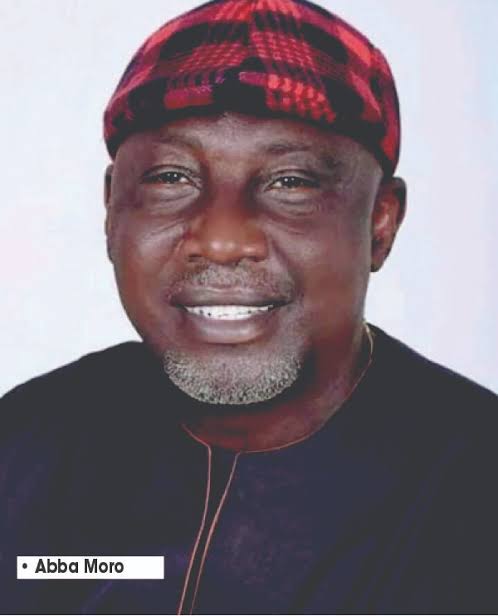
Senator Abba Patrick Moro, the Senate Minority Leader, is no stranger to political struggles. In fact, his political journey began during his days as a student union activist at the University of Lagos (UNILAG). He continued his activism as a lecturer at the Benue State Polytechnic, where he led the Academic Staff Union of Polytechnics (ASUP) and served as a national officer. A comrade in every sense, Moro has long been immersed in advocacy and struggle.

He eventually left academia to pursue a political career. Though he initially faced setbacks, Moro persevered. His breakthrough came when he was elected Chairman of Okpokwu Local Government Area in Benue State. In that role, he demonstrated notable administrative and leadership acumen. His colleagues recognized his capabilities, electing him Chairman of the Association of Local Government Chairmen of Nigeria (ALGON), where he also served on the national executive.

By a stroke of fate, Moro was appointed Minister of Interior under the Goodluck Jonathan administration—this, after successfully leading the campaign team of former Senate President David Mark as Director General for two consecutive terms in Benue South Senatorial District.

When his mentor and political leader David Mark exited the Senate in 2019 after a 20-year tenure, Abba Moro was the natural choice to succeed him. His emergence, despite the presence of political heavyweights such as former Deputy Governor Steve Lawani, retired Defence Permanent Secretary High Chief Mike Onoja, and former Minister of Education Prof. Jerry Agada, spoke volumes. Many of these contenders had left the political family of Mark after his senatorial election was annulled by the Court of Appeal. During the rerun, Moro led the campaign and delivered victory.

Currently serving his second term in the Senate, Moro chaired the Committee on Federal Character in the 9th Senate and now leads the minority caucus in the 10th Senate—representing all minority political parties.

Observers had expected that, as Minority Leader, Moro would be combative toward the ruling All Progressives Congress (APC). While he does challenge the ruling party—especially when policies threaten citizens’ welfare—his style is more collaborative than confrontational. His focus remains attracting democratic dividends to his constituents. So far, he has facilitated social infrastructure projects, employment, and appointments for his people.

Maduka College Advert

Still, Moro faces an unexpected and daunting challenge: the steady defection of opposition lawmakers—senators, representatives, and even governors—to the APC. If the trend continues, he may soon have no caucus to lead. Undeterred, he continues to rally the remaining opposition members, urging them to stay firm in the belief that “the dry bones shall rise again.”

He has been critical of defectors, describing them as “sinners” seeking political absolution in the APC.

According to Moro:

“When history unfolds, we will understand the true reasons behind these defections from the PDP to the ruling party.
It has always been the case—people do not want to remain outside the corridors of power. Once in opposition, they realize they won’t enjoy the same benefits.
Some of them, who have held top positions at the state and national levels, may have more personal motivations for joining the APC.
Let’s not forget that a chieftain of the APC once said, ‘If you defect to APC, your sins are forgiven.’ With that background, it’s easy to see why some people are moving.”

He questioned the erosion of political values:

“Where have principles gone? Where are our values?
You were elected on a party’s platform, and the Supreme Court has ruled that people vote for parties, not individuals. So, how can one justify switching allegiance on the vague claim of acting in their constituents’ interest?”

Moro also dismissed any notion of a merger ahead of the 2027 general elections.

“The PDP is a household name in Nigeria. From rural villages to major cities, we have loyal structures and active members. That brand cannot be discarded,” he said.
“Coalitions are acceptable if they enhance our democratic objectives.
But a merger that entails abandoning the PDP name is a non-starter. The PDP name is an asset—it’s our identity and strength.”

He emphasized that despite recent defections and internal challenges, the PDP remains a formidable force that must stay rooted in its core identity.

On the outcome of the 2023 general elections, Moro pointed to the party’s decision to field a northern candidate as a major factor in its defeat.

“In 2022, heading into 2023, the PDP was in opposition and had to strategize on returning to power,” he said.
“While the PDP constitution provides for zoning, the Nigerian Constitution allows everyone a fair shot at any position.
In our attempt to field the best candidate to challenge the ruling party, we left the choice open. Unfortunately, that backfired.”

Reflecting further, he added:

“Looking back, one of our biggest missteps was fielding a northern candidate. Morally, many Nigerians felt that after eight years of northern leadership, it was only fair to support a southern candidate.
We failed to recognize that sentiment, and we’re now dealing with the consequences. Damage can be done in minutes, but rebuilding takes time.
The PDP is coming to terms with these mistakes. If we keep repeating them, we should expect the same results.”
Moro also responded to recent comments by FCT Minister Nyesom Wike, who warned that PDP could face worse defeat in 2027 if it fails to zone its presidential ticket to the South.

“Those are assumptions—but valid ones,” he said.
“Coming from someone like Wike, who played a key role in the G5, the party must take note. If we keep making the same mistakes, the outcome will be predictable.
As the saying goes, ‘Those who don’t learn from history are doomed to repeat it.’”

In the same token , his colleague and former governor of Bayelsa state Senator Seriake Dickson also warned that the PDP must reorganize or risk collapse. The former governor urged PDP governors to take responsibility and lead the party’s revival with sincerity and commitment.

In the days and months ahead , Moro would have to redouble his efforts to ensure that his team is no longer depleted. He will have to prove his capacity more as a good manager of men.

Moro will need all the wisdom first to put his Benue South family together to work as a team . He will need to mend fences and heal the wounds of the aggrieved. This will ensure that the forthcoming national convention of the PDP produces a leadership that inspires and can be trusted.
He will need a united house to make the difference in 2027.


Opinion

Enugu State, Governor Mbah and The Road Revolution

Published

on

Enugu Works Commissioner reads riot act to construction firms
Governor Peter Mbah and other functionaries during road project inspection
Spread the love

By Samson Ezea

There is no meaningful development without infrastructure, and no infrastructure impacts the daily lives of the people more directly than roads. Roads connect communities, drive commerce, reduce travel time, improve security, attract investments, and open up rural areas for economic growth. In Enugu State today, one of the most visible signatures of Governor Peter Ndubuisi Mbah’s administration is the aggressive push in road construction and reconstruction across the state. From urban renewal projects to strategic rural link roads, the administration has continued to redefine the state’s infrastructural landscape.

Recently, I had cause to travel to Nsukka. I began my journey from Independence Layout through the Enugu–Port Harcourt Expressway and passed through Abakpa Junction. What immediately caught my attention was the impressive level of work on the second lane of the Enugu–Onitsha Expressway, which has already been opened for use, as well as the ongoing construction of the flyover bridge at Abakpa Junction.

On getting to Penoks Junction, I became even more excited seeing the extent of the dualisation project stretching from the junction down to the flyover bridge at T-Junction as part of the ongoing dualisation of the Penoks–Opi–Nsukka Road by Governor Mbah’s administration. Unlike in the past, when journeys to Nsukka were stressful and time-consuming, I arrived in less than 40 minutes.

Apart from the already completed sections, construction work is progressing rapidly on other parts of the road, particularly from the Opi Nsukka Junction axis towards Enugu. Just like every other road, Governor Mbah’s administration has constructed and reconstructed in the state, one remarkable feature of the project is the provision of proper drainage systems on both sides of the road to ensure easy flow of erosion and floodwater. This was largely absent on the old road and had contributed significantly to its deterioration over the years.

Beyond eliminating the usual traffic congestion and gridlock associated with the route, the economic benefits and long-term impact of the dualisation of this strategic road cannot be overemphasized. It is a major gateway linking Enugu State to northern Nigeria and other parts of the South-East.

Maduka College Advert

Also, during the grand finale of the Tomorrow Is Here Movement, the vibrant support group of Governor Mbah’s administration, held at Owo Junction last month, I took time to travel through the ongoing 44.5-kilometre dual carriage road being constructed from scratch from Owo Junction through Ubahu down to Ikem. The road, when completed, will serve as another major access route connecting Enugu State to Northern Nigeria, while opening up several rural communities to development and economic opportunities.

Across Enugu State, from urban centres to rural communities, I have personally driven through several strategic roads either under construction or undergoing rehabilitation by Governor Mbah’s administration, roads I never even knew existed from my undergraduate days in Enugu till date.

Despite the huge backlog of infrastructural deficits inherited from decades of neglect by successive administrations, even before the creation of Enugu State in 1991, Governor Mbah’s administration has performed remarkably well in critical infrastructure development, particularly in roads, schools, hospitals, and related sectors. These projects are gradually transforming the developmental outlook of the state and positioning Enugu as an emerging investment destination.

From the outset, it was obvious that Governor Mbah came prepared for governance. This became even clearer on August 31, 2024, when he commissioned the Enugu State ultra-modern Mega Asphalt Plant, one of the best in the South-East region. The plant was established specifically to tackle the high cost and logistical challenges associated with road construction, especially asphalt production, which constitutes a major component of road projects.

The establishment of this important facility has significantly accelerated the pace and quality of road construction across the state.
Aside from occasional delays caused by the rainy season, most of the roads awarded by the administration are progressing steadily. Importantly, none of the projects awarded by Governor Mbah’s government has been abandoned. Construction activities are ongoing on virtually all of them, earning commendations from residents and indigenes alike.

Even as political activities ahead of the 2027 general elections intensify, with many politicians focusing more on strategies for electoral victory, Governor Mbah appears determined to allow his performance speak for him. This perhaps explains why the administration has continued to award more strategic road projects across the state.
Among the recently flagged-off projects is the 52.2-kilometre Nsukka–Leija–Aku–Akpakumeze–Eke-Ebe Road, inaugurated during the Enugu North Mega Endorsement Rally in May 2026. Other newly awarded projects include:
Beach Junction–Ovoko Afor Road, Nsukka
Enyichiru Barracks Junction Road, Nsukka – 1.2km
Mechanic Road Barracks Junction, Nsukka – 1.15km
Ugwuachara Road, Nsukka – 1.55km
Ezeagu–Umumba–Orie Engine Ebenebe Road – 10.1km
Enugu United Palm Plantation (EUPP) Access Road at Ibite Olo, Ezeagu – 14.5km
Umabi–Umuaga Link Road – 3.6km
Eke Obinagu–Obodo Nike–Umuode–Oruku–Aguikpa–Amaechi Idodo Road – 18.23km
Obodo Ukwu–Inyi Road – 5.6km
Ehuhe–Achi–Umabi Road – 13.05km
Amanpunato Achi–Amoli Road – 16.47km
Altogether, these projects cover over 151 kilometres of roads across different parts of the state.

These are not just ordinary roads; they are economic lifelines. They will boost agriculture, enhance rural commerce, improve access to healthcare and education, reduce travel time, and strengthen connectivity between rural communities and urban centres.
That is why it is amusing to read the propaganda and misinformation being circulated by some sponsored social media hirelings attempting to downplay the achievements of Governor Mbah’s administration in road construction. Their aim may be to score cheap political points ahead of the 2027 elections, but facts remain sacred.
Even to the blind, it is obvious and indisputable that Governor Mbah’s administration has done remarkably well in road construction and reconstruction across Enugu State. The administration has not abandoned any road project awarded so far and continues to initiate new projects despite growing political distractions.

The construction of the Mega Asphalt Plant at the early stage of the administration clearly demonstrated foresight, seriousness, and preparedness to tackle the long-standing challenge of deplorable roads across the state.
However, one undeniable reality remains: the infrastructural decay inherited over several decades is enormous.

Even if Governor Mbah were given another eight years focused solely on road construction, it would still be difficult to completely erase the backlog of dilapidated roads across the state. That is simply the magnitude of neglect accumulated over the years.

Nevertheless, the progress made so far deserves recognition and appreciation. Road construction is highly capital-intensive and requires careful planning, technical expertise, and time to ensure durability and quality delivery. Therefore, development should not only be assessed based on whether roads in one’s immediate community have been reconstructed. Governance must be viewed from a broader perspective.

In all fairness, Governor Peter Mbah’s administration has shown commitment, vision, and determination in addressing Enugu State’s infrastructural challenges. The ongoing road revolution across the state is not merely about laying asphalt; it is about opening up communities, stimulating economic growth, improving the quality of life of the people, and laying a solid foundation for future generations.

Indeed, the roads are speaking for the administration.

• Ezea writes from Independence Layout, Enugu State

Continue Reading

Business

Amukpe-Escravos pipeline and the real cost of ignoring current value, By Sufuyan Ojeifo

Published

on

Spread the love

Nigeria’s oil infrastructure has a habit of telling uncomfortable truths. Not just about barrels and flow rates, but about how a country chooses to value what it cannot afford to lose, and what it risks when it gets that calculation wrong.

Take the Amukpe-Escravos Pipeline, for example. A syndicate of lenders, led by Sterling Bank, is pushing back against efforts to revive a collapsed transaction involving a 40% stake in the asset. Their argument is not complicated. It is rooted in numbers and contractual discipline.

To be clear, a deal that fell apart in 2024 is being reconsidered using a valuation from that same year. However, since then, the asset has proved its worth. Independent assessments now place that stake closer to $600 million. The earlier benchmark sits far below that. The gap is not cosmetic. It is material. And if left unaddressed, it becomes a cost.

The original $243 million offer did not collapse by accident. It was terminated in October 2024 after Conpurex Limited failed to meet payment obligations, breached key terms, and sought to shift risk back to the seller. By the time the Technical Committee closed the process, confidence had already drained out of it. That much is settled.

Ordinarily, that should have been the end. Instead, there are moves to return to a September 2025 approval linked to that same process. The lenders describe this as an administrative carryover. Their response is simple. Start again. Set aside the old approval. Bring in an independent adviser. Return the asset to the market and let current value speak.

What is striking is not just the position itself, but how unusual it sounds in the Nigerian context. In a system where strategic assets have too often travelled through corridors of convenience, an insistence on valuation and process can sound almost rebellious. It should not be so.

Maduka College Advert

Because this is not entirely about one pipeline. It is about whether a terminated deal remains terminated. Whether contracts still mean what they say. Whether performance counts for anything once the paperwork has been filed away. And, crucially, who bears the cost when value is ignored.

The numbers, as always, are blunt. A 2025 independent valuation, referenced in the March 2026 edition of Africa Oil+Gas Report, places the 40% stake at a mid-case of $372 million, a high case of $544 million, and an upside of $641 million. These are not speculative figures. They reflect an asset that has quietly done its job in a difficult environment.

With a capacity of 160,000 barrels per day and uptime consistently above 95%, the Amukpe-Escravos Pipeline has become one of the more reliable evacuation routes in a system where reliability is often in short supply. While other corridors struggle with theft and disruption, this one works.

That fact matters a great deal. Because when an asset proves itself under pressure, its value does not stand still. It moves. To price it as though nothing has changed is not just a technical choice. It is a financial one. And every financial choice has consequences.

It says performance can be ignored. It says time does not count. It says administrative continuity can outrun economic reality. To be fair, the earlier process gave enough warning signs. Lenders questioned the assumptions. Coordination was weak. When Continental Oil and Gas stepped back, Conpurex entered without a clean transition and soon began to reopen settled terms, shifting obligations and introducing new conditions that unsettled the commercial balance. The eventual termination was not dramatic. It was inevitable.

What unsettles stakeholders now is the possibility that a process that ran its course may still shape the outcome. If a concluded transaction can reappear without a clear restart, the line between closure and continuity begins to blur. Once that line blurs, contractual uncertainty follows. And when certainty weakens, serious capital takes notice.

This is where the issue widens beyond the pipeline itself. Back in March, Africa Oil+Gas Report described the Amukpe-Escravos matter as no longer just a transaction story, but a test of how Nigeria governs, values, and safeguards strategic oil infrastructure. That reading feels even more relevant now.

Because what is at stake is not simply who acquires a stake in a pipeline. It is how the country signals to those willing to invest in its most critical assets. It is about whether value is recognised only in theory, or protected in practice. It is about whether losses are acknowledged, or quietly absorbed.

The lenders’ position is often described as resistance. It is better understood as discipline. Reset the process. Revisit the approval. Bring in independent oversight. Return the asset to the market through a transparent and competitive process that reflects present realities. Ensure capable counterparties. Align all stakeholders.

These are not extravagant demands. They are the basics. Nigeria has seen too many assets drift from promise to regret. Too many structures that once worked reduced to cautionary tales. When something works, when something proves resilient in a difficult system, the least that can be done is to treat it with the seriousness it has earned.

Moments like this do not announce themselves as turning points. They arrive quietly, dressed as routine decisions.

But they reveal everything. For an economy seeking disciplined capital and trying to rebuild confidence, the signal matters. Let the process be reset. Let valuation reflect reality. Let the outcome show that when Nigeria recognises value, it also knows how to protect it, and what it stands to lose when it does not.

Until then, the lenders’ position stands as a reminder that in a system where too much has been taken for granted, some lines are too important to be crossed and must be held.

● Sufuyan Ojeifo publishes THE CONCLAVE online newspaper.

Continue Reading

Health

How Gov Peter Mbah is rewriting Enugu’s healthcare story

Published

on

Sit-at-home: Gov Mbah threatens to sanction teachers, bankers, traders
Enugu Governor Dr Peter Mbah
Spread the love

By Dr. Collins Ogbu

In the life of every society, there comes a defining moment when leadership either sustains the status quo or boldly reimagines the future. For Enugu State, that moment is now. At the centre of this transformation is Governor Peter Ndubuisi Mbah, whose administration is not merely responding to challenges in the health sector but fundamentally rebuilding it. Recent public discourse surrounding the suspension of a health assistant trainee by a private institution has, perhaps inadvertently, created an opportunity to restate a deeper truth: the Enugu State Government remains focused, deliberate, and fully committed to repositioning healthcare delivery across the state.

For years, Enugu’s healthcare system reflected a troubling pattern familiar in many subnational contexts; underfunded primary healthcare centres, overstretched personnel, aging and inadequate infrastructure, and an overreliance on private or out-of-state medical services. Rural communities were particularly disadvantaged, often forced to travel long distances for basic care. Training institutions operated with limited capacity, while secondary and tertiary facilities struggled with outdated equipment and insufficient staffing. The system was largely reactive, constrained by years of neglect and unable to meet the growing needs of the population.

Governor Mbah’s administration has decisively broken from that past. Anchored on the principle that healthcare is a right and not a privilege, the government undertook a comprehensive audit of the sector and initiated a far-reaching reform agenda. Rather than incremental adjustments, the approach has been bold and systemic; targeting every layer of healthcare delivery, from primary care to specialised services.

Central to this transformation is the rollout of 260 Type-2 Primary Healthcare Centres across all political wards in the state. This initiative directly addresses the longstanding gap in grassroots healthcare access. Where communities once depended on poorly equipped facilities or distant hospitals, modern, well-positioned centres are now being established to provide quality care within reach. This effort is further strengthened by the recruitment of over 2,250 healthcare workers, a significant intervention aimed at resolving the manpower shortages that previously undermined service delivery.

At the secondary level, general hospitals are undergoing extensive rehabilitation to restore their capacity as reliable referral centres. Facilities such as Uwani General Hospital, which once symbolised infrastructural decline, are being transformed to meet modern standards. These upgrades are ensuring a more efficient continuum of care between primary and tertiary institutions.

Maduka College Advert

The transformation is even more pronounced in tertiary healthcare. The Enugu State University Teaching Hospital (ESUTH), Parklane, is experiencing unprecedented infrastructural expansion, including the construction of a twin six-floor Laboratory and Clinical Complex, a seven-floor Nursing Complex equipped with advanced diagnostic facilities, and a modern Accident and Emergency Department. These developments represent a significant leap from the limitations of the past, positioning the institution as a centre of excellence in both service delivery and medical training.

In the area of medical education, the administration has recorded a landmark achievement with the reaccreditation of the ESUT College of Medicine and the subsequent increase in its admission quota to 350 students – the highest among state-owned institutions in Nigeria. This milestone reflects a strategic commitment to building human capital and ensuring a steady pipeline of highly trained medical professionals for the future.

Equally significant is the completion of the State University of Medical and Applied Sciences (SUMAS) Teaching Hospital in Igbo-Eno. Unlike in previous years when a single teaching hospital struggled to meet demand, Enugu now has a second fully equipped facility, with recruitment already underway to commence full-scale operations. This expansion not only improves access to tertiary care but also strengthens the state’s capacity for medical training and research.

Crowning these efforts is the nearly completed 300-bed Enugu International Hospital, a state-of-the-art, super-specialist facility designed to elevate healthcare standards and reduce the need for outbound medical tourism. For decades, many residents sought advanced medical care outside the state or country, often at great financial and emotional cost. This facility represents a turning point, offering world-class services within Enugu and reinforcing the state’s emergence as a healthcare hub.

Amid these sweeping reforms, the government has also demonstrated a strong commitment to transparency and responsible governance. By clearly distancing itself from the internal disciplinary processes of a private institution while engaging relevant stakeholders, it underscores respect for institutional autonomy alongside responsiveness to public concerns.

What is unfolding in Enugu today is not merely policy execution but a comprehensive transformation. The contrast between the past and the present is both clear and compelling; where there were once gaps, there is now structure; where there was decline, there is now renewal. The state is moving from a system defined by limitations to one driven by vision, investment, and measurable progress.
While challenges inevitably remain, the trajectory is unmistakable.

Enugu State is no longer managing a fragile healthcare system; it is building a resilient, modern, and inclusive one. In the final analysis, Governor Peter Ndubuisi Mbah’s strides in the health sector are redefining not just infrastructure and policy, but the very experience of healthcare for Ndi Enugu, laying the foundation for a future where quality care is accessible, reliable, and sustainable for all.

• By Dr. Ogbu is a Senior Special Assistant, SSA to Enugu State Governor on Strategic Communications 


Continue Reading

Trending

Maduka College Advert