News
Gov Mbah commissions multiple projects, commends Nsukka council boss


…calls on investors to choose Enugu as first choice for business
The Enugu State Governor, Dr. Peter Mbah, weekend, commissioned a number of projects ranging from roads, water, and skill acquisition centre to legistlative building constructed by the Nsukka Local Government Chairman, Barr. Walter Ozioko.
The governor, who said the projects aligned with the objectives of his administration to bring development to all the nooks and crannies of the state, commended the chairman for the laudable projects.

He said his administration was intentional about creating the right infrastructure and environment for businesses to thrive, calling on investors to seize the opportunity afforded by the state to invest.

Governor Mbah, who was represented by the Deputy Governor of the State, Barr. Ifeanyi Ossai, further stressed that water, skill acquisition, education and critical infrastructure are receiving attention by the government which would improve the standard of living of citizens and attract investors to the state.


Noting that the projects would be of immense benefits to the people of the areas as they could now drive on asphalt roads, move their produce and goods to market and also improve the man hours of an average worker, the governor added that efforts were on ground to speed up the completion of the ongoing smart school projects across the state.
According to him, the smart schools, which are tailored towards skills acquisition and expansion of curriculum for hard skills, will have centres for artificial intelligence, robotics, digital technology, computer and science laboratories, interactive smart boards, clinic, including facilities for students with special needs.
Explaining the idea behind the smart schools, Mbah said the older generation lacks most of the skills that would drive the industrial revolution the state is anticipating through private sector driven economy.
Students that are presently enrolled in the schools and youths who are undergoing digital and analystics trainings, the governor said, would have the requisite skills that private investors needed.
While appreciating the people for their support in the last general elections, the governor reiterated his commitment to spread development across the state, saying the council chairman had shown good leadership qualities and encouraging performance.
“What Walter Ozioko has done is a signpost of what is on its way. He has created access roads, provided water and built a centre for skills acquisition. We are happy with his achievements,” the governor added.
He also lauded investors in the state for considering Enugu as their preferred destination, assuring that the administration would continue to strengthen relationship with them through the right security and environmental framework.
Speaking earlier, the council chairman appreciated the governor for his support throughout the period of the projects even as he said the local government has already keyed into Governor Mbah’s philosophy of disruptive innovation which is “fast turning Enugu State into the attraction of the world”.
Ozioko recounted how the two-year journey of his chairmanship culminated in the executed projects, noting that despite the challenges faced by his government, the dream to make Nsukka one of the urban cities to be reckoned with came to reality.
“Your Excellency, these projects and their significance capture the mood, the depth and the reach of our passion, drive and dedication while journeying this far.
“Your achievements in barely a year in the areas of security, education, water resources, etc are topnotch,” he added
Some of the projects commissioned include, a standard commercial borehole at Opi Junction, 850 metre asphalted Cold Room road, 400 metre asphalted Onudialoke road, 900 metre asphalted Lejja Park-Amaeze road, Governor Peter Mbah Skill Acquisition centre and a modern legislative complex in Nsukka town.



News
Anambra Billboard Saga: Onyima Challenges Soludo Govt to Cite Law Behind Umeh’s Billboard Removal
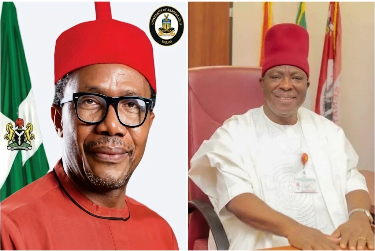
• Billboard Controversy Deepens As Critics Faults Soludo Govt’s Action
The controversy surrounding the removal of a campaign billboard belonging to Senator Victor Umeh in Anambra State has deepened, following criticism of the state government’s explanation by prominent Nigerian journalist, Dr Tony Onyima.
The Anambra State Government had dismissed allegations that the billboard was removed because it featured the image of former Governor Peter Obi, insisting that the action was based on an alleged violation of the Anambra State Signage Act, 2010.
The billboard, which reportedly featured Senator Umeh, who represents Anambra Central Senatorial District, alongside Peter Obi, the presidential candidate of the National Democratic Congress (NDC), was defaced by officials of the Anambra State Signage and Advertisement Agency (ANSAA).
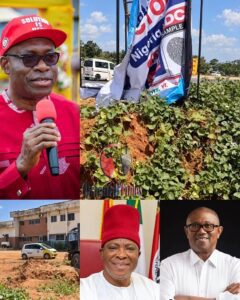
The incident generated widespread reactions after a video showing officials defacing the billboard was shared on social media by Charles Ifeanyi Obi, an aide to Senator Umeh.
The aide questioned the action, particularly as the senator had allegedly fulfilled his financial obligations to the agency. He also shared a photograph purportedly showing representatives of the senator making a payment of N20 million as statutory political advertising fees.
Reacting to the controversy, the Commissioner for Information and Value Reformation, Dr Law Mefor, said the enforcement action had nothing to do with Peter Obi’s image or political affiliation.
In a statement issued in Awka on Thursday, November 19, 2026, Mefor acknowledged that Senator Umeh had paid the required signage fee but alleged that Peter Obi had not fulfilled the relevant payment requirements.
According to him, featuring the NDC presidential candidate on the billboard without meeting the statutory obligations constituted a violation of the state’s signage regulations.
Mefor further explained that the law being enforced was enacted in 2010 during Peter Obi’s administration as governor of Anambra State.
He warned that any combined billboard campaign featuring political candidates who had failed to meet their signage obligations would attract similar enforcement, irrespective of their political status or party affiliation.
However, Onyima, in a reaction titled, ‘Mefor’s Explanation Raises More Questions Than Answers’, faulted the government’s position, describing its justification as contradictory and raising questions about the legal basis for removing a billboard sponsored by someone who had reportedly paid the required fees.
He argued that if the removal had nothing to do with Peter Obi’s image, the government should explain why the former governor’s alleged failure to pay signage fees formed the central justification for the action.
Onyima also questioned whether the Anambra State Signage Act, 2010, permits the removal of a billboard sponsored by an advertiser who has fulfilled his financial obligations simply because another person featured in the advertisement allegedly failed to pay the required fees.
He challenged the commissioner to identify the specific provision of the law that authorises such enforcement.
The journalist further suggested that the controversy had a political dimension, arguing that the growing public appeal and political influence of Peter Obi could not be diminished through the removal of billboards.
He maintained that the fact that the signage law was enacted during Obi’s administration did not automatically justify its application, insisting that what mattered was whether the legislation was being enforced fairly and consistently.
“Nobody is suggesting that Peter Obi or anyone else should be exempt from applicable signage fees. The issue is simple: Senator Umeh paid for his billboard. On what specific legal grounds, therefore, was it removed?” Onyima queried.
He urged the Soludo administration to provide the statutory provisions supporting its action rather than rely on political arguments.
Onyima warned that the rule of law must not become an instrument of political intimidation, adding that while a billboard could be pulled down, the political influence and public image of Peter Obi among his supporters could not be demolished.
The incident has continued to generate debate over the regulation of political advertising in Anambra State, with questions emerging about the responsibilities of advertisers, candidates featured in campaign materials and the extent of enforcement powers available to ANSAA.
The controversy is also unfolding against the backdrop of increasing political activities ahead of the 2027 general elections, with the state government’s insistence on regulatory compliance facing scrutiny from critics who want greater clarity on the legal basis for the enforcement action.

The Economic and Financial Crimes Commission (EFCC) has arraigned Lagos socialite, Halimat Adenike Tejuosho, over an alleged ₦603.4 million fraud involving a promise to secure the appointment of a woman as Group Managing Director of the Nigerian National Petroleum Corporation (NNPC).
Tejuosho was arraigned on Wednesday, November 18, 2026, before Justice A.S. Adepoju of the Federal Capital Territory High Court sitting in Gwagwalada, Abuja, on a five-count charge bordering on advance fee fraud, obtaining money by false pretence and receiving proceeds of crime.
The charge, marked FCT/CR/473/2026, accused Tejuosho and her co-defendant, Gidado Ibrahim, of allegedly collecting ₦603.4 million from one Oluseye Yomi-Sholoye between August and October 2024.
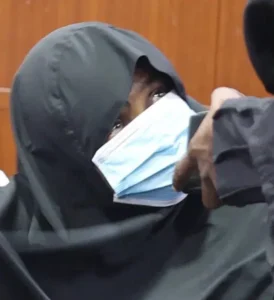
According to the EFCC, the defendants allegedly obtained the money under the pretence that they could facilitate Yomi-Sholoye’s appointment as the Group Managing Director of the NNPC, knowing that the representation was false.
The anti-graft agency further alleged that Tejuosho received ₦259.9 million into her Access Bank account between August and October 2024.
She was also accused of receiving an additional ₦50 million on September 30, 2024, into an account belonging to Haleems Integrated Services Limited, allegedly knowing that the funds were proceeds of criminal activity.
When the five-count charge was read to her, Tejuosho pleaded not guilty to all the allegations.
Following her plea, her counsel, Chuks Ugwuru, applied for bail on liberal terms, arguing that the offences were bailable.
The defence lawyer also relied on his client’s health condition, presenting a medical report which he said indicated that she was critically ill.
He urged the court to consider her medical condition as a special circumstance warranting the grant of bail.
However, EFCC prosecution counsel, Yahaya Tarfa, opposed the application, informing the court that the commission had filed a 12-paragraph counter-affidavit, alongside an exhibit and written address.
Tarfa urged the court to impose appropriate conditions to ensure that the defendant would be available throughout the trial.
In her ruling, Justice Adepoju granted Tejuosho bail in the sum of ₦100 million, with one surety in the same amount.
The court directed that the surety must reside within the court’s jurisdiction and own landed property in the Federal Capital Territory.
The judge further ordered that the property’s title documents be verified by the FCT Land Registry, with a copy deposited with the court registrar.
Tejuosho was also directed to surrender her international passport to the court registrar pending the hearing and determination of the case.
The court ordered that she remain at the Kuje Correctional Centre until she fulfils the bail conditions.
The case was subsequently adjourned until February 1, 2027, for trial.
Meanwhile, reports have linked Tejuosho to the City Boy Movement, a political support group associated with President Bola Tinubu. However, the group reportedly distanced itself from her on the day of her arraignment, insisting that she was not its member.
The EFCC had earlier declared her wanted in April 2026 over an alleged case of obtaining money by false pretence.
The allegations are yet to be established in court.
News
Iva Valley Massacre: 77 Years After, Enugu Demands Justice for 21 Miners Shot Dead by British Colonial Police
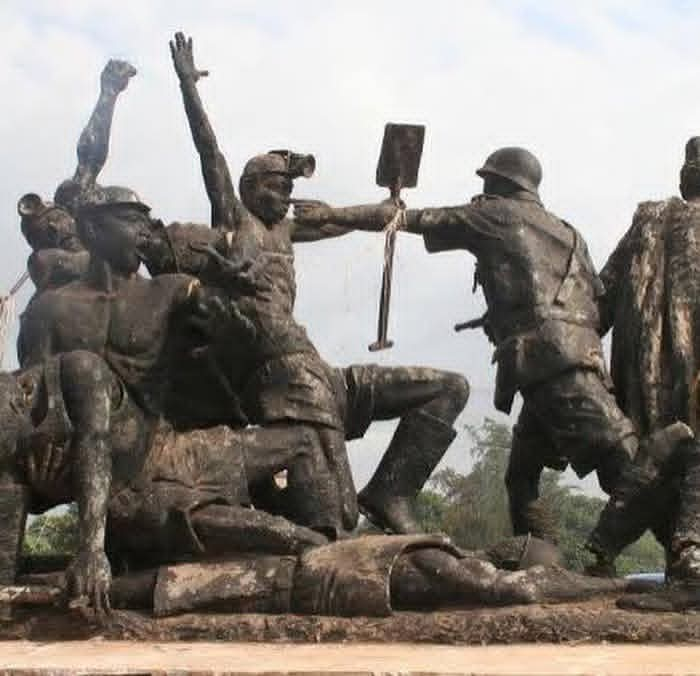
The Enugu State Government has renewed its demand for justice, historical recognition and reparations for the families of 21 coal miners killed by British colonial police during a protest at the Iva Valley coal mine on November 18, 1949.
The government restated its commitment on Wednesday, November 18, 2026, during the 77th anniversary commemoration of the massacre held at the International Conference Centre, Enugu, where families of the victims also renewed their calls for redress over the decades-old tragedy.
The event, attended by government officials, historians, cultural organisations, former coal miners, relatives of the victims and members of the public, featured a stage adaptation of IVA 21: The Incarnations, a book written by the Executive Secretary of the Enugu State Council for Arts and Culture, Laurence Ani.
Representing Governor Peter Mbah, the Secretary to the State Government, Prof. Chidiebere Onyia, said the anniversary should serve as more than an annual remembrance, stressing that the sacrifice of the slain miners deserved lasting recognition and justice.
Speaking on the theme, “Beyond Remembrance: Justice, Colonial Accountability and the Imperative of Reparations for the Iva Coal Mine Massacre,” Onyia said the commemoration was a moral obligation to preserve history and pursue justice.
“For this administration, this anniversary is not an event to be held merely as an annual ritual. It is an obligation to history,” he said.
He described the 21 victims as fathers, husbands, brothers and members of their communities whose lives were cut short while demanding improved working conditions and payment of their legitimate wages.
According to him, the Mbah administration provided substantial support for the commemoration because the massacre represents a defining chapter in Enugu’s history and Nigeria’s broader struggle for human dignity, workers’ rights and justice.
Onyia urged young people to take a deeper interest in the state’s history, warning that the passage of time must not be allowed to erase unresolved historical injustices from public consciousness.
Delivering the keynote address, a lecturer in Arts and Culture at Godfrey Okoye University, Dr Ozo Ferdinand Aniekwe, traced European colonial expansion in Africa to economic interests, arguing that the pursuit of wealth and control of natural resources, rather than a purported civilising mission, largely shaped imperial activities on the continent.
He examined the connections between capitalism, colonialism and imperialism, calling for more deliberate efforts to document African history and challenge the dominance of European perspectives in historical records.
Aniekwe also urged Nigerians to seek justice for historical wrongs while ensuring that past grievances did not hinder constructive relationships or efforts to address their enduring consequences.
Meanwhile, the Governor’s Special Adviser on Soil, Mineral Resources and Mining, Hon. Samuel Onyinye Okoro, said the anniversary had renewed discussions on compensation for the victims’ families and environmental reparations for communities affected by mining activities.
Okoro stressed that the consequences of colonial-era mining extended beyond the 1949 killings, citing abandoned underground tunnels, structural deterioration and the dangers confronting residents of communities built around former mining sites.
He said the state and federal governments were aware of the risks and that efforts were underway to conduct a comprehensive audit of abandoned mining locations to determine appropriate remediation measures.
The special adviser explained that the government was also examining ways to address the dangers without unnecessarily demolishing homes and other structures built over the abandoned tunnels.
On plans to establish a school of mining in Enugu, Okoro disclosed that discussions were ongoing, describing the proposed institution as crucial to reviving the state’s mining industry and equipping young people with the technical skills required to participate in the sector.
In his remarks, Ani said the stage production was designed to preserve the tragedy through creative storytelling and introduce its historical significance to a wider audience.
He explained that IVA 21: The Incarnations sought to portray the miners beyond their identities as coal workers by bringing to life their humanity, family relationships, personal ambitions and aspirations before their untimely deaths.
Ani also disclosed that the production was being developed into an international motion picture in collaboration with German filmmakers, with Nigerian and German professionals expected to participate.
According to him, preparations for the film, including visits to the old mining sites, would commence shortly, while the production was expected to be completed within 18 months and premiered in Enugu.
Also speaking, a representative of the Coal Miners Foundation, Hyacinth Ohagwu, said efforts were being made to document families affected by the massacre and preserve the history of Enugu’s underground mining industry.
Ohagwu warned that abandoned mining tunnels remained a serious threat to communities, particularly in areas where residential buildings had been erected over hollow underground passages.
He called for the identification of vulnerable locations and urgent preventive measures to avert possible tunnel collapses. He also proposed the restoration of the old mining school and the preservation of mining-era structures as archives and exhibition centres.
The foundation representative further advocated the introduction of mining history into the state’s school curriculum to ensure that future generations understood the contribution of coal mining to Enugu’s development and the sacrifices made by the workers.
Speaking on behalf of the victims’ families, Ihedube Chima and Steven Agu recounted the lasting impact of the massacre on their respective families.
Chima said he gradually came to understand the tragedy through accounts passed down by older members of his family, while Agu called for fairness in the treatment of miners and expressed satisfaction with the government’s recognition of the victims.
Other relatives also shared testimonies about the massacre and its enduring consequences across generations.
The commemoration came against the backdrop of an earlier landmark judgment by an Enugu State High Court concerning compensation and reparations for the families of the slain miners.
The Iva Valley massacre occurred on November 18, 1949, when British colonial police opened fire on coal miners protesting harsh working conditions and unpaid wages at the Iva Valley mine, killing 21 workers.
Seventy-seven years later, the tragedy remains a painful reminder of colonial exploitation and the sacrifices made by Nigerian workers in the struggle for dignity, fair treatment and justice.
-
 News3 days ago
Nigerian Pastor Dies Aboard Flight From US
-
News2 days ago
Enugu Assembly Passes Bill Capping Rent Increase at 2%, Restricts Hikes to Four Years
-
News3 days ago
2027: Obaze Alleges Plot to Use Judiciary to Stop Obi, Kwankwaso, NDC Candidates
-
News3 days ago
Tinubu Orders Release of 78 Suspects Arrested Over Attack on His Convoy in Abuja
-
News2 days ago
Nursing Students Shut Down School, Protest Colleague’s Death
-
News3 days ago
Mbah’s Manifesto Scorecard: From Promises to Projects, Enugu’s Journey of Transformation
-
News2 days ago
Gunmen Kill Security Guard, Abduct Businessman’s Family Members, Visitor in Zamfara
-
News19 hours ago
U.S. Strategist Diana London Deletes Posts on Tinubu, Nigeria-U.S. Security Partnership