News
Abducted Imo traditional ruler, Ohiri regains freedom


Kidnapped imo state Traditional ruler of Orodo, His Royal Highness Samuel Ohiri, has been rescued freed from his abductors.
Igwe Ohiri who’s the former head of the Imo State Council of Traditional Rulers was kidnapped by gunmen from his home in Orodo community, Mbaitoli Local Government Area, Imo State, some weeks ago.

He was reportedly rescued unharmed by members of the Imo State Police Command’s Anti-Kidnapping unit following a heated battle with the kidnappers in the forest.
The Police Public Relations Officer, Henry Okoye, made the disclosure on Thursday in Owerri, via a WhatsApp message on the force platform.
He said the Command had been putting up a lot of effort, cooperating with other security services to make sure the traditional ruler was freed.












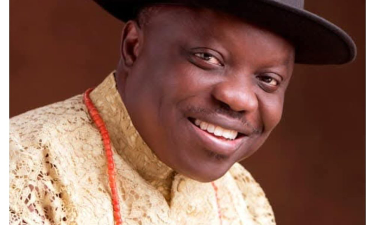
Former Delta State Governor, Dr Emmanuel Eweta Uduaghan, has died.
The former governor reportedly passed away on the morning of Monday, October 19, 2026, according to a statement issued by the Uduaghan family.
The family announced his death with deep sorrow, describing him as a beloved father, brother, uncle and patriarch whose life and service touched many people across Delta State and Nigeria.
Uduaghan, who governed Delta State from 2007 to 2015, held several key positions in the state government before becoming governor.
He served as Commissioner for Health between 1999 and 2003 and later as Secretary to the Delta State Government from 2003 to 2007.
During his years in public service, he was involved in the administration and development of the state, with emphasis on human and infrastructural development.
The family described his death as a significant loss, saying he was a source of strength and a respected elder whose contributions and memories would remain cherished.
It expressed gratitude to God for his life and service, while praying for the repose of his soul and strength for relatives, friends, associates, former colleagues and others mourning his death.
The statement concluded with a prayer for his peaceful rest, adding that his legacy would endure through the lives he touched.
The announcement was signed by the Uduaghan family.


From left: Executive Director of Emadeb Energy and Emadeb Development Foundation, Mrs Olugbesoye Olujimi, Group CEO of Emadeb Energy, Mr Adebowale Olujimi, and Oyo State Governor, Seyi Makinde, after the commissioning of the renovated/equipped multi-million naira Chemistry and Physics Laboratories donated to Government College, Ibadan by Mr Olujimi, a member of Class of 1985, through Emadeb Development Foundation last Saturday

Oyo State Governor, Mr Seyi Makinde unveiling the plaque at commissioning of the renovated/equipped multi-million naira Chemistry and Physics Laboratories donated to Government College, Ibadan by Mr Adebowale Olujimi (left), member of Class of 1985 and Group CEO of Emadeb Energy, through Emadeb Development Foundation, at the 2026 AGM and reunion of Government College Ibadan Old Boys Association, GCIOBA, on Saturday

Interior of the 24KVA solar-powered renovated/equipped Chemistry and Physics Laboratories donated to Government College, Ibadan by Mr Adebowale Olujimi, member of Class of 1985 and Group CEO of Emadeb Energy, through Emadeb Development Foundation, the CSR and philanthropic arm of Emadeb Energy Group

Exterior of the 24KVA solar-powered renovated/equipped Chemistry and Physics Laboratories donated to Government College, Ibadan by Mr Adebowale Olujimi, member of Class of 1985 and Group CEO of Emadeb Energy, through Emadeb Development Foundation, the CSR and philanthropic arm of Emadeb Energy Group.
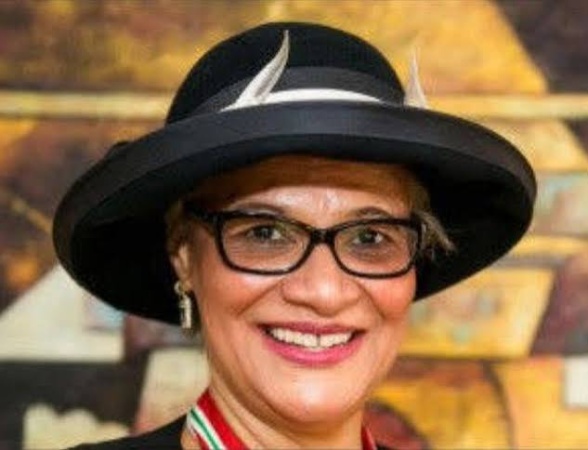
A retired justice of the Supreme Court, Amina Adamu Augie, has warned that corruption within Nigeria’s judiciary and legal profession is eroding public confidence in the administration of justice and transforming the courts from institutions of impartiality into what she described as “market stalls.”
Speaking in Abuja during the 40th anniversary celebration of the Nigerian Law School Class of 1986, popularly known as the Centennial Class, Augie said corrupt practices involving judges, lawyers and court officials had weakened the credibility of the justice system and damaged the public’s perception of the legal profession.
The retired justice called for practitioners found guilty of misconduct to be punished, regardless of their seniority, influence or professional standing.
Augie, who taught at the Nigerian Law School before beginning her judicial career, identified corruption, political interference, inadequate funding and delays in the administration of justice as some of the most serious challenges facing Nigeria’s judiciary.
“The third, which I will not dress up, is corruption. Where it exists on the Bench, at the Bar, or in the Registry, it poisons everything by turning the one place that a citizen should find impartiality into one more market stall,” she said.
She nevertheless cautioned against the blanket condemnation of the judiciary, stressing that the majority of judges and lawyers remained honest, hardworking and poorly remunerated.
According to her, the justice system must be designed in a way that protects judicial officers and other legal practitioners from undue pressure and temptation, rather than exposing them to conditions that make misconduct easier.
Augie expressed particular concern about the conduct of some senior members of the legal profession, saying their actions had contributed substantially to the decline in public trust in the courts and the wider justice system.
“Have we kept faith with them? In part, YES, in part, NO. Public trust has paid the price. The public today is quick to believe the worst of lawyers, and sorry to say, not always without cause,” she said.
“When a few senior members of the profession have been found to traffic in the corruption of justice, the damage is not to them alone; it stains the gown we all wear.”
She said rebuilding confidence in the legal system would require more than public relations campaigns or efforts to improve the image of the judiciary. In her view, the profession must demonstrate a willingness to discipline its members openly and fairly, without being intimidated by their status.
“Restoring that trust is not a matter of better public relations. It is a matter of conduct and a profession willing to discipline its own, without fear or favor, no matter how senior the offender may be in the legal profession,” she said.
The retired justice reminded lawyers that their foremost duty was to the court and the administration of justice, not merely to the clients who retained them. She said professional responsibility demanded honesty, candour, respect for judicial authority and commitment to the rule of law.
Augie urged lawyers to reject attempts to manipulate court proceedings, manufacture or distort evidence, delay cases unnecessarily or secure favourable judgments through improper influence.
She also warned that corruption could not be addressed in isolation from the broader conditions under which the judiciary operates. Inadequate funding, she said, posed a serious threat to judicial independence because a court that depended on the executive for basic infrastructure and operational needs could not be regarded as completely autonomous.
“A Judiciary that must beg the executive for a Courtroom roof, vehicles, or even the Judges’ entitlements is not fully free; financial autonomy for the Courts is not a perk for Justices and Judges, but a guarantee for litigants,” she said.
Augie further criticised the delays and high costs that continue to make litigation inaccessible to many Nigerians. She described delay as the “chronic disease” of the country’s justice system and said it had weakened public confidence in the courts.
Drawing on her experience at the Supreme Court, she said the apex court was burdened by an excessive number of appeals, including disputes that should ordinarily have been resolved at lower levels of the judicial system.
She recalled an appeal concerning the burning of 12 goats that eventually reached the Supreme Court, despite the enormous workload already confronting the court.
According to her, constitutional amendments were needed to narrow the categories of cases that could be taken to the apex court. Such reforms, she said, would enable Supreme Court justices to focus on matters involving significant constitutional, legal and national questions.
Augie also condemned the repeated failure of government authorities to comply with court orders. She cited the prolonged detention of former National Security Adviser Sambo Dasuki and Islamic Movement leader Ibrahim El-Zakzaky, despite judicial directives ordering their release.
She said the disobedience of court orders by public officials weakened the authority of the judiciary and sent a dangerous message that compliance with the law was optional for those in power.
Reflecting on the development of Nigeria’s justice system over the past four decades, Augie acknowledged that progress had been made, particularly since the country’s return to democratic rule in 1999. However, she expressed disappointment that justice remained slow, expensive and beyond the reach of many citizens.
She referred to Nigeria’s ranking of 120th out of 143 countries in the 2025 World Justice Project Rule of Law Index, describing the position as an uncomfortable indication of the country’s institutional weaknesses and the continuing challenges facing its justice system.
Augie called for comprehensive reforms to strengthen judicial independence, improve access to justice, modernise case management, reduce delays and restore ethical standards across the legal profession.
She urged members of the Class of 1986, many of whom now hold senior positions in the judiciary, government and legal profession, to use their influence to defend the rule of law and rebuild public confidence in the courts.
“If Governments obey the Courts, if its Judgments are enforced, if justice comes within a reasonable time and within reach of the poor, if the profession upholds its integrity and disciplines its own, Nigeria would be better positioned to secure its future”, she said. (Weekend Trust)
-
 Faith1 day ago
Awka Anglican Diocese Rejects Ibezim’s Suspension, Threatens to Leave Church of Nigeria
-
News2 days ago
BREAKING: Mbah Extends Enugu Movement Restriction to 10pm, Scraps Keke Ticketing
-
Politics1 day ago
Nigeria’s Weak Opposition and the Cost of One-Party Dominance: Can the Opposition Rebuild Before 2027?
-
News2 days ago
2027: Keke Riders Endorse Mbah, Tinubu
-
News3 days ago
Enugu Approves ₦32bn Legacy Gratuity Payment, Begins Disbursement Next Week
-
News20 hours ago
Catholic priest dies as crucifix falls on him during Mass
-
News14 hours ago
Corruption turning Nigerian Courts to ‘market stalls’ — Retired Justice Augie
-
News2 days ago
2027: Opposition to name single presidential candidate before polls – Lukman