Connect with us

News

Nine Nigerian stowaways captured at Gambia sea return to Lagos

Published

on

Spread the love
No fewer than nine Nigerians who attempted to stowaway to Europe through The Gambia have been received by the Nigeria Immigration Service, NIS, Murtala Muhammed International Airport, MMIA, Lagos Command.

The stowaways had claimed that they were lured into the voyage by some of their friends who were lucky to make it to Europe through the same path.

It was gathered that the Nigerians involved are between the age range of 21 to 30.

They attempted to travel to Europe through The Gambia sea, but they were spotted by the ship captain who immediately alerted the security agencies of the neighbouring country.

It was also learnt that in a bid to escape arrest, the stowaways jumped into the high sea with two of them struggling to swim.

They were eventually rescued from drowning and taken to the Nigeria High Commission in The Gambia which immediately processed emergency travel documents for them to be repatriated to Nigeria, despite their reluctance to return into the country.

Maduka College Advert

The stowaways were brought back to Nigeria through Asky Airlines with the registration number: via Lome, Togo.

Meanwhile, the Comptroller, NIS, MMIA Command, Mrs. Adesola Adesokan, has described the development as a deathtrap.

Adesokan, lamented the incessant stowaway incidents among Nigerians and admonished them against it.

She said: “Such a trip is a deathtrap waiting to happen. Many Nigerians had lost their lives through such means in the past.

“The nine stowaways have been handed over to the MMIA Command by the officials of the Gambian immigration service.

“About nine Nigerians were sent back by The Gambian immigration officers for attempted stowaway in the high sea and two of them almost lost their lives in the process because when they were discovered, they attempted to escape and jumped into the high sea. Unfortunately for them, two of them could not swim.

“The captain of the ship had to get in touch with the country that is within the neighbourhood for the rescue mission. The security officers were able to quickly rescue them, put them in the boat and took them to a hotel where they were given food.

“But, they were very resistant and refused to return to Nigeria. In fact, they were still demanding money from the immigration service there before they could return to Nigeria. They were eventually taken to the Nigeria High Commission in The Gambia, which persuaded them and issued them emergency travel documents for them to be able to be brought back to Nigeria through the MMIA.”

She also appealed to such irregular travelers to desist from it and follow the right channel of travels to any country of their choice.

“We need to change our mentality. When they get there illegally, the first thing is they will begin to hide and when they are caught, they will be deported. Even when they are not caught, they go there to do odd jobs that they cannot be proud of doing to their friends and family members.

“They should look before they leap. Most of the time, it may be a journey of no return. I am not saying you can’t travel abroad, but, go there legally, read your books, apply it in the right way, apply to travel and go and showcase Nigeria as a very intelligent nation in the comity of nations,” she said.

In response to the situation, one of the stowaways, Abdul Yakubu, alleged that he was selling noodles and dried eggs on Lagos Island before he was cajoled to embark on the trip.

He alleged that he lost N70,000, which he paid to the man who introduced and boarded him on the ship.

Also, another member of the returnees, Daniel Vincent, said he thought he would have been in Europe after three days of the trip.

Vincent said he was shocked to realise that he had not left the shore of Africa when they were detected by the crew members of the ship and handed over to immigration in The Gambia.

“They told us we would be in Europe within five or six days. We didn’t carry any food or water with us when we boarded the ship at Tin Can Port in Lagos. It was a very regrettable experience I would not encourage even my enemies to embark upon,” he said.

A boat driver, who declined to give his name, claimed he had once embarked on an unsuccessful trip as a stowaway.

He claimed he was convinced to embark on the journey by a friend who successfully entered Europe through the illegal method.

News

10 Killed or Missing, 2,000 Displaced as Communal Clash Destroys 150 Houses in Anambra – NEMA

Published

on

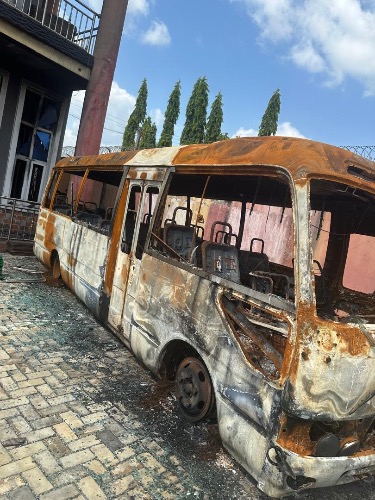
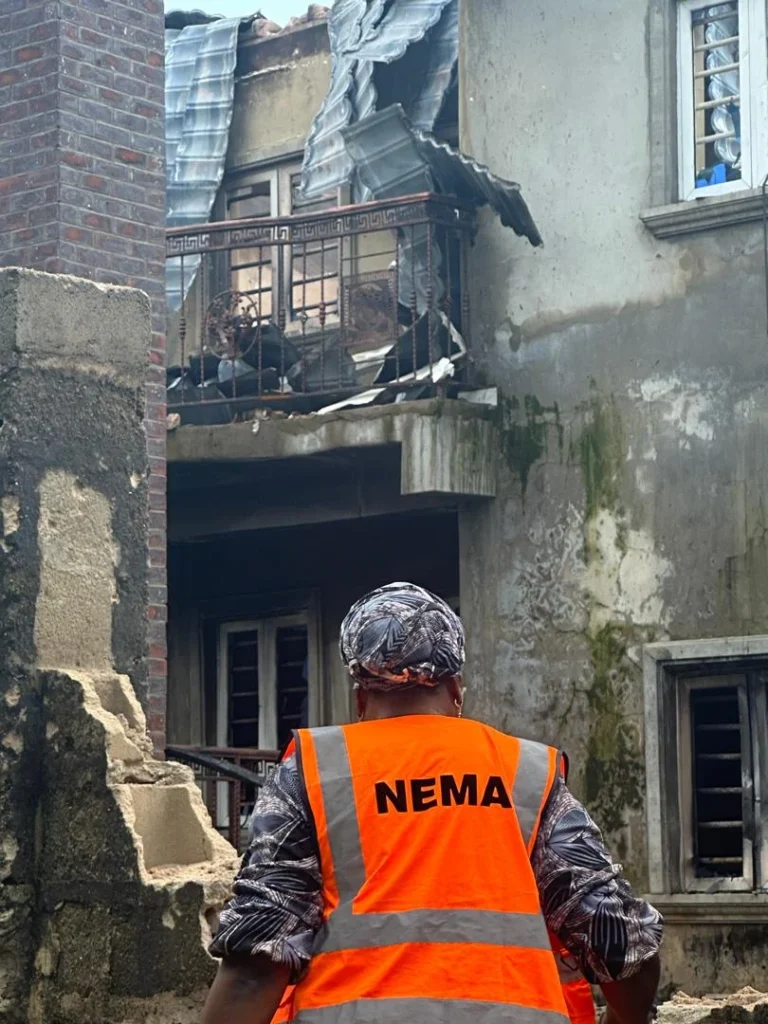
Some of the property destroyed during the communal crisis
Spread the love

No fewer than 10 persons have been killed or declared missing, while more than 2,000 others have been displaced following a violent communal clash between Umuoba Anam and Aguleri communities in Anambra East Local Government Area of Anambra State.

The National Emergency Management Agency (NEMA) also disclosed that more than 150 houses were destroyed during the conflict, which reportedly affected shops, factories, vehicles and other valuable property belonging to residents, including non-indigenes.

The Head of Operations of NEMA’s Enugu Zonal Office, Mrs Priscilla Madukwe, disclosed these figures on Saturday when she led an assessment team to the affected communities to evaluate the extent of destruction and the humanitarian impact of the violence.

Houses razed during the clash

The team, comprising officials of NEMA and the Anambra State Emergency Management Agency (SEMA), was led to the devastated areas by the Chairman of Anambra East Local Government Area, Mr Ifeanyi Chinweze, alongside community leaders and security operatives.

Maduka College Advert

The communal crisis, which erupted in October, reportedly left several parts of the communities in ruins. A traditional ruler’s palace was also razed during the violence, while hundreds of residents were forced to flee their homes for safety.

The scale of destruction prompted the Federal Government, through NEMA, to dispatch an assessment team to determine the extent of the damage and identify the humanitarian needs of the affected residents.

Speaking during the visit, Madukwe described the level of destruction as unfortunate, assuring the victims that the agency would submit its findings to the Federal Government for possible intervention.


A house set ablaze during the attack

She said the assessment was aimed at determining the appropriate assistance required to enable displaced residents to recover from the tragedy and return to their homes.

Madukwe also called on traditional rulers, community leaders and other stakeholders to intensify efforts towards resolving the dispute, restoring lasting peace and preventing a recurrence of the violence.

She stressed that the return of peace, law and order to the affected communities remained a priority.

In his remarks, the Chairman of Anambra East Local Government Area, Chinweze, said the council was working with relevant stakeholders to address the differences that triggered the crisis.

He appealed to the warring communities to embrace dialogue, reconciliation and peaceful coexistence, noting that the curfew imposed in the area had contributed to restoring calm.

Chinweze described the conflict as a major setback to socioeconomic development, warning that insecurity, killings and destruction of property could undermine economic activities and development in the affected communities.

He also commended the Federal Government for sending the assessment team and expressed hope that the victims would receive relief assistance to cushion the effects of the crisis.

Also speaking, the Head of Administration of SEMA, Mrs Ndidi Omega, disclosed that the Anambra State Government had established a committee to investigate the circumstances surrounding the conflict.

According to her, the committee would recommend measures to prevent a recurrence and identify possible forms of assistance for those affected.

Meanwhile, more than a month after the outbreak of violence, the affected communities are reportedly yet to return fully to normalcy, with many residents still displaced and security operatives maintaining a presence in the area to prevent further hostilities.

The latest assessment has renewed calls for urgent humanitarian intervention and a lasting resolution of the dispute to enable displaced families to return to their homes and rebuild their livelihoods.

Continue Reading

News

Bleak Christmas: Economic Hardship Dims Festive Celebrations as Nigerians Struggle to Survive

Published

on

Spread the love

ADVOCATE SUNDAY DISCOURSE

By Tony Edike

As politicians prepare for 2027 election campaigns and the wealthy plan holidays abroad, millions of ordinary Nigerians are struggling to afford basic food items, pay transport fares and give their families a modest Christmas celebration. The season of joy is gradually becoming a season of anxiety for many households.

Christmas has always been one of the most anticipated seasons in Nigeria, particularly in the South-East, where the celebration carries enormous religious, cultural and social significance.

It is traditionally a period of joy, reunion, generosity and thanksgiving. Families travel from cities to their ancestral communities, markets become crowded with shoppers, traders record increased sales, and homes are filled with preparations for the celebration. For many people, Christmas is not complete without new clothes, good food, family reunions and visits to loved ones.

However, as December approaches, the familiar excitement that usually characterises the Christmas season appears to be missing in many parts of the country.

Maduka College Advert

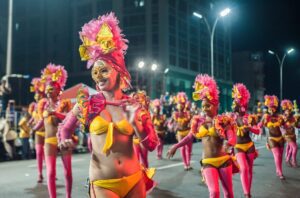
The Calabar Christmas Carnival

Barely 40 days to Christmas, the usual rush by consumers to markets and shopping centres across the South-East to purchase food items, clothing and other necessities has yet to gain momentum. Traders who traditionally depend on the festive season to make substantial sales are expressing concerns over the apparent absence of customers.

For many households, the problem is not a lack of desire to celebrate Christmas. It is the inability to afford it.

Nigeria’s worsening economic difficulties, declining purchasing power, high food prices and the rising cost of petroleum products have combined to make ordinary living increasingly difficult. The consequences are evident in the daily struggles of families who must prioritise feeding, transportation, rent, school expenses and other essential obligations over festive celebrations.

Christmas Without the Usual Excitement

The economic realities confronting Nigerians have fundamentally changed how many families approach the Christmas season.

In previous years, the approach of December would trigger a noticeable increase in commercial activities. Markets would be crowded, traders would stock up their shops, transport operators would anticipate increased patronage, and families would begin making arrangements to travel home for the festivities.

Today, that familiar atmosphere appears subdued.

A Christmas Tree

Many traders in the South-East complain that customers are no longer purchasing goods in the quantities they used to. Some consumers who would ordinarily buy bags of rice, cartons of beverages, meat, cooking ingredients and new clothes are now struggling to afford even a fraction of their usual Christmas shopping.

The situation raises a fundamental question: What is Christmas without the purchasing power to celebrate it?

The reality is that economic hardship does not only affect the ability of citizens to feed themselves. It also takes away the little pleasures that make life meaningful, including the opportunity to celebrate important religious and family occasions.

For millions of Nigerians, Christmas is gradually becoming another reminder of their economic vulnerability.

The Decline of Village Christmas Celebrations

One of the most disturbing consequences of the economic situation is the gradual decline in the traditional movement of people from urban centres to their ancestral communities during Christmas.

In the South-East, Christmas is more than a religious celebration. It is a major cultural event that brings families, kindreds and entire communities together.

It is the period when sons and daughters return home to reconnect with their roots, visit elderly parents, participate in community activities, attend church services, settle family matters and contribute to the development of their villages.

But the rising cost of transportation is making this annual tradition increasingly difficult.

With the high cost of petroleum products translating into expensive transport fares, many families are reconsidering their journeys. A household that must spend a substantial amount transporting itself to the village and back may simply decide to remain in the city.

For families with several children, the financial burden is even greater.

The implication goes beyond reduced travel. It affects rural commerce, community activities, family relationships and the cultural traditions that have sustained the Igbo people for generations.

When people cannot afford to travel home for Christmas, village markets, local transport operators, food vendors and small businesses also lose an important source of seasonal income.

The economic hardship is therefore not just reducing the size of Christmas celebrations; it is gradually weakening an important social and cultural tradition.

2027 Politics and the Question of Priorities

Perhaps one of the most troubling aspects of the present situation is the apparent contrast between the economic struggles of ordinary Nigerians and the increasing political activities ahead of the 2027 general elections.

Already, political calculations, alignments, consultations and campaign preparations are occupying the attention of many political actors.

Huge resources are expected to be committed to political mobilisation, publicity, political meetings, travels and other activities as the election season gathers momentum.

There is nothing inherently wrong with political participation or preparations for elections. Elections are an essential component of democracy.

However, the question Nigerians should be asking is whether the welfare of citizens is receiving the same level of attention and commitment as political ambitions.

At a time when families are struggling to put food on their tables, unemployed youths are searching desperately for opportunities, small businesses are battling rising operational costs and traders are recording disappointing sales, the welfare of ordinary citizens should remain a central concern of political leadership.

Political ambition should not overshadow the responsibility of governance.

The ultimate purpose of occupying public office is to improve the living conditions of the people. Political leaders must therefore demonstrate that their concern for citizens extends beyond election seasons and campaign promises.

A society in which political activities flourish while ordinary citizens struggle to afford basic necessities must urgently reconsider its priorities.

A Christmas of Contrasting Realities

There is also an uncomfortable contrast between the experiences of different categories of Nigerians during this festive period.

While some wealthy Nigerians, politicians and public office holders may be making arrangements for holidays abroad, expensive celebrations and luxurious lifestyles, millions of less privileged citizens are wondering where their next meal will come from.

For some families, the greatest Christmas expectation is not a holiday trip, new clothes or an elaborate celebration. It is simply the ability to secure a bag of rice, cooking oil and other basic food items to feed their children.

Some parents are already worried about how to meet the expectations of their children, who may not fully understand why Christmas cannot be celebrated as it was in previous years.

There are families who may have to explain to their children why there will be no new clothes, special meals or journeys to the village this year.

There are also elderly citizens who depend on the support of their children and relatives but may receive little or nothing because those expected to provide assistance are themselves struggling economically.

This is the human face of the economic crisis, and it should not be ignored.

The Moral Responsibility of the Wealthy

Christmas represents the celebration of the birth of Jesus Christ, whose teachings emphasise love, compassion, sacrifice, humility and concern for the less privileged.

It is therefore important that the season should not be reduced to expensive celebrations, entertainment and displays of wealth.

Those who have the means to celebrate should remember those who cannot afford the basic necessities of life.

Wealthy Nigerians, business leaders, politicians, public office holders, religious organisations and corporate institutions have an opportunity to make a meaningful difference in the lives of struggling families.

A bag of rice, food supplies, financial assistance, medical support or payment of school fees for a disadvantaged child may mean more to a struggling household than an elaborate Christmas party.

Politicians, in particular, should understand that their responsibilities to the people are not limited to election campaigns.

Rather than concentrating exclusively on political mobilisation and the enormous expenses associated with electioneering, political leaders should also consider supporting genuine welfare initiatives that will bring relief to vulnerable households.

Governors, lawmakers, local government chairmen and other public office holders should make targeted interventions to support indigent families, unemployed youths, widows, elderly citizens and people living with disabilities.

Such interventions should be transparent, properly organised and focused on those who genuinely need assistance.

Corporate organisations and wealthy individuals should also consider community-based Christmas support programmes, especially in rural communities where poverty and limited economic opportunities are particularly challenging.

Government Must Address the Root Causes

While charitable interventions can provide temporary relief, they cannot replace the need for sustainable economic policies.

Nigeria cannot continue to depend on seasonal donations and food distribution to address a crisis that requires fundamental economic solutions.

The government at all levels must intensify efforts to reduce the cost of living, improve food production, strengthen local manufacturing, create employment opportunities and support small businesses.

The cost of transporting goods and people must also receive serious attention. The impact of high petroleum prices on transportation, agricultural production, distribution and general commercial activities is too significant to ignore.

Government policies must translate into measurable improvements in the purchasing power of ordinary Nigerians.

Economic growth should not be measured only by official statistics, investment announcements or government revenue figures. It should also be reflected in the ability of an average family to afford food, pay school fees, access healthcare and meet basic household needs without living in constant anxiety.

The real test of economic recovery is whether ordinary citizens can feel the difference in their daily lives.

Christmas Should Not Become a Luxury

As the countdown to Christmas continues, the reality confronting Nigeria is deeply concerning.

A country where millions of people cannot afford to celebrate one of the most important religious festivals because of economic hardship must pay serious attention to the condition of its citizens.

Christmas should not become a luxury reserved for the wealthy.

The ability to put food on the table, purchase modest clothing for children and travel to see loved ones should not be an extraordinary privilege.

For Christians, Christmas is a season of hope and the celebration of God’s gift to humanity. Even in difficult circumstances, the message of love, generosity and compassion must remain alive.

But hope must also be accompanied by responsibility, particularly from those entrusted with public resources and those who have accumulated wealth in society.

Our Position

The Advocate believes that the approaching Christmas should serve as a moment of reflection for Nigeria’s political leaders, wealthy citizens, business organisations and religious institutions.

At a time when political actors are increasingly looking towards the 2027 general elections, the suffering of ordinary Nigerians must not be pushed to the background.

The welfare of citizens should be more important than political calculations. The dignity of the poor should matter as much as the comfort of the privileged.

We call on political leaders, public office holders, wealthy Nigerians and corporate organisations to remember the less privileged during this festive season.

Let this Christmas be an opportunity to demonstrate genuine compassion, not merely through speeches and public appearances, but through practical acts of kindness that can put food on the tables of struggling families.

A politician who can spend millions of naira on political activities should also be concerned about the hungry families within his constituency.

A wealthy individual who can afford an expensive holiday abroad should remember the elderly neighbour, the struggling widow and the unemployed young man who may not have enough to celebrate Christmas.

Beyond individual generosity, government must intensify efforts to address the economic conditions responsible for the present hardship.

Ultimately, the true spirit of Christmas is not measured by the price of the clothes we wear, the quantity of food on our tables or the destinations of our holiday travels. It is measured by the love we show, the lives we touch and the sacrifices we make for others.

Nigeria must not allow economic hardship to extinguish the joy, hope and humanity that Christmas represents.

For millions of struggling Nigerians, the greatest Christmas gift this year may simply be a decent meal, a little financial relief and the assurance that they have not been forgotten.

That is the spirit of Christmas we must collectively restore.

Continue Reading

News

15 ‘Victims’ Accuse Kennedy Iyere of Fraud, Petition IGP

Published

on

Spread the love

Fifteen individuals and corporate organisations have petitioned the Inspector-General of Police (IGP), Olatunji Disu, calling for the investigation and possible prosecution of Comrade Kennedy Iyere over allegations of fraud, obtaining money under false pretences and other related offences.

The petitioners, comprising individuals, hotels and media organisations, alleged that Iyere was involved in a pattern of fraudulent dealings involving false representations, fraudulent inducement, diversion of funds and conspiracy with other persons to defraud them, resulting in substantial financial losses.

The petition, dated August 10, 2026, was signed by the principal petitioner, Obinna Ukor, on behalf of the other alleged victims, including Dr Okechukwu Duru, Silver Green Hotel Limited, Valencia Hotels Abuja, Mr Climate Ignatius, Susan Great, Gbenga Okenla, Pastor Shedrack Oka, Obinna Ifeandu, The Nigeria Start-Up News, Everyday News NGR, The Whisper.ng and Hero TV.

In one of the cases outlined in the petition, the complainants alleged that Iyere obtained approximately N14 million from Ukor through representations and assurances that were later discovered to be false and misleading.

According to the petition, Iyere allegedly failed to utilise or account for the money in accordance with the purpose for which it was released.

Maduka College Advert

“Comrade Kennedy Iyere, having obtained the said monies, failed to apply and/or account for the same in accordance with the representations and circumstances upon which the monies were released to him.

“Rather, the suspect retained, diverted and/or dealt with the funds in a manner inconsistent with the purpose for which they were obtained.

“Notwithstanding repeated demands and requests for an explanation and/or restitution, he has failed and/or refused to satisfactorily account for the monies.

“Of particular concern is the subsequent discovery that, notwithstanding the representations upon which he parted with his funds, the suspect had received and/or was dealing with substantial sums of money from other persons during the relevant period.

“The circumstances surrounding the manner in which Comrade Kennedy Iyere induced the petitioner to part with the said money are matters requiring urgent and comprehensive criminal investigation,” the petition stated.

The petitioners consequently urged the IGP to order an immediate and comprehensive investigation into Iyere’s activities and dealings and ensure that anyone found culpable is brought to justice.

They specifically requested that the police investigate the allegations, trace the movement of the funds allegedly obtained from them, facilitate the recovery of any money or property established to have been unlawfully obtained and prosecute the suspect and any other persons found culpable where sufficient evidence exists.

The petitioners also called on the police to take lawful steps to secure Iyere’s attendance before the investigating authorities.

Meanwhile, the IGP reportedly approved the petition in August, with the principal petitioner now demanding accelerated action to prevent other unsuspecting members of the public from allegedly falling victim to similar dealings.

The latest petition comes against the backdrop of an earlier directive by former IGP Kayode Egbetokun, who reportedly ordered Iyere’s arrest in 2025 over allegations of criminal breach of trust, obtaining money under false pretences, cheating and impersonation.

According to TheCable, Egbetokun had, in a letter dated November 13, 2025, conveyed his directive through Bukola Kuti, his Principal Staff Officer III.

The letter reportedly referred to a complaint submitted by Valen Legal Practitioners on behalf of its clients and directed the relevant police authorities to act in accordance with existing IGP directives on investigations.

The letter stated:

“I forward herewith copy of letter dated 12th November, 2025 received from Valen Legal Practitioners on the above-underlined subject and write to convey the directive of the Inspector-General of Police that you deal in line with the IGP’s extant directives on investigation as contained in Police Wireless Message CB:4001/IGP.SEC/ABJ/VOL.121/48 DTO: 211340/11/2024 and CB:4001/IGP.SEC/ABJ/VOL.121/110, DTO: 241300/01/2025 respectively.”

In the earlier petition submitted by Valen Legal Practitioners on behalf of its clients, the law firm accused Iyere of allegedly defrauding Silver Green Hotel Limited and several other individuals and corporate organisations of a combined N113,508,757.

The law firm specifically alleged that Iyere obtained N26 million from Silver Green Hotel Limited through a purported representation that he was an employee of the Federal Ministry of Youth Development and that the Federal Government would sponsor a youth empowerment programme tagged the Youth Economic Intervention and De-Radicalisation Programme (YEIDEP).

According to the law firm, the alleged scheme involved promises of government-backed projects to induce the hotel and other individuals to release money.

“We continue to act as solicitors to Silver Green Hotel Limited and several other individuals and corporate bodies who have been defrauded by one Iyere Kennedy Ebhenya, hereinafter referred to as ‘the suspect’,” the petition stated.

The allegations are yet to be established in court. Iyere’s response to the latest allegations was not contained in the petition provided.

Continue Reading

Trending

Maduka College Advert