News
Military clarifies Drone attack on Kaduna community

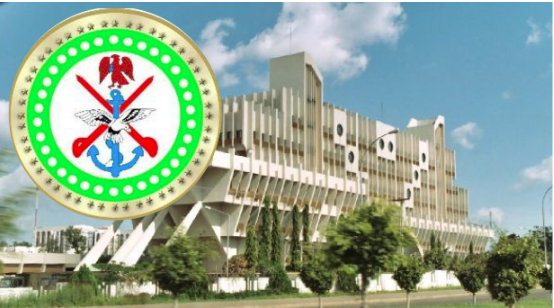
The Defence Headquarters says the drone attack on Ligarma community in Igabi Local Government Area of Kaduna State on Sunday, was based on information about untoward activities of terrorists in the area.
This was contained in a statement by the Director of Defence Media Operations, Maj.-Gen. Edward Buba on Tuesday in Abuja bringing new clarification on the drone attack on the Kaduna community that led to the loss of innocent lives.

Buba said the Nigerian Army Unmanned Aerial Vehicle (UAV) detachment had at about 2200hrs on Sunday, observed the movement of terrorists at Ligarma, known to be a terrorist-infested area of Kaduna State.
He said the aerial surveillance captured the movement of groups of persons synonymous with the terrorist tactics and modus operandi.
Buba explained that the observed advance of the terrorists that were gathered posed a threat to key infrastructure within reach of their activities.

According to him, the threat was eliminated to prevent the terrorists from unleashing terror on innocent civilians.
“It should be noted that, terrorists often deliberately embed themselves within civilian population centres for civilian population to bear the consequences of their atrocities.
“Nevertheless, the Nigerian military does its best at all times to distinguish between civilians and terrorist.
“The military views every civilian death in the cause of operations as a tragedy as such tragedies are needless and unwanted, which causes the armed forces to take extensive measures to avoid them,” he said in regret of the drone attack on the Kaduna community.
According to him, one such measure taken by the military is to continually give precise instructions to communities.
“For instance, communities are to always alert troops of their activities particularly when such a community is known to be infested with terrorist and their sympathizers.
“These instructions are intended at enabling the military to distinguish between friendly and untoward activities,” he said.
Buba said the armed forces would continue to operate in line with international laws and would also continue its determined and cautious progress in eradicating terrorists from the land.
He said the terrorists often disguised as civilians to perpetrate terror as part of their tactics, adding that the military would continue to find innovative solutions to the challenges faced in the conduct of its operations, he concluded in the clarification of the Kaduna drone attack. (NAN)



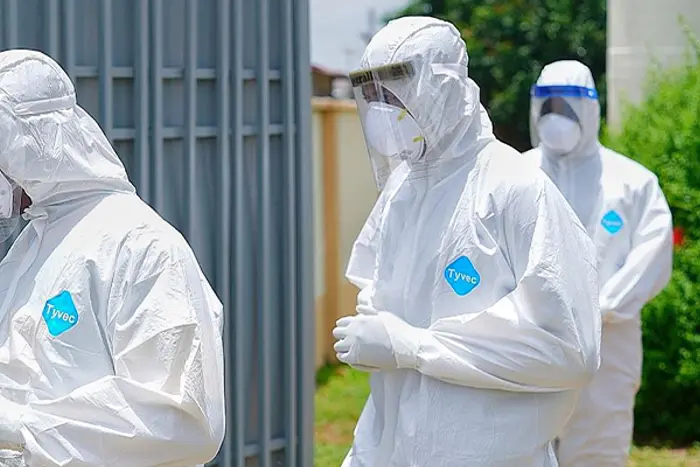
The Federal Government has confirmed a case of Ebola disease in the Federal Capital Territory (FCT), identifying 44 close contacts as health authorities intensify efforts to contain the infection and prevent further spread.
The Coordinating Minister of Health and Social Welfare, Professor Muhammad Ali Pate, disclosed this in a statement issued on Tuesday, October 20, 2026, following laboratory confirmation of the case.
According to the statement, the patient is a woman who recently arrived in Nigeria on an international flight from Uganda.
She was admitted to a private hospital in the FCT, where she received treatment for several days before the diagnosis was confirmed.
The Minister said the patient was currently in isolation and receiving medical care.
He added that the Federal Ministry of Health and Social Welfare, the Nigeria Centre for Disease Control and Prevention (NCDC), the FCT Health Services Secretariat and other relevant authorities were working together to contain the infection.
Contact tracing has commenced, with public health teams identifying and monitoring individuals who may have been exposed to the patient, including healthcare workers, patients, caregivers and travel contacts.
The government has also intensified disease surveillance, while the hospital where the patient received treatment is being supported to strengthen its infection prevention and control measures.
The Federal Government called on public and private healthcare facilities across the country to remain on high alert and promptly report suspected cases to public health authorities.
It urged healthcare workers to maintain a high index of suspicion, identify and isolate suspected cases without delay, and strictly observe infection prevention and control protocols.
The government also explained that Ebola spreads through direct contact with the blood or other body fluids of an infected person who is sick or has died from the disease, as well as contact with contaminated materials.
It further clarified that a person infected with Ebola cannot transmit the disease before symptoms develop.
The government urged Nigerians to remain informed and follow public health guidance as authorities continue efforts to contain the confirmed case and prevent further transmission.
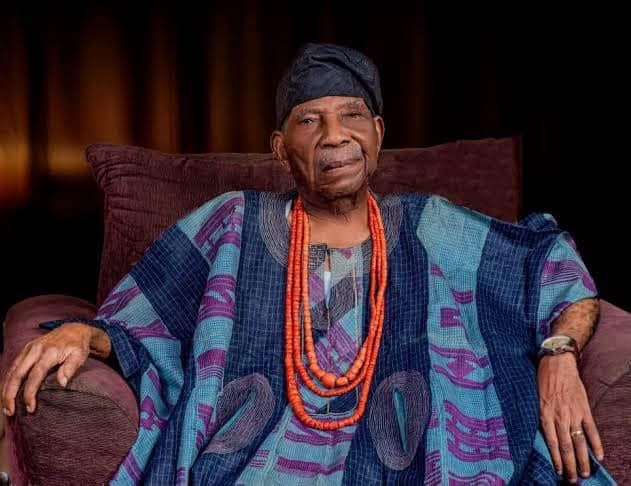
Pa Reuben Famuyide Fasoranti, the revered Yoruba elder statesman and national leader of the pan-Yoruba socio-political organisation, Afenifere, has died at the age of 100.
Announcing the death of the centenarian, Governor Lucky Aiyedatiwa, in a statement personally signed on Tuesday, mourned the death of the elder statesman and community leader.
Aiyedatiwa described the late Fasoranti as a symbol of wisdom, integrity and selfless service whose contributions to the development of Ondo State, Yorubaland and Nigeria would remain indelible.
The governor, in a condolence message issued on Tuesday, said the centenarian’s fatherly counsel, guidance and principled positions on justice and good governance would be sorely missed.
He said Fasoranti lived a fulfilled life and left behind an enduring legacy that would continue to inspire generations.
“Pa Fasoranti was a patriarch, a beacon of wisdom, integrity and selfless service whose century-long life was marked by uncommon commitment to the development of our dear State, Yorubaland and Nigeria at large,” Aiyedatiwa said.
Aiyedatiwa, who expressed sadness over the elder statesman’s death, said his administration and the people of Ondo State shared in the grief of the deceased’s family and associates.
On behalf of the state government and its people, the governor extended his condolences to the Fasoranti family, the people of Akure Kingdom, and the entire state over the loss.
He prayed for the peaceful repose of the deceased’s soul.

The All Progressives Congress (APC) Presidential Campaign Council has denied allegations of a plot to assassinate former Vice-President Atiku Abubakar, the African Democratic Congress (ADC) presidential candidate for the 2027 general election.
Dele Alake, spokesperson for the APC Campaign Council, made the denial while reacting to the allegation raised by Timi Frank, a member of the ADC.
The council urged Frank to submit any evidence in his possession to the relevant law enforcement agencies for investigation, stressing that any credible threat to life must be treated seriously, irrespective of political affiliation.
It categorically denied any involvement by President Bola Tinubu, the Presidency or the APC in an alleged plot targeting Atiku or any other opposition figure.
The council also dismissed reports that security personnel attached to the former vice-president had been withdrawn, insisting that Atiku remained protected by the Nigeria Police Force and the Department of State Services (DSS).
According to the statement, President Tinubu recently directed security agencies to strengthen security arrangements for all presidential, vice-presidential, governorship and deputy governorship candidates ahead of the 2027 general elections.
Reacting to the political implications of the allegation, Alake described the assassination claims as “typical opposition rabble-rousing”, accusing those behind them of attempting to heighten political tension and attract international attention through social media.
“Let our political competition be peaceful, lawful, and focused on the big issues that matter to Nigerians, not character assassination or wild, baseless allegations,” the statement read.
The APC Campaign Council further highlighted Tinubu’s longstanding experience in opposition politics, urging candidates, political parties and their supporters to remain factual and responsible in their public statements.
It called on political actors to uphold democratic values and ensure that the build-up to the 2027 general elections remains peaceful, lawful and focused on issues affecting Nigerians.
-
 News2 days ago
JUST IN: Former Delta Governor, Uduaghan, dies
-
News2 days ago
Federal High Court Upholds ENSSAA’s N150m Political Campaign Billboard Fee, CTC Reveals
-
News2 days ago
Corruption turning Nigerian Courts to ‘market stalls’ — Retired Justice Augie
-
Politics2 days ago
AA Assembly Candidate, Ugbaje Friday, Unveils Development Agenda for Ibaji
-
News3 days ago
Catholic priest dies as crucifix falls on him during Mass
-
News12 hours ago
FG confirms Ebola case in FCT, identifies 44 contacts
-
Gallery2 days ago
PHOTO NEWS: Emadeb Energy CEO Gives Back to Alma Mater in Show of Gratitude
-
News2 days ago
Reject money requests from home, Obi tells UK-based Nigerians