News
President Tinubu announces salary increase


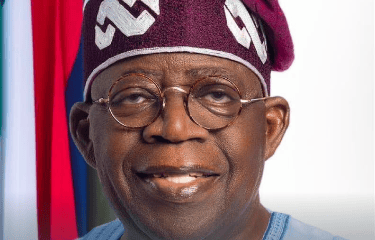
President Bola Tinubu has approved a provisional wage increment for workers in the country as part of efforts to cushion the effect of the fuel subsidy removal.
Tinubu made this known while addressing Nigerians on the 63rd Independence Anniversary of the country in Abuja on Sunday.

The president said that the average low-grade worker would receive an additional N25,000 per month for the next six month.
“Based on our talks with labour, business and other stakeholders, we are introducing a provisional wage increment to enhance the federal minimum wage without causing undue inflation.
“For the next six months, the average low-grade worker shall receive an additional Twenty-Five Thousand naira per month,” he said.

The president said that the present administration was committed to relieving the hardship faced by Nigerians, adding that various measures had been taken by all tiers of government to mitigate them.
“There is no joy in seeing the people of this nation shoulder burdens that should have been shed years ago. I wish today’s difficulties did not exist. But we must endure if we are to reach the good side of our future.
“We have embarked on several public sector reforms to stabilize the economy, direct fiscal and monetary policy to fight inflation, encourage production, ensure the security of lives and property and lend more support to the poor and the vulnerable.
“To ensure better grassroots development, we set up an Infrastructure Support Fund for states to invest in critical areas. States have already received funds to provide relief packages against the impact of rising food and other prices,” Tinubu said.
He said that other efforts were being taken by government to touch all aspects that would impact directly on the lives of Nigerians to ease the pains of the new economic reforms.
The president said that on the issue of transportation, a cheaper and safer Compressed Natural Gas buses would be deployed across the country.
“These buses will operate at a fraction of current fuel prices, positively affecting transport fares. New CNG conversions kits will start coming in very soon as all hands are on deck to fast track the usually lengthy procurement process.
“We are also setting up training facilities and workshops across the nation to train and provide new opportunities for transport operators and entrepreneurs.
“This is a ground breaking moment where, as a nation, we embrace more efficient means to power our economy. In making this change, we also make history.” (NAN)










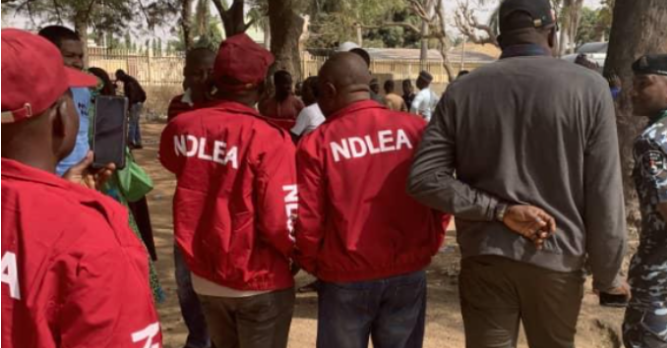
The National Drug Law Enforcement Agency (NDLEA) has intercepted 8,725 kilogrammes of tramadol powder worth more than ₦6.98 billion at the Apapa Port in Lagos and arrested a female passenger allegedly attempting to smuggle cannabis to Saudi Arabia.
The passenger, Fatimah Ahmad, was arrested on Friday, October 16, during the outward clearance of an Ethiopian Airlines flight to Jeddah via Addis Ababa at the Mallam Aminu Kano International Airport, Kano State.
The agency said operatives found 511.75 grammes of cannabis concealed in a gallon of palm oil she was carrying.
According to the NDLEA, Ahmad told officers that her cousin, Abubakar Yahaya, had given her the gallon. Yahaya was subsequently arrested at the airport car park.
The agency’s Director of Media and Advocacy, Femi Babafemi, disclosed the arrests and seizures in a statement on Sunday, detailing a series of anti-drug operations across several states.
At the Apapa Port, NDLEA operatives, working with the Nigeria Customs Service and other agencies, uncovered the tramadol shipment on October 2 during an examination of cargo declared as maize starch.
A confirmatory test at the agency’s forensic laboratory identified the substance as tramadol hydrochloride powder. When separated from its concealment on October 14, the shipment comprised 349 bags with a gross weight of 8,725 kilogrammes, valued at more than ₦6.98 billion.
At the Tin Can Port, also in Lagos, officers discovered 55 kilogrammes of Canadian Loud, valued at ₦165 million, hidden in a Toyota Sienna vehicle inside a 40-foot container on October 12.
The agency also reported the arrest of Elizabeth Chidera Kalu at Idumota Market on October 14, with 10,600 ampoules of diazepam injection and 6,500 tablets of Molly recovered from her store.
In separate operations in Mushin, two men, Idowu Daudu and Ahmed Oniyinde, were arrested on October 15 with 59.95 kilogrammes and 61.23 kilogrammes of skunk, respectively.
Another operation along Iyana Oba led to the interception of a truck allegedly carrying illicit drugs from Trade Fair Market. The NDLEA said 18,000 pills of tramadol 250mg were found in cartons labelled as Rambo insecticide. The suspects arrested were identified as Tajudeen Adeduntan, a loading manager, and his assistant, Azeez Sikiru.
In Edo State, six suspects were arrested during raids in Warake, Ivhiaro and Ewe/Irue communities in Owan East Local Government Area between October 15 and 16.
Those arrested included 85-year-old Grace Ehimeka, who was allegedly found with 179 kilogrammes of skunk, and Ayo Aigberadion, 53, with 220.8 kilogrammes. Other suspects were allegedly found with varying quantities of cannabis and other substances, including tramadol, Swinol and diazepam.
In Ondo State, the agency said operatives raided a cannabis farm in Okemoro Isinbode camp forest on October 17, destroying 7,500 kilogrammes of skunk cultivated on three hectares of land and arresting five suspects.
The operation also yielded 92 bags of skunk weighing 1,267 kilogrammes, 11 kilogrammes of cannabis seeds and three kilogrammes of fresh stems, bringing the total weight of the recovered exhibits to 1,281 kilogrammes.
In another operation in Owo, officers tracked 53-year-old Okunebe Ndidi to a hideout in Ameyinti on October 16 and recovered 25 bags of cannabis weighing 375 kilogrammes.
In Bauchi State, NDLEA operatives intercepted a Volkswagen Golf wagon at Ragwam village in Katagum Local Government Area on October 14, recovering 894,800 tramadol capsules and Exol-5 tablets from Shamsu Garba, 35.
The agency also said officers on patrol along the Bauchi-Gombe road recovered 291 blocks of cannabis weighing 265 kilogrammes from an abandoned vehicle at Tudun Natsira village. (Channels TV)
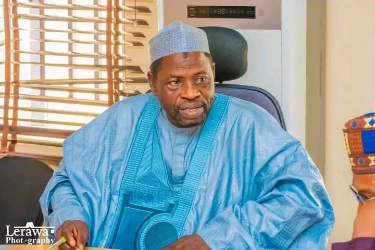
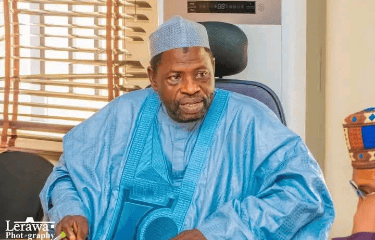
Alhaji Ibrahim Ladan Duguri, the Executive Secretary of the Bauchi State Health Contributory Management Agency (BASHCMA), has lost his life alongside those of four of his children in an accident at Yalwan Duguri in Alkaleri Local Government Area of the State.
Governor Bala Mohammed, who confirmed the tragedy, expressed profound sorrow and deep grief.
The governor described the death of Alhaji Ibrahim Ladan Duguri as a monumental loss to Bauchi, particularly the health sector, “where he distinguished himself through dedication, commitment, and an unwavering passion for improving access to healthcare services for the people”.
In his condolence message signed by his Special Adviser on Media and Publicity, Mukhtar Gidado, the governor equally saddened by the tragic circumstances surrounding the incident and extends his heartfelt sympathy to the immediate family of the deceased, the Duguri Emirate Council, friends, associates, colleagues, and the entire people of Bauchi over the loss.
He also prayed for the full recovery, strength, and comfort of Suleiman, one the deceased’s son who reportedly survived the accident .
Mohammed said, “As Executive Secretary of BASHCMA, the deceased played an important role in advancing the state’s health contributory management system and supporting efforts to make healthcare more accessible to the people, especially the less privileged. His dedication was also evident in his contributions to the state’s medical team during pilgrimage exercises in the Kingdom of Saudi Arabia, where his commitment to the health and well-being of pilgrims was widely valued.
“Beyond his professional accomplishments, Alhaji Ibrahim Ladan Duguri was a close personal friend, and classmate of Governor Bala Mohammed. His death, therefore, represents not only the loss of a valued public servant but also the painful departure of a beloved family member and trusted companion whose life was marked by service, loyalty, and dedication to humanity.”
He acknowledged that no words can adequately express the pain and anguish of the bereaved family at this difficult moment.
Mohammed prayed that Almighty Allah, in His infinite Mercy, would forgive the shortcomings of the deceased, accept their good deeds, and grant Alhaji Ibrahim Ladan Duguri and his beloved children eternal rest in Aljannatul Firdaus.
The governor called on all well-meaning citizens of Bauchi to remember the bereaved family in their prayers and to offer them the necessary compassion, and solidarity during this moment of profound grief.
The funeral prayer for the deceased will be conducted at the palace of the District Head of Yalwan Duguri by 11:00am, on Sunday.

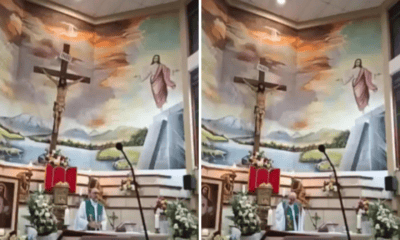
A Catholic priest has died after a crucifix fell on him while he was celebrating Mass in Guayaquil, Ecuador.
The priest, identified as Father Patricio Alfredo Sánchez Molinari, was conducting the service on Saturday when the incident occurred.
The ceremony was being streamed live, with footage of the incident later circulating widely on social media.
Videos showed Molinari addressing worshippers inside the church before the crucifix fell on him, disrupting the religious service.
The Archdiocese of Guayaquil confirmed the priest’s death in a statement published on its social media platforms on Sunday.
The archdiocese said Molinari served as parish priest of Our Lady of Perpetual Help Church in the Central Vicariate.
“We announce that our beloved Fr. Patricio Alfredo Sánchez Molinari, CSsR., who served as parish priest of Our Lady of Perpetual Help Church in the Central Vicariate, has departed for the Father’s House to rejoice in His presence and glory,” the statement read.
The archdiocese prayed for the repose of his soul, saying, “Eternal rest grant unto him, O Lord. And let perpetual light shine upon him. May he rest in peace. Amen.”
-
 Faith2 days ago
BREAKING: Anglican Church Places Archbishop Ibezim on Six-Month Leave, Bars Him From Church Duties
-
News2 days ago
Gunmen Abduct Catholic Priest in Benue, Police Launch Rescue Operation
-
News2 days ago
Tinubu Orders Rescue of Kidnap Victims, Demands Peaceful 2027 Elections
-
News1 day ago
BREAKING: Mbah Extends Enugu Movement Restriction to 10pm, Scraps Keke Ticketing
-
Faith19 hours ago
Awka Anglican Diocese Rejects Ibezim’s Suspension, Threatens to Leave Church of Nigeria
-
News1 day ago
2027: Keke Riders Endorse Mbah, Tinubu
-
Politics17 hours ago
Nigeria’s Weak Opposition and the Cost of One-Party Dominance: Can the Opposition Rebuild Before 2027?
-
News2 days ago
Enugu Approves ₦32bn Legacy Gratuity Payment, Begins Disbursement Next Week