Connect with us

Editorial

FULL TEXT: President Buhari’s farewell broadcast to the nation

Published

on

President Muhammadu Buhari
Spread the love

FAREWELL SPEECH BY HIS EXCELLENCY, MUHAMMADU BUHARI, PRESIDENT AND COMMANDER-IN-CHIEF, FEDERAL REPUBLIC OF NIGERIA

My fellow Nigerian brothers, sisters and friends of Nigeria.

  1. I address you today, in my last assignment as a democratically elected President of our great and well-endowed nation, with a deep sense of gratitude to God, a great deal of appreciation to the Nigerian people and a modest sense of fulfilment.
  2. Today we mark and celebrate another peaceful transition of power from one elected government to another in our steady march to improve and sustain Nigeria’s democracy.
  3. This year we witnessed the most keenly contested Presidential Elections since the first Republic and this demonstrates that our democracy is getting better and more entrenched with each election.
  4. We must as a nation improve and sustain gains we make in the electoral process, on an incremental basis for Nigeria to take its rightful place among Nations.
  5. Our democracy provides for, allows and encourages seeking redress for perceived injustices, enabling some candidates and political parties that did not agree with the results to go to court.
  6. Irrespective of the outcome of the various cases, I urge all parties involved to accept the decision of our courts and join hands to build a better Nigeria.
  7. I salute the doggedness and resilience of all the Presidential Candidates and their political parties for believing in our judicial system by taking their grievances with the election results to court.
  8. In the course of the campaigns, we had argued and disagreed on how to make Nigeria better but we never disagreed or had any doubts that Nigeria has to be better.
  9. As your President, I call on all of us to bring to bear the strength of our individualism, the power of our unity, the convictions of our beliefs to make Nigeria work better and together with one spirit and one purpose.
  10. To my brother, friend and fellow worker in the political terrain for the past ten years – Asiwaju Bola Ahmed Tinubu -, I congratulate you on the realisation of your dream, which was propelled by a burning passion to put Nigeria amongst the leading nations of the world.
  11. You have indeed worked for this day and God has crowned your efforts. I have no doubt that your passion for excellence, reliance on competence, fairness in relationships, commitment to equity, loyalty to the country and desire for Nigeria to be globally relevant would come through for you, under God’s guidance, as you lead our country to levels higher that I am leaving.
  12. You are the best candidate among all the contestants and Nigerians have chosen well.
  13. The last eight years have been an exciting experience in my desire and commitment to see a Nigeria in which public goods and services are available, and accessible within a united, peaceful and secure nation.
  14. Fellow Nigerians, on the strength of your overwhelming support for me and my political party, I started this journey with a great deal of promise and expectation from you. I never intended to be just politically correct but to do the correct things that will make meaningful impact on the lives of the common Nigerian.
  15. This high expectation was not misplaced because, like the ordinary Nigerian, I had grown tired of watching the country progressively moving away from the path of correctness.
  16. To ensure that our democracy remains resilient and our elected representatives remain accountable to the people, I am leaving behind an electoral process which guarantees that votes count, results are credible, elections are fair and transparent and the influence of money in politics reduced to the barest minimum. And Nigerians can elect leaders of their choice.
  17. We are already seeing the outcome of this process as it provided an even playing field where persons without any political God-Father or access to money defeated other well-resourced candidates.
  18. The Nigerian economy has become more resilient due to the various strategies put in place to ensure that our economy remained afloat during cases of global economic downturns.
  19. You would all recall the supply chain disruptions and economic downturn that the world witnessed between 2020 and 2022 as a result of the COVID-19 pandemic. The deftness of our response to the pandemic still remains a global best practice.
  20. Furthermore, we increased the ability of the poor and rural Nigerians to earn a living, provided more food for millions in our villages and gave our women opportunities to earn a living.
  21. Young men and women in urban centres were also supported to put their skills into productive use. Our administration also provided an enabling environment for the private sector to engage in businesses for which their return on investments is guaranteed.
  22. The private sector proved a strong partner in our drive to build a resilient and sustainable economy as evidenced by the growing number of turn-key projects in various sectors of the economy.
  23. In the course of revamping the economy, we made some difficult choices, most of which yielded the desired results. Some of the measures led to temporary pain and suffering for which I sincerely apologised to my fellow countrymen, but the measures were taken for the over-all good of the country.
  24. Mindful of the need to ensure adequate infrastructure to drive economic growth, we completed age-long projects and processes notably amongst which are the Petroleum Industry Act, completion of some power projects, completion of the second Niger bridge and various important roads linking cities and states.
  25. Our battle to ensure that all Nigerians live in a safe and secure environment has achieved considerable results. As I complete my term in office, we have been able to reduce the incidences of banditry, terrorism, armed robbery and other criminal activities considerably.
  26. To sustain the gains made so far, I call on all Nigerians to be more vigilant and support the security agencies by ensuring that our values defined by being your brothers’ keeper govern our actions.
  27. Up-till now, I still grieve for our children still in captivity, mourn with parents, friends and relatives of all those that lost loved ones in the days of the senseless brigandage and carnage. For all those under unlawful captivity our Security Agencies are working round the clock to secure their release unharmed.
  28. Fellow Nigerians, you know how dear the desire in my heart is, to rid the country of corrupt practices that had consistently diminished our efforts to be a great country.
  29. I did pursue this commitment relentlessly, in spite of the expected push back. I am happy that considerable progress had been made in repatriating huge sums of money back to the country and also taken over properties illegally acquired from our common wealth.
  30. To improve service delivery, we began the implementation of a number of reforms aimed at producing an Efficient, Productive, Incorruptible and Citizen-oriented (EPIC) Federal Civil Service and the results are beginning to show.
  31. On the international scene, Nigeria’s influence continues to grow as exemplified by notable Nigerians occupying headship and leadership positions in renowned global bodies.
  32. Our democracy is built on and continues to thrive on the principles of separation of powers. The leadership and members of the National Assembly deserve my appreciation for their patriotism which did not detract from their roles as a check to the executive arm.
  33. I also want to use this opportunity to express my appreciation to a good number of Nigerians who provided their support and encouragement to help me navigate the exciting journey in moving Nigeria forward.
  34. I cannot and will not forget the millions who prayed for me during my illness in my first term of office. I am constantly praying for you and for Nigeria to thrive in peace.
  35. As I retire home to Daura, Katsina State, I feel fulfilled that we have started the Nigeria Re-Birth by taking the initial critical steps and I am convinced the in-coming administration will quicken the pace of this walk to see a Nigeria that fulfils its destiny to be a great nation.
  36. I am confident that I am leaving office with Nigeria better in 2023 than in 2015.
  37. I thank you all. And may God Bless the Federal Republic

Editorial

Three Years of Service: Governor Mbah reaffirms commitment to Enugu’s sustainable development

Published

on

Enugu Gov Dr Peter Mbah during the 3rd Anniversary Thanksgiving Service
Spread the love

At a Thanksgiving Mass marking the third anniversary of his administration, Peter Mbah delivered a speech and shared a testimony at the Government House Chapel, Enugu, on May 29, 2026.

The Full Speech:

A Mass is usually not a platform for speeches. So, I crave your indulgence – given what today represents.

This is an opportunity to express my gratitude for the support and prayers of Ndi Enugu in the last three years.

Nothing we achieved would have been possible without the support of the civil servants and my entire team.

Thank you for your dedication to duty and painstaking implementation of our policies.

Thank you, My Lord Bishop, for your wise counsel and prayers. And to the Chaplain – for your daily dose of enriching sermons.

Maduka College Advert

The church has been an important part of this journey. Our gathering here this morning re-affirms that.

My dear Ndi Enugu,

This morning feels both sombre and energising to me.

Perhaps anniversaries naturally create that feeling. Like a birthday. A celebration, yes, but also a moment that interrupts the rush of events and forces you to reflect.

Three years ago, after taking the oath of office at Okpara Square, I signed the Citizens’ Charter.

I remember the weight of that moment very clearly.

At the time, many people saw just another government promise. Public life had produced too many declarations that never truly reached ordinary people. Hope had become cautious.

But I believed that moment mattered.

The Charter was about trust. About rebuilding faith in public office and creating a service-centred mindset by government for the people of this state.

Most of what we now speak about so easily had not yet taken physical form. It existed as planning, conviction and hard belief. You could describe the future, but you could not touch it.

That gap between vision and evidence is uncomfortable. It asks people to hold faith before results arrive.

And honestly, that was our first challenge.

We had become too used to disappointment.

Too used to shrinking our expectations in order to protect ourselves from frustration.

That was the atmosphere surrounding Enugu three years ago.

Which is why I have always felt that the deeper significance of the Citizens’ Charter was psychological before it was political. It marked a decision to think seriously again about what this state could become and how future generations might eventually live here.

This morning, I think it is worth pausing to reflect on that moment properly.

Let us go on a journey across Enugu State today.

Picture it:

You leave early in the morning. You move through the capital and further outward into the rural communities.

You pass schools in every ward of the state.

Step inside one of them. Listen to children speaking confidently about robotics, AI, coding, agriculture, science and citizenship.

Watch how naturally they use computers and smart boards, as though this future already belongs to them.

Keep driving.

You come across healthcare centres communities can actually reach, where maternal mortality has fallen dramatically and healthcare is moving closer to ordinary life.

Move again.

You travel on smooth roads now connecting communities more efficiently across the state. Roads carrying farmers, traders, workers, students and businesses more from one place to another.

At some point, you stop at a junction and watch the city drive by:

Workers, students and traders traveling in air-conditioned CNG buses with Wi-Fi.

Watch how differently the city now breathes.

Then visit the terminals; The International Conference Centre; Hotel Presidential.

Look in on Hotel Presidential. Watch people visiting from different parts of the state and country. Watch how infrastructure shapes the feeling of a place before a single conversation even begins.

Go further.

Take a flight on Enugu Air: to Lagos, Abuja, Kano today, and tomorrow – the world.

Connectivity changes the psychology of a place. It changes how people see themselves and how the world sees them too.

Watch the shops opening throughout the week.

Watch young people working late at an ICT hub or filling restaurants late into the evening.

Then come back to the Lion Building.

Sit with my team.

Tell them what you saw.

Tell them what you can feel happening around the state.

Tell us whether this still looks like the Enugu you once knew.

And then come and see me.

Tell me how all this makes you feel

Now let me paint a different picture.

Imagine waking up tomorrow and finding yourself back in the Enugu of three years ago.

The roads are broken again. Gridlock clutters the junctions. Mondays fall silent under sit-at-home orders. Shops close. Businesses retreat indoors. Public transport becomes stressful and exhausting again. Schools drift further behind the modern world. Healthcare centres struggle to meet basic needs. Hotel Presidential slips back into decay. Rural communities remain cut off by weak infrastructure and poor connectivity.

The tech hubs are gone. The innovation ecosystem disappears before it fully matures. Investment dries up.

National attention moves elsewhere. International partnerships fade. The state begins losing confidence in itself again.

And the people who drove this transition – I and the team around me – are no longer there.

Slowly, quietly, expectations begin shrinking again.

And then ask yourself honestly: how would that feel?

What would you fight to keep?

What would you protect for your children and for the generations coming after us?

What people see today are outcomes.

What they do not always see is the struggle, persistence and invisible labour required to bring those outcomes into existence.

A functioning society does not emerge because somebody gives a speech and announces a vision. Between intention and reality sits an enormous amount of hard thinking, strategy and effort.

Take Hotel Presidential.

By the time we came into office, the matter had already been trapped in legal processes for years. Hearings had been pushed far into the future. It would have been easy to leave it there and move on to easier things.

But that building mattered symbolically to the state. It represented pride, confidence and economic possibility.

Allowing it to continue decaying indefinitely would have meant accepting paralysis as permanent.

So, we pushed. We engaged. We argued the case directly. We insisted the people of Enugu deserved results instead of endless postponement.

The same thing applies across the state.

People drive on constructed roads now, but before asphalt is laid there are engineering studies, negotiations, budgeting decisions and months of planning.

You see buses moving more smoothly across the city today, but somebody first had to think carefully about routes, congestion, pricing, terminals and sustainability.

Security required major investment, coordination, difficult decisions and resolve.

Even political harmony does not happen automatically. Across these past years, countless meetings have taken place quietly behind closed doors. Stakeholders have been engaged patiently. Communities have been listened to. Consensus had to be built repeatedly.

And still, we do not always get everything right.

None of this work is glamorous.

Most of it never appears in headlines.

But this is how serious transformation actually happens.

Through sustained effort, difficult decisions, and people remaining focused long after applause fades.

What we are doing here cannot be understood simply as a collection of projects.

We are rebuilding the operating system of this state.

A different future is being constructed layer by layer -economically, culturally and institutionally.

And we are living through one of those rare moments when the direction of a society can change fundamentally.

Can you feel it?

A state that had learned to manage limitation is thinking ambitiously again.

Young people are starting to imagine futures for themselves here at home. Investors are looking at Enugu. The wider region is paying attention.

And God willing, what is being built here will contribute to something larger nationally.

But work at this scale cannot remain superficial if it is going to endure.

That is why the foundations matter so much – education, healthcare, infrastructure, security, technology, investment, public trust.

These things only last when people begin treating them as their own.

When we are gone, what will remain?

Will future generations inherit systems strong enough to carry them further than we ourselves travelled?

Will they look back and recognise this period as the moment Enugu truly changed direction?

Or will people mistake the beginning for the end?

Because what we see around us today is not completion.

It is proof that far more is possible.

Three years ago, much of this journey depended on vision, trust and the willingness of people to take a chance on a different direction for the state.

Today, the situation is different.

People can now see the changes around them in daily life.

And that changes the responsibility all of us now carry.

Tomorrow Is Here can no longer remain government’s project alone.

It belongs to Ndi Enugu.

The future of this state cannot depend permanently on one administration or one political moment. It must become rooted in public culture – in the way communities protect what has been built, participate seriously and hold leadership accountable for continuing the work properly.

Lasting transformation survives only when citizens themselves begin carrying part of the responsibility for protecting it.

What we are building is still young.

A child taking its first steps into the world still needs guidance, patience and careful attention, even when those first steps fill the family with pride. In many ways, our wider transformation is still at that stage.

And anything young requires protection while it strengthens itself.

Eight months from now, in January, we will enter another election.

Do we realise enough that history has placed something precious in our hands?

History is full of people who reached this stage, relaxed too early and stopped thinking like underdogs. Momentum made them comfortable. Success softened their discipline. They mistook winning a battle for winning the war.

We cannot afford that mistake.

Forces that threaten serious progress never disappear. Political brinkmanship. Short-term thinking. Financial pressures. Geopolitical instability. People more interested in noise, ego and personal advancement than long-term results.

These are the challenges before us now.

So let us gather around what we have begun building here carefully.

Let us protect it.

Let us strengthen it.

Let us campaign for it.

Let us bring more people into the fold and help them understand why this moment matters.

Why!

Because Tomorrow is Here

God bless Enugu State

God bless the Federal Republic of Nigeria

Continue Reading

Editorial

Governor Mbah at 54: Disruptive Innovations Redefining Governance in Enugu State

Published

on

Enugu gov't approves establishment of army barracks in Isi-Uzo LGA
Enugu State Governor, Dr Peter Mbah @ 54
Spread the love

BY TONY EDIKE

As Governor and Peter Ndubuisi Mbah marks his 54th birthday today, it is both timely and compelling to reflect on a leadership journey that is steadily redefining governance in Enugu State. In under two years, his administration has charted a bold course—one that departs from incrementalism and embraces disruptive, results-oriented governance driven by innovation, speed, and accountability.

At the heart of this transformation lies an ambitious economic vision. Initially, Governor Mbah set out to grow Enugu into a $30 billion economy. However, in a demonstration of confidence rooted in ongoing reforms and early gains, he has recently raised the bar—pledging to double that target. This upward revision is not mere rhetoric; it reflects a strategic recalibration backed by aggressive investments in infrastructure, productivity, and institutional efficiency.

Roads Infrastructure 

Road infrastructure remains one of the clearest indicators of this shift. Through initiatives such as the “Zero Pothole Initiative,” the administration has significantly improved the quality of roads within Enugu metropolis. Many residential layouts in Enugu which roads were abandoned by successive administrations now enjoy asphalt roads with quality drainages on both sides to ensure durability. Beyond urban renewal, the government’s focus on rural access roads—especially those linking agricultural zones to markets—underscores a deliberate strategy to unlock economic value across the state. Roads, under Mbah, are not just pathways; they are economic lifelines.

Transformation of Transport Sector 

In tandem with road development is a bold transformation in the transport sector. A standout innovation is the launch of Enugu Air, a state-backed aviation initiative designed to position Enugu as a regional transportation hub. This move signals a forward-thinking approach to connectivity—enhancing both passenger movement and economic linkages with other parts of Nigeria and beyond. Alongside this, the administration is modernizing the broader transport ecosystem through structured mass transit schemes, digitization, and the development of integrated transport terminals.

Tackling Age-long Water Challenge

Water provision, long a challenge in the state, is receiving overdue attention. The rehabilitation of major water schemes such as Ajali and Oji River marks a critical step toward restoring potable water supply to homes and businesses. More importantly, the government is adopting a sustainability-focused model that prioritizes efficient distribution and long-term maintenance—ensuring that access to clean water becomes consistent rather than episodic.

Maduka College Advert

Security Reforms

Security reforms under Governor Mbah reflect a decisive embrace of technology and intelligence-led strategies. The establishment of a modern Command and Control Centre, supported by surveillance systems, CCTV installations, and improved inter-agency coordination, has enhanced the state’s capacity to prevent and respond to crime. This has contributed to a safer environment, essential for both citizens’ well-being and investor confidence.

Wealth Creation

On wealth creation, the administration is shifting the economic base from consumption to production. Agro-industrial processing zones are being developed to add value to agricultural produce, reduce post-harvest losses, and create jobs. At the same time, investor-friendly policies are opening up opportunities in sectors such as technology, manufacturing, and commerce. These efforts collectively position Enugu as a competitive destination for business and innovation.

Tax Reform

Tax reforms have also played a crucial role in supporting this transformation. By digitizing revenue collection and strengthening compliance mechanisms, the government is reducing leakages and enhancing transparency. The objective is clear: to grow internally generated revenue in a manner that is efficient, fair, and sustainable. The government recently took steps to eliminate multiple taxation by introducing a bill at the State House of Assembly to harmonize various taxes payable in the state. The law has already been made and it is expected to give serious relief to tax payers in the state.

President Tinubu lauds Mbah’s achievements 

These sweeping reforms have attracted national recognition. President Bola Ahmed Tinubu has commended Governor Mbah for his bold vision and tangible developmental strides, highlighting Enugu State as an emerging model for effective subnational governance.

President Tinubu while felicitating Dr Peter Mbah on his 54th birthday, celebrated the lawyer and philanthropist, highlighting the tremendous progress recorded in Enugu State under his leadership over the past two years.

He particularly lauded Dr Mbah’s bold commitment to the ideals of progressive governance and constitutional democracy, as exemplified in his administration’s transformational projects and programmes.

Dr Mbah was a private-sector player who had achieved success in the oil and gas sector before he was elected governor of Enugu State in 2023. According to Tinubu: “During my official visit to Enugu in 2025, I witnessed firsthand what good and competent leadership, as demonstrated by Mbah, can accomplish when anchored on vision and service to the people.

“Dr Mbah’s inclusive governance and partnership with other Southeast governors is repositioning the region for economic and political transformation.”

Mbah: A Distinguished Leader

What distinguishes Governor Mbah’s leadership is not just the scale of his ambition, but the discipline of execution. Projects are pursued with urgency, monitored with precision, and delivered with accountability. This governance style is gradually reshaping public expectations—proving that transformational leadership is both possible and achievable.

As he celebrates his birthday, Dr. Peter Ndubuisi Mbah stands as a symbol of a new governance paradigm in Nigeria—one defined by innovation, courage, and a relentless pursuit of progress. His administration’s disruptive reforms are not only transforming Enugu State but also offering a compelling blueprint for sustainable development across the nation.

If sustained, this bold vision—now recalibrated toward an even larger economic horizon—could firmly establish Enugu as one of Nigeria’s foremost economic powerhouses.

With the commitment and determination already demonstrated by the Governor, Enugu is undoubtedly on the path to economic prosperity, and its citizens will continue to declare: ‘OUR TOMORROW IS HERE.’”

 • Tony Edike is a renowned journalist and public analyst 

Continue Reading

Editorial

The Revolution Nigeria Deserves

Published

on

Spread the love

By Valentine Obienyem

The true revolution Nigeria needs is a break with the past, a transformation of civic culture, ethics of leadership, and public participation. This is the revolution that undermines corruption, enthrones accountability, and restores hope.

Revolution is not merely a dramatic or violent overthrow of governments; it is, more profoundly, a warning signal that societies emit, like a volcano emitting lava, when injustice, corruption, exclusion, and moral or material degradation have reached intolerable levels. It arises when established institutions lose their legitimacy – and of which institution is this not true in Nigeria? – and when the social contract between rulers and the ruled collapses. In such moments, revolution becomes the language of a people who have exhausted peaceful avenues of redress and can no longer endure the weight of systemic failure.

In other words, revolution functions as a painful but necessary process of renewal. It is the weeding out of entrenched falsehoods, surgical removal of decayed structures, and destructive habits that choke the life of a society. By clearing away what has become irredeemably dysfunctional, revolution creates the possibility – though not the guarantee – of a fresh beginning. It offers a chance for a nation to rediscover its values, reconstruct its institutions, and realign power with justice, dignity, and the common good.

History offers powerful illustrations of this truth. In the French Revolution, the accumulated suffering of ordinary people eventually broke the bonds of obedience and unleashed one of the most consequential upheavals in modern history. The careless speech of Marie Antoinette was merely a trigger. Reflecting on this process, Mirabeau posed a piercing question: “Have these men studied, in the history of any people, how revolutions commence and how they are carried out? Have they observed by what a fatal chain of circumstances the wisest men are driven far beyond the limits of moderation, and by what terrible impulses an enraged people is precipitated into excesses at the very thought of which they would have shuddered?” His warning exposed a central truth of revolutionary moments – that upheavals are not initially driven by extremists, but by the steady pressure of injustice and neglect, which, when left unchecked, push even the most moderate societies and individuals toward desperate and radical ends.

What happened in France was not unique. Throughout history, revolutions have erupted because ordinary people were pushed to the breaking point by unbearable conditions. Recently, I met a lawyer who had been detained by security agencies for months over a matter that could have been resolved in less than a week. In his own case, he had a wealthy brother who supported him. What, then, of those who do not have an “Abraham” to stand by them? When he was finally released, he was so frustrated and disillusioned that he expressed a willingness to join any revolutionary movement he could find, eager to fight against the injustices that had made life in Nigeria so difficult for many.

The American Revolution burned with resentment against colonial exploitation and denial of political representation; the Haitian Revolution erupted under the brutal yoke of slavery and racial dehumanization; the Chinese Revolution was powered by deep poverty, social exploitation, and foreign domination; and the Arab Spring sprang from frustration with corruption, unemployment, repression, and stolen futures. These historical moments share common causes: inequality, systemic corruption, political exclusion, economic hardship, abuse of power, suppression of basic freedoms, erosion of dignity, and, above all, the collapse of hope – just like our computer collapsed under “Mohmoodian” glitch – in the possibility of reform within existing systems.

Maduka College Advert

Even in our own time, this pattern continues to repeat itself. Today, a different kind of revolution is unfolding thousands of miles away in Iran, where widespread protests have erupted across cities like Tehran, Isfahan, Shiraz, and Mashhad, driven by soaring inflation, deepening economic crisis, and public anger at entrenched political and religious leadership. Demonstrations began with economic grievances – skyrocketing prices and a collapsing currency – but have swiftly grown into broader challenges to the regime’s authority and legitimacy. Authorities have responded with force, internet shutdowns, and mass arrests, reflecting how desperate governments react when people reach their limits.

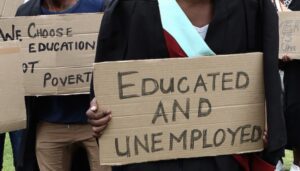
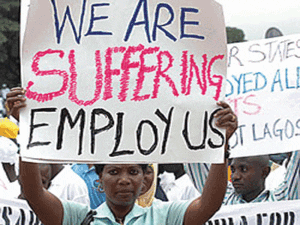
Against this global background, Nigeria’s situation becomes even clearer. In Nigeria, too, the conditions for revolutionary pressure exist. Corruption has become systemic; public resources are routinely plundered, basic services are missing, and inequality grows every year. Economic hardship is now a daily reality for millions of citizens. The failures of leadership—political, economic, and moral—have left ordinary Nigerians with shrinking opportunities, growing insecurity, and diminishing trust in the state. Meaningful change cannot come through polite silence alone—it will require the righteous indignation of citizens who refuse to accept mediocrity and corruption as normal.

Yet, despite this growing pressure, the people of Nigeria today are disillusioned. The conditions that Mirabeau described—a fatal chain of circumstances driving citizens beyond moderation—are visible in the everyday struggles of Nigerians who wrestle with unemployment, insecurity, inflation, and political exclusion. Many who once placed their trust in peaceful, constitutional change now question whether the system can be transformed from within without a fundamental break with past habits of governance.

However, at this point, an important caution must be introduced. But here we must recognize a vital point captured by Durant: violent revolution often destroys more than it creates, and only a profound shift in national character and values can build lasting progress. Durant argued that revolutions that fail to transform the underlying moral and intellectual principles of a society often lead to new forms of corruption or stagnation. The true revolution Nigeria needs is a break with the past, a transformation of civic culture, ethics of leadership, and public participation. This is the revolution that undermines corruption, enthrones accountability, and restores hope.

Therefore, Nigeria today stands at such a crossroads. Economic decay, political mismanagement, and social despair could drive people to extremes that few would have imagined: exactly what Mirabeau warned against. But the choice is not merely between chaos and calm; it is between a revolution of character and purpose and a slow descent into disorder. What Nigeria needs is a revolution of renewal, exemplified by strong, ethical leaders like Peter Obi, and a citizenry determined to reclaim its future not through destruction, but through restoration and reform.

This brings us directly to why Obi is mentioned. The reference to Obi is grounded in his antecedents. We know what Anambra State used to be before he governed it, precisely under Mbadinuju, and that memory reminds us of what Nigeria has become today. Things have gone terribly wrong. Anambra itself had drifted into decay until 2006, when a disruptive meteor entered and altered its orbit. He introduced policies that stimulated inventiveness, industry, and thrift. He marched through the fisc with an economizing scythe, abolishing offices that carried emoluments without duties and restoring discipline, purpose, and direction to governance.

In the same spirit, only by breaking decisively with the patterns that have held us back can a new Nigeria that is possible begin. Just as Obi, our meteor, altered the orbit of Anambra, so does Nigeria now need a leader like him capable of altering her own trajectory. By confronting and dismantling Nigeria of corruption, impunity, and complacency that has taken root at the national level, Nigeria can truly transform.

Ultimately, the world has witnessed revolutions that toppled regimes, but history teaches that lasting change does not come merely from the fall of governments; it comes from a transformation in a society’s values, priorities, and collective will. Let that be the revolution Nigeria seeks today, not a revolution of burning buildings, but one fuelled by a burning desire for justice, integrity, discipline, and a shared sense of national purpose.

Consequently, to achieve it, the country definitely does not need the likes of President Ahmed Bola Tinubu. Each day he remains as president, arising from a stolen mandate, brings untold hardship upon the people. Nigerians are tired and are just waiting for 2027 to do the needful. Indeed, there is nothing revulsive in the history of governance in Nigeria than the rise of PBAT, or more comforting than the thought of Mr. Peter Obi becoming the next president.

Continue Reading

Trending

Maduka College Advert