Politics
Igbo residents in Lagos: I fear we are getting to the end of Nigeria — Ezeife

• ‘Why Yoruba, Igbo elders must meet’
•Explains how he worked for Abiola’s victory
•’Nobody can dominate Nigeria if S-East, S-West work together’
Apart from widespread electoral violence across the country, attacks on Igbo voters in Lagos during last Saturday’s elections have left far-reaching implications in the polity. Elder statesman and former governor of Anambra State, Dr. Chukwuemeka Ezeife, in this interview, speaks on the issue and concludes that there is a plot to set Yoruba and Igbo against each other.
Igbo residents in Lagos were made an issue in the presidential and governorship elections in the state. How do you react?

I fear that we are getting to the end of Nigeria. Some people don’t want Nigeria to continue. The two groups, who, if they agree to work together, can stabilize Nigeria, are being set against each other. Nobody can dominate Nigeria if Yoruba and Igbo agree to work together. This is a deliberate plan to end Nigeria. But Nigeria will not end because God created this country with great favour.
Look at everything about Nigeria. Is it the endowments? We are so gifted by God. And I don’t know any country so blessed. We go through all kinds of problems and survive. We had the civil war and all kinds of problems. I think the plan to cause fracas between the Igbo and Yoruba would fail the way others failed in the past. I have always challenged Yoruba people to tell me one person who worked so hard for the late Chief MKO Abiola (winner of June 12, 1993 presidential poll and a Yoruba man) before his election and after the annulment of the election than me. In the East, everywhere Abiola visited, he went with my pilot car. I was the governor of Anambra State at the time. We worked day and night to ensure he won. When the election was annulled, I was at the forefront of the campaign for its de-annulment. We were the founders of National Democratic Coalition, NADECO.
Frightening

What frightens me is that if this thing goes further, the Igbo would show who they are and it won’t be good for the country. Nobody can be more violent than the Igbo who is determined to defend themselves in the face of aggression. We are gifted in many ways by God.
We should be thanking God that we are not spilling blood. I think there should be a way out of what is happening. Igbo and Yoruba elders should meet and find a way to ensure this does not happen again.
What was described as anti-Igbo comments from unlikely persons were found to have enabled the widespread attacks on the Igbo last Saturday…
I never knew that, but I am surprised to hear about it. That is life. Sometimes surprising things happen. I read so many things about Igbo in Lagos. The things I read from Yoruba writers are so encouraging. One of them said Igbo didn’t put a gun on anybody’s head to buy his land in Lagos. For negative thinkers, the best thing is a disintegrated Nigeria, but that is not good for Africa. We are called the giant of Africa. And blacks are judged the way Nigerians are judged. We should know our responsibilities and our destiny. We must do the best we can to project African dignity and respect.
You were a key figure in the defunct Third Republic when Abiola was elected across ethnic and religious lines. But ethnicity was a major factor in this election cycle. How do you feel about that?
There are interests at play. Some people are targeted as if they have subdued the interest being pursued by some people. I don’t like to say it, but I must mention that there are religious interests. And that has international backing. There are local political interests. Progressive people, who are dynamic and industrious, are never loved by everyone. If you succeed where others fail, don’t expect to be loved by others. But things are changing in Nigeria and we are beginning to understand each other. I just read about how Yoruba and Igbo integrated and worked together on #ENDSARS seamlessly. I know things would change, and the change has come.
Peter Obi would be sworn in as President and a new Nigeria would emerge. In that new Nigeria where Peter would be President, the Igbo would ask for no favour, no privileges and nothing special for themselves. They would be super happy that one of them has led Nigeria to success. They would be happy that one of them has made it possible for black people to be highly respected in the world. Those are the things Igbo would be enjoying when Peter Obi takes over. We don’t want any special political and economic advantage. Many people would be happy to see that happen.
You talked about when Peter Obi would be sworn in, but the President-elect has started preaching national healing. Don’t you think it is enough to douse the tension created by what happened in Lagos last Saturday?
We don’t know the origin of the problem in Lagos. But there are suspicions that APC is the main implementer of the problem. That is why people are suspecting APC is behind it. Igbo people voted for one Nigeria. Nobody invited them to Kano, nobody invited them to Lagos and nobody invited them anywhere. Yet, anywhere you go in Nigeria, you find them prospering in large numbers. It is just their destiny and nothing changes it.
It is not every Igbo man that is thinking about moving all investments back home. Some may think retaliation, but that would be bad. Nigeria fought against Biafra for three years, using British war machines, Russian jets and other European war equipment. What was supposed to last three weeks or a month lasted for three years. Those people introduced some new elements into warfare.
People should not provoke the Igbo people into thinking about fighting back. The Igbo voted for one Nigeria and it won’t be good for Nigeria if they are made to think about retaliating the attacks on them. Nobody should think of retaliating. Things would change for the better.
What do you think are the implications of the anomalies that characterized the elections for the country’s electoral framework?
I have concluded that one segment of Nigeria has come to an end. Nigeria cannot continue like this. It is a shame to entire Africa. Imagine what the world press has been saying about the elections. We have come to the end. We better recognise it and accept that the end has come.
We cannot afford to have other elections like these. This is a comprehensive failure. It was such that you would find people leading and suddenly the results would be manipulated. It was so obvious in the presidential election. And all they are saying is going to court. This should be the end of ‘’go to court’’ in Nigeria. Next time it would be a revolution. There must be going back to basics to develop proper social values.
Our churches, our mosques, our schools, and town unions should go back to the basics to teach morals. The aim is to make Nigeria begin to develop again otherwise the country will disintegrate. But God would not allow it. We need a new Nigeria that would be exemplary to the world.
Some are of the view that when the story of this election cycle is written, Peter Obi would be recognised as having re-engineered the electoral process in some ways…
Because of how things have happened, everybody is interested in improvement. It is not just Peter Obi, I believe it was God’s decision for Nigerians to embrace change. Peter Obi is just the face of a movement. It is just an idea whose time has come. The Bible talks about time and season. The time and season for a new Nigeria have come.
Vanguard



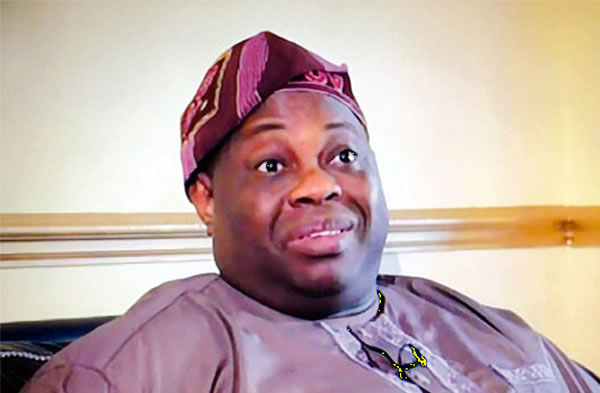
A chieftain of the African Democratic Congress, Dele Momodu, has said Peter Obi could defeat President Bola Tinubu in the South-East and parts of the South-South in the 2027 presidential election.
Momodu said Obi, the Nigeria Democratic Congress’s presidential candidate in the 2027 election, remained popular in the two regions and could pose a major challenge to Tinubu’s re-election bid.
He stated this during an interview on Arise Television on Wednesday, while discussing the opposition’s chances in the 2027 general election.
“I can tell you something. Soludo is the same. I can bet my life on it that Peter Obi will humiliate and disgrace Soludo in Anambra state. I have no question about that,” Momodu said.
He described Obi as a “rock star” in the South-East and South-South, arguing that his popularity could affect Tinubu’s electoral prospects in the regions.
“Peter Obi is a rock star. Where he comes from, especially in the South-East and the South-South,” he said.
Momodu, however, declared his support for former Vice-President Atiku Abubakar, who is also seeking to challenge Tinubu in 2027 under the ADC.
He said he would welcome calls for opposition leaders to unite, noting that their ability to work together could influence the outcome of the election.
“I’m supporting Atiku, but I will be very happy when people say, ‘Oh, if you people don’t come together, you are going to lose election,’” he said.
According to Momodu, Tinubu would face a difficult task if Obi retained his influence in the South-East and South-South, as the President would need substantial support across the southern part of the country while also competing in the North.
“The scenario is different this time. Peter Obi will humiliate Tinubu and all his supporters in the South-East and some parts of the South-South. And that’s dangerous for Tinubu,” he said.
He added that Tinubu would need to secure the three southern regions to strengthen his chances of victory, while also seeking support in the North.
“For Tinubu to win, he needs to lock down all the three regions in the South, and he now has to go and struggle in the North, where, number one, he was supported last time by President Muhammadu Buhari,” Momodu said.
Tinubu won the 2023 presidential election, while Obi finished third behind Atiku, who contested on the platform of the Peoples Democratic Party.
Obi secured significant support in the South-East and parts of the South-South during the 2023 election, while Tinubu’s victory was supported by votes from several parts of the country.
The 2027 presidential election is expected to feature renewed competition among major political parties, with opposition figures facing calls to build a common platform to challenge the ruling All Progressives Congress.
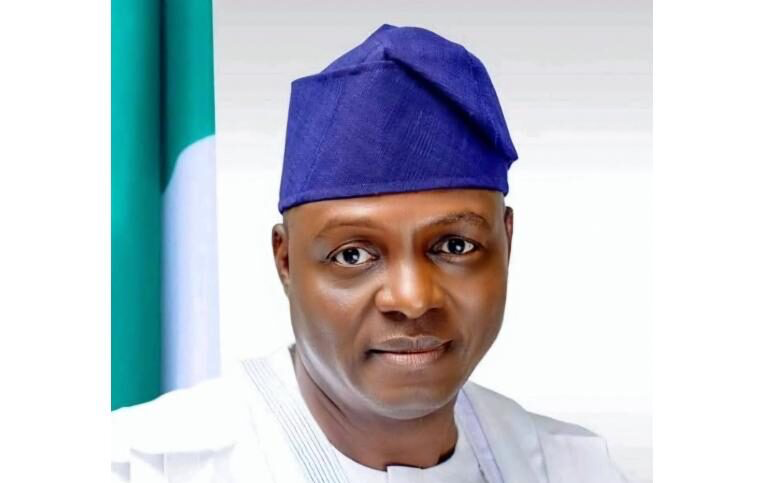
The National Chairman of the All Progressives Congress (APC), Professor Nentawe Goshwe Yilwatda, has charged members of the party’s Presidential Campaign Council to unite national and grassroots structures, communicate the achievements of President Bola Ahmed Tinubu’s administration and mobilise Nigerians for his re-election in 2027.
Speaking at the inauguration of the APC Presidential Campaign Council, Professor Yilwatda described the assignment as a collective responsibility requiring effective coordination, discipline, strategic communication and sustained engagement with Nigerians.
In a statement signed by his Special Adviser on Media and Information Strategy, Abimbola Tooki, he said the party’s campaign must be anchored on the administration’s record, an honest acknowledgement of prevailing challenges and a credible vision for the country’s future.
According to him, the administration’s economic reforms and investments in roads, power, gas, railways, ports, agriculture and digital connectivity must be clearly communicated to Nigerians, with emphasis on their impact on productivity, employment, commerce and national development.
“Our responsibility is to explain what has been achieved, what is progressing and what remains to be done. We must demonstrate how these reforms and investments will translate into practical improvements in the lives of Nigerians,” he said.
The APC National Chairman emphasised that the success of the campaign would depend on the effective collaboration of national leaders, governors, legislators, state chapters, local government structures and ward members to ensure that the party’s message reaches every community.
He also underscored the importance of women, youths and persons with disabilities, calling for their meaningful participation and leadership in the campaign process.
“Our women are indispensable to party organisation and community mobilisation. Our youths must be engaged as partners in shaping Nigeria’s future, while persons with disabilities must enjoy full, accessible and inclusive participation in our democratic process,” he stated.
Professor Yilwatda urged party members to approach the assignment with confidence, while warning against complacency.
“Confidence is not complacency. It is the determination to prepare thoroughly, work together and earn the trust of the people,” he said.
He noted that the APC would seek Nigerians’ support for President Tinubu’s re-election in 2027 by presenting evidence of progress, explaining the administration’s policies and outlining the work that remains to be done.
He stressed that the campaign must directly address citizens’ concerns about the cost of living, security, employment, education, healthcare, agricultural productivity and economic opportunities.
The National Chairman also called for issue-based and peaceful political engagement, recognising the legitimate role of the opposition in a democratic society.
“The APC will present its case with confidence, defend its record with facts and trust Nigerians to make their choice through a credible democratic process,” he said.
Professor Yilwatda reaffirmed the commitment of the APC National Working Committee to working closely with the Presidential Campaign Council and all party structures to achieve their shared objectives.
He charged members to remain united and focused, declaring that the party had a vision to communicate, a future to build and the confidence of Nigerians to earn.
“One mission, one responsibility: to work together, communicate effectively and earn the mandate of Nigerians for President Bola Ahmed Tinubu in 2027.”
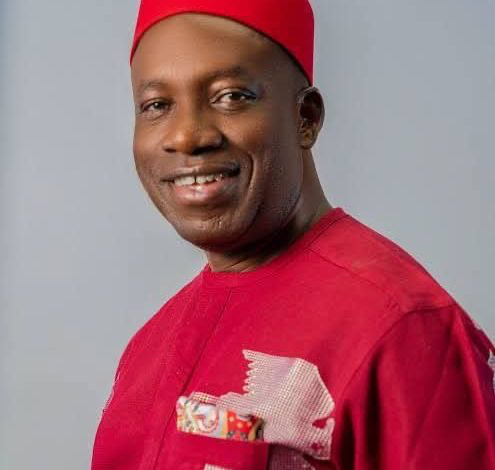
Anambra State Governor, Prof. Chukwuma Soludo, has been appointed a member of the All Progressives Congress (APC) 2027 Presidential Campaign Council list released last night.
This is despite the fact that he is the National Leader of the opposition All Progressives Grand Alliance (APGA).
Similarly, Federal Capital Territory (FCT) Minister Nyesom Wike, the National Leader of the opposition Peoples Democratic Party (PDP) and Osun State Governor, Senator Ademola Adeleke of the opposition Accord Party (AP), are on the expanded and all-inclusive team headed by President Bola Ahmed Tinubu.
Other members include Presidential Adviser on Policy and Coordination, Hadiza Bala Usman, former Ogun State Governor Ibikunle Amosun, former Lagos State Governor Akinwunmi Ambode, Aviation Minister Festus Keyamo, and former House of Representatives member Patrick Obahiagbon.
Also named as members are former Osun APC governorship candidate Bola Oyebamiji, former National Legal Advisers Dr. Muiz Banire and Babatunde Ogala, Chief Ayiri Emami, Victor Giadom, Magnus Abe, and former Ogun State Governor Gbenga Daniel.
The list, according to a report by The Nation, reflects inter-party cooperation and harmony based on the shared vision of propelling the country to the horizon of progress.
The report quoted a statement by APC National Secretary, Senator Ajibola Basiru, as saying that the campaign council will be inaugurated tomorrow in Abuja.
-
 Faith1 day ago
BREAKING: Anglican Church Places Archbishop Ibezim on Six-Month Leave, Bars Him From Church Duties
-
News2 days ago
Senate fumes over death of NYSC Corps member at Enugu Camp, orders probe
-
News2 days ago
How Senator Mandiya died after bathroom fall in Abuja Home – Ningi
-
News3 days ago
2027: Why I wont attend every campaign rally – Tinubu
-
News3 days ago
EFCC probes Atiku over alleged corruption committed as Vice President
-
Politics2 days ago
2027: I can bet my life Obi will humiliate Soludo in Anambra – Momodu
-
News1 day ago
Gunmen Abduct Catholic Priest in Benue, Police Launch Rescue Operation
-
News1 day ago
Tinubu Orders Rescue of Kidnap Victims, Demands Peaceful 2027 Elections