Politics
Enugu Guber: APC candidate Nnaji promises to end perennial water scarcity, pursue ICT development, job creation

By Madu Ezenoha
As part of his innovative roadmap towards transforming Enugu state to a mega city, the governorship candidate of the All Progressives Party (APC), Enugu State, Chief Uche Nnaji (Nwakaibie) has expressed his desire to end the perennial water scarcity in Enugu state if elected governor.

Again, we shall vigorously pursue workable interventions to ensure a sustainable potable water supply to the people, including the total reconstruction of Ajali and Oji River water scheme, replacement of damaged water pumps, revamping of vandalized electricity armored cables and relaying of abandoned water pipes to ensure maximum reticulation of water within the metropolis and other parts of the state.
Nnaji’s work plan was contained in his manifesto which he recently presented to the public.
He stated that aside from the state government having borrowed billions of naira and dollar, the State Water Agency, ENRUWASA, has equally received multiple funding support from the World Bank to reticulate clean and potable water in the State, yet water scarcity persists.

He described as a sad irony that a household led by a citizen that the state government denied a N30,000.00 minimum wage spends about N25,000.00 on the state government’s laughable ‘water on wheels’ as well as private water tankers weekly.
He said, “Water is a gift from God, and we should ensure everyone has access to clean and drinkable water. Access to water is the sixth of the UN’s sustainable development goals (SDGs). My administration shall pursue these goals with vigour and commitment. Most importantly, we shall run a transparent, accountable, and inclusive administration.”
Nwakaibie announced that ICT is another area not adequately explored in the state.
He stated, “My administration shall invest massively in the requisite infrastructure for ICT development, knowing that we are not only in the computer age but are rapidly moving into the age of robotics and mechatronics.
“In the event of possible robotics and technological disruptions, we need to catch up with the rest of the developed and developing worlds. We need to train our children in IT, coding, robotics and mechatronics.
“Very soon, there may no longer be electrical and mechanical engineering but more about mechatronics, robotics, etc. That is why we shall considerably address our information infrastructure in line with evolving software. ICT is the way to go. Global blue- chip companies like Amazon, Facebook, WhatsApp, and kindred ICT companies have shown that we need not be oil producers but could be more prosperous than oil-producing countries.
“Beyond our committed efforts to create employment opportunities for our youth, we shall also pursue a “youth re-orientation” policy in the State. We intend to refocus the youth away from white-collar jobs to start thinking of becoming employers of labour rather than employees.
“In other words, we are more interested in creating many skilled entrepreneurs who can create jobs and wealth. The Zuckerberg and Amazons of this world are more affluent than many countries, even when they do not produce oil. They are that rich because they have been able to create solutions to human problems.
“So, our interest is to refocus the minds of our youth toward creating solutions, albeit with solid vocational and other skills. We shall fast-track our policy of skill acquisition among our youth by initiating feasible PPP arrangements
with giant construction companies in addition to upgrading and constructing new government Technical Schools and various Craft Development Centres in the State.”
Nnaji said that it is disheartening and ridiculous that the people of the state have to look for Ghanaians and Togolese if they need to do good artisanal work.
He said that in summary, his administration shall focus on industrialisation, lifting people out of poverty, creating employment opportunities, improving the state’s health and other sectors, and raising people’s survival rate and income earning capacity.
“By implementing our proposed initiatives detailed in this manifesto, we shall generate over 590,000 new jobs in my first four years as the governor.”



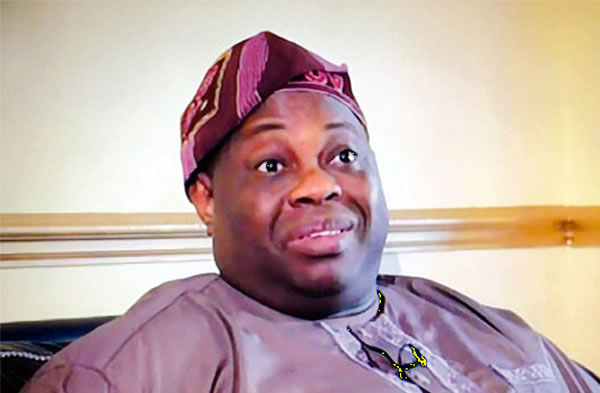
A chieftain of the African Democratic Congress, Dele Momodu, has said Peter Obi could defeat President Bola Tinubu in the South-East and parts of the South-South in the 2027 presidential election.
Momodu said Obi, the Nigeria Democratic Congress’s presidential candidate in the 2027 election, remained popular in the two regions and could pose a major challenge to Tinubu’s re-election bid.
He stated this during an interview on Arise Television on Wednesday, while discussing the opposition’s chances in the 2027 general election.
“I can tell you something. Soludo is the same. I can bet my life on it that Peter Obi will humiliate and disgrace Soludo in Anambra state. I have no question about that,” Momodu said.
He described Obi as a “rock star” in the South-East and South-South, arguing that his popularity could affect Tinubu’s electoral prospects in the regions.
“Peter Obi is a rock star. Where he comes from, especially in the South-East and the South-South,” he said.
Momodu, however, declared his support for former Vice-President Atiku Abubakar, who is also seeking to challenge Tinubu in 2027 under the ADC.
He said he would welcome calls for opposition leaders to unite, noting that their ability to work together could influence the outcome of the election.
“I’m supporting Atiku, but I will be very happy when people say, ‘Oh, if you people don’t come together, you are going to lose election,’” he said.
According to Momodu, Tinubu would face a difficult task if Obi retained his influence in the South-East and South-South, as the President would need substantial support across the southern part of the country while also competing in the North.
“The scenario is different this time. Peter Obi will humiliate Tinubu and all his supporters in the South-East and some parts of the South-South. And that’s dangerous for Tinubu,” he said.
He added that Tinubu would need to secure the three southern regions to strengthen his chances of victory, while also seeking support in the North.
“For Tinubu to win, he needs to lock down all the three regions in the South, and he now has to go and struggle in the North, where, number one, he was supported last time by President Muhammadu Buhari,” Momodu said.
Tinubu won the 2023 presidential election, while Obi finished third behind Atiku, who contested on the platform of the Peoples Democratic Party.
Obi secured significant support in the South-East and parts of the South-South during the 2023 election, while Tinubu’s victory was supported by votes from several parts of the country.
The 2027 presidential election is expected to feature renewed competition among major political parties, with opposition figures facing calls to build a common platform to challenge the ruling All Progressives Congress.
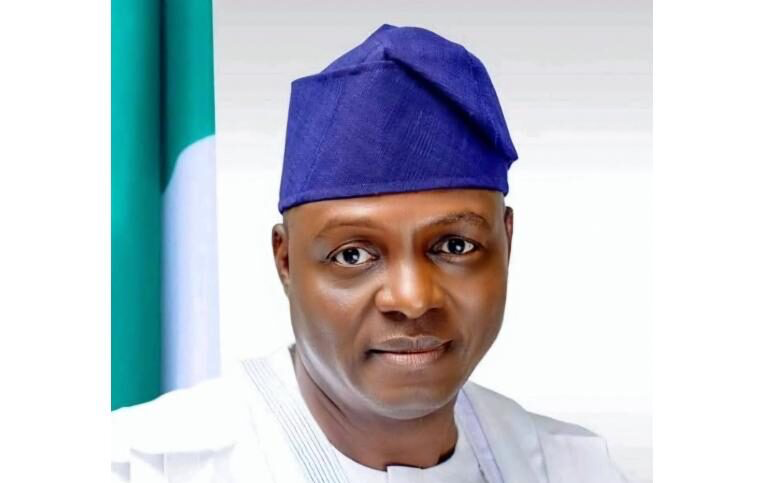
The National Chairman of the All Progressives Congress (APC), Professor Nentawe Goshwe Yilwatda, has charged members of the party’s Presidential Campaign Council to unite national and grassroots structures, communicate the achievements of President Bola Ahmed Tinubu’s administration and mobilise Nigerians for his re-election in 2027.
Speaking at the inauguration of the APC Presidential Campaign Council, Professor Yilwatda described the assignment as a collective responsibility requiring effective coordination, discipline, strategic communication and sustained engagement with Nigerians.
In a statement signed by his Special Adviser on Media and Information Strategy, Abimbola Tooki, he said the party’s campaign must be anchored on the administration’s record, an honest acknowledgement of prevailing challenges and a credible vision for the country’s future.
According to him, the administration’s economic reforms and investments in roads, power, gas, railways, ports, agriculture and digital connectivity must be clearly communicated to Nigerians, with emphasis on their impact on productivity, employment, commerce and national development.
“Our responsibility is to explain what has been achieved, what is progressing and what remains to be done. We must demonstrate how these reforms and investments will translate into practical improvements in the lives of Nigerians,” he said.
The APC National Chairman emphasised that the success of the campaign would depend on the effective collaboration of national leaders, governors, legislators, state chapters, local government structures and ward members to ensure that the party’s message reaches every community.
He also underscored the importance of women, youths and persons with disabilities, calling for their meaningful participation and leadership in the campaign process.
“Our women are indispensable to party organisation and community mobilisation. Our youths must be engaged as partners in shaping Nigeria’s future, while persons with disabilities must enjoy full, accessible and inclusive participation in our democratic process,” he stated.
Professor Yilwatda urged party members to approach the assignment with confidence, while warning against complacency.
“Confidence is not complacency. It is the determination to prepare thoroughly, work together and earn the trust of the people,” he said.
He noted that the APC would seek Nigerians’ support for President Tinubu’s re-election in 2027 by presenting evidence of progress, explaining the administration’s policies and outlining the work that remains to be done.
He stressed that the campaign must directly address citizens’ concerns about the cost of living, security, employment, education, healthcare, agricultural productivity and economic opportunities.
The National Chairman also called for issue-based and peaceful political engagement, recognising the legitimate role of the opposition in a democratic society.
“The APC will present its case with confidence, defend its record with facts and trust Nigerians to make their choice through a credible democratic process,” he said.
Professor Yilwatda reaffirmed the commitment of the APC National Working Committee to working closely with the Presidential Campaign Council and all party structures to achieve their shared objectives.
He charged members to remain united and focused, declaring that the party had a vision to communicate, a future to build and the confidence of Nigerians to earn.
“One mission, one responsibility: to work together, communicate effectively and earn the mandate of Nigerians for President Bola Ahmed Tinubu in 2027.”
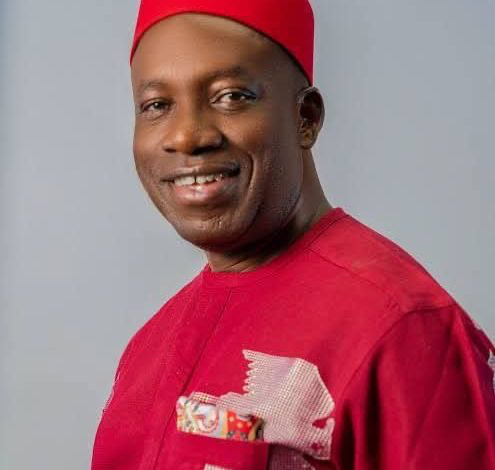
Anambra State Governor, Prof. Chukwuma Soludo, has been appointed a member of the All Progressives Congress (APC) 2027 Presidential Campaign Council list released last night.
This is despite the fact that he is the National Leader of the opposition All Progressives Grand Alliance (APGA).
Similarly, Federal Capital Territory (FCT) Minister Nyesom Wike, the National Leader of the opposition Peoples Democratic Party (PDP) and Osun State Governor, Senator Ademola Adeleke of the opposition Accord Party (AP), are on the expanded and all-inclusive team headed by President Bola Ahmed Tinubu.
Other members include Presidential Adviser on Policy and Coordination, Hadiza Bala Usman, former Ogun State Governor Ibikunle Amosun, former Lagos State Governor Akinwunmi Ambode, Aviation Minister Festus Keyamo, and former House of Representatives member Patrick Obahiagbon.
Also named as members are former Osun APC governorship candidate Bola Oyebamiji, former National Legal Advisers Dr. Muiz Banire and Babatunde Ogala, Chief Ayiri Emami, Victor Giadom, Magnus Abe, and former Ogun State Governor Gbenga Daniel.
The list, according to a report by The Nation, reflects inter-party cooperation and harmony based on the shared vision of propelling the country to the horizon of progress.
The report quoted a statement by APC National Secretary, Senator Ajibola Basiru, as saying that the campaign council will be inaugurated tomorrow in Abuja.
-
 Faith5 hours ago
BREAKING: Anglican Church Places Archbishop Ibezim on Six-Month Leave, Bars Him From Church Duties
-
News23 hours ago
Senate fumes over death of NYSC Corps member at Enugu Camp, orders probe
-
News1 day ago
How Senator Mandiya died after bathroom fall in Abuja Home – Ningi
-
News2 days ago
2027: Why I wont attend every campaign rally – Tinubu
-
Features2 days ago
Aguleri/Umuoba Anam Crisis: The Bloody Battle Between Close Neighbours
-
News2 days ago
EFCC probes Atiku over alleged corruption committed as Vice President
-
News2 days ago
‘Anyone who attempts suicide and fails will go to jail,’ says Akpabio
-
Politics1 day ago
2027: I can bet my life Obi will humiliate Soludo in Anambra – Momodu