

Connect with us

News

Discos hike electricity tariff secretly, consumers kick

Published

on

Spread the love

Electricity distribution companies have quietly increased the tariff payable by power consumers across the country.

Although most of the Discos did not make this public, electricity users have kicked against the move, describing it as “a perfect robbery” amidst the harsh economic realities in Nigeria currently.

Reacting to the price hike, a resident of a Lagos highbrow estate, Mr. Oye Sola, lamented the increase.

He said, “Electricity tariff is now N72.2 per unit. Another price hike from N66; I suspect they are going to N100. A higher price for poorer services.

Another customer of Ikeja Disco identified as Ola Busari said, “They are just milking us. This is a perfect robbery. Discos need to be checked.

Maduka College Advert

Another Lagos resident named Olojede said, “They increased prices without informing us. There was no official communication to us as our estate representatives.” However, the Nigerian Electricity Regulatory Commission, in its Multi-Year Tariff Order, provides a 15-year tariff path for the Nigeria Electricity Supply Industry with limited minor reviews each year.

It states that reviews are in the light of changes in a limited number of parameters such as inflation, interest rates, exchange rates and generation capacity, and major reviews every five years when all of the inputs were reviewed with the stakeholders.

NERC, however, did not announce the latest hike in tariff, which a power distribution company attributed to the regulator on Wednesday.

A Twitter user, Oyibo Ediri, accused the Abuja Electricity Distribution Company of quietly increasing the tariff in December, alleging that the firm raised the rate for non-maximum demand customers by N12.65.

“AEDC has quietly increased the cost of electricity. Cost increased from N57.55 in December to N68.2 for tariff band A non-MD. No official statement from @aedcelectricity or @NERCNG on the increase. These people won’t stop to fleece us,” the Twitter user stated.

Replying to the tweet, the AEDC, via its official Twitter handle, @aedcelectricity, explained that the tariff hike was based on the order of NERC.

“Good day, please be informed that the increase in Tariff is in compliance with NERC order,” the Disco stated.

Also, reacting to the response of AEDC, Ediri asked the power firm to provide the current rates approved by the NERC.

“Kindly make the current rates available as ordered by @NERCNG. Thank you,” the Twitter user stated.

 Another Twitter user, Justin David, who reacted to the request by Ediri, then said, “We await their response.”

But the Disco did not make any further comment nor did it reply to the requests of the power consumers.

However, the response could not be obtained from the power regulator as of Wednesday. Its officials did not immediately respond to calls and text messages seeking clarification on the development.

But on its website, NERC explained that one of the primary functions of the commission as contained in Section 32 (d) of the Electric Power Sector Reform Act, 2005 was to ensure that the prices charged by licencees were fair to customers and sufficient to allow the licencees to finance their activities and obtain reasonable profit for efficient operations.

“In pursuant to the authority given under Section 76 of the EPSR Act 2005, the commission established a methodology for determining electricity tariff in the Nigerian Electricity Supply Industry and subsequently issued a tariff order called the Multi-Year Tariff Order that sets out tariffs for the generation, transmission and distribution of electricity in Nigeria,” it stated.

It added, “The purpose of the MYTO is to set cost-reflective tariffs which will allow the power sector to be properly funded and functional.

“It provides a 15-year tariff path for the NESI with limited minor reviews each year in the light of changes in a limited number of parameters (such as inflation, interest rates, exchange rates and generation capacity) and major reviews every five years, when all of the inputs are reviewed with the stakeholders.”

Meanwhile, the tariff increase was first observed on the Tariff Band A Non-MD, which was increased from N57.55 per unit in December to N68.2 per unit.

This amounts to about 19 per cent increase in tariff, according to our calculation.

Reacting to the development, the National Secretary, Nigeria Electricity Consumer Advocacy Network, Uket Obonga, confirmed the increase in tariff, but stated that it was in line with the MYTO.

He said, “They’re (Discos) are transiting to the new tariff regime that takes effect from January. On January 1 this year, around 4pm, I had over 300 units in my meter, but to confirm whether there is an increment, I had to buy some units online.

“I bought units of N2,000, which is supposed to be about 26 or 27 units, but what I saw there was about 21 units, which is confirmation that there is a tariff increase according to the current MYTO.

“They moved into a new tariff regime on January 1. But there have been other arbitrary increments outside the MYTO regime. However, the one that took effect now is based on the MYTO, as captured in the MYTO 2020 order.”

Also, NERC Chairman, Sanusi Garba, had during a press briefing said, “We will adjust the rate every six months to take care of the foreign exchange component of costs, and also inflation. This is absolutely a very straightforward thing,”

Although the chairman said the rate might not necessarily be an upward review, the naira continued to depreciate over time.

The spokespersons for Eko Electricity, Ikeja Electric, and Ibadan DisCos, Godwin Idemudia, Ayeni Akinola, and Busolami Tunwase, respectively, declined to comment on the matter. They directed our correspondent to the Association of Nigerian Electricity Distributors.

The PUNCH put calls across to the spokesperson for the DisCos umbrella body, the Association of Nigerian Electricity Distributors, Sunday Oduntan, but there was no response. Response to a message sent to his line was still being expected as of press time.

PUNCH

News

Alleged $1bn arms fraud: Funds given to Defence Ministry, not military — Gen. Buratai

Published

on

Spread the love

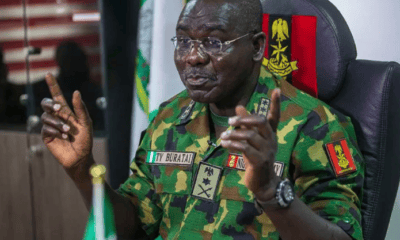
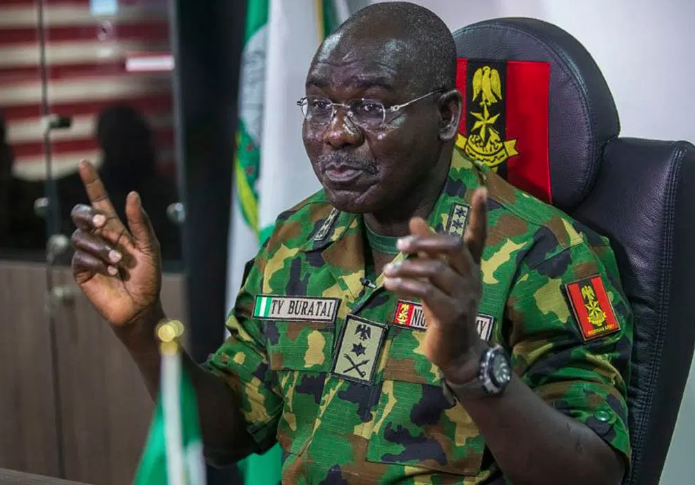
Former Chief of Army Staff, COAS, Lt. Gen Yusuf Buratai, retd., disclosed yesterday that the $1bn approved for defence procurement during his tenure as Army Chief by the federal government was released to the Ministry of Defence and not the services.

Gen Buratai disclosed that the funds, which were approved by the National Economic Council, NEC, did not pass through his hands or the accounts of the Nigerian Army, Navy and Air Force.
He said allegations surrounding the funds turned out to be “political and malicious,” noting that “they first emerged during the 2019 election period when the opposition alleged that the money had been diverted for electoral purposes”

His words:  The $1 billion was approved by the National Economic Council, NEC, for defence procurement. Not a single dollar of that fund passed through my hands or through the accounts of the Nigerian Army, Navy, or Air Force.

“The funds were released to the Ministry of Defence, and the entire procurement process was handled by that ministry. The Army, Navy, and Air Force never had a single dollar from that fund to make procurement directives.

Maduka College Advert

“I have described these allegations as political and malicious. They first surfaced during the 2019 election period when the opposition alleged the funds had been diverted for electoral purposes, a claim the federal government publicly refuted. Yet the stain remained, attached to the service chiefs, rather than the institution that managed the funds.”

The former COAS said the federal government publicly refuted the allegation at the time but lamented that the controversy continued to affect the reputation of service chiefs.

He faulted the ministry for not publicly explaining how the funds were disbursed or how contracts were awarded.

“The ministry, since then on its own, had not publicly explained how the funds were disbursed or contracts awarded. Accountability must be properly located,”he said.

While calling for greater transparency in military procurement, Buratai recommended the establishment of a defence procurement transparency portal to publish information on contracts awarded, contracting entities and delivery timelines, subject to national security considerations.

“The Ministry of Defence must own procurement record. The $1 billion arms procurement controversy festered because the institution that managed the funds, the Ministry of Defence, remained silent while service chiefs absorbed criticism.

“I recommend a Defence Procurement Transparency Portal that publishes, within national security limits, broad categories of contracts awarded, contracting entities, and delivery timelines.

“When the media asks where the money went, the answer should come from the ministry that spent it, not from military officers who never touched it,” he said.

Furthermore, Buratai proposed quarterly accountability bulletins summarising court martial outcomes relating to human rights violations and operational conduct, provided the publications did not compromise the rights of accused personnel or ongoing military operations.

Speaking on alleged human rights violations by members of the Nigerian security forces, Buratai said credible claims should be investigated and, where substantiated, prosecuted.

“I have always maintained that where credible allegations exist, they must be investigated and, where substantiated, prosecuted. The military is not above the law,” he said.

He acknowledged the need for the military to demonstrate that its disciplinary processes were credible, transparent and capable of addressing allegations at all levels.

He said that improved communication by the military and the Ministry of Defence would help address public concerns and ensure that media reports reflected the full context of security operations.

In his remarks, Former Senate President and Chairman Senate Committee on Defence Senator Ahmed Lawan, called  for a dedicated percentage of Nigeria’s revenue to funding of the Armed Forces of Nigeria and other security agencies to procure more platforms.

He noted that the National Assembly had been supporting the Armed forces and other security agencies by way of budgetary approvals.

He said:  “For us in the National Assembly, it is our duty to support the arm of government, to ensure that whatever resources are available and are required, are requested by the arm of government, we support that and we even give more.

‘’As at today, I am over 27 years as a member of the National Assembly, I have not seen any request sent by the executive for the armed forces and other security agencies that has not been approved. In fact, in most cases, they were always approved because we believe that security is first.’’

The Minister of Defence, General Christopher Musa, in his remarks, said:  ‘Today’s security threats are increasingly complex, adaptive and interconnected. Terrorist groups, criminal networks and other adversaries exploit information, technology, financial systems and gaps in coordination to pursue their objectives.

Represented by Air Commodore Steven Ogunmodede, retd., Senior Special Assistant on Foreign Relations, the minister said:  “Consequently, our response must combine effective combat operations with timely intelligence, technological capability, sound planning and cooperation among relevant security institutions.

“This is the essence of intelligence-led operations. The ability to identify a threat early, understand its networks, anticipate its intentions and act with precision can make the difference between preventing an attack and responding after lives have been lost.

“Technology can strengthen our surveillance, reconnaissance, communications and analytical capabilities, but it must be supported by trained personnel, reliable systems, effective doctrine and sound operational judgement.

“Technology is a force multiplier, it does not replace the human judgement, discipline and professional competence upon which military effectiveness ultimately depends.

“At the Ministry of Defence and across the Armed Forces of Nigeria, we recognise the importance of these capabilities and continue to pursue approaches that improve situational awareness, intelligence coordination and operational effectiveness.

“We must remain willing to learn, adapt and innovate, while ensuring that investments in technology translate into practical improvements in our ability to protect lives, defend our territorial integrity and respond to emerging threats.

“Equally important is the need to strengthen cooperation across our security architecture, because no single institution possesses all the information or capabilities required to address today’s security challenges.’’
Continue Reading

News

Rochas Okorocha arrested, released after one-hour Interrogation — Police

Published

on

Rochas Okorocha
Spread the love

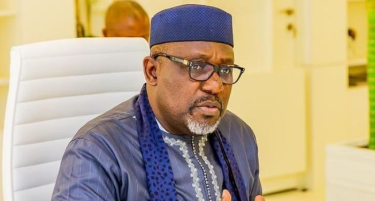
Former Imo State Governor, Senator Rochas Okorocha, was arrested by the Nigeria Police Force (NPF) on Monday night.

The Nigeria Police Force Public Relations Officer, CSP Aniete Iniedu, confirmed the development to Channels Television.

Okorocha, who was arrested at REIZ Continental Hotel in central Abuja, was, however, released on bail by the NPF following an hour of interrogation over allegations of criminal conspiracy, forgery and impersonation.

CSP Iniedu, who confirmed the arrest and subsequent release on bail to our correspondent, noted that the former governor was asked to return to the Force Headquarters on Tuesday for further interrogation as investigations into the allegations continue.

The arrest reportedly followed Okorocha’s failure to honour previous police invitations in connection with the ongoing investigation.

Maduka College Advert

He was initially invited to the Force Headquarters on September 2, but the appointment was rescheduled to September 8 at the request of his lawyers, a date he reportedly failed to honour.

Continue Reading

News

BREAKING: Soludo, Wike, Adeleke, others appointed member of APC Presidential Campaign Council

Published

on

Anambra Gov, Prof Chukwuma Soludo
Spread the love

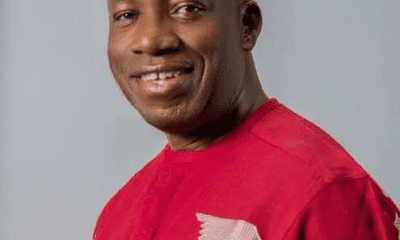
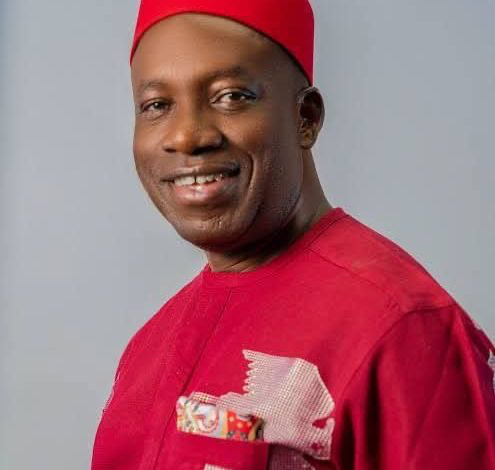
Anambra State Governor, Prof. Chukwuma Soludo, has been appointed a member of the All Progressives Congress (APC) 2027 Presidential Campaign Council list released last night.

This is despite the fact that he is the National Leader of the opposition All Progressives Grand Alliance (APGA).

Similarly, Federal Capital Territory (FCT) Minister Nyesom Wike, the National Leader of the opposition Peoples Democratic Party (PDP) and Osun State Governor, Senator Ademola Adeleke of the opposition Accord Party (AP), are on the expanded and all-inclusive team headed by President Bola Ahmed Tinubu.

Other members include Presidential Adviser on Policy and Coordination, Hadiza Bala Usman, former Ogun State Governor Ibikunle Amosun, former Lagos State Governor Akinwunmi Ambode, Aviation Minister Festus Keyamo, and former House of Representatives member Patrick Obahiagbon.

Also named as members are former Osun APC governorship candidate Bola Oyebamiji, former National Legal Advisers Dr. Muiz Banire and Babatunde Ogala, Chief Ayiri Emami, Victor Giadom, Magnus Abe, and former Ogun State Governor Gbenga Daniel.

Maduka College Advert

The list, according to a report by The Nation, reflects inter-party cooperation and harmony based on the shared vision of propelling the country to the horizon of progress.

The report quoted a statement by APC National Secretary, Senator Ajibola Basiru, as saying that the campaign council will be inaugurated tomorrow in Abuja.

Continue Reading

Trending

Maduka College Advert