

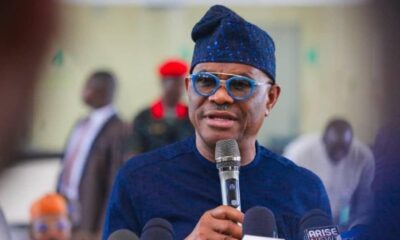




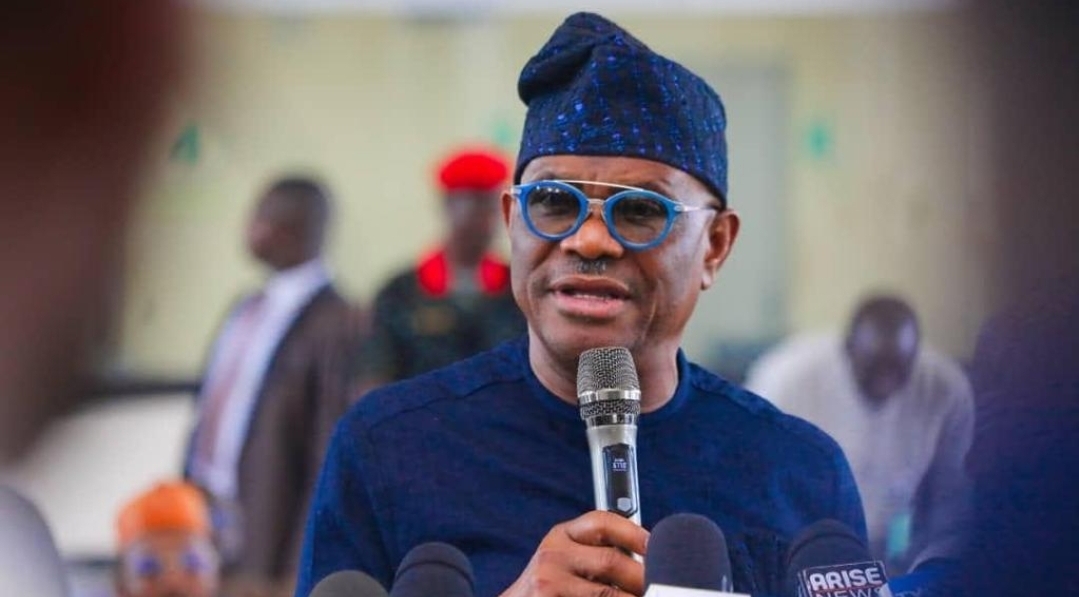
The reactions followed a renewed confrontation between Wike and APC governors over the political structure the FCT minister is assembling ahead of the 2027 general elections.
Wike is a Peoples Democratic Party member serving in a federal government led by an APC president.

The former Rivers governor was appointed FCT minister by Tinubu after the 2023 election, despite having remained a prominent PDP politician and having contested the presidency under the opposition party.
While some APC state chapters welcomed Wike’s support for Tinubu and said they would receive him if he decided to defect to the ruling party, others opposed the coalition outright, arguing that a politician could not simultaneously support the APC at the presidential level and candidates of other parties in governorship and legislative elections.
The development has exposed a growing disagreement within the President’s political camp over how support for his 2027 re-election should be organised and, more importantly, who should control the political structures through which such support is mobilised.

The latest dispute was triggered by Zamfara State Governor and APC governor, Dauda Lawal, who told Wike to choose between joining the APC and remaining with the Rainbow Coalition.
Speaking in an interview with Channels Television’s Inside Sources on the sidelines of the 81st United Nations General Assembly in New York, Lawal said the position of the APC governors was unchanged.
“Our message is very, very clear: Be on one side. You can’t be on two sides. If you’re in APC, please come out and support APC. Not you’re supporting APC here, and you’re supporting other political parties somewhere else. It doesn’t make sense. It’s not done anywhere,” Lawal said.
The Zamfara governor added, “And that is why we maintain our stand, and it is very clear—the message is very clear. He can speak, he can say whatever he wants to say, but our position has been very, very clear: APC all the way from head to toe.”
Asked whether the governors were asking Wike to join the APC, Lawal responded, “Exactly. What’s the essence?”
He further disclosed that he intended to raise Wike’s political position with President Tinubu.
“It’s something that I will take up with the President when he comes back. So, let there be a very, very clear line where this guy belongs to. It’s either he’s in APC or he’s out. It’s simple. And I go with my brothers, the governors,” Lawal stated.
The demand has since received varying degrees of support from APC chapters across the country.
Coalition faces resistance
In Imo State, the APC Publicity Secretary, Jones Onwuasoanya, said Wike was attempting to maintain an ambiguous political position and urged him to formally identify with the ruling party.
“Decency demands that an individual who claims so much allegiance to the philosophies and programmes of a political party should fully align with that political party, rather than playing hide and seek with his loyalty to the party,” Onwuasoanya said.
He added, “If Wike is sincere about his support for President Tinubu, then he should join the APC and begin to campaign for our party across all positions rather than being selective.”
The Imo APC spokesman dismissed the Rainbow Coalition as a political structure with little relevance in the state.
“As long as the All Progressives Congress in Imo State is concerned, there is nothing like a Rainbow Coalition or whatever it might be called. The APC is the only viable political platform in Imo State and Imolites are fully aligned with us,” he said.
He maintained that the party was confident of victory in 2027, saying, “There is no political arrangement or structure outside the APC that poses any threat to our Party’s electoral chances.”
In Gombe, the APC Publicity Secretary, Murtala Usman, similarly urged Wike to complete his political transition to the ruling party.
“My opinion is the same as the people who are advising him to join APC because APC doesn’t need any rainbow coalition for now,” Usman said.
He warned that such an arrangement could create confusion within the ruling party.
“That rainbow coalition will cause some confusion in the APC because those who are stakeholders in the APC, particularly in some states, will find it very difficult to handle,” he stated.
Usman argued that recent defections of PDP governors to the APC had already created difficulties for some long-standing party members.
“So Wike should switch to APC completely. Since he is doing the work of APC, let him be a full member, not a partial member,” he said.
Ondo rejects selective support
The Ondo State APC also rejected the idea of a coalition that would support Tinubu for president while backing candidates from other parties in other elections.
The state party secretary, Alex Kalejaiye, said the arrangement was unacceptable to the chapter.
“We are disturbed that the coalition would only support President Bola Ahmed Tinubu, in the general elections, but field candidates for other positions,” he said.
According to him, APC’s objective was to deliver all its candidates and not just the presidential candidate.
“To us in Ondo State, support for the candidates of the ruling party must be total; our party is committed to mobilising votes for the President, three senatorial, nine representatives, and 26 House of Assembly candidates. That is not negotiable,” Kalejaiye stressed.
He warned that supporting different parties on the same ballot could create confusion for voters and potentially complicate the electoral process.
The chapter therefore appealed to Wike to collapse the coalition into the APC.
“The APC could therefore appeal to Barr. Nyesom Wike, the leader of the coalition, to collapse his structures into the ruling party, so we could present a common front during the elections,” he said.
Jigawa welcomes Wike
In Jigawa State, the party said it welcomed Wike’s support for Tinubu and would gladly receive him if he decided to join the APC.
The state APC Publicity Secretary, Bashir Kundu, said, “We in the Jigawa APC welcome the contribution Wike is making in promoting the President and APC candidate for the 2027 election, Bola Tinubu. We will certainly welcome Nyesom Wike if he decides to join our party, the APC.”
Kundu also argued that the APC itself emerged from a coalition of political parties and could therefore accommodate politicians from different political backgrounds.
He dismissed concerns that Wike could harm the APC’s electoral interests, saying the party had its own structures and programme.
“I am not aware of such plans, but I know for sure that Wike will not cause that kind of harm to the APC because the party has its own programme,” he said.
In Benue State, reactions were more complicated, reflecting existing divisions within the state APC.
James Orgunga, the organising secretary of one of the APC factions, praised Wike for supporting Tinubu but said he would prefer the FCT minister to formally join the party.
“Wike has joined APC already, because he is working for the president; we appreciate that, but as a core party man, anyone working for the success of a candidate in my party should be praised,” Orgunga said.
“But I do not subscribe to a rainbow coalition and am of the opinion that Wike join our party.”
However, Daniel Ihomun, the publicity secretary of another faction loyal to Secretary to the Government of the Federation George Akume, offered a different view.
“He should not join APC; he should remain where he is because he has helped to destroy PDP for us,” Ihomun said.
He claimed that a Rainbow Coalition structure existed in Benue under what he described as the “Benue Strategic Alliance for Tinubu”, involving members of the APC, PDP and Labour Party.
Dual-loyalty concerns
In Rivers State, where Wike served as governor and remains a major political actor, the controversy has an additional dimension.
The factional APC led by Emeka Beke backed the Progressive Governors Forum’s opposition to the coalition.
The faction’s publicity secretary, Darlington Nwauju, said Wike could not simultaneously maintain loyalty to the PDP and work with the APC.
“The truth remains that if you look at the background or the context of Nigerian elections and if you cast your mind to the fact that the level of political education in Nigeria is still way behind,” Nwauju said.
He argued that asking voters to support candidates from different political parties at different levels could create confusion.
“You cannot confuse the electorate by thinking that you can order them into voting for candidate A in party A and candidate B in party B on the same election day,” he stated.
Nwauju said the APC governors were therefore justified in asking Wike to either join the party or stay away from its internal affairs.
“My belief is that the Progressive Governors Forum is in the right with the advisory that they have issued. Join the APC or leave her alone. You cannot stand [and] use your association with the APC to rebuild the PDP,” he said.
He further alleged that Wike’s activities could contribute to a revival of the PDP, describing that as a concern for the ruling party.
The Anambra State APC chairman, Senator Emmanuel Anosike, described Wike’s coalition as an affront to the party and its governors.
“It amounts to an insult to the integrity and sensibility of the APC and its governors for Wike to make such comments,” Anosike said.
He argued that Wike, as a PDP member, had no basis for intervening in the internal affairs of the APC.
“The minister is not a member of the party, hence should stop meddling in the internal affairs of the party,” he stated, noting that the APC governors had sufficient political structures to deliver Tinubu in 2027.
“Governor Hope Uzodimma of Imo State is the leader of the APC Governors Forum, and he is in full control of the party structures across the country through the members of the Forum and has shown capacity having delivered Mr President at his first term election and still has all that it takes to do it again in 2027,” he said.
He described Wike’s intervention as an attempt to remain politically relevant, adding that the Anambra APC did not recognise the Rainbow Coalition as an alternative political structure.