
Connect with us

News

Buhari @ 80: 12 things Nigerians need to know

Published

on

Spread the love

By Garba Shehu

First thing to know is that President Muhammadu Buhari, a retired General and former Military Head of State, was born in Daura on December 17th, 1942. He lost his father at the early age of three years.

He was enlisted in primary school by the District Head of Daura, Waziri Alasan, and fell under the guardianship of his elder brother, Alhaji Dauda Daura, Malam Mamman’s father, then a headmaster at Mai Aduwa, from where the young Buhari went to the middle and secondary schools.

After his education at the now Government College Katsina, he went to the Nigerian Military Training College Kaduna which is now known as the Nigerian Defence Academy. He trained at the Mons Officer Cadet School, a British Military training school in Aldershot and also attended the US Army War College (USAWC) Carlisle, Pennsylvania and the National Defence College, New Delhi, India.

Apparently, Muhammadu Buhari, as a young officer, had already been gifted with “wisdom and strength for the future,” the motto of the USAWC even before he got there.

Maduka College Advert

The young Buhari was sent by his country to Congo (DRC) on a UN Peace keeping mission assigned to command a battalion, but in carrying out his duty, he almost lost his life before earning his first salary.

Caught in a tricky and dangerous situation of either protecting a prisoner to face the wrath of 5,000 armed natives and, possibly losing his life and the relatively small number of 400 men under him, or finding another solution to mollify the mob, he gathered the needed courage and wisdom to stop a major tragedy from happening.

By this, he saved his own life and the troops under him.

As a soldier, he fought in the 30 months’ Nigerian Civil War and did not take a single day off while the war lasted. He traversed the entire Eastern Region literally on foot and suffered a gunshot in the lower leg. He was the second in command in the battalion that fired the first shot in the war.

Two, he was a military governor of the Northeast, now broken into six states as a young Colonel and thereafter, Federal Commissioner (Minister) and Chairman, Nigerian National Oil Corporation, now renamed NNPCL.

As a General, he had the record of commanding all four army divisions they had in their time. As Military Secretary, he did the meticulous work of documenting the records of the entire officer corps.

That is why it baffled him to no end that some officers in the Army Records Office, obviously playing politics with the issue in 2015, claimed that the army didn’t have his WAEC certificate which was no more than a ploy to stop him as a candidate in the election.

Three. As a politician with more than 4 million followers on Twitter and an equally huge following on Facebook, Instagram and the others, President Buhari is one of the most popular politicians that this country has ever produced.

Four. He holds the record of being the first opposition candidate to defeat an incumbent in an election to take office as President of Nigeria. He is the only non-PDP president to win two consecutive terms of four years. He is a charismatic leader with the capability to sway the masses. In all five elections he ran as president, three of which were recorded as losses, there was none in which he got less than 12 million votes.

Five. The COVID-19 pandemic seized the world by its collar. COVID-19 lockdown shut all businesses and threw people out of their jobs all over the world. National economies slowed down and were in a recession in all countries but China. The Nigerian government under President Buhari pulled out the country out of the COVID-induced recession at a global record time. No Nigerian bodies were picked on the streets from COVID deaths as the pundits projected. In fact, West Africa suffered the least number of casualties in the subregional grouping on the continent, thanks to the ECOWAS COVID-19 Champion, working with regional leadership, the AU and the UN.

Six. In seven-and-a-half years, he is credited with the introduction of some of the country’s long delayed reforms, among these is a most ambitious infrastructure push since the 1970s – delivering roads, rail, ports, power plants, airports etc; and deploying innovative financing mechanisms like the Presidential Infrastructure Development Fund (PIDF), Executive Order 7, Sukuk Bonds, and Green Bonds.

Seven. He is presiding over the largest programme of legislative reforms in Nigeria’s history: the Company and Allied Matters Act, CAMA revised for the first time in 30 years; Prisons Act for the first time in almost 50 years; Police Act for the first time in 70 years. And a surfeit of all the new Acts too – the Nigerian Centre for Disease Control, NCDC, Climate Change, the Suppression of Piracy and Other Maritime Offenses, SPOMO, the Finance Acts, Electoral Amendment, the new Terrorism Act, among others.

Eight. The president is building the largest social investment programme in Africa, and one of the largest in the world, serving tens of millions of Nigerians. The school feeding component, giving a free meal a day to 10 million children has increased school enrollment and lowered the distressing number of out-of-school children in our country.

Nine. The president is successful in rebuilding the confidence of the Nigerian military, and degrading Boko Haram/ISWAP. He has commenced the rebuilding of the Northeast; making the biggest investments made in military platforms and assets in more than 40 years; Police Reforms (New Police Act, Police Trust Fund, Community Policing, Police Recruitment of 10,000 men in uniform every year, community policing, New Police Salary Structure); Nigeria’s Coastal Waters (in the Gulf of Guinea) are the safest they have ever been in almost 3 decades.

Ten. In the sphere of foreign affairs, the president has distinguished himself as a global leader respected by the world. He has enhanced Nigeria’s standing in the international community. At the African Union, AU he is the outgoing Anti-Corruption Champion; at the ECOWAS, he has performed wonderfully as Covid-19 Champion; His leadership of the Lake Chad Basin Commission has come to an end with a lot of benefits, not least the degradation of Boko Haram terrorism. His recent inauguration as the Chairman of the committee of Heads of State of the African Great Green Wall Agency is to fortify the continent against harmful effects of climate change.

Under his leadership, Nigeria presented Ambassador (Professor) Mohammed Bande, Nigeria’s Permanent Representative as the President of the UN General Assembly, and Mrs Amina Mohammed got appointed and reappointed as the Deputy Secretary General of the UN. He spearheaded the campaign for the election of Dr. Ngozi Okwonjo-Iweala as the World Trade Organization, WTO DG- the first for an African and the female gender, and promoted the election and re-election of Akin Adesina for the Second Term in AfDB – in the face of concerted opposition. He sealed the very helpful military deals with the US Government; made bold interventions to restore stability in Gambia and Guinea Bissau and Nigerians have been pushed into holding leadership positions in recent years at the International Criminal Court, African Civil Aviation Commission, and several others.

Eleven. Muhammadu Buhari as a young army Colonel and Federal Commissioner for Petroleum Resources was convinced by science, not geopolitics or native instinct that oil and other hydrocarbons were plenty in existence in the Northern States as well as the Southwest and knew that the political stability of the nation will be helped by the sense psychological equality or balancing its discovery could help to bring.

He fought hard for this as Federal Commissioner Petroleum Resources and Chairman of the Nigerian National Petroleum Corporation until his very last day in office but it didn’t work.

When he found himself in office as elected President 30 years after leaving oil, he resumed his passions as oil finder at the Lake Chad Basin area, considered a low hanging fruit until kidnapping and killings by the Boko Haram terrorist group spoiled things up.

Explorations shifted to the Benue trough map and his vindication came by way of the unveiling of the Kolmani Oil Well straddling Bauchi and Gombe states, promising more than a billion barrels of crude oil and over 500 billion cubic feet of natural gas. The project has already attracted over USD 3 billion in investment. For doing the most work to discover the new oil fields, President Buhari deserves a gold medal, and for Asiwaju Bola Tinubu, an easy ride to power for the promise he made to take the explorations further afield.

Twelve. While the work of nation-building under his incomparable hard work, dedication and creativity continues to advance the country in many ways, the same cannot be said of some fellow country men who put all manner of obstacles in the way to accomplishing two major projects about which he very passionate: completing and commissioning of the Ajaokuta Steel Rolling Mill and construction of the 3, 500 megawatts Mambila Electricity Power Project. Thankfully, the long-drawn legal tussle on Ajaokuta just got ended and the Minister of Solid Minerals Development Arch. Olamilekan Adegbite has already hit the ground running, hoping to achieve what is possible before the administration ends its term.

While the legal contestation for Ajaokuta was ongoing, the country under President Buhari has begun to record progress in the production of liquid steel through the private sector.

Same however cannot be said of the Mambilla Power Project where the problems have defied solutions. ChinaExim has withheld funding to Mambila as did the Qatari Sovereign Wealth Fund due to the challenges by one man claiming to have a contract that doesn’t exist anywhere. We are hearing that he wants to be paid on the basis of this improperly awarded contract to be paid money in hundreds of millions of US Dollars to cover the cost of his litigation. President Buhari is not one to give anyone free money from the treasury.

As he marks this milestone by attaining the age of 80, in an extraordinarily state of high physical and mental fitness, Muhammadu Buhari’s life continues to symbolize service to the nation and humanity as well as dedication and commitment to the building of a secure, stronger and prosperous Nigeria.

News

Alleged $1bn arms fraud: Funds given to Defence Ministry, not military — Gen. Buratai

Published

on

Spread the love

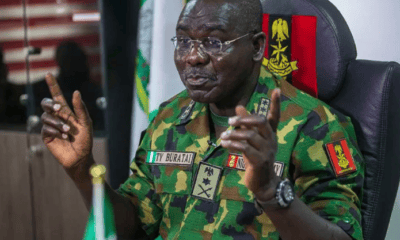
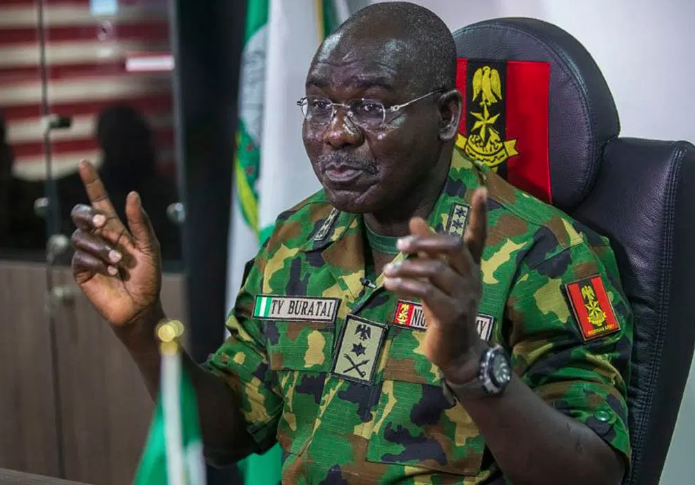
Former Chief of Army Staff, COAS, Lt. Gen Yusuf Buratai, retd., disclosed yesterday that the $1bn approved for defence procurement during his tenure as Army Chief by the federal government was released to the Ministry of Defence and not the services.

Gen Buratai disclosed that the funds, which were approved by the National Economic Council, NEC, did not pass through his hands or the accounts of the Nigerian Army, Navy and Air Force.

He said allegations surrounding the funds turned out to be “political and malicious,” noting that “they first emerged during the 2019 election period when the opposition alleged that the money had been diverted for electoral purposes”

His words:  The $1 billion was approved by the National Economic Council, NEC, for defence procurement. Not a single dollar of that fund passed through my hands or through the accounts of the Nigerian Army, Navy, or Air Force.

“The funds were released to the Ministry of Defence, and the entire procurement process was handled by that ministry. The Army, Navy, and Air Force never had a single dollar from that fund to make procurement directives.

Maduka College Advert

“I have described these allegations as political and malicious. They first surfaced during the 2019 election period when the opposition alleged the funds had been diverted for electoral purposes, a claim the federal government publicly refuted. Yet the stain remained, attached to the service chiefs, rather than the institution that managed the funds.”

The former COAS said the federal government publicly refuted the allegation at the time but lamented that the controversy continued to affect the reputation of service chiefs.

He faulted the ministry for not publicly explaining how the funds were disbursed or how contracts were awarded.

“The ministry, since then on its own, had not publicly explained how the funds were disbursed or contracts awarded. Accountability must be properly located,”he said.

While calling for greater transparency in military procurement, Buratai recommended the establishment of a defence procurement transparency portal to publish information on contracts awarded, contracting entities and delivery timelines, subject to national security considerations.

“The Ministry of Defence must own procurement record. The $1 billion arms procurement controversy festered because the institution that managed the funds, the Ministry of Defence, remained silent while service chiefs absorbed criticism.

“I recommend a Defence Procurement Transparency Portal that publishes, within national security limits, broad categories of contracts awarded, contracting entities, and delivery timelines.

“When the media asks where the money went, the answer should come from the ministry that spent it, not from military officers who never touched it,” he said.

Furthermore, Buratai proposed quarterly accountability bulletins summarising court martial outcomes relating to human rights violations and operational conduct, provided the publications did not compromise the rights of accused personnel or ongoing military operations.

Speaking on alleged human rights violations by members of the Nigerian security forces, Buratai said credible claims should be investigated and, where substantiated, prosecuted.

“I have always maintained that where credible allegations exist, they must be investigated and, where substantiated, prosecuted. The military is not above the law,” he said.

He acknowledged the need for the military to demonstrate that its disciplinary processes were credible, transparent and capable of addressing allegations at all levels.

He said that improved communication by the military and the Ministry of Defence would help address public concerns and ensure that media reports reflected the full context of security operations.

In his remarks, Former Senate President and Chairman Senate Committee on Defence Senator Ahmed Lawan, called  for a dedicated percentage of Nigeria’s revenue to funding of the Armed Forces of Nigeria and other security agencies to procure more platforms.

He noted that the National Assembly had been supporting the Armed forces and other security agencies by way of budgetary approvals.

He said:  “For us in the National Assembly, it is our duty to support the arm of government, to ensure that whatever resources are available and are required, are requested by the arm of government, we support that and we even give more.

‘’As at today, I am over 27 years as a member of the National Assembly, I have not seen any request sent by the executive for the armed forces and other security agencies that has not been approved. In fact, in most cases, they were always approved because we believe that security is first.’’

The Minister of Defence, General Christopher Musa, in his remarks, said:  ‘Today’s security threats are increasingly complex, adaptive and interconnected. Terrorist groups, criminal networks and other adversaries exploit information, technology, financial systems and gaps in coordination to pursue their objectives.

Represented by Air Commodore Steven Ogunmodede, retd., Senior Special Assistant on Foreign Relations, the minister said:  “Consequently, our response must combine effective combat operations with timely intelligence, technological capability, sound planning and cooperation among relevant security institutions.

“This is the essence of intelligence-led operations. The ability to identify a threat early, understand its networks, anticipate its intentions and act with precision can make the difference between preventing an attack and responding after lives have been lost.

“Technology can strengthen our surveillance, reconnaissance, communications and analytical capabilities, but it must be supported by trained personnel, reliable systems, effective doctrine and sound operational judgement.

“Technology is a force multiplier, it does not replace the human judgement, discipline and professional competence upon which military effectiveness ultimately depends.

“At the Ministry of Defence and across the Armed Forces of Nigeria, we recognise the importance of these capabilities and continue to pursue approaches that improve situational awareness, intelligence coordination and operational effectiveness.

“We must remain willing to learn, adapt and innovate, while ensuring that investments in technology translate into practical improvements in our ability to protect lives, defend our territorial integrity and respond to emerging threats.

“Equally important is the need to strengthen cooperation across our security architecture, because no single institution possesses all the information or capabilities required to address today’s security challenges.’’
Continue Reading

News

Rochas Okorocha arrested, released after one-hour Interrogation — Police

Published

on

Rochas Okorocha
Spread the love

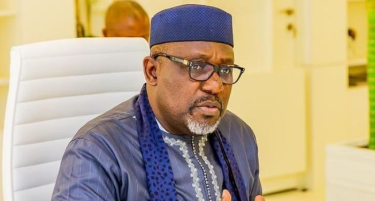
Former Imo State Governor, Senator Rochas Okorocha, was arrested by the Nigeria Police Force (NPF) on Monday night.

The Nigeria Police Force Public Relations Officer, CSP Aniete Iniedu, confirmed the development to Channels Television.

Okorocha, who was arrested at REIZ Continental Hotel in central Abuja, was, however, released on bail by the NPF following an hour of interrogation over allegations of criminal conspiracy, forgery and impersonation.

CSP Iniedu, who confirmed the arrest and subsequent release on bail to our correspondent, noted that the former governor was asked to return to the Force Headquarters on Tuesday for further interrogation as investigations into the allegations continue.

The arrest reportedly followed Okorocha’s failure to honour previous police invitations in connection with the ongoing investigation.

Maduka College Advert

He was initially invited to the Force Headquarters on September 2, but the appointment was rescheduled to September 8 at the request of his lawyers, a date he reportedly failed to honour.

Continue Reading

News

BREAKING: Soludo, Wike, Adeleke, others appointed member of APC Presidential Campaign Council

Published

on

Anambra Gov, Prof Chukwuma Soludo
Spread the love

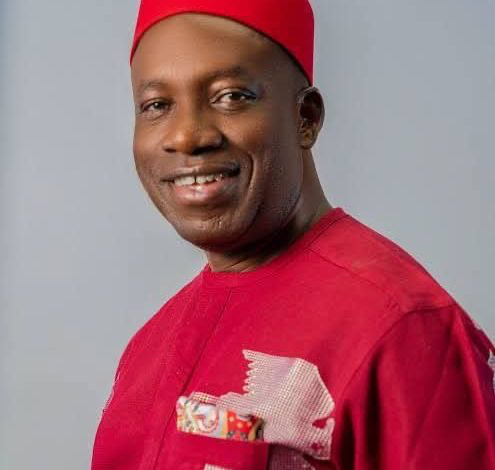
Anambra State Governor, Prof. Chukwuma Soludo, has been appointed a member of the All Progressives Congress (APC) 2027 Presidential Campaign Council list released last night.

This is despite the fact that he is the National Leader of the opposition All Progressives Grand Alliance (APGA).

Similarly, Federal Capital Territory (FCT) Minister Nyesom Wike, the National Leader of the opposition Peoples Democratic Party (PDP) and Osun State Governor, Senator Ademola Adeleke of the opposition Accord Party (AP), are on the expanded and all-inclusive team headed by President Bola Ahmed Tinubu.

Other members include Presidential Adviser on Policy and Coordination, Hadiza Bala Usman, former Ogun State Governor Ibikunle Amosun, former Lagos State Governor Akinwunmi Ambode, Aviation Minister Festus Keyamo, and former House of Representatives member Patrick Obahiagbon.

Also named as members are former Osun APC governorship candidate Bola Oyebamiji, former National Legal Advisers Dr. Muiz Banire and Babatunde Ogala, Chief Ayiri Emami, Victor Giadom, Magnus Abe, and former Ogun State Governor Gbenga Daniel.

Maduka College Advert

The list, according to a report by The Nation, reflects inter-party cooperation and harmony based on the shared vision of propelling the country to the horizon of progress.

The report quoted a statement by APC National Secretary, Senator Ajibola Basiru, as saying that the campaign council will be inaugurated tomorrow in Abuja.

Continue Reading

Trending

Maduka College Advert