News
Ansaru terrorists operate as another govt in Birnin Gwari, collect levies from residents — Kaduna Councillor

The Ansaru terrorist group has established another government within the Birnin Gwari Local Government Area of Kaduna State and now taxes helpless residents, a Senior Councillor of the Birnin Gwari Emirate, Zubair Abdurra’uf has said.
“We have a government within the government,” Abdurra’uf lamented on Channels Television’s Sunrise Daily programme on Wednesday.

“There are some areas within Birnin Gwari, particularly the eastern part, whereby the Ansaru (group) administer this territory because they give directives to the citizens who are there and they decide what to be done,” he said.

According to him, the splinter group of notorious Boko Haram terrorist group came into Birnin Gwari over 12 years ago under the guise of teaching the people Islamic knowledge but later turned to insurgents with abhorrence for western education.

“Most of the schools in the area are deserted because they issued a decree that nobody should go to any school or have any form of formal education,” he said.
Abdurra’uf said Birnin Gwari, which is vast with difficult terrain and mountainous places and adjoining forest to Zamfara and other states, has since been deserted by government institutions as the insurgents sack local chiefs and enthrone their rule.
“At times, the locals have no option but to take some of their issues to these terrorists for adjudication because of the absence of some of the institutions of government that will normally take care of these issues,” the traditional councillor said.
“The ideological conviction of Ansaru is not different from Boko Haram because the Ansaru are a splinter group of Boko Haram and whatever you see Ansaru do is in consonance with whatever Boko Haram are doing but only that the modus operandi of the two groups differ,” he said.
This is not the first time that officials would sound the alarm of terrorist dominance in Birnin-Gwari. In May, Kaduna State Governor, Nasir El-Rufai said Boko Haram and the Ansaru terrorists are taking over the Birnin-Gwari and Giwa local government areas in the state.
The traditional councillor said the infiltration by terrorists in the area is not a question of the Almajiri system but lack of coordination to ensure people are not indoctrinated with the kind of “alien ideology” of the Ansaru people.
Abdurra’uf said the locals now see the Ansaru terrorist sect as a “messiah” that protects them from marauders who rustle their cows and hijack their harvests.
“They have their cattle confiscated, their farms, they have to pay all sorts of levies to the terrorists. They pay for the harvest. For every ten bags, they give two bags to all these bandits while they take eight away.
“So, when the Ansaru offers help to these people, they take it because they don’t have the means to protect themselves. They have seen Ansaru as messiah that will eliminate these people (marauders) who capitalise on their inadequacy and lack of protection which is the primary responsibility of the government,” he said.
He further said the Ansaru group distributes food items to locals during festivities, adding that young people join Ansaru because of poverty and neglect of the government.
Abdurra’uf said the Independent National Electoral Commission (INEC) can’t deploy its personnel to the terrorist den in Birnin Gwari, doubting the possibility of the 2023 elections being held in the area.
On Monday, the presidential candidate of the All Progressives Congress (APC) Bola Tinubu visited the Emir of Birnin Gwari, Zubairu Maigwari, and promised to wipe out bandits and terrorists in Kaduna and other parts of the northern region if elected as in 2023.
Also, an APC stalwart, Ahmed Sajo, who was a guest on Channels Television’s breakfast show on Wednesday alongside Abdurra’uf, said Tinubu will eliminate non-state actors in Birnin Gwari if elected.
However, Abdurra’uf warned against the politicisation of the security challenges of the area and other parts of the north.
“Bad governance increases the issue of insecurity,” he stated, noting that politicians should not capitalize on insecurity to get votes during elections but look away after they get elected.
He said President Muhammadu Buhari doesn’t sympathise with residents of the area despite the many attacks by terrorists in the area. The official urged the government to rise up to its primary responsibility of protecting lives and property.
Kaduna, one of the seven states in the North-West geopolitical zone, has recorded increasing bandit and terrorist attacks in the last two years including the infamous infiltration of the Nigerian Defence Academy on August 24, 2021, and the dastard attack on a moving train on March 28, 2022.
The Kaduna State Government said 1,192 persons were killed by bandits and other violent groups in 2021 while over 3,000 residents, students, and travellers were kidnapped. So far, over 800 people have been killed by bandits, and more than 1,200 persons kidnapped in Kaduna between January and September 2022, according to official data. (Channels TV)



News
‘Ban Nigerians from Our Country’ — Demonstrators Stage Fresh Anti-Migrant Protest in South Africa

Demonstrators under the March and March anti-migrant group on Wednesday staged a fresh protest in Pretoria, South Africa, demanding a ban on Nigerians entering the country.
The protesters, led by the group’s leader, Jacinta Ngobese-Zuma, called on the South African government to stop Nigerians from entering the country, accusing some Nigerian immigrants of engaging in drug-related activities.
Speaking during the protest, Ngobese-Zuma challenged Nigerians living in Sunnyside, a suburb of Pretoria, to explain why the area has been nicknamed “Little Lagos” because of the large Nigerian population.
“I’m being told here that we’ve entered Sunnyside, the home of Nigerians. I’m inviting Nigerians to come out. Let’s talk to each other. We want to know who gave you this place and called it Nigeria. Who gave you permission to call this place Lagos or whatever you call it?” she asked.
She further questioned why Nigerians had allegedly adopted names associated with their home country for parts of South Africa.
Also speaking, Xolani Zuma, the group’s legal representative, called on the South African government to impose an entry ban on Nigerians.
“The state must ban Nigerians from South Africa. They must ban Nigerians until they stop selling drugs to our people. The rest of Africa, we are fine, but we do not want Nigerians in South Africa anymore. That is what we are saying,” Zuma said.
Ngobese-Zuma also demanded that South Africa withdraw from the 1951 United Nations Convention Relating to the Status of Refugees.
She described the international agreement as “not sustainable and not feasible”, arguing that the presence of migrants places additional pressure on public resources and fuels frustration among South African citizens.
One of the convention’s central principles is non-refoulement, which prohibits countries from returning refugees to territories where they face serious threats to their lives or freedom.
The group said it was marching to the Home Affairs Department to formally present its demands to the government.
The latest demonstration comes amid heightened diplomatic tensions between Nigeria and South Africa over issues affecting the Nigerian community in the country.
Last week, the Nigerian High Commission and the South African Presidency exchanged positions over the omission of a speech by Nigeria’s High Commissioner, Femi Fani-Kayode, during the presentation of his credentials.
Fani-Kayode described the omission as disrespectful to Nigeria but later said the matter had been put behind following the intervention of South African President Cyril Ramaphosa and an invitation from the Department of International Relations and Cooperation (DIRCO) to address the disagreement.
The high commissioner also disclosed that he had begun looking into issues affecting Nigerians in South Africa since his arrival in the country.
He described those behind xenophobic attacks as a “tiny minority”, insisting that they did not represent the majority of South Africans, whom he characterised as decent and accommodating.
Meanwhile, more than 1,500 Nigerians were reportedly repatriated from South Africa this year amid renewed xenophobic tensions, with at least four Nigerians said to have been killed in related attacks.
Despite the growing concerns, Fani-Kayode has maintained that Nigeria has no intention of severing diplomatic relations with South Africa, although he warned that patience was wearing thin within the corridors of power.
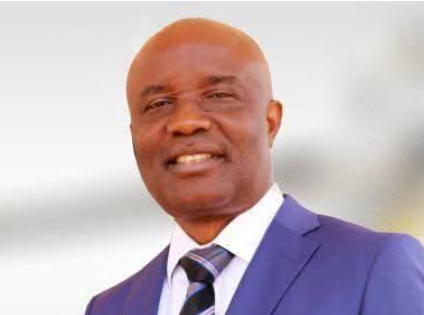
Rev. Dr Chidi Okorafor has emerged as the new General Superintendent (GS) of the Assemblies of God Nigeria, returning to the church’s highest administrative position amid renewed efforts to address longstanding leadership challenges within the denomination.
Okorafor was elected on Wednesday afternoon during the ongoing 38th General Council meeting of the church at Evangel Camp, Okpoto, Ebonyi State.
His emergence was greeted with excitement and jubilation by delegates and other participants as the election result was announced.
The election is particularly significant given the history of leadership disagreements, factional divisions and prolonged legal battles that have affected the church in recent years.
Okorafor is not a newcomer to the position. He previously served as General Superintendent after emerging during the church’s 2014 General Council meeting, following the suspension and removal of his predecessor, Rev. Prof. Paul Emeka.
Background of the leadership crisis
The Assemblies of God Nigeria was plunged into a major leadership crisis in March 2014 when its General Committee suspended Paul Emeka over alleged constitutional violations, including taking internal church disputes to court.
The decision triggered a bitter disagreement, with Emeka rejecting his removal and continuing to lay claim to the office of General Superintendent.
The disagreement eventually divided the denomination into rival factions, with competing groups operating from the church’s national secretariat in Enugu and Evangel Camp in Okpoto, Ebonyi State.
The dispute also resulted in several court cases, confrontations over church properties and tensions among ministers and members.
In February 2017, the Supreme Court affirmed Emeka’s removal, dismissing his appeal and upholding the church’s decision.
The judgment effectively settled the major legal contest over the leadership position in favour of the church’s leadership under Okorafor.
However, the denomination subsequently experienced another internal controversy involving Okorafor himself in 2019 and 2020.
A disciplinary process was initiated following allegations against him, which he challenged through the church’s internal structures. The General Committee upheld the disciplinary decision in March 2020. Okorafor subsequently served the suspension and was restored to ministerial membership, although he lost the administrative positions he previously held.
The history of these disputes has continued to feature in discussions about governance, constitutional procedures, reconciliation and leadership succession within the denomination.
More recently, fresh concerns emerged ahead of the 38th General Council meeting, with Apostle Iheanyi Patrick Ogele reportedly issuing a pre-action notice to the church’s leadership, demanding that certain grievances, including allegations of marginalisation and discrimination against women ministers, be addressed.
He also threatened legal action over the proposed leadership election. The allegations, however, remain claims by the petitioner.
Against this background, Okorafor’s latest emergence is expected to attract considerable attention within the church, particularly regarding the prospects of institutional stability, reconciliation and stronger internal governance.
Meanwhile, elections into other national leadership positions of the church were still ongoing as of the time of filing this report.
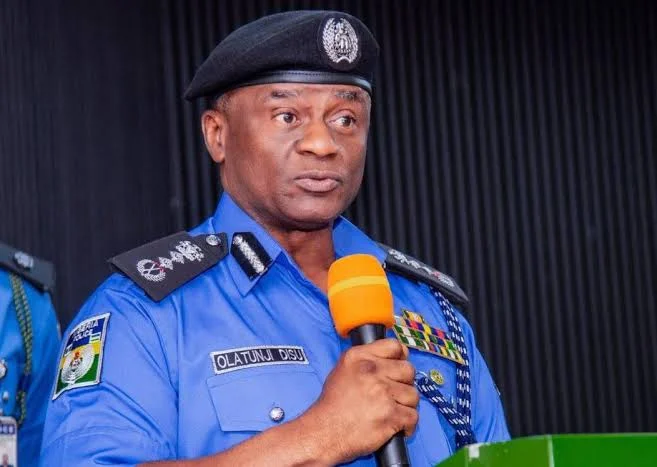
The Inspector-General of Police (IGP), Olatunji Disu, has directed hospitals and medical personnel across Nigeria to provide immediate medical attention to gunshot victims without demanding a police report as a precondition for treatment.
The directive, contained in a statement published on the official X handle of the Nigeria Police Force on Thursday, emphasises the need to prioritise saving lives over administrative procedures during medical emergencies.
Disu described the issue as a matter of life and death, warning that delays in attending to gunshot victims could lead to avoidable deaths.
He clarified that the law does not require victims of gunshot injuries to obtain or present a police report before receiving medical attention at any hospital.
“When a gunshot victim is brought to any hospital, the law does not require a police report before treatment,” the IGP stated.
The police chief specifically appealed to doctors, nurses and other healthcare professionals to ensure that injured persons receive prompt medical attention without waiting for police documentation.
He also reassured Nigerians that the primary responsibility of the police is to protect lives and ensure public safety, rather than create fear or discourage members of the public from assisting people in distress.
Addressing members of the public, Disu urged Nigerians not to hesitate to assist injured persons during emergencies, assuring them that they would not face punishment for offering help.
“To members of the public, if you see someone injured, do not hesitate to help. You will not be punished for helping,” he said.
The IGP further charged police officers and healthcare workers to uphold the law and ensure that administrative requirements do not become obstacles to emergency medical intervention.
Reiterating the urgency of the directive, Disu delivered a clear message to hospitals and emergency responders: “Treat first, save lives.”
-
 News3 days ago
Nigerian Pastor Dies Aboard Flight From US
-
News2 days ago
Enugu Assembly Passes Bill Capping Rent Increase at 2%, Restricts Hikes to Four Years
-
News1 day ago
U.S. Strategist Diana London Deletes Posts on Tinubu, Nigeria-U.S. Security Partnership
-
News2 days ago
Nursing Students Shut Down School, Protest Colleague’s Death
-
News3 days ago
Mbah’s Manifesto Scorecard: From Promises to Projects, Enugu’s Journey of Transformation
-
News2 days ago
Gunmen Kill Security Guard, Abduct Businessman’s Family Members, Visitor in Zamfara
-
News2 days ago
₦17.58bn Cash Gifts: Ebonyi Stakeholders Beg Newspaper to Withhold Beneficiaries’ List
-
News2 days ago
CP Ogarabe Assumes Duty as Enugu Police Commissioner, Pledges Intelligence-Led Policing