News
Vandalism causing flooding on Lagos-Calabar Coastal Highway –Umahi


The Federal Government on Thursday raised concerns over a disturbing surge in vandalism of critical public infrastructure, particularly along the Lagos–Calabar Coastal Highway corridor and major bridges in Lagos.
It warned that the trend threatened the durability of newly constructed roads and bridges nationwide.
The government also attributed recent flooding along the coastal highway to blocked drainage channels caused by improper waste disposal.
The Minister of Works, David Umahi, who spoke at a press briefing in Abuja, described the situation as “alarming and unsustainable,” saying the ministry was engaged in a “daily fight” to protect federal assets from deliberate sabotage.
According to him, the Lagos coastal highway had become a major hotspot for vandalism despite intensified security measures.
“This press briefing is to bring to the attention of the public the massive vandalism of our critical infrastructure all over the country. Within the coastal route that is being circulated, you can see massive break-ins. It is a daily fight,” he said.

Umahi said he personally visited Lagos two weeks ago to assess the destruction and commended the Lagos State Government and the police for deploying operatives along the highway.
“I thank the governor and the people of Lagos State, as well as the Commissioner of Police.
“There has been a massive deployment within the coastal route to check vandalism. But as we speak now, the things we have done to protect the coastal route are being destroyed by people,” he said.
The minister disclosed that protective installations, including green barbed wires and other security fittings along sections of the highway, had been repeatedly cut and stolen.
“They have cut wires that were put there to protect the beauty of the coastal roads. In several sections, these have been cut and taken away,” he said, adding that ongoing construction works were being disrupted by illegal access to restricted areas.
“The width of our road is 12 metres, and nine metres have been completed. There are connecting wire bars and protective coverings. Yet people go there, cross into the restricted areas and damage the work,” he explained.
The Lagos–Calabar Coastal Highway, one of the Federal Government’s flagship road projects, is designed to run approximately 700 kilometres from Lagos through several coastal states to Calabar, Cross River State, boosting trade, tourism, and regional connectivity.
The first phase in Lagos has faced controversies ranging from right-of-way disputes to environmental concerns.
Umahi linked the recent flooding along the coastal highway to blocked drainage channels caused by indiscriminate waste disposal.
“The flooding of the coastal highway was because our underground drainage channels were blocked. People dump refuse inside the manholes and underground channels. When those channels are blocked, water has nowhere to go. That is the basic reason for flooding seen on the coastal road, and I think for most places in Lagos.
“The public has a duty to protect public assets. We are doing everything possible to ensure the coastal highway is free and functional, but citizens must also play their part,” he said.
Beyond the coastal road, Umahi expressed concern over the condition of major bridges in Lagos, including the Third Mainland Bridge and Carter Bridge.
He disclosed that serious structural issues had been identified, with experts recommending eventual demolition of Carter Bridge.
Temporary measures are being implemented to keep it functional for about three years pending reconstruction.
Umahi attributed much of the damage to illegal sand mining around bridge foundations, explaining that many bridge piles depend on sand for stability.
“To the extent that by investigations and stakeholders’ meetings, experts have said Carter Bridge has to be demolished.
“But we are doing everything possible to strengthen it so that we can use it for the next three years pending reconstruction,” he said.
He cited an incident in which an illegal miner struck and removed a bridge pile, adding: “We have directed that the company involved be prosecuted. These illegalities have serious consequences on our infrastructure.”
The minister also listed other acts of vandalism nationwide, including the theft of expansion joints on bridges, reinforced concrete barriers on the Abuja–Kaduna–Zaria–Kano highway, and electrical installations on flyovers and bridges.
“Just about two weeks back, we caught people removing expansion joints on Carter Bridge in Lagos.
“This is the second time we are catching people there,” he said, noting that expansion joints were often sold as scrap, weakening structural integrity.
Umahi highlighted the role of security technology, noting that the installation of Closed-Circuit Television cameras on the Third Mainland Bridge, as directed by President Bola Tinubu, had helped track and arrest vandals.
“It was very easy for the police to catch the vandals because of the CCTV installed there,” he said.
The minister warned against the practice of parking heavy trucks on bridges, stressing that bridges are not designed to withstand prolonged static loads.
“Roads and bridges are never designed for static loads. When you allow heavy trucks and vehicles to be parked on bridges, you are asking for trouble,” he cautioned.
He reiterated that the Federal Government had adopted reinforced concrete technology in road construction to enhance durability.
“The President inherited a very terrible state of roads and bridges. That is why he introduced reinforced concrete technology.
“The roads we are building now will last between 50 and 100 years, unlike many older roads that failed within 10 years,” he said.
While acknowledging that no project execution was perfect, Umahi insisted that the ministry remained committed to transparency and value for money.
“No one is God. No human being does anything in perfect order. But we are doing everything within the limit of our ability and conscience to ensure there is value for money and that we address the needs of our people,” he said.
He urged Nigerians to take collective responsibility for safeguarding public infrastructure, warning that repeated vandalism would drain public resources and slow national development.
“If we do not protect this infrastructure, repairs will have to be repeated. That is not good for our society.
“The President is working tirelessly to deliver these projects, and we must all help to protect them,” he concluded. (The Punch)


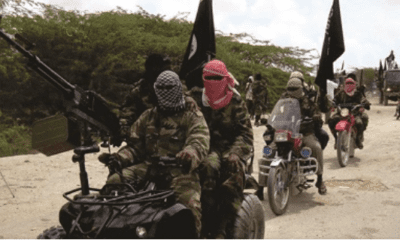







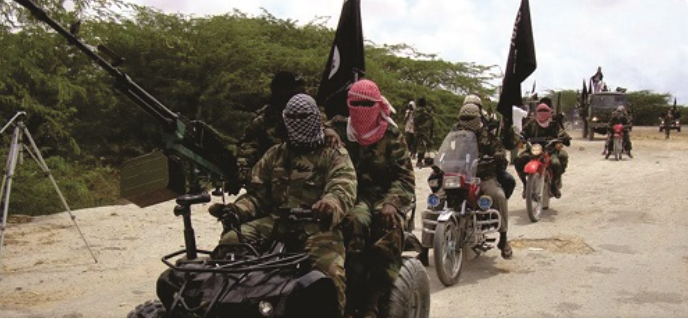
Bandits have murdered at least 32 farmers in a series of attacks on Tugan-Makeri, Konsoko, and Pissa communities in Borgu Local Government Area of Niger State.
Residents told Daily Trust that the first attack occurred at Tunga-Makeri in Konkoso Ward around 3:00 a.m., during which six people were killed.
They said the bandits later invaded Konsoko and Pissa at about 6:00 a.m. on Saturday, shooting sporadically.
During the dire incident, 26 people were reportedly killed and several buildings, including a police outpost, were set ablaze.
Sources added that the exact number of casualties from the attack on the Pissa community in Kabe/Pissa has yet to be ascertained.
Hassan Abdullahi, a resident of the area, said that the attackers, numbering over 200, operated for several hours.
He said the Saturday attack began around 6:00 a.m. and lasted until about 10:00 a.m., adding that the affected communities are located about 200 kilometres from the Nigerian Air Force Base in New Bussa, the headquarters of Borgu LGA.
When contacted, the spokesperson for the Niger State Police Command, SP Wasiu Abiodun, said the attack on Tugan-Makeri village occurred around 3:00 a.m. on Saturday.
He confirmed that six people were killed in the community, some houses were set ablaze, and an unspecified number of people were kidnapped.
Abiodun also confirmed that the bandits later moved to Konsoko, but said details of the attack there were still sketchy.
He said: “On 14/2/2026 at about 6:00 a.m., a report was received indicating that at about 3:00 a.m., suspected bandits invaded Tunga-Makeri village via Shafachi District in Borgu LGA. During the attack, six persons lost their lives, some houses were set ablaze, and a yet-to-be-ascertained number of persons were abducted. The terrorists were also reported to have moved to Konkoso village, while other details remain sketchy.

Operatives of the Operation Puff Adder of the Bayelsà State Police Command have arrested a 38 year old man, Iliasu Mohammed over his alleged involvement in the 2022 shooting of a Police Inspector, Ekperi Edwin in the stomach and left for dead in Yenagoa, the State capital.
The Police Inspector was shot on August 21, 2022 by unidentified gunmen along his street at Akenfa, Yenagoa during what police sources described as an alleged armed robbery and attempted assassination.
The police inspector was reported to have sustained life-threatening injuries and underwent emergency surgery, with bullet pellets still reportedly lodged in his body over three years after the incident.
The case however took a new dimension following allegations that a key suspect linked to the crime was released under questionable circumstances after being handed over to the Nigeria Police by the military.
Sources familiar with the incident told our correspondent that a new petition to the State Commissioner of Police, Daniel Iyamah. has been minuted to the Special Tactical and Intelligence Unit of the State Command headed by CSP Chris Nwaogbo.
A suspect connected to the case is currently in police custody and is expected to be arraigned in court, marking the first concrete prosecution step since the incident occurred.
Police sources described the move as part of efforts by the new commissioner of police to ensure a thorough, impartial, and intelligence-led investigation, given the sensitivity of the case and the status of the victim as a serving police officer.
Senior security sources however revealed that the takeover by Operation Puff Adder signals renewed commitment by the Nigeria Police Force to address unresolved violent crimes, especially those involving attacks on its personnel
Police authorities have confirmed that investigations are ongoing and assured that the matter will be investigated thoroughly.
Already, the Department of Public Prosecution (DPP) of the State Ministry of Justice has approved the case for prosecution and the Police is awaiting the arraignment of the suspect in the State High Court.
A US Marine who fell overboard from an attack ship in the Caribbean has become the first known American casualty in the Trump administration’s operation targeting drug-trafficking boats.
Nigerian-born Lance Cpl Chukwuemeka E. Oforah, 21, fell from the USS Iwo Jima on 7 February and was lost at sea. He was pronounced dead after a lengthy search, which ended 10 February.
His death was announced on Wednesday and remains under investigation by the military.
The Florida native was assisting Operation Southern Spear, which has carried out 38 lethal strikes on alleged drug boats in the Caribbean Sea and Pacific Ocean since September. It played a key role in the capture of Venezuelan president Nicholas Maduro.
A statement from the US Marines contained no details regarding how he may have fallen from the ship.
“We are all grieving alongside the Oforah family,” said Col Tom Trimble, commanding officer of the Marine Expeditionary Unit known as Special Operations Capable.
“The loss of Lance Cp. Oforah is deeply felt across the entire Navy-Marine Corps team. He will be profoundly missed, and his dedicated service will not be forgotten.”
A news release from the military branch said the sprawling search for Oforah involved five ships and 10 aircraft.
The USS Iwo Jima was used to transport Maduro after his capture in a US raid. Maduro’s capture came after weeks of a military build-up in the region, along with frequent strikes on vessels that the Trump administration said were carrying drugs headed for the US.
The pace of the strikes has notably ebbed since US forces in early January captured Maduro – who has been accused by the Trump administration of working with drug trafficking groups.
Defence Secretary Pete Hegseth has said Operation Southern Spear is aimed at removing “narco-terrorists from our hemisphere” and securing the US from “the drugs that are killing our people”.
But some legal experts have said the strikes could be illegal and violate international law by targeting civilians, with no due process afforded to the suspects.
US officials have faced bipartisan scrutiny over a follow-up strike – or “double-tap” – on 2 September that targeted an alleged Venezuelan drug boat in the Caribbean Sea.
The families of two Trinidadian men killed in the 14 October strike have since filed a lawsuit against the American government, alleging the strike amounted to “lawless killings in cold blood; killings for sport and killings for theatre”. (BBC report)
-
 News2 days ago
BREAKING: Security agents attempt to arrest El-Rufai at Abuja airport, passport seized
-
News3 days ago
I’ll soon be arrested by federal authorities —- Nasir El- Rufai
-
News2 days ago
Nigerian student dies in UK after chronic illness
-
News3 days ago
US Lawmakers introduce Bill to sanction Miyetti Allah, Kwankwaso, Fulani Militia
-
News2 days ago
It’s not in my DNA to work for Tinubu, but I will work for Nigeria, Omokri defends Ambassador role
-
News3 days ago
UK graduate returns to Nigeria, recounts struggles to secure employment
-
News2 days ago
Police nab hotel owner, recover gun, drugs from premises
-
News2 days ago
Nigeria better served by leaders under 50 not 100 – Jonathan