
News
We won’t sit-at-home again – Onitsha Main Market traders assure Soludo


Traders at the Onitsha Main Market have pledged to end compliance with the Monday sit-at-home, declaring their readiness to resume full business activities in line with the directive of the Anambra State Government.
The pledge was made on Thursday during an interactive session between Governor Chukwuma Charles Soludo and market leaders from across the state.
The meeting followed the recent closure of the Onitsha Main Market and the prolonged Monday shutdown that has crippled commercial activities in the South-East.
Speaking on behalf of the traders, the Chairman of Onitsha Main Market, Mr. Chijioke Okpalugo, said traders were prepared to commence Monday operations in support of the governor’s vision of a “One Anambra,” but appealed for enhanced security to guarantee the safety of lives and property.
In his remarks, Governor Soludo declared that all markets and shops in Anambra State must remain open on every working day, including Mondays, stressing that the era of sit-at-home-induced market closures was over.
Addressing Onitsha traders specifically, the governor presented a “renovate or rebuild” option for the market, offering either a complete redevelopment into a modern trading hub or a comprehensive overhaul of existing structures.

He insisted that business activities must continue irrespective of the option chosen.
Soludo described the enforcement of the sit-at-home as a criminal enterprise no longer connected to the agitation for the release of Mazi Nnamdi Kanu, dismissing claims that the order was linked to the detained IPOB leader.
“It is not linked to Mazi Nnamdi Kanu. He does not support the sit-at-home. If it doesn’t happen in Umuahia, his hometown, why Onitsha and Nnewi?” the governor asked.
He further alleged that many of those enforcing the sit-at-home were not indigenes of Anambra State and warned that the government would deploy extreme measures if defiance persisted.
In response, market leaders requested a visible and sustained security presence in markets, full operation of motor parks to facilitate the movement of buyers and goods, and decisive action against individuals who benefit from or enforce the sit-at-home order.
The governor assured traders of an overhaul of the state’s security architecture around markets, pledging that Anambra’s commercial centres would be protected from harassment and intimidation.
“Igboland and Anambra will move forward,” Soludo declared.




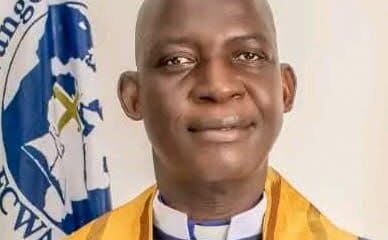








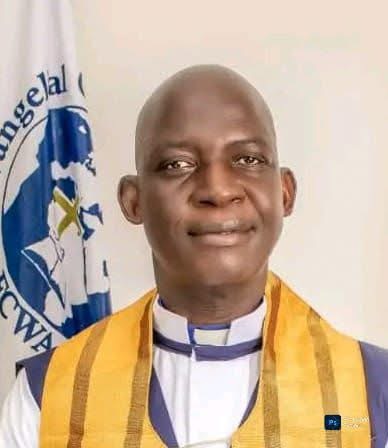
No fewer than 160 members of the Evangelical Church Winning All (ECWA) are currently in captivity across Kaduna and Kogi states, with their families facing crippling ransom demands, the leadership of the Church has revealed.
The disclosure comes as the Church raised alarm over Nigeria’s worsening security situation, following the recent abduction of worshippers in Kajuru Local Government Area of Kaduna State.
In a statement issued by the ECWA President, Rev. Job Bagat, the Church disclosed that “about 100 members from the Kwassam District Church Council, 30 from the Saminaka District Church Council in Kaduna State, and another 30 from the Kabba District Church Council in Kogi State were already being held by kidnappers before the latest incident in Kajuru.”
ECWA described the situation as deeply distressing and reflective of the growing insecurity confronting communities across the country.
The Church expressed profound concern over what it described as persistent and targeted attacks against Christian communities, clergy and ordinary citizens, noting that such acts constitute a direct assault on constitutional rights to life, worship and security.
According to the statement, “ECWA pastors, church workers and members in several states have suffered killings, abductions, displacement and destruction of livelihoods, leaving many communities traumatised and abandoned.”
ECWA specifically condemned the abduction of worshippers on Sunday, January 18, 2026, in Kurmin Wali community, Kajuru Local Government Area, describing it as “sacrilegious and barbaric. The armed invasion of churches during worship, which was confirmed by the Nigeria Police Force, is sacrilegious and barbaric, further deepening fear and national anguish,” the statement said.
Rev. Bagat noted that the Kajuru attack was part of a broader pattern of violence threatening several ECWA District Church Councils, including Katari and Gidan Waya in Kaduna State; Katsina South in Katsina State; Patigi, Omu-Aran and Ora-Ago in Kwara State; Kabba District in Kogi State; Gwol and Mangu in Plateau State; and Shiroro in Niger State.
While acknowledging renewed efforts by the Federal Government and the eventual deployment of security personnel to Kajuru, ECWA expressed grave concern over delays in response, warning that such lapses cost valuable time and embolden criminal networks.
The Church stressed that security measures must be proactive, intelligence-driven, sustained and preventive, particularly in vulnerable rural communities.
ECWA therefore called on the Federal, State and Local Governments to strengthen intelligence gathering and early-warning systems, ensure swift and effective responses to threats, transparently prosecute perpetrators and their sponsors, and provide adequate protection for places of worship and other soft targets.
The Church also urged traditional rulers, community leaders and citizens to promote unity, shared vigilance and peaceful coexistence, while reaffirming its solidarity with all victims of insecurity and its commitment to prayer, peacebuilding, advocacy and practical support for affected communities.

A former governor of Kogi State, Yahaya Bello, has been granted permission by the Federal High Court sitting in Abuja to travel to Saudi Arabia to perform the 2026 lesser Hajj.
In granting the application, Justice Emeka Nwite ordered that Bello’s international passport, which has been in the custody of the court, be temporarily released to him.
The former governor is currently standing trial before the court over alleged misappropriation of funds, in a case instituted by the Economic and Financial Crimes Commission (EFCC).
The application for permission to travel was personally deposed to by Bello and moved by his lead counsel, Joseph Daudu, SAN. Counsel told the court that the request was to enable the defendant travel to the Holy Land to observe the lesser Hajj during the month of Ramadan.
Daudu further informed the court that Bello had not travelled to the Holy Land in over eight years and that there was a need for him to do so to pray for divine intervention regarding the charges brought against him by the EFCC.
Responding, lead prosecution counsel, Kemi Pinheiro, SAN, informed the court that the prosecution did not oppose the request for the defendant to travel but would not concede any of the dates already fixed for the continuation of trial.
In a brief ruling, Justice Nwite granted the application and approved the release of Bello’s passport from March 13, 2026, for a period of 10 days.
The court subsequently adjourned the matter until Friday, January 30, for the continuation of the examination of the seventh prosecution witness.
Earlier in his testimony, the witness, Olomotane Egoro, a subpoenaed official of Access Bank, told the court of cash inflows from local government areas in Kogi State into the accounts of Fazab Business Enterprise and E-Traders International Ltd. He also testified that several cash withdrawals were made from the accounts.
The EFCC is prosecuting Bello over alleged money laundering amounting to N80.2 billion, allegations which the former governor denied when he was arraigned before the court.

…Announces major reforms in land sector
The Enugu State Government has announced sweeping reforms in the land sector, including the immediate abolition of illegal levies and the streamlining of land-related charges, as part of Governor Peter Mbah’s broader economic transformation agenda.
The government disclosed that ground rent, land use charge, and all property-related charges have now been unified and reduced by over 60 per cent, with property owners required to pay only a single Unified Land Use Charge annually through the Enugu State Internal Revenue Service (EIRS), whether their properties are located within estates or outside them.
Governor Peter Mbah made the announcement at a stakeholders’ townhall meeting on land sector development, which held at the International Conference Centre, Enugu, on Thursday.

Represented by the Secretary to the State Government (SSG), Prof. Chidiebere Onyia, the Governor said his administration remained committed to building a transparent, efficient, and investor-friendly land administration system anchored on legality, digitisation, and accountability.
He described land as the legal foundation for housing, infrastructure, agriculture, commerce, and investment, stressing that since inception, the administration has pursued deliberate reforms to modernise land governance, reduce uncertainty, curb abuse, and restore public confidence in the land tenure system.
“These reforms are anchored on transparency, predictability, digitisation of records, and strict adherence to statutory processes for land allocation, registration, and development control,” he said, adding that effective land governance must be driven by continuous engagement with communities, professionals, investors, traditional institutions, and citizens.

A major highlight of the reforms is the immediate ban on the controversial Ogbonecheagu fees collected by some communities and local governments. Prof. Onyia said Governor Mbah has declared all such fees illegal and directed their outright abolition following widespread complaints by residents.
A task force has been constituted to enforce compliance, while members of the public who are compelled to pay such illegal charges have been urged to submit evidence to Whistleblowing@enugustate.gov.ng for prompt intervention.
The SSG further revealed that the reforms were informed by the recommendations of a multi-stakeholder Committee on Land-Related Revenue and Administration constituted by the Governor to address complaints of multiple taxation and revenue abuse in the state.

In his remarks, the Commissioner for Lands and Urban Development, Barr. Chimaobi Okorie, said Governor Mbah has introduced critical policy directions and legal instruments, including an executive order declaring nine of the state’s seventeen local government areas as urban areas to enable planning and structured infrastructural development.
He also said that the Mbah Administration enacted the Enugu State Geographic Information System (ENGIS) law to serve as a one-stop platform for land transactions and to drive the full digitisation and digitalization of land processes and systems. According to him, land records are now fully harmonised, eliminating cases of missing files, while every plot of land in the state can be digitally tracked.

Managing Director of ENGIS, Mr. Chiwetalu Nwatu
The Commissioner added that applicants seeking Certificates of Occupancy (C of O) can now apply online or walk into designated government offices for seamless processing. He further noted that the Property Protection Law signed by Governor Mbah guarantees the security of legitimate property ownership and protects investors’ assets.
In his presentation, the Managing Director of ENGIS, Mr. Chiwetalu Nwatu, announced that all buildings located in housing estates owned by the Ministry of Housing and the Housing Development Corporation must henceforth obtain building approval directly from the Ministry and the Corporation, irrespective of their locations.
He added that building approval for houses in non-government estates within the Enugu municipal area will now be processed exclusively by the Enugu Capital Territory Development Authority (ECTDA) to eliminate jurisdictional overlaps and administrative delays.

Mr. Nwatu further announced that Certificates of Occupancy for all buildings in both private and government estates will now be processed directly for individual property owners, thereby strengthening security of titles and improving assets bankability.
Also speaking, the Executive Chairman of the Enugu State Internal Revenue Service (ES-IRS), Mr. Emmanuel Ekene Nnamani, said the newly signed Tax Law was designed to place a greater tax burden on the wealthy while protecting low-income earners.
He urged residents to obtain their Tax Identification Numbers free of charge and comply with tax filing requirements to enable the government to generate accurate data for development planning.
Responding to questions from participants, Prof. Onyia announced the constitution of a committee chaired by the Managing Director of ENGIS, Mr. Chiwetalu Nwatu, to address complaints related to layouts and recommend practical solutions within one week for government consideration.
The townhall meeting attracted a broad section of stakeholders, including heads of government agencies, community landholders, estate developers, surveyors, town planners, property agents and lawyers, traditional rulers, town unions, business operators, religious organisations, financial institutions, civil society groups, development partners, and members of the public.
-
 News3 days ago
President Tinubu falls during official reception parade in Turkey
-
News23 hours ago
BREAKING: Enugu Govt bans notorious Ogbonecheagu, illegal levies, slashes land charges by 60%
-
News2 days ago
2027: INEC Releases Election Timetable
-
News2 days ago
Market Closure: Police disperse protesters on Onitsha head bridge
-
News3 days ago
UNN alleges plot to cause unrest on campus
-
News3 days ago
Brigadier-General behind alleged failed coup against Tinubu Govt
-
News2 days ago
1,683 children kidnapped, 184 killed in school attacks – Report
-
News2 days ago
Enugu Police arraign man, 42 over alleged rape of girl, 13