News
Enugu Govt to Hold Stakeholders’ Townhall Meeting on Land Sector Development, Jan. 27

The Enugu State Government has announced plans to convene a broad-based stakeholders’ engagement meeting as part of its ongoing reforms and development initiatives in the state’s land sector.
The townhall meeting, scheduled for Tuesday, January 27, 2026, will take place at The Dome Hall, Enugu International Conference Centre, at 10:00 a.m. prompt.
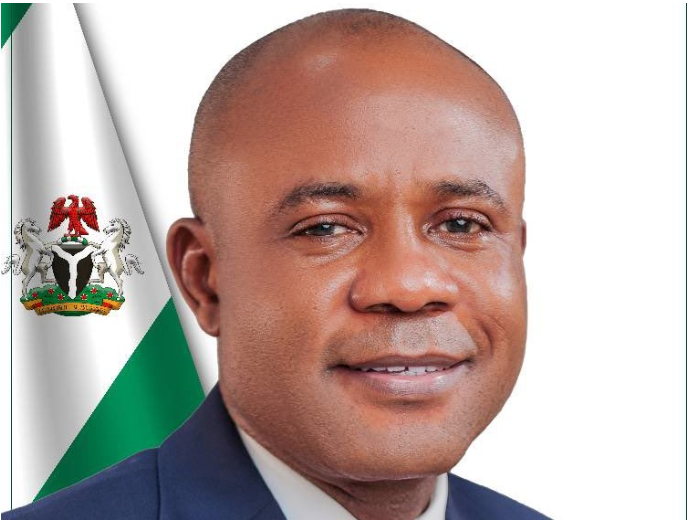
The government, in a statement issued on Thursday by the Commissioner for Information and Communication, Dr. Malachy Agbo, said the engagement is aimed at providing stakeholders with clear, accessible, and up-to-date information on land sector development in Enugu State.
According to the statement, the initiative aligns with the administration of Governor Peter Mbah’s commitment to transparency, public participation, and the establishment of a modernised land management framework capable of safeguarding the rights and investments of landowners, developers, and investors.
Dr. Agbo explained that the engagement will also serve as a platform for participants to receive firsthand directives from the Governor on land sector reforms, understand their roles and responsibilities in land administration, and identify proactive measures for protecting communities and investments.
“The meeting is designed to deepen stakeholder understanding of government policies, promote orderly land administration, and strengthen confidence in Enugu State as a preferred investment destination,” the statement said.

The townhall is open to a wide range of stakeholders, including individual landowners, families and community landholders, estate developers, residents, community layout coordinators, surveyors, land buyers and agents, property lawyers, professional bodies, traditional rulers and town unions, business operators, religious organisations, financial institutions, academic and research institutions, media organisations, civil society groups, development partners, and other concerned citizens.
The government urged all relevant stakeholders to attend and actively participate in the engagement, describing it as a critical step toward building a transparent, investor-friendly, and sustainable land management system in the state.













A newlywed wife has been arrested by the Jigawa State Police Command over the alleged poisoning of her husband, who died after consuming a meal prepared by her.
The incident occurred on January 23, 2026, at about 1700hrs at Gauza village in Jahun Local Government Area of Jigawa State.
Confirming the incident in a statement made available to journalists in Dutse, the state capital, on Saturday, the Police Public Relations Officer of the Jigawa State Command, SP Shi’isu Adam, said the deceased reportedly took his lunch at home before he suddenly fell seriously ill.
According to the police spokesperson, the man was rushed to the hospital for medical attention but was pronounced dead while receiving treatment.
Following the incident, detectives from the Jahun Division swung into action and arrested the wife of the deceased as the principal suspect.
SP Shi’isu Adam said that “during interrogation, the suspect confessed to poisoning her husband’s food with rat poison.”
He added that the “suspect claimed she sent her cousin to purchase the rat poison used in committing the act.”
According to the PPRO, the suspect reportedly stated that she was forced into the marriage by her parents, a situation she claimed led to her actions.
However, the police spokesperson said the Jigawa State Commissioner of Police has directed that the case be thoroughly investigated at the State Criminal Investigation Department in Dutse.
He said upon the conclusion of the investigation, the suspect would be charged to court for prosecution.
Meanwhile, the police command urged members of the public to remain calm and law-abiding and to seek lawful means of resolving family and marital disputes.
The statement further “advised against taking laws into one’s hands, noting that such actions often result in irreversible consequences.”
Accordingly, the police assured the public of the command’s commitment to justice and the protection of lives and property across the state.
“The police will ensure that justice is served in this case,” the PPRO said, adding that “the suspect is currently in police custody, awaiting trial.”

The Anambra State Government has announced the termination of the Monday sit-at-home in the state “with immediate effect”.
This was contained in a statement signed by the Board Secretary, Mgbemena Loveline E., on behalf of the state universal basic education board.
It also warned that errant civil servants who flout the directive would either receive 20 per cent of their salary or forfeit it entirely.
“Sequel to the state exco retreat held on January 21, 2026, presided by the Executive Governor, Charles Chukwuma Soludo, I am directed to inform you that the state government has directed, and also as a decision, that the protracted Monday sit-at-home in Anambra State has been abolished with immediate effect.
“By this directive, any staff, both tutorial and non-tutorial, who fail to attend to school or the office on Monday will either receive 20 per cent of his/her salary or forfeit it entirely,” the statement partly read.
“You are to bring the content of this letter to the notice of all staff under you and ensure adequate compliance.
“Please be properly guided, as the above is the executive decision of the state government,” it added.
Monday Shutdown
For years, large parts of Anambra State have observed the weekly sit-at-home on Mondays — a shutdown that has grounded commercial and social activities across the state.
Originally imposed by non-state actors in the South-East, the practice led to fear and reluctance among residents to go about normal business, with markets, schools, and workplaces often deserted at the start of the week.
The sit-at-home order has been widely seen as harmful to the state’s economic life.
Traders, transport workers, and students have been forced to remain indoors on Mondays, disrupting livelihoods and slowing economic momentum in key commercial hubs such as Onitsha.
Lawmakers and stakeholders in the state have described the paralysis of business activities as damaging to the local economy, with repeated calls for residents to open shops and return to work.
Governor Soludo has been at the forefront of official efforts to end the weekly closures.
In April 2022, Soludo formally declared an end to the sit-at-home in Anambra, announcing that the directive would no longer be observed and offering amnesty to youths still in hideouts as part of measures to restore peace and normal economic life.
He also said a peace and reconciliation committee would be set up to address challenges and engage with federal authorities on behalf of detained persons.
In more recent statements, Soludo has noted that the sit-at-home phenomenon has largely diminished and that those still observing Mondays at home do so by personal choice rather than because of insecurity.
He emphasised that the state is now secure, urging residents to take advantage of the improved environment to resume normal business activities.
Despite official pronouncements, some residents have continued to observe the practice out of caution.

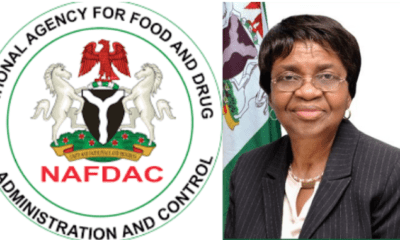
The National Agency for Food and Drug Administration and Control (NAFDAC) has uncovered an illegal factory producing counterfeit Goya oil .
The agency has also dismantled a large syndicate involved in the production and distribution of fake alcoholic beverages in Lagos, warning that the activities pose serious threats to public health.
Addressing journalists at a press briefing in Lagos on Friday, the Director of Investigation and Enforcement at NAFDAC and Chairman of the Federal Task Force on Fake and Substandard Products, Mr Martins Iluyomade, said the discoveries were made during routine surveillance and enforcement operations conducted over the past few weeks.
According to him, NAFDAC operatives uncovered an illicit production site within the Oke-Arin Market area of Lagos, where fake Goya oil was being locally manufactured and packaged for sale.
“The genuine Goya oil is imported into Nigeria through a reputable company, and original products are still in circulation. However, we discovered that some individuals were faking the product and producing it within the market,” Iluyomade said.
He explained that the counterfeit oil was produced by burning palm oil and adding chlorine, using crude equipment such as stoves, before refilling and repackaging the mixture into empty containers.
Iluyomade warned Nigerians, particularly churches and prayer houses where the oil is commonly used, that original Goya oil is never packaged in plastic (PET) bottles.
“There is no original Goya oil in plastic bottles. The authentic product comes only in glass bottles. Anywhere you see it being sold in PET bottles, report it to the nearest NAFDAC office,” he cautioned.
He further expressed concern over the growing use of fake anointing oils in religious settings, describing the practice as dangerous.
“Some people even drink anointing oil. You are not drinking anointing oil; you are drinking poison,” he warned.
Iluyomade said NAFDAC’s enforcement strategy focuses on stopping production at the source rather than penalising unsuspecting traders.
“Once we stop production, whatever is already in circulation will naturally dry up. We do not want to compound the problem of market women and others who may not be aware. But for the producers, it is the end of the road,” he stated.
He appealed to religious organisations to cooperate with the agency to prevent the sale or use of the counterfeit product within their premises.
In a related development, Iluyomade revealed that NAFDAC also dismantled a major syndicate involved in the counterfeiting of alcoholic drinks in Lagos, describing the practice as widespread and highly lucrative for criminals.
“The faking of alcoholic drinks has become seriously endemic in Nigeria because it is one of the easiest products to counterfeit,” he said.
He disclosed that a suspect, identified as Mr Moses Nelson, was arrested in the Badagry area of Lagos and has since been charged to court. According to him, a wide range of fake alcoholic brands were recovered from the suspect’s residence, with the syndicate operating a distribution network supplying major markets across Lagos.
NAFDAC has warned distributors and retailers against patronising unauthorised suppliers, reiterating its commitment to protecting public health and ridding the market of fake and substandard products.
-
 News2 days ago
FG bans meter charges, warns DisCos, installers of prosecution
-
News1 day ago
FG signs concession agreement for Enugu Airport
-
News1 day ago
Blackout as National grid collapses first time in 2026
-
News2 days ago
TRUMP: Terrorists killing thousands of Nigerian Christians are being “annihilated” by US
-
News1 day ago
Three children burnt to death while grazing cattle
-
News2 days ago
Tinubu approves posting of four Ambassadors-designate
-
Politics1 day ago
Fubara is APC leader in Rivers, Wike has no party authority — Bwala
-
News22 hours ago
NAFDAC uncovers fake Goya oil factory, Alcohol counterfeit syndicate