
News
Peter Obi to Nigerians: 2023 is your opportunity to take back Nigeria

The presidential candidate of the Labour Party, Peter Obi, has appealed to all Nigerians, especially the youths, to see the 2023 election as an opportunity to take back their country and more importantly shun every form of primordial sentiments.
Obi made the remarks while delivering an speech at the Success Conference 2022, at the Citi-Hub, Km 50, Abakaliki, Ebonyi State.

The speech in full:

“It gives me great pleasure and honour to join you all and to extend a warm welcome to everyone attending this crucial conference. This conference is both timely and highly topical as it brings together our vibrant youths to reminisce on their roles, as key agents of change, in advancing national development. I want to express my sincere gratitude to the conference’s organizers for the excellent job they are doing to encourage and uplift our young people to realize their potential as leaders in the development of our beloved nation.

It is imperative that, as this conference draws closer to the most critical period ahead of the 2023 elections, all young people of voting age obtain their PVCs and make sure they cast their ballots for qualified, competent, and trustworthy candidates at the local/state and national levels. Governments at all levels have a responsibility to provide an environment that allows people to achieve their life goals, including those related to infrastructure, health, education, and security of life and property. Good leaders bring about the good life; terrible leaders bring about destruction.
Without a doubt, the new administration taking office in 2023 will face a plethora of domestic and external challenges provoked by cumulative leadership failures over the years. These challenges have threatened our national unity, social cohesion, and citizens’ trust in the government and impeded our economic outcomes. Our country is currently one of the most miserable in terms of poverty rate, number of out-of-school children, infant and under-5 mortality rate, life expectancy, and a host of others. All these problems, though difficult, are not unsolvable.
Permit me to say that Nigeria is not bereft of good ideas and plans that will move the country forward. However, the institutional weaknesses and lack of political will to implement them are undermining our development efforts. With the right leadership with political will and commitment to addressing these problems, a new Nigeria, where everybody including the most vulnerable and excluded group like youths, women, and children will become the key stakeholders in the decision-making process, is possible.
I, therefore, reiterate my commitment to a purposeful leadership that draws its strength from all Nigerians, particularly the youths, in policy formulation and administration. The overall task of our leadership in 2023 is to streamline governance and ensure that it is responsive, transformative, and effective. We will demonstrate that good governance is all about providing the needed services to the people. If elected the next president of Nigeria, youths would be the main proponents of my main agenda to transform Nigeria from a consuming nation to a producing nation. The two main components of this agenda are human capital development and finance. Incidentally, the central goal of today’s conference is to improve the quality of human capital. Thus, under my leadership, the Federal Government will prioritise the ability of our educational system to produce the necessary skilled labour force that coincides with the 21st-century labour market demand, alongside providing entrepreneurial education at all levels. In addition, given the role of health in reinforcing education in the measure of productivity, my leadership will pay serious attention to the health system by ensuring that at least 100 million poor Nigerians have access to free medical services through an integrated health insurance scheme.
With respect to finance, the lack of government-backed sizeable venture capital funds is a significant adverse factor in the finance mix for SMEs and young entrepreneurs at the grassroots level. If elected, we intend to create a professionally managed SME Equity Fund within the first year of office with the goal of promoting the development of at least one value-added industry that will utilize the local raw material supply, be it agricultural or mineral, in every local government in Nigeria. our collaboration with global organizations like UNIDO and Afrexim Bank will ensure that the goods from these local enterprises will be of export grade.
In conclusion, I wish to appeal to all Nigerians, especially the youths, to see the 2023 election as an opportunity to take back their country and more importantly shun every form of primordial sentiments. The 2023 election should be based on competence, capacity and commitment to doing the right thing and not on ethnicity/tribe and religion since the high cost of living, insecurity and other problems that are facing us have no discrimination against ethnicity/tribe and religion. Finally, I wish to thank the organisers once again for inviting me.

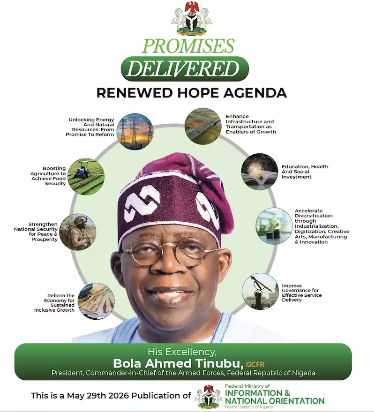

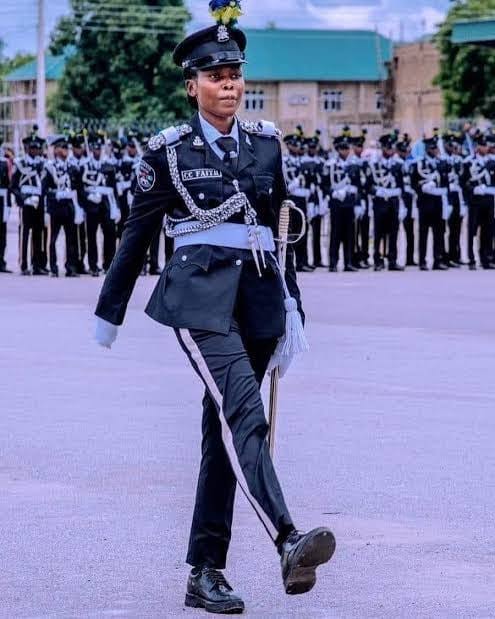
The National Economic Council (NEC) has approved an additional ₦130 billion for the rehabilitation and upgrading of police training institutions across Nigeria, bringing the total funding commitment to ₦230 billion ahead of the proposed establishment of state police.
The fresh allocation is expected to accelerate the renovation of police colleges, upgrade training facilities and strengthen the capacity of the institutions to accommodate increased recruitment and training requirements.
The Council also endorsed two major development programmes involving proposed World Bank financing of $850 million to strengthen disaster preparedness, climate resilience and early childhood development across the country.
These decisions were reached at the 162nd virtual meeting of the NEC, held on Monday and presided over by Vice President Kashim Shettima.
The Council had approved an initial ₦100 billion for the rehabilitation of police training institutions last October, following the establishment of an ad hoc committee on the recommendation of President Bola Ahmed Tinubu.
Presenting an update at the meeting, Enugu State Governor Peter Mbah, who chairs the NEC Ad-Hoc Committee on Police Training Institutions, disclosed that rehabilitation work was ongoing at 13 locations nationwide, with approximately 30 per cent of the work completed.
He assured the Council that the additional ₦130 billion would accelerate the ongoing projects, improve training facilities and strengthen the capacity of police institutions to meet the country’s growing security needs.
The intervention is also expected to support preparations for the proposed recruitment of 50,000 police personnel and provide the necessary training infrastructure ahead of the anticipated transition to a decentralised policing system.
Economy records growth, but household pressures persist
Meanwhile, the Minister of Finance and Coordinating Minister of the Economy, Taiwo Oyedele, presented an update on the country’s economic performance, reporting improvements in several key indicators.
Oyedele said Nigeria’s real Gross Domestic Product (GDP) grew by 4.43 per cent in the second quarter of 2026, compared with 4.23 per cent in the corresponding period of 2025.
He also disclosed that inflation had declined for the fifth consecutive month to 14.06 per cent in October 2026, its lowest level since September 2020, while external reserves stood at $54.87 billion as of November 12, 2026.
According to the minister, Nigeria’s trade surplus increased from ₦10.2 trillion in the first half of 2025 to ₦20.1 trillion in the corresponding period of 2026.
He added that net revenue distributed through the Federation Account Allocation Committee (FAAC) rose by 44 per cent, from ₦15.2 trillion in 2024 to ₦21.9 trillion in 2025.
However, the minister acknowledged that the improving economic indicators had yet to translate sufficiently into relief for households and businesses, particularly in food prices, electricity costs, access to affordable credit and employment opportunities.
He expressed concern that food inflation remained elevated at 19.13 per cent in October, while high lending rates and energy costs continued to put pressure on businesses and household incomes.
NEC considers $850m World Bank-supported projects
The Council also considered two memoranda on disaster management and early childhood development presented by the Minister of Budget and Economic Planning, Senator Atiku Bagudu.
The first concerned the proposed $350 million Accelerating Resilience through Investment Systems and Engagement (ARISE-Nigeria) Project, a six-year World Bank-supported programme designed to strengthen Nigeria’s capacity to anticipate, prepare for and respond to floods, droughts, fires and other natural disasters.
The programme is expected to improve emergency operations centres, early warning systems, weather monitoring and disaster response financing at both federal and state levels.
Between five and 10 states are expected to participate in the initial phase, with selection based on exposure to disaster risks, institutional readiness and commitment to emergency preparedness.
The second memorandum concerned Nigeria’s State-Led Early Childhood Development Programme, which seeks to improve children’s access to healthcare, nutrition, early learning and protection services across the 36 states and the Federal Capital Territory.
The programme is expected to receive funding through a proposed $500 million World Bank financing arrangement, with the Global Financing Facility indicating potential additional grant support of $30 million.
Under the initiative, early childhood development hubs will link primary healthcare facilities with childcare services, preschool education and other essential social services, particularly in underserved communities.
State governors are expected to provide leadership in implementation, resource mobilisation and accountability, while existing institutions will coordinate service delivery.
NEC seeks stronger national identity registration
On the proposed National Identity Management Commission (NIMC) Act 2026, the Council called for stronger collaboration between the commission and state governments to accelerate the registration of Nigerians and improve the integration of the National Identification Number (NIN) into public services.
The initiative is expected to strengthen public service delivery, improve tax administration, eliminate duplicate records and reduce fraud in government payrolls, pension administration and social intervention programmes.
The Council also urged state governments to accelerate identity registration and data capture to ensure wider coverage of the national identity system.
Shettima calls for stronger institutions
In his opening remarks, Vice President Kashim Shettima said Nigeria’s economic future and the long-term success of President Bola Tinubu’s reforms depended on building strong institutions and strengthening cooperation between federal and state governments.
He stressed the need for ministries and state governments to address practical responsibilities while considering the interests of citizens affected by government policies.
Shettima said: “While His Excellency, President Bola Ahmed Tinubu, GCFR, makes the difficult reforms to stabilise the economy, we must all participate in establishing institutions capable of sustaining the benefits of those reforms. This requires ministries and States to settle practical responsibilities without losing sight of the people affected. To achieve this, we must cooperate.
“We must allow a sound practice in one jurisdiction to inform decisions elsewhere, while respecting the differences in capacity and circumstance across the country. The quality of our cooperation will shape the inheritance we leave.”
The Vice President urged Council members to consider the needs of future generations when taking decisions, stressing that the quality of governance and intergovernmental cooperation would determine the country’s institutional legacy.
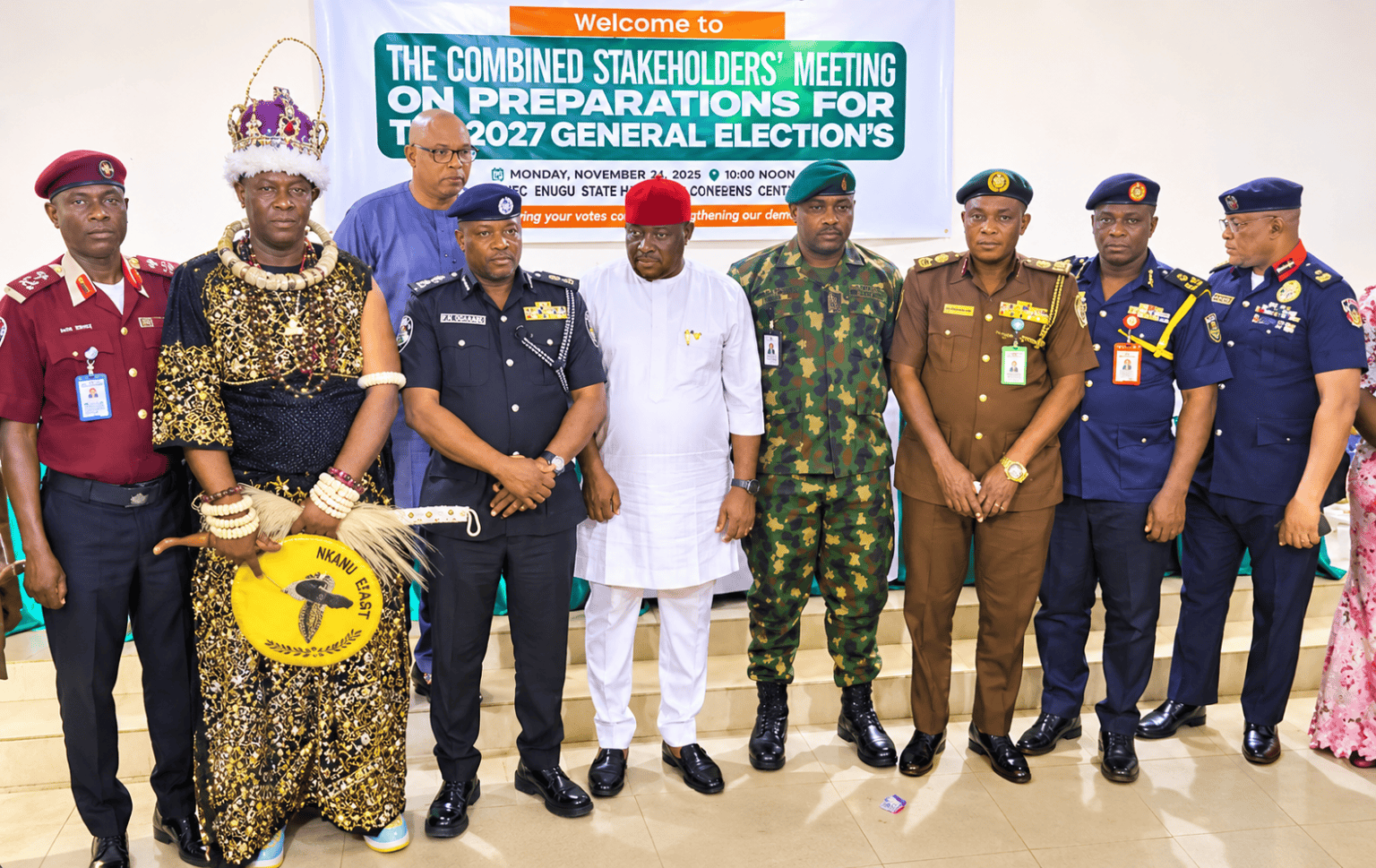
The Independent National Electoral Commission (INEC) has announced plans to conduct a mock accreditation exercise in 520 polling units across Enugu State as part of preparations for the 2027 General Elections.
The exercise, scheduled for Saturday, November 28, will cover two polling units in each of the 260 registration areas in the state.
The Resident Electoral Commissioner (REC) in Enugu State, Dr Chukwuemeka Chukwu, disclosed this on Monday during the Combined Stakeholders’ Meeting on Preparations for the 2027 General Elections held in Enugu.
Chukwu said the nationwide exercise was designed to test the functionality and operational readiness of the commission’s accreditation technology and election-day procedures ahead of the 2027 polls.
He explained that INEC would deploy 1,040 personnel for the exercise, with two officials assigned to each of the 520 selected polling units.
According to him, the arrangement would ensure adequate personnel coverage, effective coordination and a comprehensive assessment of the commission’s technological and operational capacity.
The REC called on political parties, civil society organisations and the media to support the exercise and sensitise voters in the selected communities.
On capacity building, Chukwu disclosed that the commission had concluded a three-day training programme for Electoral Officers (EOs) and Assistant Electoral Officers (AEOs), held between November 16 and 18.
He said the training was aimed at strengthening the officers’ capacity in election planning, coordination, implementation and compliance with established electoral guidelines.
He added that the programme also emphasised professionalism, neutrality, discipline and accountability in the discharge of their responsibilities.
Chukwu further disclosed that INEC held a meeting with the Inter-Party Advisory Council (IPAC) on November 20 to discuss preparations for the 2027 elections and strengthen cooperation with political parties.
He said the commission also organised an Electoral Risk Management Sensitisation Workshop on October 29 to familiarise stakeholders with its Electoral Risk Management Framework and strategies for identifying and mitigating potential electoral threats.
On inclusive participation, the REC said INEC had continued to organise sensitisation programmes targeting persons with disabilities, women and youths.
He disclosed that 540 women drawn from the 17 local government areas of the state had already participated in sensitisation workshops organised by the commission.
Speaking at the meeting, the Commissioner of Police, Enugu State Command, CP Fidelis Ogarabe, who is also the Co-Chairman of the Election Security Committee, assured INEC and residents of the state of adequate security for all electoral activities.
Ogarabe said security agencies were fully prepared to provide protection before, during and after the 2027 General Elections.
“Security agencies are always ready. We are assuring INEC and residents of the state of adequate security before, during and after the elections.
“We are ready; call on us and tell us the security challenges and we will resolve them on time,” he assured.
Also speaking, the Chairman of the Enugu State Traditional Rulers’ Council, Igwe Samuel Asadu, urged INEC to intensify public enlightenment and awareness campaigns on its programmes, particularly those directly affecting residents at the grassroots.
Asadu stressed the need for increased sensitisation on the collection of Permanent Voter Cards (PVCs), the forthcoming mock accreditation exercise and the importance of widespread participation in the electoral process.
He also called for more frequent engagement with stakeholders, noting that traditional institutions could help mobilise and encourage residents to participate actively in the elections.
The stakeholders’ meeting was attended by representatives of political parties, security agencies, traditional and religious institutions, civil society organisations, organisations of persons with disabilities, the media, INEC heads of departments and electoral officers across the state.
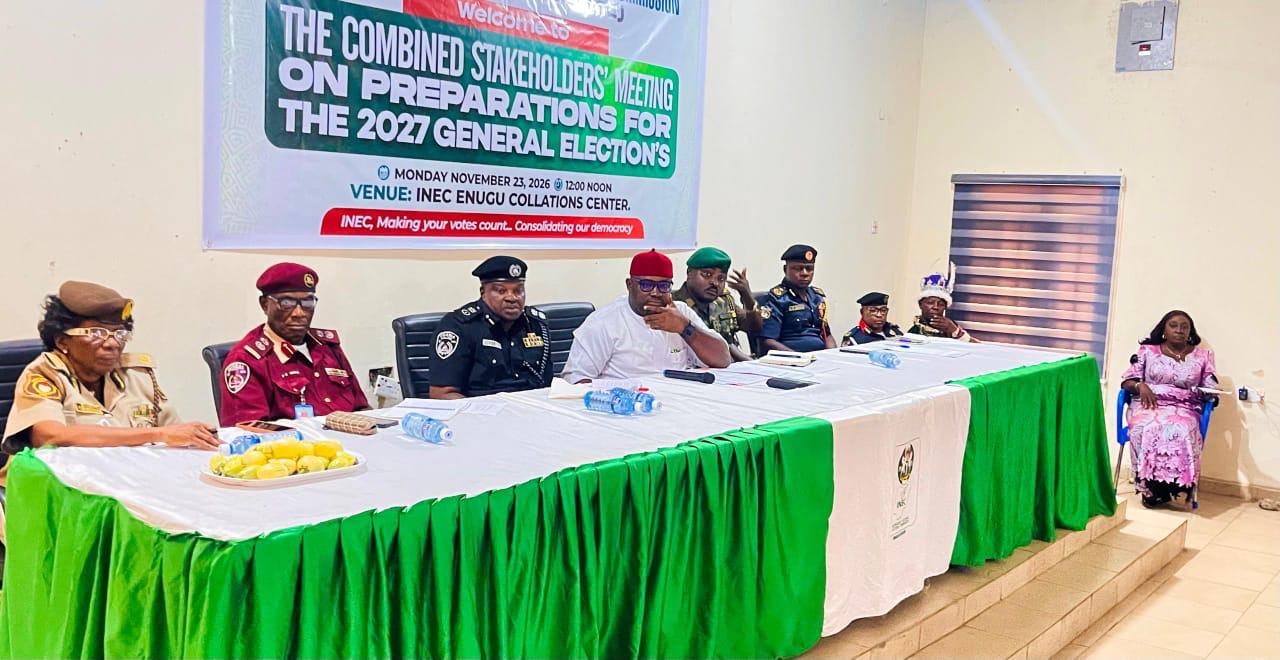
The Enugu State Police Command has reaffirmed the readiness of the Police and other security agencies to provide adequate security before, during and after the 2027 general elections.
The Commissioner of Police, Enugu State Command, CP Fidelis Ndubuisi Ogarabe, gave the assurance on Monday, November 23, 2026, during the Independent National Electoral Commission (INEC) Combined Stakeholders’ Meeting held at the Commission’s State Headquarters, Independence Layout, Enugu.
Ogarabe, who spoke in his capacity as Co-Chairman of the Inter-Agency Consultative Committee on Election Security (ICCES), urged residents, particularly eligible voters, to conduct themselves peacefully and avoid actions capable of undermining the electoral process.
He also called on members of the public to support security agencies by providing credible and timely information that could assist in preventing threats to the electoral process and ensuring peaceful, secure and credible elections.
Earlier, the INEC Resident Electoral Commissioner in Enugu State, Dr Chukwu Chukwuemeka, in his welcome address, highlighted the Commission’s ongoing preparations for the 2027 general elections.
He listed the collection of Permanent Voter Cards (PVCs) and the nationwide Mock Accreditation Exercise scheduled for Saturday, November 28, 2026, among the key activities lined up by the Commission.
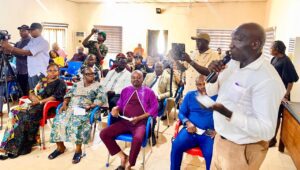
The REC also addressed questions and concerns raised by participants during the interactive session.
The meeting attracted heads of security agencies, political party leaders, the Chairman of the Enugu State Traditional Rulers Council, HRM Igwe Samuel Asadu, the State Coordinator of the National Youth Service Corps (NYSC), leaders of town unions, Presidents-General of communities across the state, media representatives, INEC field officers and other stakeholders.
The engagement provided an opportunity for electoral stakeholders to discuss preparations, identify potential security concerns and strengthen collaboration towards the successful conduct of the 2027 general elections in Enugu State.
-
 News3 days ago
2027: Obi Urges Nigerians to ‘Sacrifice One Day for Nigeria to Be Good Again’
-
News2 days ago
Pomp, Pageantry as 37th NAFEST Opens in Enugu; Mbah Champions Cultural Economy
-
News2 days ago
2027: ‘I’ll Defeat Natasha Without Spending a Dime,’ Yahaya Bello Boasts, Calls Dino Melaye Noise Maker
-
Editorial2 days ago
Fake Drugs: NAFDAC Seeks Death Penalty as Counterfeit Products Flood Nigerian Markets
-
News1 day ago
Police Take Over Fountain of Life Church as Jimmy Odukoya’s Leadership Crisis Deepens
-
News2 days ago
Abductions: 640 Nigerians Still in Captivity as Families Cry Out Over Government Silence
-
News1 day ago
South-East Policy and Impact Conference to chart pathway from economic reforms to regional prosperity
-
News1 day ago
2027 Elections: Controversy Trails Inauguration of 200-Man Security Outfit by Umahi’s Son