The International Press Centre (IPC), Lagos, has urged journalists and online publishers to strengthen fact-checking, professional ethics, accountability and inclusive reporting ahead of the 2027 general elections.
The centre also called on media organisations to move beyond partisan political coverage and prioritise issues affecting citizens, including insecurity, unemployment, education, healthcare, electricity, transportation and access to public services.
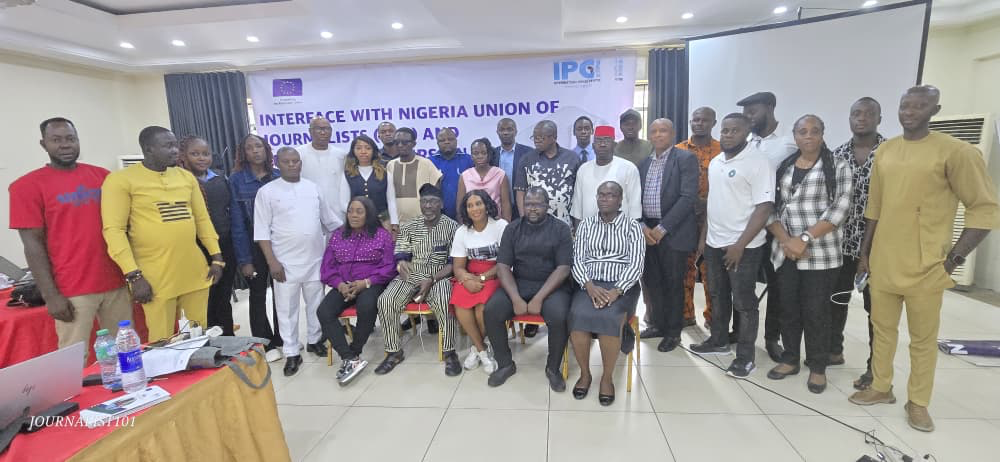
The call was made during a two-day media interface with the Nigeria Union of Journalists (NUJ) and editors and publishers on the Democratic Scorecard (Enugu State Edition), held from November 4 to 5, 2026, at BON Hotel Platinum, Independence Layout, Enugu.
The initiative was organised under the European Union Support to Democratic Governance in Nigeria (EU-SDGN) programme, aimed at strengthening the capacity of journalists in credible electoral reporting, combating corruption and promoting informed citizen participation in democratic processes.
Speaking at the workshop, the Executive Director of IPC, Dr Lanre Arogundade, represented by the programme manager, Stella Nwofia, stressed the need for journalists to prioritise accuracy over speed, uphold professional standards and hold political office holders accountable through credible and independent reporting.
He urged online publishers and editors to ensure inclusive electoral coverage by giving adequate attention to women, young people, persons living with disabilities, internally displaced persons and other underrepresented groups.
Arogundade observed that while digital platforms had expanded opportunities for information sharing and public participation, they had also accelerated the spread of misinformation, manipulated content, hate speech and divisive narratives.
He, therefore, urged online publishers to strengthen their fact-checking and verification skills, particularly when reporting politically sensitive issues, warning against the pressure to break stories at the expense of accuracy.
He maintained that fact-checking and verification must remain integral to responsible electoral journalism rather than optional additions to the profession.
The IPC executive director also emphasised the need to protect the safety and professional independence of journalists, insisting that media practitioners must be allowed to discharge their legitimate responsibilities without intimidation, harassment or unlawful interference.
In a presentation titled, “2027 General Elections in the Context of Democratic and Accountability Reporting: Scanning the Electoral Environment and Reporting Citizens’ Priority Concerns,” Professor Ifeoma Dunu, Director of UNIZIK Radio, Nnamdi Azikiwe University, Awka, challenged journalists to place citizens’ interests at the centre of electoral reporting rather than focusing predominantly on politicians and their activities.
Dunu observed that media coverage often gives prominence to political rallies, campaign promises and party differences, while critical issues affecting ordinary citizens receive insufficient attention.
She urged journalists to interrogate campaign promises, scrutinise government budgets, track the implementation of public projects and evaluate the performance of elected officials.
She identified insecurity, unemployment, education, healthcare, electricity, transportation and access to public services as key issues that should dominate the media agenda ahead of the 2027 elections.
The university don also highlighted the importance of monitoring the electoral, legal, political, institutional, economic, social inclusion, public service, security and information environments to ensure comprehensive electoral coverage.
Another presentation, delivered by Mr Olusola Oludiran, focused on fact-checking and the utilisation of digital tools in journalism.
Oludiran examined the growing challenge of misinformation, manipulated information and artificial intelligence-generated content, stressing the importance of verification and responsible dissemination of information in protecting public trust and the credibility of the media.
The workshop also examined the Democratic Scorecard as a tool for measuring democratic performance and strengthening accountability.
Participants were encouraged to scrutinise the obligations of public institutions, examine the management of public resources and budgets, monitor government promises against actual delivery and assess government interventions through measurable outcomes.
The engagement further emphasised the importance of community participation and sustained investigations into citizens’ concerns, urging journalists to translate public priorities into editorial decisions and consistent accountability reporting.
In her opening remarks, Nwofia acknowledged the importance of the capacity-building initiative, noting that the growing demand for speed and visibility in online publishing sometimes undermined accuracy.
She observed that many online publishers in Enugu were experienced journalists who had moved from established media organisations to establish their own platforms, making continuous professional development necessary.
She expressed optimism that the training would improve participants’ professional capacity, create better opportunities for online publishers in the state and strengthen their visibility in the national media space.
Nwofia urged participants to take the lessons seriously, share the knowledge acquired with their staff and incorporate the best practices into their daily newsroom operations.
Also speaking, the Chairman of the Corporate Online Chapel of the NUJ, Enugu State Council, Clinton Umeh, pledged that online publishers in the state would translate the lessons from the workshop into improved newsroom practices.
Umeh described the initiative as an important intervention for independent online media practitioners, many of whom had acquired years of experience in established media organisations before establishing their own platforms.
He acknowledged the intense competition for speed and visibility in digital publishing, noting that the pressure to break stories first could sometimes compromise accuracy.
He said the training would help participants consolidate their existing knowledge, improve their professional output and strengthen the visibility of Enugu-based online publishers.
Umeh particularly welcomed the opportunity for practitioners in the state to benefit from professional exposure and networking opportunities available to online publishers in major media centres such as Lagos and Abuja.
He assured the organisers that participants would put the knowledge acquired into practice and extend its benefits to their employees and other members of their respective organisations.
The NUJ chapel chairman also noted that independent online publishers largely depend on their capacity and productivity to earn a living, making professional competence and commitment essential to the sustainability of their media businesses.
He called for the continuation of similar interventions, stressing that opportunities to interact with media practitioners across the country would promote networking, collaboration and professional growth.
Arogundade, in his remarks, urged participants to make the engagement practical by sharing experiences from their respective media organisations, asking critical questions and developing ideas that would improve electoral reporting across print, broadcast and online platforms.
He said the success of the engagement should not be measured merely by the quality of discussions or the number of participants, but by the stories published, claims verified, citizens’ concerns amplified, accountability questions raised and professional standards upheld in the months leading to the 2027 elections.
He appreciated the NUJ Enugu State Council for supporting the engagement, as well as the resource persons who accepted the invitation to lead the deliberations. He also acknowledged the European Union for providing funding support for the project.
The Advocate reports that the initiative is expected to translate into stronger verification practices, more inclusive electoral coverage and sustained public-interest journalism as media organisations prepare for the 2027 general elections.