ADVOCATE SUNDAY DISCOURSE
By Tony Edike
As counterfeiters devise new ways to deceive consumers, the agency records hundreds of enforcement cases, thousands of product seizures and dozens of convictions, raising fresh concerns about the safety of medicines, food, water and everyday consumer products in Nigeria.
The growing circulation of fake, adulterated and substandard products in Nigeria has assumed an alarming dimension, prompting the National Agency for Food and Drug Administration and Control (NAFDAC) to demand tougher punishment, including life imprisonment or the death penalty, for manufacturers and distributors of counterfeit regulated products.

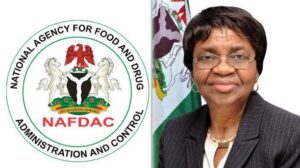
NAFDAC DG, Professor Mojisola Adeyeye
The agency’s Director-General, Professor Mojisola Adeyeye, recently described individuals involved in the production and distribution of fake products as “merchants of death”, arguing that their activities amount to a deliberate threat to the lives of millions of Nigerians.
Her demand comes amid renewed efforts by the agency to dismantle networks involved in the manufacture, importation and distribution of counterfeit medicines, adulterated food, contaminated water, fake cosmetics and other potentially dangerous consumer products.
The concern is that while NAFDAC continues to intensify its enforcement operations, those involved in the illicit business are equally devising new methods to evade regulatory authorities, exploit weaknesses in the supply chain and maximise profits at the expense of public health.
A disturbing picture of counterfeit products
The scale of the problem is reflected in NAFDAC’s enforcement statistics.
Between January and August 2026, the agency recorded 474 new cases, 821 product seizure entries and 213 raids nationwide.
Its Directorate of Investigation and Enforcement also reported 52 arrests, 179 establishments closed or sealed, 218 administrative sanctions and 295 concluded cases within the eight-month period.
The operations covered medicines, cosmetics, packaged water, drinks, food, medical devices and chemicals.
Cosmetics accounted for the highest number of seizure entries, with 401, followed by drinks with 215 and drugs with 112.
The figures demonstrate that the threat extends beyond counterfeit medicines to virtually every category of regulated product consumed by Nigerians.
In another surveillance exercise between May and July 2026, NAFDAC’s Post-Marketing Surveillance Directorate reportedly visited 5,738 facilities across the 36 states and the Federal Capital Territory, mopping up 7,210 brands of products considered non-compliant.
Food and water accounted for 3,633 products, while drugs and herbal products accounted for 2,459.
These figures provide an indication of the scale of regulatory concerns confronting the agency.
From fake medicines to counterfeit drinking water
One particularly disturbing dimension of the menace is the counterfeiting of products belonging to established and trusted manufacturers.
NAFDAC recently uncovered the activities of three companies allegedly involved in counterfeiting CWay dispenser water bottles.
According to Professor Adeyeye, the operators collected empty 19-litre bottles bearing the identity and branding of the legitimate water company, refilled them with water from unapproved production sources and reintroduced them into the market.
The counterfeit products were reportedly distributed to major hotels and supermarkets.
The development raises serious concerns about the safety of drinking water consumed in homes, offices, hotels, restaurants and other public establishments.
Unlike properly manufactured and regulated bottled water, water obtained from unapproved sources may not have undergone the necessary treatment, filtration and quality-control procedures.
Contaminated water can expose consumers to dangerous microorganisms and waterborne diseases, including cholera, typhoid and diarrhoeal infections.
The CWay incident also demonstrates how counterfeiters exploit the reputation of established brands to deceive unsuspecting consumers.
For many Nigerians, the appearance of a familiar brand on a product is enough to create confidence, without necessarily verifying where the product originated or how it was manufactured.
Fake toothpaste, medicines and cosmetics
The counterfeiting of everyday household products has also become a source of concern.
NAFDAC disclosed that it had investigated the production of counterfeit Oral-B and Colgate toothpastes and arrested individuals allegedly involved in the operations.
The agency also uncovered the counterfeiting of products bearing the Nivea and Listerine brand names during an enforcement operation at Igbudu Market in Warri, Delta State.
The operation, conducted by officers from NAFDAC’s Asaba Zonal Office with the support of the Department of State Services, the Nigerian Army and the market union, led to the seizure of suspected counterfeit cosmetics and other regulated products.
In a related warning, NAFDAC cautioned Nigerians against purchasing KY Jelly lubricant currently circulating in the market.
According to the agency, the product’s marketing authorisation holders confirmed that the last authorised supply was made more than five years ago. Consequently, any such product currently being sold should be treated as suspect.
Although the agency did not declare every product bearing the affected brand names counterfeit, the developments underscore the importance of verifying the authenticity and source of consumer products before purchase.
The danger associated with counterfeit cosmetics and personal-care products is particularly worrying because such products are applied directly to the skin or used in sensitive parts of the body.
Where their ingredients, manufacturing conditions and safety standards are unknown, consumers may be exposed to harmful substances, contamination, skin reactions and other health complications.
The deadly consequences of fake medicines
Perhaps the most dangerous aspect of the counterfeit products business is the circulation of fake and substandard medicines.
Medicines are manufactured to treat specific illnesses, control medical conditions and save lives. However, when counterfeiters introduce products containing the wrong ingredients, inadequate quantities of active substances or harmful contaminants, the consequences can be devastating.
A patient who purchases a fake antimalarial drug, for instance, may continue to suffer from malaria because the medicine does not contain the required active ingredients.
Similarly, counterfeit antibiotics may fail to treat bacterial infections, allowing illnesses to worsen and potentially contributing to antimicrobial resistance.
The consequences can be particularly severe for children, pregnant women, elderly people and patients battling serious medical conditions.
There is also the danger of patients losing confidence in genuine medicines after experiencing treatment failures caused by counterfeit alternatives.
In some cases, victims may spend additional money treating complications arising from the consumption of fake medicines, thereby worsening the financial burden on families already struggling with the rising cost of healthcare.
The business is therefore not simply an economic crime. It is a serious public health threat capable of causing avoidable illnesses, permanent injuries and deaths.
NAFDAC moves beyond seizures to convictions
In defending its enforcement record, Adeyeye disclosed that NAFDAC had secured 64 convictions against individuals involved in counterfeiting across the country.
The offenders reportedly received prison sentences ranging from one to seven years without an option of fine.
The agency also recalled its major enforcement operations between February and March 2025 in Idumota, Lagos; Aba, Abia State; and Onitsha Bridgehead, Anambra State.
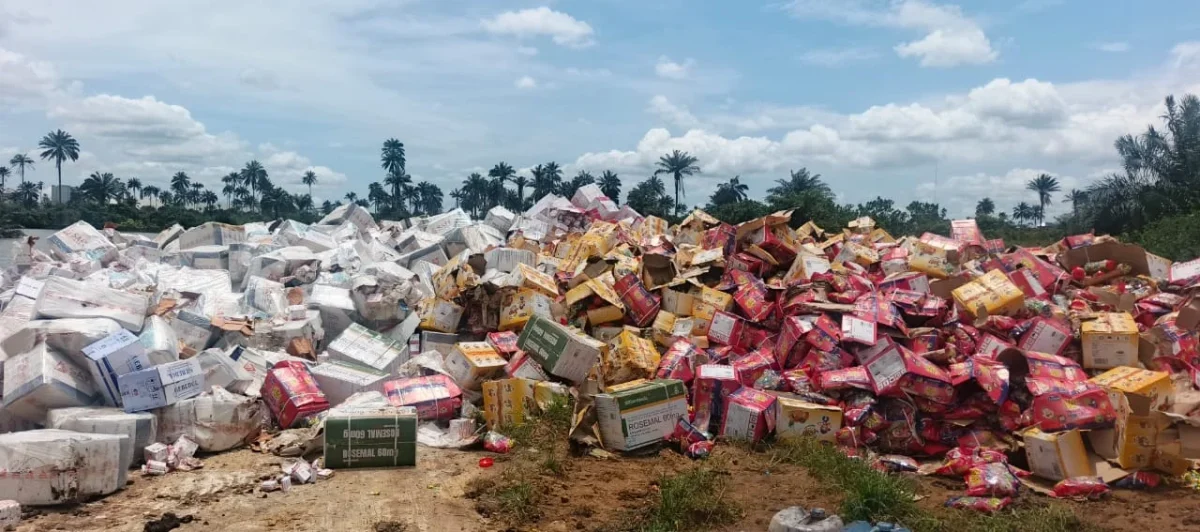
Those operations resulted in the seizure and destruction of more than 137 truckloads of counterfeit and substandard products valued at over N1.5 trillion.
In February 2026, NAFDAC also destroyed fake, expired, counterfeit and banned medicines worth more than N15 billion in Ibadan, Oyo State.
The products included Analgin, co-codamol, codeine syrups, tramadol, oxytocin and expired vaccines.
Another destruction exercise in Kuje, Abuja, in March 2026 involved counterfeit medicines and other regulated products valued at N1.8 billion.
At the Lagos Trade Fair Market in February 2026, the agency seized more than 10 million doses of counterfeit malaria medicines and cosmetics valued at approximately N3 billion.
Four suspects were reportedly arrested following the discovery of the products in a three-storey building allegedly used as a warehouse.
These operations indicate that the agency is increasingly focusing on the criminal networks behind the trade rather than limiting its activities to the removal of suspicious products from markets.
Why NAFDAC wants the death penalty
Against this background, Adeyeye has called for the introduction of tougher penalties for individuals who deliberately manufacture and distribute fake regulated products.
She argued that existing punishments are insufficient to deter individuals who continue to risk human lives for financial gain.
“The penalties should include death penalty or life imprisonment to people who produce and sell fake regulated products,” she said.
The NAFDAC boss disclosed that the agency’s enabling laws and other relevant legislation were undergoing review, expressing the expectation that the revised legal framework would provide stronger sanctions.
Her position is based on the argument that individuals who knowingly manufacture and distribute products capable of killing unsuspecting consumers should face punishment proportionate to the harm their activities can cause.
However, the proposed death penalty has also opened up a wider debate about criminal justice, proportionality of punishment and the effectiveness of severe sanctions in addressing economic crimes.
Under the existing Counterfeit and Fake Drugs and Unwholesome Processed Foods (Miscellaneous Provisions) Act, Cap C34, Laws of the Federation of Nigeria 2004, a person convicted of producing, importing, manufacturing, selling or distributing counterfeit, adulterated, banned, substandard or expired drugs, or unwholesome processed food, faces a fine of up to N500,000 or imprisonment for between five and 15 years, or both.
The law also provides punishment for the unauthorised sale of drugs in unlicensed premises.
Importantly, the death penalty is not the punishment prescribed under this existing law for these offences. NAFDAC’s proposal would therefore require legislative action before it could become an applicable punishment.
The challenge of enforcement and prosecution
While tougher legislation may serve as a deterrent, the fight against counterfeit products requires more than the introduction of harsher punishments.
One major challenge is the ability of regulatory authorities to identify and dismantle the entire supply chain, including manufacturers, importers, financiers, warehouse operators, distributors and retailers.
In many instances, the individuals selling counterfeit products in markets may not be the same people responsible for manufacturing them.
This makes intelligence gathering, investigation, laboratory analysis and successful prosecution particularly important.
NAFDAC must also strengthen its surveillance of production facilities, warehouses, distribution networks, border entry points and online marketplaces where counterfeit products may be advertised and sold.
The involvement of other security and regulatory institutions, including the Nigeria Police Force, Nigeria Customs Service, Department of State Services and relevant state authorities, is equally important.
Another concern is the possibility of regulatory compromise, inadequate monitoring and the continued operation of illegal production facilities despite repeated enforcement exercises.
For the proposed tougher penalties to achieve their intended purpose, investigations must be thorough, prosecutions must be successful and offenders must be held accountable regardless of their financial status or political connections.
Consumers must also become more vigilant
NAFDAC has repeatedly stressed that the fight against counterfeit products cannot be left entirely to government agencies.
Consumers have a responsibility to pay attention to the products they purchase and report suspicious items to the appropriate authorities.
Nigerians are advised to purchase medicines from licensed pharmacies and other authorised outlets rather than relying on roadside vendors or unverified online sellers.
They should also examine product packaging, registration numbers, manufacturing and expiry dates, batch numbers and seals before purchasing regulated products.
However, consumers must understand that the presence of a NAFDAC registration number does not, on its own, guarantee authenticity, as counterfeiters can reproduce the registration details of genuine products.
Product details should therefore be checked against NAFDAC’s official registration databases, including its Greenbook and NAPAMS platforms.
Suspiciously cheap products, damaged packaging, spelling errors, unusual changes in colour or texture and sellers unable to explain the source of their goods should also attract caution.
NAFDAC has urged Nigerians to report suspected fake and unsafe products through its official complaint channels.
The agency can be reached on 0800-1-623322 or through its official reporting channels.
Beyond death penalty: Nigeria needs a sustained war against counterfeiters
The growing circulation of fake products raises fundamental questions about the effectiveness of Nigeria’s consumer protection and public health regulatory systems.
How can a country guarantee the safety of its citizens when counterfeit medicines, questionable drinking water, fake cosmetics and adulterated food products continue to find their way into markets?
How can legitimate manufacturers compete when criminal operators can exploit established brands, avoid quality-control expenses and make enormous profits from products that may endanger human lives?
And how many Nigerians have unknowingly consumed counterfeit products without realising that what they purchased could expose them to serious health risks?
These are questions that require urgent answers.
NAFDAC’s demand for life imprisonment or the death penalty reflects the seriousness of the threat confronting the country. However, the ultimate measure of success will not be the severity of the punishment announced but the agency’s ability to prevent dangerous products from reaching consumers, dismantle the criminal networks behind their production and distribution, and secure convictions against those responsible.
Nigeria must also strengthen public awareness, support genuine manufacturers, improve product traceability and ensure that regulatory agencies have the resources and institutional independence required to carry out their responsibilities.
Ultimately, the fight against fake products is a fight to protect human lives. No Nigerian should have to worry that the medicine purchased from a pharmacy, the water served in a hotel, the toothpaste used by a child or the food consumed by a family could become a source of illness or death.
The business of counterfeiting must no longer be treated as an ordinary commercial offence. It is a threat to public health, consumer confidence and national development that demands sustained action from government, industry stakeholders and citizens.
• The Advocate