News
Presidential aide blocked Yar’Adua’s letter to NASS to make me acting president —Jonathan


Former President Goodluck Jonathan has made startling revelations about the constitutional crisis that engulfed Nigeria during the late President Umaru Musa Yar’Adua’s prolonged illness, alleging that a top presidential aide deliberately withheld a crucial handover letter from the National Assembly.
In an interview with Rainbow Book Club, trending on Saturday, Jonathan disclosed that Yar’Adua had written a formal letter to empower him as acting president before travelling abroad for medical treatment in 2010, but the aide entrusted with the document refused to submit it to lawmakers.

The former president said the aide’s action plunged the country into a constitutional crisis, leaving Nigeria without an acting president or commander-in-chief for months.
He explained that while he could perform executive functions as vice president, including presiding over Federal Executive Council meetings and approving ministerial memos, he lacked the constitutional authority to act as commander-in-chief without the formal letter.
He noted that the crisis forced the National Assembly to invoke the “doctrine of necessity,” empowering him to act as president without an official letter, a move he compared to the swift transition protocols in the US.

Jonathan said: “There’s always a balancing between North and South, Muslims and Christians. And Yar’Adua was a Northern Muslim, serving as president. He took over from a Southern Christian, Obasanjo, who ruled for eight years.
“Definitely the Northern Muslims wanted Yar’Adua to at least do eight years before power would return to the South, likely to another Christian. But his health issues came up and it was a problem. That’s why even allowing me to act as president became an issue.
“One year that Yar’Adua was going for the medical checkup. Actually, a letter was written. Of course, the constitution says that for the vice president to act, the president would send a letter to the Senate and the House of Rep informing them.
“That letter was written, but the person who the letter was handed over to, I will not mention the name to you now, was one of the aides of Yar’Adua, refused to submit the letter to the National Assembly. And Yar’Adua became so ill that he had no control of issues.
“So we had a country where the president was not available, and there was no acting president. Yes, as a vice president, you can take over the responsibilities of, some responsibilities of the president. You know the president of Nigeria has two main responsibilities.
“First, you are the chief executive of the country, so like a prime minister of a country. That, the vice president can assume, you don’t need any transfer. And I was doing that because we were having an executive council meeting, we were approving memos from ministers, so the government was going on.
“But there was no commander-in-chief. What is the second responsibility of the president of Nigeria, besides being the executive head of the country? And there’s nothing like acting commander-in-chief. Either you’re a commander-in-chief or not.
“But when you become an acting president, you are at the same time a commander-in-chief. So that was lacking, and no country allows that gap. A country like America, they don’t allow that gap at all.
“If an American president wants to, even if it’s a whitlow, that he requires an extension, that he will be off for five minutes, he will hand over to the vice president before that procedure. Immediately he regains consciousness, he takes over. But we stayed for some time.
“And that led to what they call the doctrine of necessity. When the National Assembly felt that the country was in a situation where it was not expected, they now have to initiate this doctrine of necessity. And they now made me to act as a president without a letter from Yar’Adua.”
Yar’Adua died in May 2010 after months of illness, and Jonathan subsequently completed his term before winning the 2011 presidential election.



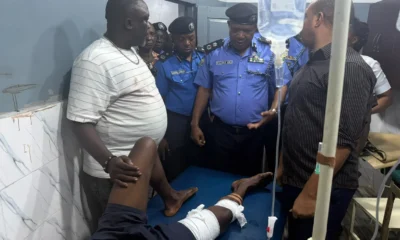






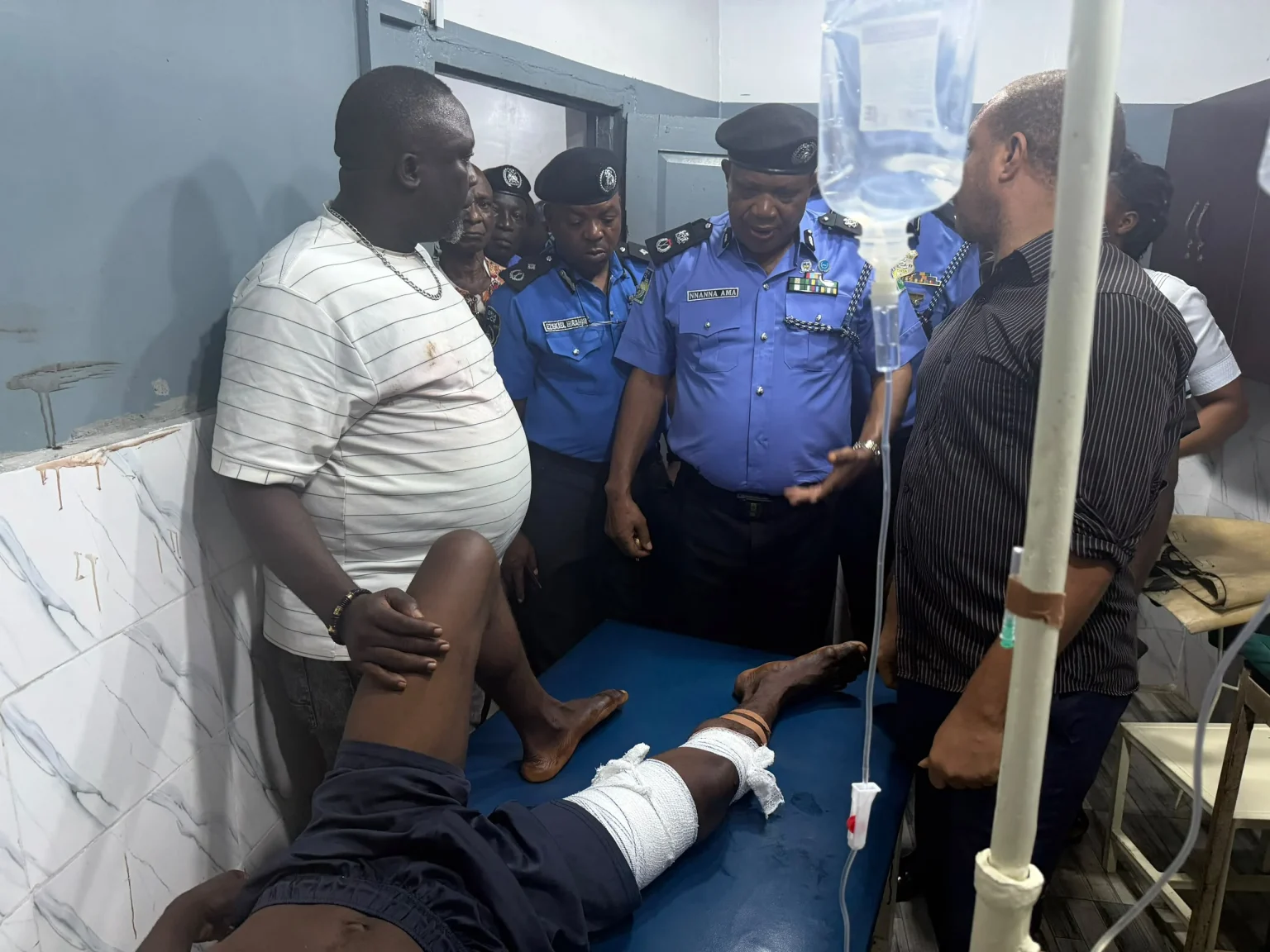
Two persons sustained gunshot injuries on Wednesday during an attempted arrest by police officers at the River Niger Head Bridge, Onitsha, Anambra State, causing panic and disrupting vehicular and pedestrian movement in the area.
The incident, which occurred around noon, caused gridlock along the busy Onitsha-Awka Expressway, as a confrontation reportedly broke out between the security operatives and some hoodlums.
Eyewitnesses near the scene said the victims were shot during the confrontation and later became unconscious before they were rushed to a nearby hospital.
One of the sources said, “The incident occurred this afternoon. It arose from a confrontation between the police officers and the victims. They were being stopped by the officers for questioning. In an attempt to arrest them, they resisted the arrest and the police fired some shots at them.
“The incident resulted in heavy skirmishes around the Bridgehead Market as people scampered to safety. The area remained in chaos until the arrival of another batch of police team. The victims were later rushed to a nearby hospital.”
Confirming the incident, the spokesperson for the Anambra State Police Command, SP Tochukwu Ikenga, said the incident occurred when the suspects allegedly resisted arrest, resulting in gunshot injuries.
Ikenga said the Commissioner of Police, Nnanna Oji Ama, had visited the scene and addressed the crowd, adding that an investigation had commenced to ascertain the circumstances surrounding the incident.
According to him, the CP subsequently visited the victims at the hospital, where he assured them of the command’s support and pledged to personally ensure that their medical expenses were covered.
He said, “The Commissioner of Police, Anambra State Command, CP Nnanna Oji, while addressing the crowd in Onitsha over the incident arising from a confrontation during an attempted arrest, stated that the immediate priority of the Command is to ensure that the victims recover fully.
“The incident occurred when suspects allegedly resisted arrest, resulting in gunshot injuries. The Commissioner of Police subsequently visited the victims at the hospital, where he assured them of the Command’s support and pledged to personally ensure that their medical expenses are covered.
“The CP further ordered a thorough and impartial investigation into the circumstances surrounding the incident, particularly the events leading to the discharge of the firearm.
“He stressed that the investigation will establish the facts and ensure that appropriate action is taken based on its findings.
“The Commissioner of Police appealed for calm and urged members of the public to remain peaceful and allow the investigation to run its course.”
Ikenga reiterated the command’s commitment to professionalism, accountability, respect for human life and the rule of law.
“Meanwhile, traffic and human movement around the Head Bridge area have been de-escalated, with free flow of vehicular and human movement now restored,” he added.
Three churches in Lagos State have been shut down by the Lagos State Environmental Protection Agency (LASEPA) over noise pollution as part of an enforcement exercise targeting 11 establishments in Agege and Mushin.
The affected churches are Holy Temple of Christ on Ayetoro Street, behind NIPCO Filling Station, Mushin; Christ Covenant Gospel Church, Western District, along Ikorodu Road, Fadeyi, Mushin; and Christ Apostolic Church, Oye Iyanu, located at Mushin Road, Church Bus Stop, Itire.
LASEPA carried out the enforcement operation on Tuesday after the affected establishments had received warnings and notices over environmental violations.
The agency said the establishments were given opportunities to correct the problems but failed to meet the required standards.
The shutdown of the three churches was linked to noise pollution, with the agency maintaining that religious activities and other operations must comply with environmental regulations to protect residents and maintain peace within communities.
LASEPA also sealed Akorohunfayo Central Mosque on Akorohunfayo Street, Fadeyi, Mushin, over noise pollution.
Other establishments affected included Biolarique Bakery Academy on Mushin Road, Mushin, which was sealed for failing to comply with the agency’s directives.
Tiles & Marbles on Silver Street, Olorunsogo, Mushin, was also shut over air pollution.
Five scrap yards operating in Agege and Mushin were equally sealed.
The facilities were accused of various environmental offences, including failure to provide evidence of an E-Waste Permit, environmental pollution and non-compliance with directives issued by LASEPA.
The affected scrap yards are Abubakar Scrap at Pipeline, Ifako-Ijaiye, Agege; Benjamin Scrap Yard on Ladoje Street, Oko Oba, Agege; Starlas and Sons Scrap Yard, also on Ladoje Street, Oko Oba, Agege; Jamin Scrap Yard at Jungle Bus Stop, Iju Road, Agege; and a Scrap Yard on Olu Aina Street, Daleko, Mushin.
LASEPA General Manager, Dr Babatunde Ajayi, said the agency would continue to monitor establishments across Lagos and enforce environmental regulations where operators fail to comply.
He urged religious organisations, business owners, facility operators, scrap dealers and other residents to obtain the necessary permits, follow environmental rules and take steps to prevent activities that could affect public health or the wellbeing of people living around their facilities.
The agency said further monitoring and enforcement exercises would continue across Lagos as part of efforts to maintain a cleaner and safer environment.

Governor Peter Mbah of Enugu State has approved the appointment of 23 Special Advisers and Senior Special Assistants to support his administration in various areas of governance.
The appointments, contained in a Public Service Announcement signed by the Secretary to the Enugu State Government, Prof. Chidiebere Onyia, on Wednesday, August 19, 2026, take effect immediately.
Nine of the appointees were appointed Special Advisers, while 14 were appointed Senior Special Assistants.
Among those appointed as Special Advisers are Hon. Chukwudi Ezinwa, Labour Union and Association Matters; Hon. Sunday Nnamani (Orlando), Special Duties; Mr. Williams Chukwu, Agriculture; Prince Afam Agana, Infrastructure Compliance; and Humphrey Onyima, Investment Strategy and Public Relations.
Others are Hon. Tony Ugwu, Rural Development; Chief Ernest Nweze, Party Coordination and Mobilisation; Hon. Emeka Onunze, Monitoring and Evaluation; and Mr. Robinson Odo (mni), Labour and Productivity.
Those appointed as Senior Special Assistants include Pastor Kenneth Asogwa (Ebube Muonso), Heritage and Community Relations; Pastor Tochukwu Ogbodo, Social Engagement; Barr. Lucky Chukwu, Public Affairs; Belonwu Nnaji, Cultural Orientation; and Hon. Steve Odo, Tourism.
Also appointed are Hon. Francis Ikewette Ede, Public Communication; Mr. Sunny Okafor, General Duties; Hon. Chinedu Okwu Otaka, Social Orientation and Mobilisation; Otaba Cosmas Ikechukwu, Protection of Public Utilities; Pius Okeagu, Assets Management; and Rt. Hon. Innocent Emeka Ugwu, Inter-Party Affairs.
The remaining appointees are Mrs. Eucharia Offor, Human Resource Management; Mr. Kenneth Oforma, Policy and Communication; and Kelvin Ede, Research and Strategy.
The state government said the appointments are effective immediately.
The new appointments are expected to strengthen the administration’s capacity across key sectors, including agriculture, infrastructure, investment, labour, rural development, public communication, tourism, human resources and community relations.
The full statement:
ENUGU STATE GOVERNMENT
OFFICE OF THE SECRETARY TO THE STATE GOVERNMENT
PUBLIC SERVICE ANNOUNCEMENT
The Governor of Enugu State, His Excellency, Dr. Peter Ndubuisi Mbah, has approved the appointment of the following persons as Special Advisers (SPAs) and Senior Special Assistants (SSAs):
1. *Hon. Chukwudi Ezinwa* — Special Adviser on Labour Union and Association Matters
2. *Hon. Sunday Nnamani (Orlando)* — Special Adviser on Special Duties
3. *Mr. Williams Chukwu* — Special Adviser on Agriculture
4. *Prince Afam Agana* — Special Adviser on Infrastructure Compliance
5. *Humphrey Onyima* — Special Adviser on Investment Strategy and Public Relations
6. *Hon. Tony Ugwu* — Special Adviser on Rural Development
7. *Chief Ernest Nweze* — Special Adviser on Party Coordination and Mobilisation
8. *Hon. Emeka Onunze* — Special Adviser on Monitoring and Evaluation
9. *Mr. Robinson Odo (mni) — Special Adviser on Labour and Productivity*
10. *Pastor Kenneth Asogwa (Ebube Muonso)* — Senior Special Assistant on Heritage and Community Relations
11. *Pastor Tochukwu Ogbodo* — Senior Special Assistant on Social Engagement
12. *Barr. Lucky Chukwu* — Senior Special Assistant on Public Affairs
13. *Belonwu Nnaji* — Senior Special Assistant on Cultural Orientation
14. *Hon. Steve Odo* — Senior Special Assistant on Tourism
15. *Hon. Francis Ikewette Ede* — Senior Special Assistant on Public Communication
16. *Mr. Sunny Okafor* — Senior Special Assistant on General Duties
17. *Hon. Chinedu Okwu Otaka* — Senior Special Assistant on Social Orientation and Mobilisation
18. *Otaba Cosmas Ikechukwu* — Senior Special Assistant on Protection of Public Utilities
19. *Pius Okeagu* — Senior Special Assistant on Assets Management
20. *Rt. Hon. Innocent Emeka Ugwu* — Senior Special Assistant on Inter-Party Affairs
21. *Mrs. Eucharia Offor* — Senior Special Assistant on Human Resource Management
22. *Mr. Kenneth Oforma* — Senior Special Assistant on Policy and Communication
23. *Kelvin Ede — Senior Special Assistant on Research and Strategy*
The appointments take effect immediately.
Signed:
Prof. Chidiebere Onyia
Secretary to the Enugu State Government
Wednesday, 19th August, 2026
-
 International8 hours ago
Canada invites 1,000 candidates to apply for permanent residence
-
News3 days ago
Sheikh Jingir: Christianity not subordinate to any religion in Nigeria — Pastor Enenche
-
Uncategorized8 hours ago
2027: Obi unfolds agenda as campaigns begin
-
News3 days ago
Wanted banditry kingpin, Ado Aleru, attends fresh ‘peace talks’ with Katsina community residents
-
News4 hours ago
BREAKING: Gunmen attack Adeleke’s convoy in Osogbo shortly after receiving Certificate of Return
-
News16 hours ago
Why I won’t apologise to Okpebholo — Davido
-
News13 hours ago
Access Bank asks court to recover N1.3bn stolen by Yahoo Boys
-
Opinion1 day ago
National Ranching Policy: Whose Land, Whose Ranches, Whose Future?