News
Obasanjo opted to leave Army when asked to succeed Murtala — IBB


Former Military President, Ibrahim Badamasi Babangida, has disclosed that former President Olusegun Obasanjo opted to leave the Army after he was asked to succeed former Head of State, Murtala Muhammed, following the failure of the 1976 coup that claimed Murtala’s life.
IBB made this disclosure in his autobiography, A Journey in Service while giving accounts of the events that followed the attempt to forcefully take over the Murtala’s military administration by a group of mutineers led by Lieutenant-Colonel Bukar Dimka.

Following Murtala’s death, IBB, in chapter 5 of his book entitled “The Murtala Muhammed Years,” narrated that the Supreme Military Council met the following day to discuss the succession plan but the council was divided over the choice of Obasanjo and Theophilus Danjuma, both of whom, at the time, were Lieutenant-Generals and most senior military officer.
IBB disclosed that though the pendulum of the SMC swung in Danjuma’s direction, he rejected the offer and suggested that Obasanjo, who was Murtala’s deputy and a ‘senior’ Lieutenant-General, should succeed Murtala.
According to him, Obasanjo, instead, opted to retire from the Army to pave the way for Danjuma’s ascension as Head of State, but such move led to a stalemate as Danjuma rejected the suggestion, insisting that Obasanjo should succeed the late Head of State.

IBB narrated on page 99 of his book: “The next day, the SMC met in Lagos to pick a successor to General Muhammed. We knew it would be either General Obasanjo or General Danjuma since, as Lieutenant-Generals, they were the most senior. As I recall, the pendulum swung in favour of General Danjuma at the start of the deliberations. Everyone present, including Obasanjo, thought Danjuma should take over.
“But somehow, Danjuma cast his lot with Obasanjo, insisting that as Muhammed’s deputy and a ‘senior’ Lieutenant-General, Obasanjo should succeed Murtala Muhammed. Obasanjo refused and offered, if I recall accurately, to retire from the Army to enable Danjuma to emerge as Head of State. There appeared to be a momentary stalemate. But that soon faded away. Faced with the insistence of Danjuma, everyone caved in, and Obasanjo accepted the challenge to succeed Murtala.
“With the question of the Head of State settled, the choice of substantive Deputy to Obasanjo and Chief of Staff (Supreme Headquarters) had to be resolved. I don’t recall that it was tabled before the SMC. But I suspect that General Danjuma, as Chief of Army Staff and ‘de facto’ deputy to Obasanjo during those early days, decided, presumably after consultations, to name Lt-Col. Shehu Musa Yar’Adua as Chief of Staff, Supreme Headquarters. And in an exercise that would have rattled a few within the military, especially those senior to him, Yar’Adua was promptly promoted to Brigadier and, subsequently, Major-General.”
The elder stateman also narrated how he disarmed late Dimka and other mutineers who had taken over the Radio House, adding that in the ensuing gunfight, Dimka escaped but his aide-de-camp, 2nd Lt Garba, was killed among other casualties.
“Meanwhile, I returned to General Danjuma to give him a report of my encounter with Dimka. Danjuma was furious. He ordered me back to the Radio House with a reiteration of his earlier instructions to ‘flush Dimka out of place immediately.
“I returned to Radio House with Chris Ugokwe, better equipped and prepared. By now, we had been joined by, among others, Mike Otuwa, James Ojokojo, John Shagaya and Jack Iketubosin.
“But first, I had to reach out to my friend and classmate, Sani Sami, who commanded the Brigade of Guards, to handle a difficult assignment. The Brigade of Guards’ barracks provided easy access to the Radio House. But again, I had to be careful since I wasn’t sure whether the Brigade was still loyal to the government.
“Sani Sami and I consulted and agreed that there should be minimum destruction. And that we would do what we were taught as cadets in situations involving a civilian population to ensure that civilians got out of the way and didn’t get injured.
“Once that was done, we moved in, cordoned off the area and engaged the mutineers in a gun battle. There were casualties in the ensuing armed confrontation, including Dimka’s ADC, 2nd Lt Garba. Also, one of the other vital plotters, Major Ibrahim Rabo, was arrested by Major Yomi Williams as he tried to escape and was promptly taken to the Bonny camp for interrogation. But, somehow, Dimka, quite inexplicably to this day, managed to escape from the scene unharmed,” IBB recalled.
He added that “Later that evening, the Federal government announced that the coup attempt had been quashed and declared seven days of national mourning in Murtala’s honour. The next day, February 14, General Muhammed was buried in Kano at a ceremony witnessed by thousands of mourners and members of the SMC, including Major-General Bisalla, who would later be implicated in the coup attempt.
“The national outpouring of grief and support following the assassination of Murtala was unprecedented. In his short six months in office, Murtala Muhammed had become a folk hero, endearing himself to many. Angry, grief-stricken students of the Universities of Ibadan, Benin and Lagos held violent street demonstrations in protest against his killers.
“Organised Labour movements, civil society organisations and even market women issued statements of solidarity for the Murtala Muhammed administration. Afterwards, the GOC of the 1 Division in Kaduna, Major-General Alani Akinrinade, issued a strong statement of support from Lagos for Murtala, and virtually all other military installations in the country followed suit by disassociating themselves from the coup.” (Sunday Tribune)



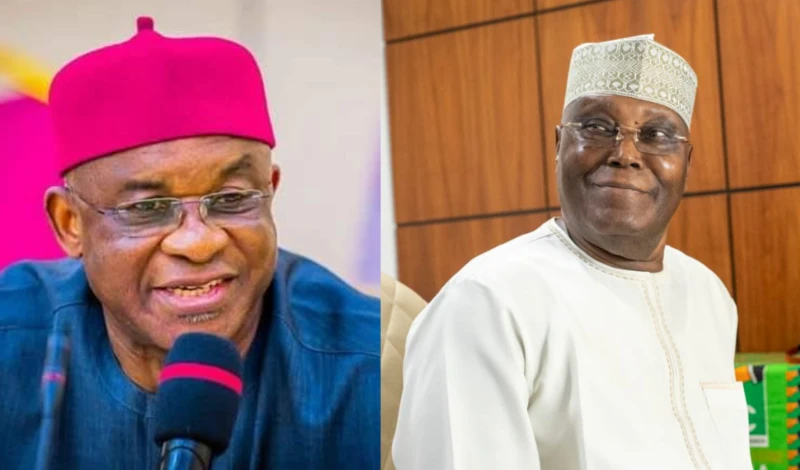
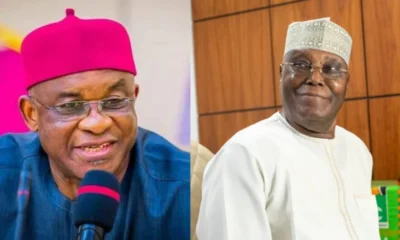
The Federal High Court in Abuja has nullified the leadership of the African Democratic Congress (ADC) led by Senator David Mark, declaring its actions and decisions on behalf of the party invalid.
The ruling also affects the emergence of former Vice President Atiku Abubakar as the ADC’s presidential candidate for the 2027 general election, as the party’s primary was conducted under the leadership declared unlawful by the court.
Atiku, whose name had earlier appeared on the list of presidential candidates published by the Independent National Electoral Commission (INEC), had reportedly picked former Rivers State Governor, Rotimi Amaechi, as his running mate.
Delivering judgment on Thursday, Justice Peter Lifu declared unlawful the caretaker committee led by Mark, which organised the party’s presidential primary that produced Atiku as its candidate.
The judgment followed a suit filed by Nafiu Bala Gombe, a former ADC National Deputy Chairman (North-East), who challenged the process through which the Mark-led group assumed control of the party.
Gombe argued that following the resignation of the former National Chairman, Chief Ralph Nwosu, he was constitutionally entitled to assume leadership of the party.
He consequently approached the court, seeking to invalidate the activities and decisions taken by the Mark-led leadership on behalf of the ADC.
The defendants in the suit, marked FHC/ABJ/CS/1819/2025, included the ADC, INEC, Senator David Mark, former Osun State Governor, Rauf Aregbesola, and Chief Ralph Nwosu.
The plaintiff also sought an order restraining Mark and Aregbesola from parading themselves as the party’s National Chairman and National Secretary, respectively, insisting that their appointments violated the ADC constitution and relevant provisions of the Electoral Act.
Justice Lifu upheld the plaintiff’s arguments and granted the reliefs sought.
The decision is expected to trigger fresh political uncertainty within the ADC, particularly as political activities intensify ahead of the January 16, 2027 presidential election.
However, the party has indicated its intention to challenge the judgment at the Court of Appeal.
The ADC National Welfare Secretary, Nkemakolam Ukandu, who was subsequently joined in the proceedings as an interested party, confirmed that the party would appeal the ruling.

The Ebonyi State Government has issued a 30-day ultimatum to occupants of a structurally defective building at No. 10 Aguluezechukwu Street, Abakaliki, directing them to vacate the premises over serious safety concerns.
The directive was issued by the Ministry of Capital City and Urban Planning following an on-site assessment led by the Commissioner, Richard Ugo Idike, alongside the Head of the Town Planning Department, Esther Nwite, other town planners and the ministry’s enforcement task force.
During the inspection, Idike expressed concern over visible structural defects and substandard construction, describing the building as an imminent threat to lives and property.
“The state government will not compromise on the safety of residents. Our ministry remains committed to ensuring that all structures across Ebonyi State strictly adhere to approved building codes and regulatory standards,” Idike said.
He explained that the 30-day notice would give the property owner time to undertake the necessary structural remedial works to prevent a possible collapse, while allowing occupants sufficient time to secure alternative accommodation.
“This notice is necessary to avert building failure and protect human lives. Occupants must make alternative arrangements before the expiration of the deadline to avoid tragic outcomes,” the commissioner added.
Idike said the ministry would intensify monitoring and enforcement activities across the state capital to identify unsafe structures, warning that properties found to be in violation of building regulations would face prompt regulatory action.
He said the exercise was in line with the urban renewal and public safety agenda of the Ebonyi State Government under Governor Francis Ogbonna Nwifuru to ensure an orderly and secure capital city.
The ministry’s task force also urged property owners, developers and builders across the state to adhere strictly to approved building plans, engage certified professionals and use quality construction materials to prevent structural failures.
Occupants of the affected building are expected to comply with the evacuation directive within the stipulated 30-day period.
The National Judicial Council (NJC) has suspended three judicial officers for one year without pay and cautioned eight others over various acts of misconduct, including unlawful detention of litigants, abuse of judicial powers and disregard for due process.
The Council, chaired by the Chief Justice of Nigeria, Justice Kudirat Kekere-Ekun, also approved warning letters for three judges following investigations into petitions concerning their handling of cases.
The decisions were taken at the NJC’s 112th meeting held on November 3, 2026.
The three suspended judicial officers are Justice Hannatu Mohammed Kabir of the Nasarawa State High Court, Grand Kadi Mohammed Sani Salihu of the Jigawa State Sharia Court of Appeal and Justice Sobere Biambo of the Rivers State High Court.
Justice Kabir was suspended for ordering the arrest and detention of a litigant for 58 days over alleged disobedience of a court order without initiating proper contempt proceedings or serving the mandatory Forms 48 and 49.
The Council also barred her from being considered for elevation for three years, holding that her actions violated the litigant’s right to a fair hearing.
Grand Kadi Salihu was suspended over his involvement in reopening a judgment delivered by the FCT Upper Area Court.
The investigation found that he exceeded his judicial authority by constituting a committee to review the judgment and subsequently assigning the matter to another judge, who received fresh evidence and delivered a new judgment.
The NJC held that the process amounted to an appeal against a valid judgment delivered by a court of competent jurisdiction.
Justice Biambo was sanctioned for ordering the arrest of litigants and imposing fines of N300,000 each in a civil dispute without following proper contempt proceedings or serving the prescribed forms.
Both Grand Kadi Salihu and Justice Biambo were also barred from consideration for elevation for three years.
The Council also cautioned Justice Kayode Agunloye of the FCT High Court over his handling of post-judgment garnishee proceedings in a suit involving First Bank of Nigeria Plc.
It found that he granted a fresh ex parte application for a Garnishee Order Nisi after an earlier similar application had been withdrawn and struck out, while other pending applications, including an application for a stay of execution, were awaiting hearing.
In another set of disciplinary decisions, the NJC approved warnings and cautions for other judicial officers, including Justice Bello Kawu, who granted interim bail to former Attorney-General of the Federation, Abubakar Malami, despite an existing remand order issued by another judge.
Justices Danjuma Oyigbenu and Isa Ebini Kana were also issued warning letters for delivering judgment in an appeal outside the constitutionally prescribed 90-day period.
Other judicial officers cautioned or placed on the Council’s Watch List include Justice Mohammed Zubairu of the FCT High Court, for making orders after being informed that an appeal had been entered at the Court of Appeal.
Justice C. A. Ogbuagor of the Enugu State High Court was also cautioned for continuing proceedings despite a pending appeal and an application for a stay of proceedings.
Similarly, Justice Chibuike Azuama of the Imo State High Court was cautioned for granting an ex parte garnishee order freezing the accounts of Puma Energy, a company that was not a party to the substantive suit.
The NJC also considered 35 petitions referred by its Preliminary Complaints Assessment Committees. It dismissed 24 for lack of merit, recommended four for further investigation and placed one in abeyance because the matter was sub judice.
The Council further directed that investigations should continue into a petition against Justice G. N. Ugbala of the Ebonyi State High Court despite the petitioner’s notice of withdrawal.
Meanwhile, the NJC recommended 28 candidates for judicial appointments across several states.
The recommendations include 24 judges for the High Courts of Kano, Ebonyi, Edo, Adamawa and Ogun States; a Grand Kadi for the Plateau State Sharia Court of Appeal; a Kadi for the Adamawa State Sharia Court of Appeal; and two judges for the Adamawa State Customary Court of Appeal.
The Council also directed the Imo State Judicial Service Commission to include the name of the Acting Chief Judge, Justice Ijeoma Agugua, in the shortlist for appointment as substantive Chief Judge, following a petition challenging her exclusion.
In addition, the NJC approved the retirement notifications of six judicial officers, including two Justices of the Supreme Court.
It also expressed condolences over the deaths of nine judicial officers between May and September 2026.
-
 News16 hours ago
BREAKING: Court Nullifies Atiku’s ADC Presidential Ticket, Removes David Mark-Led Leadership
-
News2 days ago
Forgery Trial: NYSC Disowns Nnaji’s Certificate, Identifies Four Discrepancies
-
News2 days ago
NDC Spokesperson Dismisses Concerns Over Peter Obi’s Health, Attributes Condition to Exhaustion
-
News23 hours ago
Presidency Reacts as NDC Opens Up on Peter Obi’s Health Challenge
-
News2 days ago
Police Rescue Seven Officers, Recover Five Bodies After Deadly Bandit Ambush in Zamfara
-
News23 hours ago
‘19 Years of Waiting!’ Enugu Pensioner Breaks Down in Joy as Mbah Pays Long-Overdue Gratuity [VIDEO]
-
News2 days ago
Gunmen Abduct Two Visually Impaired Persons in Plateau, Demand N50m Ransom
-
News1 day ago
Enugu Air to Begin Lagos–London Flights in December – Official