Education
NECO releases 2024 SSCE internal examination results


The National Examinations Council, NECO, has released the 2024 SSCE internal results.
The Registrar/Chief Executive of NECO, Professor Dantani Wushishi, disclosed this on Thursday while briefing newsmen at the organization’s headquarters in Minna, Niger State.

Wushishi also said that NECO blacklisted 21 supervisors in 12 states and de-recognized one school in Ekiti State for mass cheating in two core subjects and one science subject.
He said the supervisors were recommended for blacklisting due to poor supervision, aiding and abetting, abscondment, extortion, drunkenness, and negligence.
“Forty schools were found to have been involved in whole-school mass cheating in 17 states adding that the schools will be invited to the council for discussion after which appropriate sanctions will be applied,” he added.




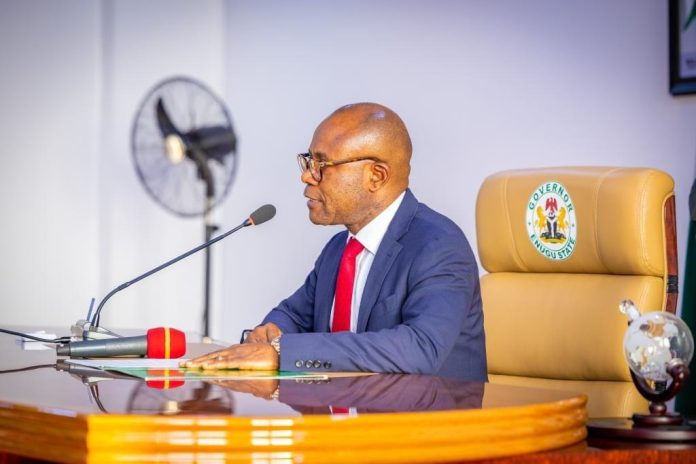
The approval was contained in a letter signed by the Secretary to the Enugu State Government, Prof. Chidiebere Onyia, dated August 11, 2026, and addressed to the Accountant General of the state.
According to the letter, the approval followed a report submitted by the Joint Action Committee on Trade Union (JACTU) in ESUT over issues surrounding a one-month strike ultimatum issued by the university’s unions.
The government also approved an across-the-board increase of N50,000 for all other categories of staff of the university.
The SSG directed the Accountant General to fully implement the approval of Governor Peter Ndubuisi Mbah.
The directive referenced an earlier Government House letter dated August 7, 2026, on the matter.
The letter, which was copied to the Vice-Chancellor of ESUT, Professor Aloysius-Michaels Okolie, for information and necessary action, is expected to take effect from September 1, 2026.
Education
Digital Economy Boost: NCC Leases Digital Industrial Park, Learning Centre to Enugu State Gov’t

…NCC’s CEO lauds Mbah’s Smart Schools, infrastructural, digital capacity initiatives
In a major boost to President Bola Tinubu’s digital economy agenda, the Nigerian Communications Commission (NCC) and the Enugu State Government, on Tuesday, sealed a strategic 15-year lease of the agency’s Digital Industrial Park and Learning Centre to the Enugu State Government.
The move would see the Enugu State Government take over and optimise the facilities located in the state capital as the Enugu Talent City and Artificial Intelligence (AI) Institute in line with the digital economy drive of the Governor Peter Mbah Administration.
Speaking during the lease agreement signing ceremony at Government House, Enugu, the Executive Vice Chairman/CEO of NCC, Dr. Aminu Maida, said the arrangement fully aligned with the Renewed Hope Agenda of the President Bola Tinubu Administration, and its ambition to grow Nigeria into a $1 trillion economy driven by productivity, innovation and private sector growth.

Maida stressed that Mbah had shown a clear agenda to build Enugu State into a digital economic powerhouse through deliberate investment in education, infrastructure, innovation and digital capacity, maintaining that the Mbah Administration was well positioned to advance the objectives for which these facilities were established.
“Our expectation is that this partnership will support Enugu’s ambition to become a leading destination for digital services, artificial intelligence, startup incubation, outsourcing, research and technology-enabled enterprise.
“We also expect these facilities to become spaces where young people acquire relevant skills, entrepreneurs transform ideas into viable businesses and local enterprises connect to opportunities beyond Enugu and Nigeria.
“These facilities were conceived as platforms for innovation, entrepreneurship and human capital development. They were designed to deepen digital skills, support startups, attract investment, create jobs and position Nigeria as a competitive destination for business process outsourcing, knowledge process outsourcing and other technology-enabled services.

“In essence, they were built not merely as physical assets, but as platforms for developing the people and enterprises that will power Nigeria’s digital economy.
“So, for us at the NCC, completing physical infrastructure is only the beginning. Buildings alone do not create innovation. People do. Ideas do. Entrepreneurs do. And partnerships bring all these elements together,” he said.
The NCC boss also commended Governor Mbah’s investment in Smart Green Schools, saying he was building an economy prepared for the future.
“Physical infrastructure is essential to development, but infrastructure alone cannot deliver lasting prosperity. This is what makes the Smart Green Schools initiative significant. It recognises that preparing our children for tomorrow must begin today. Technology-enabled schools, digital learning facilities, robotics and artificial intelligence laboratories demonstrate an understanding that education must evolve alongside technology. That is leadership with the future in mind.
“Investment in education and skills raises productivity, expands economic opportunity and strengthens the ability of individuals and businesses to create value.
“This is even more important today. Artificial Intelligence is reshaping industries. Automation is changing the nature of work. Digital technologies are transforming how governments serve citizens and how businesses operate,” he concluded.
Speaking, Governor Peter Mbah commended President Tinubu for recognising the centrality of the digital economy to the $1 trillion economy he seeks to build, as well as for understanding that much of that growth would come from the states.
He noted that AI would contribute about $20 trillion to the global economy by 2030, saying, “It is not a space you want your young ones to be missing.”
“We also believe that our talents, our brightest talents, should not be exported in person. We believe that they should export their talents outside the country from here, and that is why we see huge benefits in these assets in terms of job creation and opportunities for our young people.
“We are also looking at transforming the Digital Bridge Institute into a world-class AI institute. We will also transform the Digital Industrial Park. If you have followed the news, we have already taken steps, working with some teams from Qatar, to make sure that it becomes a certification centre for AI on the continent.
He said the NCC would not regret its decision to temporarily hand over the facilities to Enugu State.
“I am sure that a few years down the line, we can come back here and be very proud of the decision we made today to activate these assets and to make sure that they are productive,” he concluded.
Earlier in his remarks, the Special Adviser to the Enugu State Governor on Digital Economy and Micro, Small and Medium Scale Enterprises (MSMEs), Arinze Chilo-Ofia, thanked the FG and NCC for the confidence reposed in Enugu State to activate and optimise the two strategic assets and ensure the realisation of the objectives for which they were conceived and built.

The Joint Admissions and Matriculation Board (JAMB) has announced the sales of registration forms for the 2026 Unified Tertiary Matriculation Examination (UTME) and Direct Entry (DE) admissions for the 2026/2027 academic session.
JAMB stated this in a post on its X handle on Tuesday night.
“UTME is open to suitably qualified candidates for admission into Nigerian tertiary institutions for the 2026/2027 academic session,” the photo statement signed by its Registrar, Ishaq Oloyede, read.

“Registration commences January 2026 and closes March 2026 (exact dates to be announced by JAMB),” the post read, disclosing that the UTME examination is scheduled to hold in April 2026.
“The period of registration for UTME candidates, including those from foreign countries, is from Monday, 26th January, 2026 to Saturday, 28th February, 2026,” the statement read in part.`
According to JAMB, candidates must have obtained their National Identification Number (NIN) before registration.
The agency said, “Only candidates who will not be less than 16 years old by 30th September, 2026 are generally eligible to apply/be considered.”
But it clarified that, “Candidates less than 16 years old by 30th September, 2026 will have to undergo an intensive evaluation to determine their eligibility for a waiver. Such must have scored not less than 80% in each of UTME/ALEVEL, PUTME, SSCE, and in the exceptional candidate assessment.”
“The UTME results of the underage candidates will be released only at the conclusion of the complete evaluation process,” JAMB said.
For Direct Entry candidates, the “Sale of 2026 Direct Entry (DE) application documents and E-PIN vending would commence from Monday, 2nd March, 2026, and end by Saturday, 25th April, 2026, and would only be at the Board’s State and Zonal Offices.”
“The 2026 UTME will commence on Thursday, 16th April, 2026 and end on Saturday, 25th April, 2026,” JAMB wrote. “Mock-UTME (optional) shall hold on Saturday, March 28th, 2026.”
-
 Features2 days ago
Dr. Joseph Okwuabudike Ojukwu, MFR: A Life of Service, Humility and Quiet Distinction
-
News2 days ago
Enugu govt suspends another traditional ruler, gives reasons
-
News2 days ago
How God saved me from assassination attempt – Abia Gov, Otti
-
News23 hours ago
Enugu Air Lands in Douala, Opens New Air Corridor Between South-East Nigeria, Cameroon
-
News1 day ago
Toxic Red: Inside deadly trade in dye-laced palm oil, coloured pepper
-
News10 hours ago
Igbo leaders reject Abuja restructuring communiqué
-
News1 day ago
Police officer who said Obi, Igbo man can never be president arrested, in trouble
-
News1 day ago
Senator Umeh commiserates with family of boy swept away by flood