


News
Tinubu makes fresh 10 appointments [Full List)
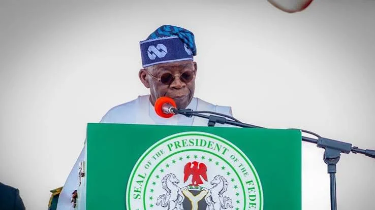
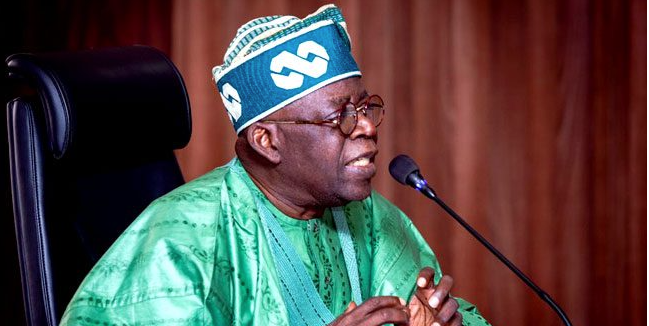
President Bola Ahmed Tinubu has announced 10 fresh appointees that will serve in the board of the Family Homes Funds Limited (FHFL).
The appointment according to a statement by the President’s Special Adviser on Media and Publicity, Chief Ajuri Ngelale is “in furtherance of efforts by the federal government to consolidate activities aimed at energizing the growth opportunities within the real estate sector.”
Ngelale gave the name of the appilointees as follows;
(1) Mr. Demola Adebise – Board Chairman
(2) Mr. Abdul Muttalab – Chief Executive Officer/Managing Director
(3) Mr. Abdullahi Musa – Executive Director (Finance)

(4) Mr. Emeka Henry Inegbu – Executive Director (Operations)
(5) Representative of the Ministry of Finance Incorporated – (Non-Executive Director)
(6) Representative of the Nigeria Sovereign Investment Authority (NSIA) – (Non-Executive Director)
(7) Mr. Sam Okagbue – (Non-Executive Director)
(8) Mr. Musa Ahmed – (Non-Executive Director)
(9) Dr. Eniang Nkang – (Non-Executive Director)
(10) Ms. Bilkisu Usman – (Non-Executive Director)
Speaking further, Chief Ngelale added that: “The President expects that the new members of the board of this important agency will deploy their expertise, experience, and commitment to steer the Family Homes Funds towards achieving its mandate of driving growth and development in the real estate sector.”

News
Nigerian professor jailed 70 months in US for $1.4m fraud
A United States federal court has sentenced a Nigerian-born former nonprofit chief executive, Dr Nkechy Ezeh, to 70 months in prison for orchestrating a $1.4 million fraud scheme involving taxpayer and donor funds meant for vulnerable preschool children.
The sentencing was announced in a press release on Wednesday by the Office of the US Attorney for the Western District of Michigan.
The sentencing was delivered by Chief US District Judge Hala Y. Jarbou, who also imposed a concurrent 60-month sentence for tax evasion and ordered Ezeh to pay $1.4 million in restitution and $390,174 to the U.S. Internal Revenue Service.
Ezeh, 61, of Kent County, Michigan, was the founder and former CEO of Early Learning Neighborhood Collaborative, a West Michigan nonprofit that provided early childhood services in underserved communities.
She is also a former Associate Professor of Education and Director of Early Childhood Education Program at Aquinas College.
She was immediately remanded into federal custody after sentencing.

During the proceedings, Judge Jarbou described Ezeh as “a fraud and a thief,” adding that the scheme was “brazen and widespread,” and involved funds intended for some of the region’s most vulnerable children.
US Attorney for the Western District of Michigan, Timothy VerHey, said Ezeh diverted money meant for low-income children for personal use.
“Nkechy Ezeh’s greed is beyond reprehensible.
“She stole taxpayer and private-donor dollars meant for low-income children in our community. Instead of helping kids, she spent that money on herself.
“The stolen money could have supported hundreds of West Michigan children and their families. Judge Jarbou’s sentence was perfectly appropriate,” VerHey said.
According to court filings, Ezeh used stolen funds to finance personal expenses, including travel to Hawaii, Europe and Africa, as well as a family wedding.
Prosecutors also said she placed relatives on a “ghost payroll,” enabling them to receive hundreds of thousands of dollars for little or no work.
She was further accused of using intermediaries to transfer stolen funds to family members in Nigeria.
The nonprofit, ELNC, was funded by US federal programmes including Head Start, the Department of Education, and private donors. It provided meals, transport and support services to children in low-income communities.
Following the fraud, ELNC shut down in 2023, leading to the loss of funding for several preschools and the layoff of 35 employees.
A former bookkeeper at the organisation, Sharon Killebrew, who was identified as a co-conspirator, was earlier sentenced to 54 months in prison for her role in the scheme.
US authorities said the case highlights the abuse of federal grants and its impact on vulnerable communities, particularly children in low-income neighbourhoods.
The investigation was conducted by the U.S. Department of Health and Human Services Office of Inspector General and the Internal Revenue Service–Criminal Investigation unit, while Assistant U.S. Attorney Clay Stiffler prosecuted the case.

News
Gun to my head, I won’t stay beyond four years — Obi
Former Labour Party presidential candidate Peter Obi has said he would serve only one term of four years if elected president, insisting he would serve only one term in office “even with a gun to my head.”
Obi made the statement in a clip from an interview scheduled to air on News Central TV on Thursday.
“I want to be a one-term president because of stability. I would not stay a day, with a gun to my head, longer than four years,” he said in the circulating video.
The former Anambra State governor also criticised the current administration’s economic policies, including borrowing and rising cost of living, saying Nigeria had entered one of its most difficult economic periods.
Obi contested the 2023 presidential election on the platform of the Labour Party, where he came third behind President Bola Ahmed Tinubu of the All Progressives Congress and former Vice President Atiku Abubakar of the Peoples Democratic Party.
Since the election, Obi has remained a key opposition figure, frequently criticising the Tinubu administration’s economic reforms.


News
NEW ENUGU SMART CITY: Peter Mbah’s Audacious Blueprint For A Global City And A New Economic Frontier
By Dr. Collins Ogbu
Cities are the new engines of global prosperity. Across the world, nations are no longer competing merely on the strength of their natural resources; they are competing on the efficiency, innovation, livability and attractiveness of their cities. From Dubai to Singapore, from Kigali to Shenzhen, the story is the same: governments that deliberately build modern urban ecosystems create wealth, attract investors, generate employment, and redefine the future of their people.
This is precisely the philosophy driving *Governor Peter Ndubuisi Mbah*’s ambitious vision for Enugu State.
When Governor Mbah declared his determination to grow Enugu’s economy from $4.4 billion to $30 billion, many saw it as audacious. But history teaches that transformational leadership is often mistaken for impossible ambition; until execution begins to silence doubters. Today, the New Enugu Smart City stands as one of the clearest physical manifestations of that economic revolution: a bold urban expansion project designed not merely as a real estate development, but as a futuristic economic ecosystem that will fundamentally alter Enugu’s economic trajectory.

The New Enugu Smart City
For decades, the old Enugu metropolis has borne the pressure of population growth, rising commercial activity, inadequate housing supply, traffic congestion, urban sprawl, and increasing pressure on public infrastructure. Like many fast-growing African cities, urban expansion often happened without long-term planning. Roads became overstretched, commercial clusters became chaotic, and housing shortages intensified. The answer to such pressures globally has never been to merely manage congestion; it has been to build new cities.

Abuja was built to decongest Lagos and create a more centrally planned capital. _Eko Atlantic_ emerged as a premium urban extension to accommodate business growth. _Konza Technopolis_ was conceptualized as Africa’s Silicon Savannah. _King Abdullah Economic City_ was created to diversify an oil-dependent economy.
_Songdo International Business District_ became a global reference point for smart urban development through integrated digital infrastructure.
The _New Enugu Smart City_ belongs in that class of visionary projects.
It is strategically designed as a modern mixed-income, mixed-use urban settlement that caters to both high-net-worth individuals and middle-income earners. Unlike elitist urban projects that often exclude the average citizen, Enugu’s model deliberately creates opportunities for luxury housing, commercial districts, technology hubs, hospitality centres, industrial clusters, retail spaces and affordable residential schemes. This means that whether one is a corporate executive, diaspora investor, entrepreneur, civil servant, student, artisan or hospitality investor, there is a place for everyone within the emerging urban ecosystem.
At the heart of every smart city lies infrastructure intelligence. The New Enugu Smart City is envisioned with modern road networks, integrated drainage systems, uninterrupted power architecture, smart security systems, broadband-enabled connectivity, efficient waste management systems, green recreational spaces, industrial layouts, commercial districts, healthcare facilities, educational institutions and technologically enabled public services.
This is what separates a smart city from conventional urban settlements.
Traditional cities often expand reactively. Smart cities expand intentionally.
Traditional cities battle traffic chaos. Smart cities deploy intelligent mobility systems.
Traditional cities struggle with utility inefficiency. Smart cities integrate modern infrastructure from inception.
Traditional cities create informal congestion. Smart cities optimize space for productivity.
And productivity is where the real conversation begins.
Land itself is one of the greatest wealth creation tools available to governments. Globally, cities such as Dubai generated billions through strategic land development, infrastructure-led real estate appreciation, tourism expansion, and business investments. The New Enugu Smart City presents similar revenue-generating opportunities through land allocation, property taxes, business licensing, hospitality investments, industrial occupancy, tourism spending and foreign direct investment inflows.
As property values appreciate, internally generated revenue rises.
As businesses move in, employment expands.
As investors arrive, confidence deepens.
As population shifts, congestion reduces in the old city.
It is a cycle of growth that smart economies understand very well.
The decongestion benefits alone are enormous. Existing commercial centres in Ogbete, Independence Layout, Abakpa, Coal Camp and surrounding districts have long experienced infrastructure pressure due to concentrated economic activities. By creating an entirely new urban destination, government is redistributing population density and commercial activity in a way that ensures balanced development across the state.
This is how globally competitive cities are built;not by overburdening old districts, but by creating new economic corridors.
And what makes this even more strategic is that the New Enugu Smart City is not developing in isolation.
It is rising within a broader ecosystem of transformational infrastructure already being built by the Mbah administration.
Enugu Air is opening Enugu to regional and global connectivity while positioning the state as a major aviation hub in southeastern Nigeria. New dual carriageways and modern road corridors are dramatically reducing travel time across urban and rural communities. The development of world-class transport terminals is redefining organized mass transit and improving urban mobility.
The construction of Smart Green Schools across the 260 political wards in Enugu State is creating the human capital pipeline that future industries within the Smart City will require. These schools are embedding digital literacy, innovation and modern learning systems into the educational ecosystem. The ongoing rollout of Type-2 Primary Healthcare Centres ensures healthcare accessibility at the grassroots level, while the 300-bed international hospital is positioning Enugu as a destination for advanced medical services and medical tourism.
The International Conference Centre, alongside the nearly-completed five-star ICC hotels, further strengthens Enugu’s business tourism credentials. Conferences, summits, exhibitions and international business events require premium accommodation, modern residential options and commercial infrastructure; and the New Enugu Smart City provides exactly that complementary ecosystem.
Governor Mbah’s target of attracting three million visitors annually becomes significantly more realistic when supported by a city that can comfortably absorb tourists, investors, conference attendees, returning diaspora citizens and business travelers.
Visitors need hotels.
Professionals need homes.
Investors need infrastructure.
Businesses need certainty.
The Smart City answers all four.
More importantly, this project opens massive opportunities for private sector participation. Real estate developers, construction firms, fintech companies, hospitality brands, logistics operators, retailers, healthcare providers, educational institutions and manufacturing concerns all stand to benefit from the city’s growth trajectory.
This is how new economies emerge.
A construction economy first.
Then a services economy.
Then a technology economy.
Then a tourism economy.
Then a manufacturing ecosystem.
Then sustainable long-term prosperity.
This model has transformed Shenzhen from a fishing settlement into a global manufacturing giant. It transformed Dubai from a desert outpost into a global investment capital. It transformed Kigali into one of Africa’s cleanest and fastest-growing urban destinations.
Enugu is writing its own version of that story.
The symbolism is equally powerful.
For decades, Enugu has proudly borne the identity of the Coal City. But the future demands a broader identity; one rooted in innovation, enterprise, global competitiveness and smart urban planning. This is why the Governor now calls it: THE CITY OF GREAT MINDS!
The New Enugu Smart City represents that transition.
From legacy economy to future economy.
From administrative capital to investment destination.
From regional relevance to global competitiveness.
From potential to performance.
Governor Peter Ndubuisi Mbah understands what many leaders fail to grasp; that economic greatness is often built through infrastructure decisions whose true value unfolds over decades.
The New Enugu Smart City is not just about buildings.
It is about building confidence.
It is not just about roads.
It is about creating routes to prosperity.
It is not just about urban expansion.
It is about economic expansion.
And years from now, when investors, tourists, multinational corporations, technology firms and families choose Enugu as their preferred destination, many will look back at this moment and recognize that this was where the future began.
A city is being built.
But beyond that;
an economy is being born.
• By Dr. Collins Ogbu – SSA to the Governor of Enugu State on Strategic Communications

-
News2 days agoMainPower: EERC Downgrades 59 Feeders in Enugu over Poor Power Supply
-
News1 day agoAnambra Police arrest two over kidnap, murder of Bishop in Delta
-
News2 days agoOver 100 reported killed in Zamfara market airstrike
-
News2 days ago2027 Polls: 30 APC Governors, 88 senators, 242 Reps, 2,620 others know fate today
-
News2 days agoDriver kills employer in Delta, flees with vehicle to Anambra
-
News2 days agoEFCC arrests energy commission DG over N500bn fraud allegations
-
News11 hours agoNigerian professor jailed 70 months in US for $1.4m fraud
-
News16 hours agoGun to my head, I won’t stay beyond four years — Obi