News
Gov Mbah breaks 19-year jinx as NMCN approves Internship, Indexing for ESUT, Nursing Schools

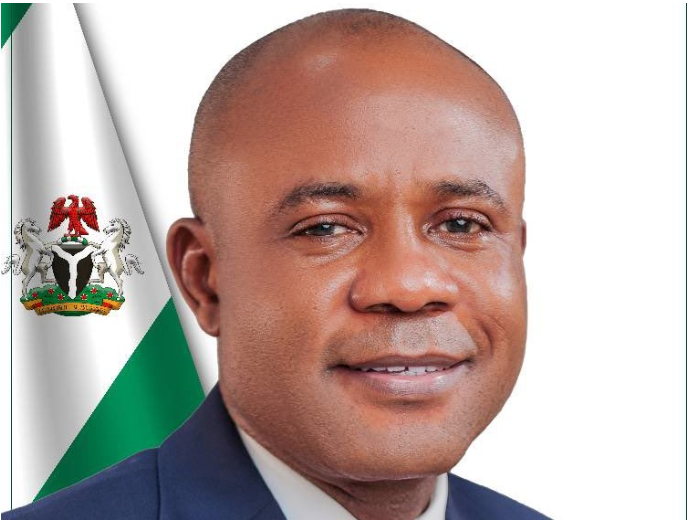
After 19 years of waiting by successive sets of the Department of Nursing, the Nursing and Midwifery Council of Nigeria (NMCN) has approved an internship programme for the Enugu State University of Science and Technology (ESUT) Teaching Hospital, Parklane, Enugu.
MMCN also approved the indexing of Nursing students at the Colleges of Nursing and the former School of Nursing, Awgu, which was recently upgraded to the College of Nursing.

The approvals were announced by the registrar of the council, Dr. Faruk Umar Abubakar, when he led a delegation of the Council’s accreditation team on a courtesy visit to Governor Peter Mbah at the Government House, Enugu, where he equally commended the Mbah administration for providing the requisite infrastructure at the Colleges of Nursing, Park Lane and Awgu to create a conducive environment for teaching and learning, while also paying attention to the welfare of health workers.
Abubakar announced the council’s approval for the immediate recruitment of 50 interns to work at Park Lane, noting that with the approval of the internship programme, more graduate nurses would now be trained at the ESUT University Teaching Hospital to boost the state’s nursing manpower.
“When you train nurses in Nigeria, they are specialists in Midwifery, General Nursing and Public Health and the internship program will strengthen the health sector,” he stated.

He lauded Governor Mbah for approving the implementation of the Consolidated Health Salary Structure (CONHESS), the latest salary structure for Nurses, noting that with such a show of commitment, the state could retain a lot of its nursing manpower as they qualify.
“Good salaries, infrastructure provision, human resources, and employment of quality nurses will help reduce migration of Nurses.
“So, I am very optimistic that with what you are doing in the state’s health sector, the environment will be so conducive and ‘japa syndrome’ will drastically reduce,” he added.
While thanking the MNMC for the approvals, Governor Mbah, who was represented by the Secretary to the State Government, Prof Chidiebere Onyia, regretted the stagnation of the state’s nursing institutions for the past 19 years. He noted, however, that his administration decided to wade in strongly through massive investment in the health and nursing space.
“We were clear from the outset that something consequential had to happen in the nursing space in terms of infrastructure, manpower training, remuneration, and motivation. We cannot possibly grow our economy from $4.4 billion to $30 billion if we do not get the health sector right.
“Let me also assure you that the gaps you have further identified will be given utmost attention. We will not play around with your recommendations,” he assured. He
Meanwhile, to clarify the development, the Special Adviser to the Governor on Health Matters, Dr Yomi Jaye, described the approvals as “a monumental breakthrough.”
“You know, this struggle started immediately after the governor came into office and discovered that there were many accreditation gaps in the School of Nursing among other healthcare institutions in the state.
“So, for 19 years, the NMCN first sited the department of nursing, our student-nurses from ESUT were not indexed, and they have not been writing professional examinations to qualify as nurses. One breakthrough now is that, as the registrar said, all of them will be indexed. All backlogs will be cleared so that there won’t be any backlogs by next year. This is what had been standing for 19 years. So, our young Ndi Enugu, it’s exam time. Governor Peter Mbah has cleared the way,” he said.








• Says security agencies must act against provocative religious remarks
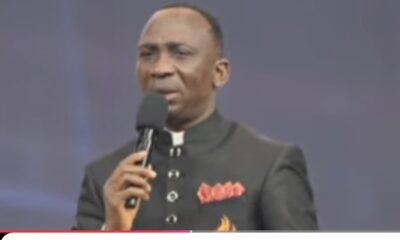
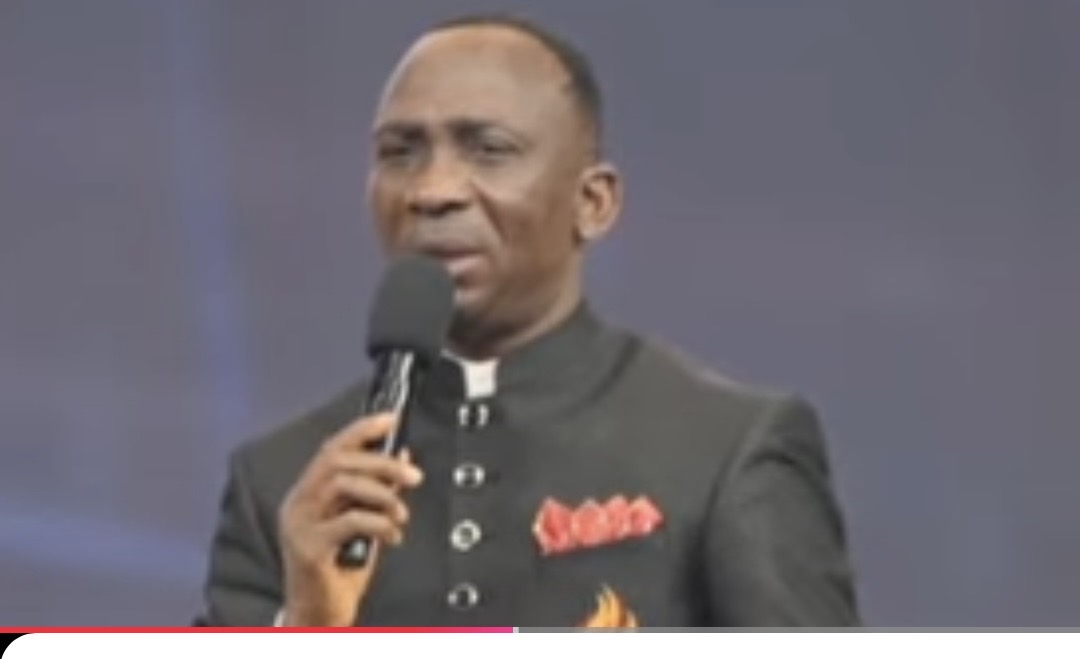
Senior Pastor of Dunamis International Gospel Centre, Pastor Paul Enenche, has declared that Christianity is not subordinate to any religion in Nigeria, while condemning comments linked to Islamic cleric Sheikh Yahya Jingir.
Speaking during the church’s Sunday service at its headquarters in Abuja, Enenche reacted strongly to the controversy generated by Jingir’s recent remarks, insisting that Christians could not be regarded as inferior to adherents of any other faith in the country.
The cleric described the suggestion that Christianity was secondary to another religion as unacceptable, arguing that Christians are present in large numbers across every part of Nigeria.
Enenche also warned against taking the Christian community for granted, maintaining that the church remains a significant force in the nation.
He criticised security agencies for failing to invite Islamic cleric, Sheikh Muhammad Jingir, over his recent comments advocating a Muslim-Muslim political arrangement in Nigeria.
According to Enenche, security agencies should have acted against statements capable of provoking religious tension and violence in the country.
The pastor described as unacceptable the suggestion that Christianity should be regarded as subordinate to any other religion in Nigeria, insisting that Christians constitute a significant part of the country’s population.
He said, “Christianity is not secondary, and no group of religious fanatics will ever make it secondary. Not you, not any political group of people will ever make Christianity secondary to any.”
Enenche also questioned why security agencies had not invited the cleric for questioning over his comments, arguing that allowing individuals to make what he described as reckless statements without consequence could threaten national peace.
He said, “I blame security forces for allowing people to make reckless statements. You allow them still moving on the road, allow them still moving, not knowing that such a statement can incite instant violence.”
The pastor added that authorities should have taken steps to establish whether the comments could incite violence, rather than allowing the speaker to continue making such statements publicly.
“People are messing up and destroying the nation; they are walking free of charge, and they are talking,” he said.
Enenche further warned against taking the Christian community for granted, saying Christians had remained calm despite what he described as provocative statements.
“Nobody should take the church in this nation for granted. Don’t take the church for granted,” he said.
His comments followed controversy generated by the Chairman of the Ulama Council of Jama’atu Izalatil Bid’ah Wa’ikamatis Sunnah, Sheikh Muhammad Jingir, who recently advocated the continued adoption of a Muslim-Muslim presidential ticket.
Jingir had, at a special wedding reception organised by the Kano State Government for 1,500 couples whose weddings it sponsored, urged Muslims to vote in a manner that would demonstrate their numerical strength.
Amid reactions to his comments, Jingir told the BBC that he had no regret over his advocacy for a Muslim-Muslim presidential ticket, stressing that he had held the position long before the administration of President Bola Tinubu.
The comments have attracted reactions from various quarters, including the National Coordinator of the Obidient Movement Worldwide, Yunusa Tanko, and Nigeria’s Ambassador-designate to South Africa, Femi Fani-Kayode.
News
Wanted banditry kingpin, Ado Aleru, attends fresh ‘peace talks’ with Katsina community residents
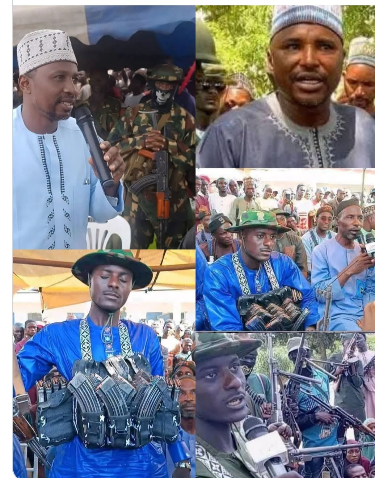
Notorious wanted bandit kingpin, Ado Aleru, has once again surfaced publicly, attending fresh peace talks with residents of Kankara Local Government Area in Katsina State.
The meeting marks another round of dialogue between communities terrorised by banditry and the armed groups that have plagued Nigeria’s North-West region for years.
Aleru is a wanted criminal on Nigerian security forces’ list, with a ₦5 million bounty on his head. Despite this, he has repeatedly appeared at peace meetings across Katsina State.
During the latest meeting, Aleru reportedly explained why previous peace efforts failed to bring lasting peace. His appearance has raised serious questions about whether these agreements can actually work.
The peace talks come just days after Aleru suffered a major blow in a military encounter at Doma village, Katsina State. Reports indicate:· His son was killed along with eight other family members· About 30 motorcycles belonging to his network were destroyed· The losses have significantly weakened his criminal network’s strength and mobility.
This is not Aleru’s first peace meeting. He previously attended talks in:· June 2025 – Danmusa LGA, Katsina State·
September 2025 – Faskari LGA, where he vowed to embrace peace·
October 2025 – Kakumi village, where a peace accord was signed
In September 2025, Aleru said he had previously withdrawn from peace efforts after his son was arrested, calling the arrest “unjust”.
Aleru’s participation in peace talks despite being wanted has sparked heated debate:Supporters of dialogue argue that negotiations can reduce attacks and help communities return to normal life.
Critics warn that agreements with armed groups often collapse, pointing to continued attacks linked to Aleru’s network even after previous peace deals.
Adding to the controversy, Aleru was previously given a traditional title in Zamfara State during the administration of former Governor Bello Matawalle, who is now Nigeria’s Minister of State for Defence.
Katsina State is one of several North-Western states hit hard by banditry, with killings, kidnappings, and displacement affecting countless communities. The fresh peace talks in Kankara show that some communities are still willing to negotiate – even with wanted kingpins like Ado Aleru.
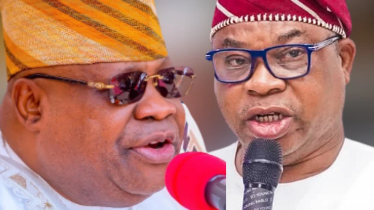
• Adeleke of the Accord Party, polled 511,067 votes to defeat APC’s Oyebamiji, who scored 444,815 votes
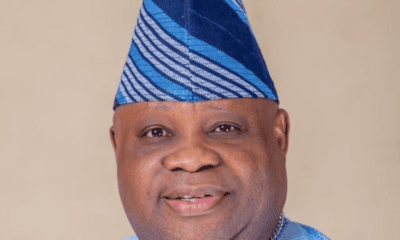
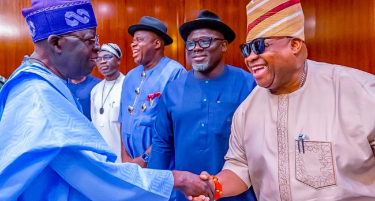
Osun State Governor, Ademola Adeleke, has revealed that President Bola Tinubu called and congratulated him shortly after he was declared winner of the August 15 governorship election.
Adeleke made the disclosure while speaking to journalists on Sunday after the Independent National Electoral Commission (INEC) declared him winner of the election.
He thanked President Tinubu for congratulating him, saying the president had contributed to the sustenance of democracy.
“I feel great. First of all, I thank the God Almighty for what has happened today. It’s a victory for democracy in Nigeria,” And, of course, I want to seize the opportunity to thank Mr President. Mr President has called me, and he has congratulated me, and I thank you, Mr President, for making sure democracy lives on because you fought for it, Mr President,” the governor said.
President Tinubu and Governor Adeleke have maintained a pragmatic relationship despite belonging to rival political parties. Despite their political differences, both leaders have maintained a cordial relationship, with Adeleke making high-profile visits to Tinubu and the President engaging with the Osun governor.
Victory for Osun people, Olive Branch
Speaking further, Adeleke said the result represented a victory for the people of Osun, who, according to him, had endorsed his administration’s performance in office.
“A victory for democracy. A victory for Osun people that stood by me and said, Imole, you have done a lot for us. You have given us the dividends of democracy in terms of infrastructure, improving our education, agriculture and so forth. So this is the Osun people saying, ‘Thank you, Mr Governor,’” he said.
The governor, who secured a second term after defeating his closest challenger, Bola Oyebamiji of the All Progressives Congress (APC), said his administration would focus on transforming Osun from a civil service-dependent state into an industrial hub.
“I will repay that thank you by making sure that I have a vision. My vision is to make sure that Osun State moves from a civil servant state to an industrial state. I will make sure, all across Osun State, development is on. I love you all, Osun State,” Adeleke said.
Adeleke also extended an olive branch to his opponents, describing the election as a contest without a victor or vanquished.
“Yes, this is no victor, no vanquished. I want them to come over. I’m expecting Oyebanji, even as a civilised person, to call me and congratulate me,” he said.
Asked whether he had ever feared that the election could go against him, Adeleke replied: “No. I have a God. I have a God who never fails.”
-
 News3 days ago
Mammoth crowd as Peter Obi makes triumphant entry into Benin, dares Gov Okpebholo [VIDEO]
-
News3 days ago
ICPC exposes Payroll Scandal: Official paying 14 family members, another worker collects 13 salaries
-
News2 days ago
Police confirm release of abducted Jezco Chairman, Ezeokafor, Rev Sister
-
News21 hours ago
BREAKING: Adeleke wins 19 LGs, APC’s Oyebamiji secures 11 LGs
-
News2 days ago
Kidnapping: My life in captivity — Justice Bunza
-
News2 days ago
Rigging Attempt: Police aiding APC to intimidate voters in Osun — Adeleke
-
Politics2 days ago
Osun Election: APC, Accord wage N20,000-per-vote war
-
Politics21 hours ago
Osun: The mourning after By Festus Adedayo