News
How traffickers forced teenage Nigerian girls into prostitution in Ghana

As the National Agency for the Prohibition of Trafficking in Persons (NAPTIP) intensifies campaigns against human trafficking and aggressively goes after the barons who are neck-deep in the illicit, inhuman business, more Nigerians, particularly young girls, keep falling victim to their antics.
Every day, there is one media report or another about what Nigerians who were trafficked to Arab countries like Libya, Oman, Lebanon, the United Arab Emirates (UAE), as well as Africa, Europe, and America, go through in their countries of destination.

However, the economic hardship in Nigeria is not helping matters, as many of the victims were merely deceived with promises of mouthwatering job offers.
Last week, the social media space was awash with reports of some Nigerian teenage girls, aged between 15 and 18, who were trafficked to Ghana and forced into prostitution. According to one of the videos that trended online, a man identified as the Chairman of the Nigerians in Diaspora Organisation (NIDO) Ghana branch, Callistus Elozieuwa, alongside his team, was seen speaking with the rescued girls.
According to him, his organisation got information that a Nigerian guy brought the ladies to Ghana and was maltreating them, including forcing them into prostitution and other things. He noted that as soon as he got the information, he sent a rescue team to the place.

“Fortunately, when they got there, they were able to rescue the girls and arrest the culprit,” he added.
Out of the 10 girls, seven were from Imo State, Southeast Nigeria, while the remaining three were from Plateau State, Northcentral Nigeria.
Three of the girls from Imo State, according to the investigation, are from the same parents: a set of twins and their elder sister. Some of the rescued girls were identified as Miracle Odunukwe (Ideato, Imo), Chiamaka Ikechukwu (Ideato, Imo), Celina Danjuma (Jos, Plateau), Mary (Plateau), Divine (Orlu, Imo), Joy Ayuba (Plateau), Odunukwe Happiness (Ideato, Imo), Nwachukwu Amarachi (Ideato, Imo), and Odunukwe Onyinyechukuwu (Ideato, Imo).
Since the news broke out, Nigerians have been commenting on the development, with some blaming the parents. Others attribute the development to the harsh economy, which is pushing many young Nigerians out of the country in search of a better life.
Those who hold this view blame the government for what has happened to the young girls. However, there are others who attribute what happened to greed. To them, the girls voluntarily decided to embark on the journey because they wanted to make money at all costs and not necessarily because anybody deceived or forced them.
Those who hold this opinion said most of the girls knew what lay ahead and decided to go for it because they wanted to get rich at all costs.
Chief Elozieuwa described the mastermind of the ugly event as very wicked, luring three sisters from the same parents away from Nigeria to Ghana and forcing them into prostitution. “The parents are not aware. They take these girls under oath and force them into prostitution,” he added.
According to the report, the girls were told they would be given sales jobs when they got to Ghana, but when they got there, they were forced into prostitution and other inhuman activities.
Chairman/CEO of the Nigerians in Diaspora Commission (NiDCOM), Abike Dabiri-Erewa, has visited the girls after NIDO informed her Commission of the development. Commenting on the development, Dabiri-Erewa, who was accompanied to Ghana by representatives from the Imo State Government, including the Deputy Speaker of the Imo State House of Assembly, Amara Iwuanyanwu, and the Commissioner for Women Affairs, Nkechinyere Ugwu, commended Elozieuwa and his team for their efforts. She emphasized the need for a permanent solution to eradicate human trafficking in Nigeria, saying, “We must declare a war against human traffickers.”
She urged parents to always question the whereabouts of their children when taken away by relatives or friends. She called for collective efforts to ensure traffickers are named and arrested.
A statement issued by the Media, Public Relations and Protocols Unit of NiDCOM said the rescued girls would be handed over to the National Agency for the Prohibition of Trafficking in Persons (NAPTIP), which will hand them over to their respective states for counseling and rehabilitation.
The Acting Nigerian High Commissioner to Ghana, Adeoye Ifedayo, also commended NIDO in Ghana and stressed the need to put a stop to human trafficking. The delegation also met with the high echelon of the Ghanaian Police, who pledged total cooperation in the war against human trafficking.
The representative of the Imo State Governor, Iwuanyanwu, reiterated the government’s commitment to the welfare and well-being of the rescued girls. Similarly, the Plateau State Governor, represented by the Commissioner for Women Affairs, pledged to cater to the welfare and full rehabilitation of the stranded girls.
Speaking on the development, a Migration Consultant and National Secretary of the Network Against Child Trafficking, Abuse and Labour (NACTAL), Nigeria, Osita Osemene, said what has happened was not a new trend. He stated that the incident was being celebrated because the criminal activities of the traffickers involved came to light; otherwise, such things happen often.
“These days, a lot of things have changed in terms of children being used as commodities. Again, children at that age now have a high desire to make it big. This is applicable to boys also.”
He noted that the scourge is not restricted to young girls, because young boys are also endangered. He revealed that after the girls were rescued, there was also another incident where about 18 teenage boys of the same age bracket were intercepted and rescued in Ghana.
“In short, after the girls were rescued, there was another report that about 18 Nigerian boys of the same age bracket were apprehended by the Ghanaian police. They were taken to Ghana to engage in internet fraud, popularly called ‘Yahoo Yahoo.’ Somebody engaged them, and they were being used to make money in a fraudulent way for that person.
“They were in a kind of captivity in Ghana because the money they were making was not for themselves but for the person who took them there.
“So, it is an ongoing trend that the underage are being manipulated and lured into crime by some criminal gangs. It is not as if it is a new thing; it is just that it is now on the increase.
“Cases of young boys and girls aged 15 and 16 being lured into cyber crimes and prostitution (sex trade) are becoming alarming. They use them, exploit them, and dump them. And Ghana, Cote d’Ivoire, Togo, and Benin Republic are now the destination countries. It is a regional business that is currently booming,” he stated.
On what should be done to stem the tide of the ugly trend, he said the awareness is there but it is still not enough, as more enlightenment is needed, particularly to educate parents.
“For some time now, the government has embarked on some kinds of awareness campaigns against the scourge. However, I think there should be an increase in awareness all the same, and the government’s seriousness in entrenching our value system in families should also be improved upon.
“This is because many families have lost our value system. Parents are involved in this mess. If you check very well, you will be surprised that most parents are aware that these young children are embarking on these kinds of journeys. But, what they don’t know is what the children are going to do over there.
“So, I think there should be an intentional increase in the level of enlightenment campaigns to create more awareness in some of these areas, particularly for the parents,” he said.
Osemene, whose organisation, NACTAL, through regional cooperation, took an active part in the rescue of the girls, said there is also a need for collaboration between countries to ensure that human trafficking is minimally reduced. “I commend the Ghanaian police; they are trying. For being proactive and able to bust and arrest some of these criminals, it shows they are on top of their game, and I commend them.
“But, there is the need for increased collaborations and partnerships between law enforcement agencies and governments of various countries. The civil societies also need to cooperate on a regional basis.
“This particular case of the 10 young girls in Ghana is being celebrated today because as soon as we got wind of the development, we initiated a regional cooperation platform. The Nigeria-Ghana Cooperation, comprising some civil society organizations from both countries, including the Nigeria Police, the Nigeria Immigration, NAPTIP, as well as the Ghana Police and the Ghana Immigration, came together to ensure that a swift intervention was taken, and that was how the girls were rescued.
“This was also with the support of the Nigerians in the Diaspora Commission led by Abike Dabiri-Erewa, and the NIDO in Ghana. It was the combined efforts of all these agencies and groups that ensured that the girls were rescued and kept in a safe place before the Nigerian government began to look at how to bring them back to hand them over to NAPTIP for proper investigation.
“There should be a proper investigation to know those who perpetrated it because we are aware that somebody was behind the crime. Somebody initiated it and carried it out,” he said.
On his level of involvement in the rescue of the girls, he said: “I participated in the rescue operation as the National Secretary of NACTAL, Nigeria. It was on that platform that I participated in the response mechanism that was set up. We have a regional platform, which I am also a member of because NACTAL is a member of the West Africa Coalition Against Trafficking in Persons and Smuggling of Migrants (WACTIPSOM). We communicated and collaborated with our members in Ghana to ensure that the people who perpetrated the evil act were brought to book in Ghana.”
Also commenting on the incident, a migration expert, Mrs Amaka Nneji, said greed is a serious motivating factor for some of the young girls. She said she realized how deep the mess was in the course of her job as a migration counselor with a non-governmental organization, Seefar.
“When we started our campaign against irregular migration, I didn’t know that girls of that age were involved until about 100 girls of that age were intercepted on their way to Libya. That was when I started going to secondary schools to campaign.
“So, a lot of young girls want to get rich at all costs, and this is because of the situation in the country. Girls as young as 13 and 14 years old are already chasing money through prostitution. I think it is also caused by greed.
“A lot of girls want to make money, irrespective of their means. It is not as if they were forced or deceived. If anybody is telling you that it is their parents who forced them into that; I want to tell you that it is not true.
“They just decided on their own to do what they were doing. It is a personal decision by most of them. All I need to tell young girls is to be careful and be smart in their relationships with men and women at all times,” she said.
In his contribution, a public administrator, Mr. Anthony Ugwuoke, decried the level of moral decadence in society. “You can see the intricate web of this immoral syndicate; from Jos, Plateau State, north-central Nigeria, to Imo State, southeastern Nigeria. Who would have imagined this? My brother, it is a classical case of moral decadence in today’s girl child,” he said.
He also blamed it on poor parenting and bad governance, saying, “This basically stems from loose parenting and the abysmal failure of successive governments in Nigeria.
“If we blame it on the misuse of social media, whichever way in our contemporary world, we are spot on. Blame it on dysfunctional governance, you are right. Blame it on the gullibility and/or innate zeal in a girl child to exploit her world, you are also not wrong.
“However, the buck still stops at the table of the government. If, for instance, the government provided these children with basic and functional education, there could have been a paradigm shift from these disgusting social frivolities to more productive engagements.
“Over time, our successive governments have failed on their own part of the social contract of governance with the citizenry.
“Come to think of it, did these children disappear into thin air here in Nigeria, and somewhere down the line, reappear in Ghana? Of course, they went through our porous borders, either bribing their way through, or getting the better part of our security agencies due to negligence.
“I can tell you for free and you can take it to the bank, that if these children are not properly treated, given a clean bill of health, and rehabilitated, I bet they shall remain shadows of their former selves, and most likely, a direct negative influence on other children in their ecosystem.
“For the mastermind, he should have known by now that the leg that moves hurriedly to perform evil has an eye that monitors here and there to expose it.
Comfort Adebisi, a victim of a similar crime in Lebanon in 2020, noted that most girls fall victim due to their inordinate quest for a greener pasture. She said traffickers would always make mouth-watering offers, which most often are too hard to resist for the young girls. “But, they will never know that all the promises are a mere ploy to lure them to a foreign land and turn them into sex slaves,” she said.
She noted that the girls must have been promised wonderful jobs in Ghana, not knowing that they would end up as prostitutes. She advised the government to step up its enlightenment campaign against trafficking in persons. She also suggested that stiff punishment should be handed down to culprits when apprehended to serve as a deterrent to other intending traffickers.



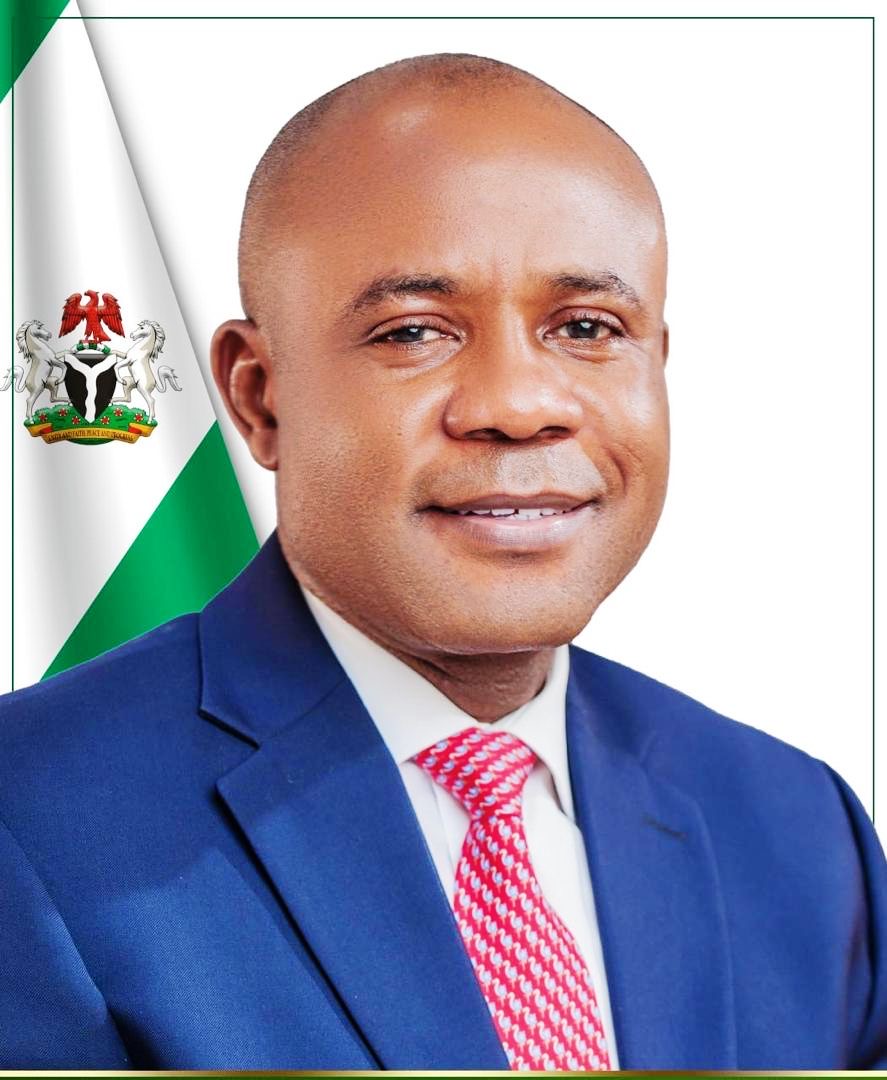
Governor of Enugu State, Dr. Peter Mbah, has approved the appointment of new members and principal officers to key state institutions as part of the administration’s ongoing efforts to reform institutions, strengthen governance and enhance effective service delivery.
Secretary to the State Government, Prof Chidiebere Onyia, disclosed this in a statement made available to Newsmen on Friday, September 4,2026 in Enugu.
The appointments are as follows:
CIVIL SERVICE COMMISSION
Prof. Gabriel Ajah — Chairman
Christian Mbah — Member One
Mrs. Stella Ekweremadu — Member Two
Mrs. Theresa Onyefuzili Ifeanyichukwu — Member Three
Uzonna Emmanuel Ogarabe — Member Four
Ambrose Nwodo — Secretary
ENUGU STATE TECHNICAL AND VOCATIONAL EDUCATION AND TRAINING (TVET)
Dr. Amaka S. Ngene — Chairman
Bonaventure Onu — Member
Barr. Nnadi Eluke — Member
Kingsley Agwu — Member
Mrs. Joy Odike — Secretary
ENUGU STATE UNIVERSITY OF SCIENCE AND TECHNOLOGY (ESUT) GOVERNING COUNCIL
Barr. Victor Chukwuani — Chairman
Engr. James Ifeanyichukwu Ajibo — Member
Dr. Eric Oluedo — Member
Dr. Mrs. Gladys Ngozi Okoro — Member
Chukwu Chikaodiri Joy — Member
INSTITUTE OF MANAGEMENT AND TECHNOLOGY (IMT) GOVERNING COUNCIL
Hon. Chinedu Onu — Chairman
Dr. Barth Nwankwo — Member
Barr. Emeka Ede — Member
Mrs. Rita Chimaobi — Member
Prince Tony Nwonye — Member
ENUGU STATE POLYTECHNIC, IWOLLO GOVERNING COUNCIL
Rev. Fr. Prof. Anthony Aniagboso Igwe — Rector
Deaconess Ifeoma Nwobodo — Chairman, Governing Council
Obinna Aleke — Member
Barr. Henry Okeke — Member
Emeka Abba — Member
ENUGU STATE COLLEGE OF EDUCATION (TECHNICAL) (ESCET) GOVERNING COUNCIL
Barr. Nwabueze Ugwu — Chairman
Prince Cletus Ajaegbu — Member
Dr. Chiesonu Isiga Eruchalu — Member
Dr. Chukwuemeka Nwatu — Member
Theophilus Onyebeke — Member
The appointments take effect immediately.

Suspected members of Boko Haram terrorists have attacked the convoy of Mustapha Gubio, the governorship flagbearer of the All Progressives Congress (APC) in Borno State.
Sources said the incident took place along the Gubio-Karote-Damasak highway in the northern part of the state on Thursday.
Damasak is located in northern Borno and is about 190km from Maiduguri, the state capital.
The convoy was en route to Mobbar, headquarters of Damasak Local Government Area, to pay a thank-you visit to members of the APC for their support which led to his emergence as the consensus candidate in the party’s last primary elections.
Sources said: “The convoy came under heavy attack around Kareto community at about 2:30pm, but was swiftly repelled by a combined team of security escorts, including soldiers, police, NSCDC, DSS, CTJF and vigilante groups.”
According to an insider who escaped but did not want his name mentioned, “The incident happened during a thank-you tour by Mustapha Gubio and his team to the northern part of the state.
“It was a terrifying moment for us; we came under heavy attacks by terrorists yesterday.”
He continued, “The terrorists fired several Rocket Propelled Grenades (RPGs) on our convoy, which also followed by sporadic shooting. Luckily, our security agencies repelled the attacks.
“Police armoured vehicles were damaged, but there was no casualty,” said the source.
Force Public Relations Officer, Ani Iniedu, confirmed the attack, saying: “Police tactical operatives successfully counter-engaged suspected terrorists who attacked a convoy along the Kareto–Damasak Road with an IED and rocket-propelled grenades.
“The tactical team forced the terrorists to retreat into the surrounding bush and subsequently scanned and cleared the immediate axis to neutralise secondary explosive threats.
“The convoy, conveying a gubernatorial aspirant, government officials and political stakeholders, was safely evacuated to a secure location with no casualties recorded among members of the entourage.”

Atiku Abubakar, the presidential candidate of the African Democratic Congress, has blamed the desperation of young Nigerians to sell their kidneys on President Bola Tinubu’s harsh economic policies.
It could be recalled that the police last week raided a hospital in Abuja, the Federal Capital Territory, FCT, after it was reported that at least 10 young men were victims of organ harvesting.
Atiku, presidential candidate of the African Democratic Congress, ADC, has now accused President Bola Tinubu of making life more expensive for Nigerians, saying he would make the country affordable again if given the opportunity.
In a post on his X handle on Friday, Atiku expressed concern over reports of young Nigerians allegedly selling their kidneys and other body organs in desperate attempts to survive the country’s worsening economic hardship.
He said young Nigerians should be pursuing their dreams, building careers and developing innovative ideas rather than considering the sale of their body organs as a means of survival.
“I have heard disturbing stories about the extent to which young Nigerians are being driven simply to survive.
“Perhaps the most horrifying are the growing reports of young people selling parts of their bodies: kidneys in particular, in desperate attempts to raise money.
“Young people should be selling dreams, ideas and innovation, not their body organs,” Atiku wrote.
He added that the rising cost of food, transportation, rent, school fees, medicine and electricity had worsened the living conditions of many Nigerians.
According to him, reports that some young Nigerians were being driven to sell their kidneys for as little as N1.7 million reflected the level of desperation caused by the cost-of-living crisis.
Atiku said Nigeria’s laws prohibiting commercial organ sales and organ trafficking were insufficient to address the poverty and desperation that make vulnerable young people targets of criminal networks.
He stressed that economic reforms should improve the living conditions of citizens by making basic necessities more affordable.
“Economic reform must have a human face. It must mean affordable food, cheaper transportation, accessible healthcare, decent jobs and renewed hope for the next generation.
“Our young people should be selling their ideas, talents and innovation to the world and not their kidneys for N1.7 million just to survive at home,” he said.
Atiku described the situation as the human cost of Nigeria’s cost-of-living crisis, accusing the Tinubu administration of worsening the economic burden on Nigerians.
He further stated that “Tinubu made Nigeria expensive. I will make Nigeria affordable again.”
-
 News1 day ago
Rivers Oil Tragedy: Toxic fumes claim 37 lives
-
News2 days ago
Security guard allegedly kills employer two weeks after resuming duty
-
News1 day ago
2027: I’m ready to die protecting my vote — Obi
-
News2 days ago
For Jim Nwobodo, it’s about good name!
-
News2 days ago
Uber exit a wake-up call, exposes Nigeria’s business crisis
-
News22 hours ago
Boko Haram attacks APC governorship candidate’s convoy in Borno
-
News3 days ago
Gunmen abduct APC Chairman, kill two
-
News2 days ago
7 DAYS TO GO: Peter Eze Youth Connect 2026 builds excitement among Enugu youths, opens doors to opportunities