Politics
Isi-Uzo: Prototype of Enugu’s Changing Development Narratives Under Gov Mbah

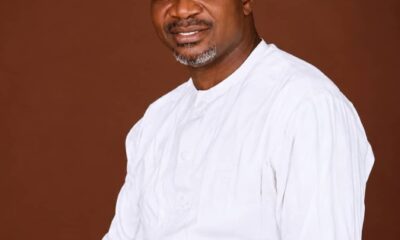
By Obiora Obeagu
Isi-Uzo is a rural area and one of the oldest local governments in Enugu State, sharing borders with Benue and Ebonyi States. It ranks low on the bottom rung of the ladder as one of the least developed LGAs in the state. Lack of requisite infrastructure has stalled its socio-economic development for over 48 years of its existence as a Council. The burgeoning agri-business of the agrarian populace of Isi-Uzo has equally been mired by insecurity: farmers-herders conflicts, banditry, and sundry criminalities. The lurking complexities of this underlying insecurity triggered a December 2022 unprecedented crisis that turned Eha-Amufu, in Isi-Uzo, into a ghost town. It saw the people – leaders, elders, youth, women and children – scatter across Isi-Uzo and neighbouring communities.

Therefore, the 2023 general elections came at a time when the people of Isi-Uzo, like the psalmist wrote in Psalm 121, lifted up their eyes to the hills and wondered where their help would come from. However, though Isi-Uzo people were united in that prayer, they were divided in where the answer to the prayer would come from. But Governor Peter Mbah’s manifesto was laden with humongous and clear vision: To grow Enugu State’s economy from $4.4 billion to $30 billion; to make Enugu the premier destination for investment, business, tourism, and for living; to eradicate poverty, just to name a few. Thus, it was not surprising that our people, in their thousands and against all odds, chose capacity over kinship. But the good news is that he has given those who stuck out their necks to fight for his victory causes to thump their chests about the choice they made.

Dr. Mbah’s ban of illegal sit-at-home a few days after his swearing-in was a signpost that it is indeed business unusual. The action sent a glimmer of hope to Ndi Enugu and the hopeful agrarian people of Isi-Uzo, whose economic potentials and freedom have been battered by over 15 years farmers-herders conflicts and banditry. This is because to the people of Isi-Uzo, their very vast and arable land resources remain their oil well. With our untapped land and natural resources, Isi-Uzo has the capacity to become the hub of agri-business in Enugu and neighbouring states if our agro-potentials are well harnessed.

Today, Mbah is taking some unprecedented, strategic steps to address the age-long and hydra-headed security challenges in Eha-Amufu and Isi-Uzo. The context and content of his kinetic and non-kinetic actions mark a remarkable departure from the norm. He is deploying security, infrastructure, and agriculture produce city projects to confront these challenges. For instance, there is an ongoing 22km asphalt road, with drainages, bridges and culverts, from Agape area to Orie-Ogbete in Mgbuji farm settlement. It is the first in the history of our people by any administration in the State.
The nature of the soil and dilapidated roads in Eha-Amufu and some other Isi-Uzo communities make the farm settlement terrains inaccessible and worse during rains. This mega project is already addressing problems of bad terrain and tackling insecurity, as local farmers, who hitherto deserted their farms out of fear have gone back, in their numbers, to farming this season. The project is poised to revive agri-business and bolster huge economic development with the re-establishment of the popular inter-state Orie-Ogbete market. It was abandoned over two years ago, after heavily armed and camouflaged bandits from neighbouring state swooped on our people and massacred them in their numbers on 6th January, 2022, burning them along with their shops and goods.
What’s more? Presently, there is ongoing road intervention by the Mbah administration to link these vulnerable Isi-Uzo communities and enhance security operations from Ikpapkara Aguamede – Uzam Ado–Odoba–OnuAdo–Orenu – Ojeshi–Akpugo flushing out to Ikem-Nkwo road that links Enugu and Benue States.
Very significant also is the ongoing construction of the 40km Owo-Ubanu-Amankanu-Neke-Ikem dual carriageway. This road will now serve as a gateway to the North Central. For instance, those traveling to the North from Ebonyi and parts of South-South like Cross Rivers wouldn’t need to go through 9th Mile. Governor Mbah has also promised to open up the about 17.5km Ikem-Nkwo-Odenigbo Eha-Amufu-Ichama-Benue State road that will join the Owo dual carriageway where it terminated at Ikem. These projects will spring up new businesses.
The Mbah administration has equally set up a military camp at Ogbete and security buffer zones across the affected border communities and flashpoint areas in Isi-Uzo LGA. Presently, there are over 200 military and security forces across Eha-Amufu communities of Eha-Ohuala, Aguamede and Ikem-Nkwo in Isi-Uzo to sustain security operations around the forest zones and border areas. The planned military barracks and restructuring of local security will ensure proactive operations, while the innovative Enugu State Security Trust Fund activated by the government will enhance and guarantee sustainable security interventions. The measures are yielding positive results, as the usual stories of killings, kidnappings, and burning of houses and properties in Isi-Uzo are fast waning. Internally Displaced Persons (IDPs) have also returned to their communities.
In the face of dwindling oil resources, our ailing economy and high rate of unemployment in the country, agriculture is the way to go. Governor Mbah has set machinery in motion for the innovative Produce City projects in Isi-Uzo and other parts of the state. This will, among others, harness arable and fallow land banks for commercial agriculture projects involving production, processing, packaging and marketing of farm products like rice, cassava, palm oil, yam, maize, among others. The government is gathering data with plans to integrate local farmers into the project and empower them with agricultural inputs. This will help them engage in large scale agriculture that will create wealth and improve their livelihoods. And only a few weeks ago, the administration sealed a N100bn deal with a private investor to revive the moribund United Palm Products Ltd palm plantations established by the Dr. Michael Okpara Government in the 1st Republic.
Malcolm X, a US civil rights activist, described education as the passport to the future, for tomorrow belongs to those who prepare for it today. I have always said that education is the sure road to freedom for our disadvantaged children, our hope for tomorrow, in rural areas whose only crime is being born into poor families in our local communities with a poor learning environment. But that is going to change with the smart school project initiative of Governor Peter Mbah, the first of its kind in the country and possibly in Africa. It will provide a world-class learning environment and equipment. Each Smart School comprises an interactive digital whiteboard, an internet system, robotics and artificial intelligence centre, modern ICT centre, two science laboratories (for primary and junior secondary), hybrid multimedia library, creative production studio, 25 inclusive classrooms and 700 Android tablets.
Currently, Smart school projects, scattered across Enugu’s 260 wards, are ongoing in 9 out of the 11 wards in Isi-Uzo. The Governor said the smart school will provide free education for early years to Junior Secondary 3. This will drastically reduce the number of out-of-school children and curb the proliferation of quack private schools in education for business in the state. Teachers are being recruited and trained for the task ahead. The provision for teachers’ quarters will curb the menace of teacher absenteeism and lost teaching hours.
Nelson Mandela said that Education is the most powerful weapon with which you can use to change the world. For me, the smart school project is the best revolution to not only Enugu State, but Africa and the Governor has laid foundation for human empowerment and legacy that will shape the future of our successive generations and give the state a quantum leap.
There is a popular saying that health is wealth. The Mbah administration is facilitating access to quality healthcare for our rural populace, especially women, children and the aged. Government’s plan to construct 260 Type 2 Primary Healthcare Centres is also rubbing off well on Isi-Uzo where such constructions, including living quarters for health workers, are ongoing. Aside from ridding the system of decrepit health structures, it will ensure access to modern medical facilities and healthcare with doctors and nurses on ground.
Governor Mbah is strategically opening up new economic corridors in our localities and Enugu State. He is leveraging on his enormous and digital wealth of experience in public and private sectors to reinvent governance in Enugu State. His 521.5 Billion 2024 “Budget of Disruptive Economic Growth” was a marked departure from the norm. With N414.3 billion capital expenditure over N107.2 billion recurrent expenditure, it carries weight with potential to positively impact the development trajectory of our dear Enugu State. It is, therefore, not surprising that BugIT ranked Mbah Administration the most prudent and least recurrent spender among the 36 states.
My encounter with Governor Peter Mbah reveals a leader with intellectual prowess, who is passionate about his people and, who is ever poised to translate his vision into action. There is hardly anything more obvious than the fact that he is delivering on his promises. Enugu State is witnessing unprecedented projects and transformation across key sectors like Education, Health, Agriculture, Security, Roads Infrastructures, ICT, among others. The 180 days commissioning and delivery of promised water, renewed the hope of a better life for Ndi Enugu. The revival of moribund assets like the abandoned Hotel Presidential and Enugu International Conference Centre, coupled with the recent flag-off of 5-Star Hotel project will boost tourism and the economy of Enugu State.
One year is too short a time to determine if an administration has delivered on its four-year mandate or not, but it is enough to check if the proper foundations have been laid and if a government is on the path to deliver on its promises. So far, Governor Mbah has laid a solid foundation and is on a sure footing and path to transforming Enugu State. And his many completed, commissioned and ongoing projects like roads where he recently commissioned 71 urban roads, the smart schools, Command and Control Centre, Primary Healthcare Centres, etc, bear testimonies to his commitment and determination.
• Obeagu, immediate past Council Chairman, Isi-Uzo LGA, is a Human Rights Lawyer and Fellow, Institute of Global Peace and Conflict Management



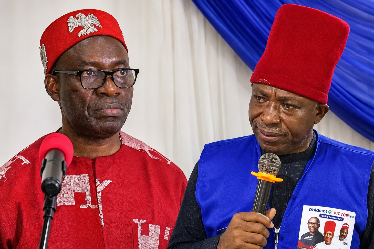
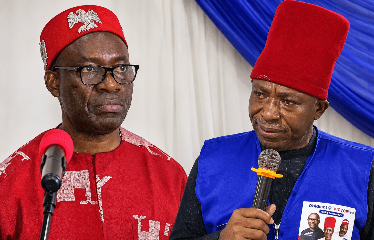
Senator representing Anambra Central, Victor Umeh, has apologised to the people of Anambra State for his role in the emergence of Governor Chukwuma Soludo, saying he deeply regrets supporting his election.
Umeh tendered the apology in Awka on Thursday, expressing disappointment with Soludo’s leadership and accusing him of working against the political interests of Anambra State and the wider Igbo nation.
The senator recalled that he served as Director-General of Soludo’s first governorship campaign alongside other prominent political figures, including Chief Primus Odili, who served as Chief of Staff to former Governor Willie Obiano.
He said he and other members of the campaign team worked tirelessly to secure Soludo’s victory, disclosing that the governor personally approached him during the campaign to seek financial assistance after admitting that he lacked the resources to prosecute the election.
According to Umeh, he subsequently contacted wealthy Anambra indigenes to raise funds for the campaign, with three prominent industrialists responding with donations of N1 billion, N100 million and $100,000, respectively.
He further alleged that the N1 billion contribution made by one of the businessmen had yet to be refunded, although he maintained that the outstanding money was not his major source of disappointment.
Rather, Umeh said his greatest concern was Soludo’s opposition to the presidential ambition of former Anambra State Governor, Peter Obi.
The senator accused Soludo of acting against the interests of his people by opposing Obi, arguing that the governor’s position amounted to working against the political aspirations of Anambra State and the wider Igbo nation.
Expressing regret over his role in Soludo’s emergence, Umeh said he never imagined that the governor would turn out the way he has.
“I am sorry for bringing him. I did not know he would turn out like this.
“Soludo is working against Ndigbo. You can’t be the governor of Anambra State and work against its interests,” he said.
• APC chairman says Tinubu is building a safer Nigeria, urges continuity ahead of 2027 presidential election
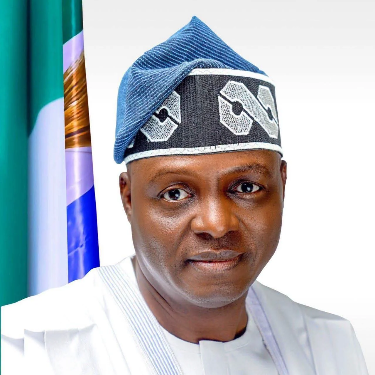
The National Chairman of the All Progressives Congress (APC), Prof. Nentawe Goshwe Yilwatda, has commended the 36 state governors and all 36 State Houses of Assembly for their unanimous support for the proposed constitutional amendment to establish State Police Services in Nigeria.
Yilwatda described the development as a landmark achievement in the country’s democratic evolution and a demonstration of political maturity, national consensus and constructive cooperation among the different tiers of government.
In a statement issued by his Special Adviser on Media and Information Strategy, Mr Abimbola Tooki, the APC chairman said the unanimous endorsement by the 36 State Houses of Assembly represented an unprecedented collective commitment to addressing one of Nigeria’s most pressing challenges: the security of lives and property.
Speaking during a meeting with party stakeholders in Abuja, Yilwatda particularly applauded the governors for their positive disposition, constructive engagement and support for the initiative.
He also commended the Speakers and members of the various State Houses of Assembly for recognising the urgency and importance of the proposed security reform.
According to him, the willingness of all states, irrespective of political affiliations and differences, to support the constitutional amendment demonstrates that national security transcends partisan considerations and remains a collective responsibility.
“This development is a powerful affirmation that when the national interest is placed above political differences, our democratic institutions can work together to deliver meaningful solutions to the challenges confronting our country,” he said.
Yilwatda described the proposed establishment of State Police Services as a major component of President Bola Tinubu’s broader reform agenda aimed at building a more responsive, effective and practical security architecture for Nigeria.
He argued that the country’s security challenges had exposed the limitations of an overly centralised policing structure in responding adequately to the peculiar security realities of different communities and geographical locations.
According to him, State Police would provide an additional layer of policing, bringing security administration closer to the people and enabling authorities to respond more promptly to threats within their jurisdictions.
He said the proposed framework would give state governments greater institutional capacity to complement the Federal Police Service in crime prevention, intelligence gathering, maintenance of law and order, and protection of communities.
Among the anticipated benefits, he listed improved grassroots intelligence gathering, faster response to security emergencies, more effective community policing, better understanding of local security threats and stronger collaboration between federal and state security institutions.
He added that the reform would strengthen efforts to tackle kidnapping, banditry, communal violence, armed robbery, terrorism and other criminal activities threatening the safety and economic wellbeing of Nigerians.
“Most importantly, State Police will enhance the capacity of government to identify emerging security threats before they escalate into major security emergencies,” he said.
However, the APC chairman stressed that the success of the initiative must be anchored on professionalism, adequate training, accountability, respect for fundamental human rights and strict adherence to constitutional provisions.
He warned that State Police Services must be established to protect citizens and enforce the law, rather than serve as instruments of political intimidation or partisan interests.
Yilwatda also commended President Tinubu for what he described as his courage, determination and commitment to addressing the country’s security challenges through institutional reforms and practical solutions.
He said the President’s approach was driven by the understanding that the primary responsibility of government was the protection of lives and property and that every Nigerian deserved to live in safety, dignity and peace, irrespective of geographical location, ethnic background, religious affiliation or political persuasion.
“The President’s determination to advance the State Police initiative demonstrates his willingness to take difficult but necessary decisions in the overriding interest of national security,” he said.
Yilwatda maintained that security should not be treated as a privilege reserved for residents of particular cities or regions, insisting that Nigerians in metropolitan centres, rural communities, farming settlements and border towns all deserved adequate protection.
He expressed confidence that, with the necessary constitutional processes and implementation safeguards, the State Police framework would become an important instrument for strengthening national security and restoring public confidence in the country’s policing system.
The APC chairman further argued that the proposed State Police reform, alongside other ongoing institutional and economic reforms, underscored the need for continuity in leadership under President Tinubu.
He urged Nigerians to look beyond political rhetoric and assess the country’s direction based on the policies, decisions, institutional reforms and measurable commitments of the present administration.
According to him, nation-building requires courage, consistency, experience and the willingness to confront difficult challenges rather than abandon necessary reforms whenever they become politically inconvenient.
“Nigeria cannot afford to repeatedly interrupt its reform journey or return to the uncertainties of leadership approaches that have failed to deliver sustainable solutions to the country’s fundamental challenges,” he said.
As the country approaches the January 16, 2027 presidential election, Yilwatda called on Nigerians across the 36 states and the Federal Capital Territory to vote for President Tinubu’s re-election.
He said continuity would provide an opportunity to consolidate ongoing reforms, strengthen the security architecture, deepen economic recovery, improve infrastructure, expand opportunities for young Nigerians and build on the foundations already being established for a more prosperous country.
The APC chairman said the forthcoming election presented Nigerians with an important choice between sustaining an ongoing reform programme and embracing political alternatives whose records in public office should be critically assessed.
He cautioned Nigerians against entrusting the country’s future to political actors whose overriding ambition, according to him, was to occupy the highest political office rather than present credible, practical and sustainable solutions to national challenges.
Yilwatda noted that the ambition to become President did not, in itself, qualify anyone for leadership, stressing that what mattered was the capacity to lead, clarity of vision, courage to make difficult decisions and a demonstrable record of responsible governance.
“It would be dangerous for the country to surrender its future to individuals whose previous opportunities to serve in positions of authority did not produce the economic stability, institutional strength and national development they now promise Nigerians,” he said.
He further argued that some politicians seeking a return to power had been part of previous administrations whose economic policies and governance decisions contributed to the difficulties the country subsequently faced.
He urged Nigerians to critically examine the records of presidential aspirants by asking what they achieved when they had the opportunity to govern, the lasting institutions they built and the solutions they provided to the economic and security challenges of their time.
Yilwatda insisted that Nigeria’s future must not become an experiment in political nostalgia, personal ambition or desperation for power.
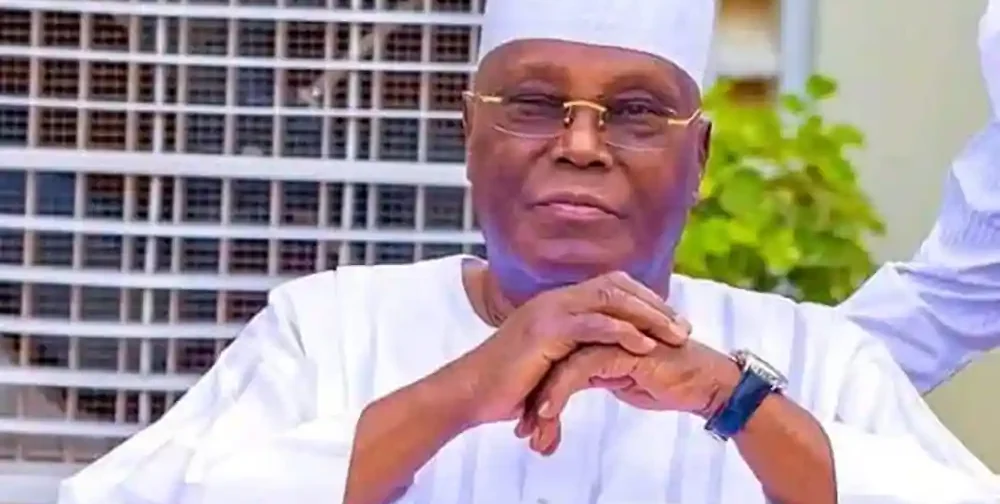
The African Democratic Congress (ADC) has approached the Court of Appeal, seeking to overturn the judgment that nullified the leadership of the party led by former Senate President, David Mark.
The party is also asking the appellate court to restrain the Independent National Electoral Commission (INEC) from altering its leadership records or tampering with the names and nomination details of its presidential and governorship candidates pending the determination of its appeal.
The ADC argued that the judgment delivered by Justice Lifu was based on an amended court process that was already the subject of a pending appeal.
It faulted the trial court for delivering its ruling before the earlier appeal had been determined, describing the development as a matter requiring the intervention of the appellate court.
According to the party, allowing INEC to implement the judgment at this stage could trigger changes that might be difficult to reverse, even if the appeal eventually succeeds.
The party is therefore seeking an order directing INEC to maintain the status quo that existed before the November 5 judgment, to safeguard its candidates’ participation in the 2027 general elections.
It urged the electoral commission to refrain from taking any action that could undermine the appellate court’s eventual decision or jeopardise the political interests of its candidates while the appeal and related applications remain pending.
The ADC further argued that the Court of Appeal must preserve the subject matter of the dispute to ensure that its eventual judgment is not rendered ineffective by any intervening action.
“These are serious questions before the Court of Appeal,” the party said.
-
 News2 days ago
Gunmen Machete Football Legend Segun Odegbami in Abeokuta Home Attack
-
News2 days ago
2027: Obi Urges Nigerians to ‘Sacrifice One Day for Nigeria to Be Good Again’
-
Editorial2 days ago
FAKE DRUGS: Nigeria’s Deadly Trade in Human Lives Must End
-
News3 days ago
“We’ve Lost a Great Son,” Mbah Mourns Ferotex CEO, Oshaba-Onuh
-
Politics2 days ago
Umeh Apologises to Anambra People for Supporting Soludo’s Emergence as Governor
-
News18 hours ago
Pomp, Pageantry as 37th NAFEST Opens in Enugu; Mbah Champions Cultural Economy
-
News1 day ago
2027: ‘I’ll Defeat Natasha Without Spending a Dime,’ Yahaya Bello Boasts, Calls Dino Melaye Noise Maker
-
News1 day ago
Abductions: 640 Nigerians Still in Captivity as Families Cry Out Over Government Silence