News
NDDC to facilitate financing for women empowerment


The Niger Delta Development Commission, NDDC, says it will partner with financial institutions to assist women to access finance to enhance their livelihood.
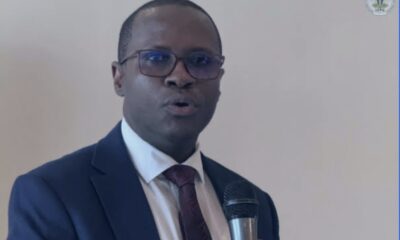
Speaking during a courtesy visit by a delegation from the Union Bank Nigeria at the NDDC headquarters in Port Harcourt, the Commission’s Managing Director, Dr Samuel Ogbuku, pledged to partner on Women Empowerment in the Niger Delta Region.

He said: “We are looking at providing single digit loans to support the women. That is why we are supporting the Niger Delta Chamber of Commerce to build entrepreneurs. The Chamber of Commerce will help us to share the risks and build a database which will guide the NDDC in setting up empowerment schemes. We are also setting up structures to monitor the performance of the entrepreneurs.”
Ogbuku stated that the registration of the Niger Delta Chamber of Commerce being championed by the NDDC was meant to extend the reach of the Commission’s programme of empowering the people of the Niger Delta region through entrepreneurial schemes.
To be able to support entrepreneurial growth and fast track development, the NDDC boss said that the Commission decided to adopt the Public Private Partnership, PPP, model to provide alternative sources of funding for its key development projects and programmes.

Ogbuku noted: “The Niger Delta is the bedrock of the Nigerian economy and we need peace for development to thrive in the region. We need to get people engaged to ensure peace. Women in the region are very industrious but we need to strengthen them.”
The Regional Business Executive, South, for Union Bank Nigeria, Mr. Chidi Ileka, stressed the need to support women with training to enable them succeed in businesses. He said the bank was eager to partner with the NDDC to further empower women in the Niger Delta region and collaborate to address gender inequality and provide women in the region with enhanced opportunities for success.
Ileka said that the partnership would help women to access finance, development programmes, and affordable healthcare, noting that the initiative, founded on principles of gender equality and the desire to champion female empowerment, would equip women in the Niger Delta with the necessary tools and resources to achieve financial independence.
He explained: “We recognise the pivotal role that access to finance plays in entrepreneurial success and economic growth. By working with the NDDC, we hope to provide women with improved financial resources that will empower them to start or expand their businesses and achieve financial stability.
Making a presentation, the Head, Alpher and Women Lead Business in Union Bank, Mrs. Chioma Nwokike, said that the bank would like to strengthen women’s long-term financial security through savings and investment opportunities by facilitating women’s ability to save and invest.
She explained that the joint initiative would encompass comprehensive business and personal development programmes, stating: “Through training, capacity building programmes and leadership development, women in the Niger Delta will acquire the skills and knowledge needed for entrepreneurship and personal growth.”
Nwokike said that the partnership would prioritise the importance of affordable healthcare for women in the Niger Delta, assuring that efforts would be made to improve healthcare access for women to ensure their well-being and enable them to focus on their personal and professional growth.




Motorists and travellers using the Benin-Agbor-Asaba route have been stranded for days as severe traffic congestion continues to disrupt movement between the South-South, South-East and Lagos.
The gridlock, which has reportedly persisted for about five days, has left motorists spending long hours on the road, with some travellers unable to reach their destinations.
The situation has been attributed largely to the poor condition of sections of the road, which has been further worsened by heavy rainfall in the area.

Minister of Works, Engr David Umahi and some National Assembly members inspecting Benin-Agbor road on Tuesday
The rain has reportedly made some portions of the road difficult to navigate, resulting in vehicles becoming stuck and worsening the already severe congestion.
The route is a major link for motorists travelling between Lagos and several states in the South-South and South-East, making the prolonged gridlock a major concern for travellers, transport operators and motorists.
Some motorists have reportedly been forced to spend extended periods on the road as efforts to navigate the affected sections have proved difficult.
The development has also raised concerns about the impact of the bad road on the movement of goods and passengers, particularly during the rainy season.
Travellers using the route have called for urgent intervention to restore movement and prevent further deterioration of the situation.
Meanwhile, the Minister of Works, Senator David Umahi, on Tuesday led an urgent federal intervention on the congested Benin-Agbor-Asaba Expressway following President Bola Tinubu’s order to ease the hardship faced by stranded motorists.
Umah’s arrival in Edo State was disclosed by his Senior Special Assistant on Media, Francis Nwaze, who shared a video of the minister’s on-site inspection on his official X handle.
“Umahi arrives in Benin, Edo State, to address the congestion on the Benin-Agbor-Asaba Road,” Nwaze posted, adding in a subsequent update, “Umahi arrives Benin-Agbor-Asaba Road to resolve issues surrounding the road, which was handed over to concessionaire on PPP Basis since 2025.”
In an official press statement issued on Tuesday, Nwaze confirmed that Tinubu ordered immediate corrective measures on both the Benin-Agbor-Asaba axis and the deplorable Ifaki-Kabba-Ado Ekiti road spanning Ekiti and Kogi States.
To execute the directive, Umahi reportedly deployed the Minister of State for Works alongside ministry officials to commence remedial works on the Ekiti-Kogi corridor.
“While the intervention team moved into Ekiti and Kogi States, Umahi himself headed to Benin, Edo State, alongside members of the National Assembly Works Committees, to initiate a similar coordinated intervention on the Benin-Agbor-Asaba road.
“The Benin meeting is expected to bring together key stakeholders, including representatives of the Edo and Delta State Governments and the Niger Delta Development Commission (NDDC), with the aim of finding immediate solutions to the challenges confronting motorists on the strategic corridor,” the statement partly read.

The FCT Police Command has identified officers accused of allegedly extorting N40,000 from a resident along Wuye-Utako Road, near Salem Church, in the Federal Capital Territory.
The Command said the officers depicted in a video circulating on social media had been identified and were in custody.
The Police Public Relations Officer of the command, SP Josephine Adeh, disclosed this in a statement on Tuesday.
“The attention of the Commissioner of Police, FCT Police Command, CP Ahmed Muhammed Sanusi, PhD, FCAI, has been drawn to a video circulating on social media alleging that police officers of the FCT Police Command extorted an FCT resident of the sum of Forty Thousand Naira (₦40,000) along Wuye – Utako Road, by Salem Church, within the Federal Capital Territory.
“The officers depicted in the video have been identified and are in custody,” the statement read.
The video, which began circulating widely on social media around August 24, features a man who claimed that on August 20, 2026, a police officer in Abuja collected ₦40,000 from him even after verifying that his documents were complete.
The man shared footage showing a receipt and a conversation after he returned to the checkpoint.
Adeh said the Command had also invited the complainant to the FCT Police Command Headquarters to give an official statement on the incident to aid investigation and disciplinary action.
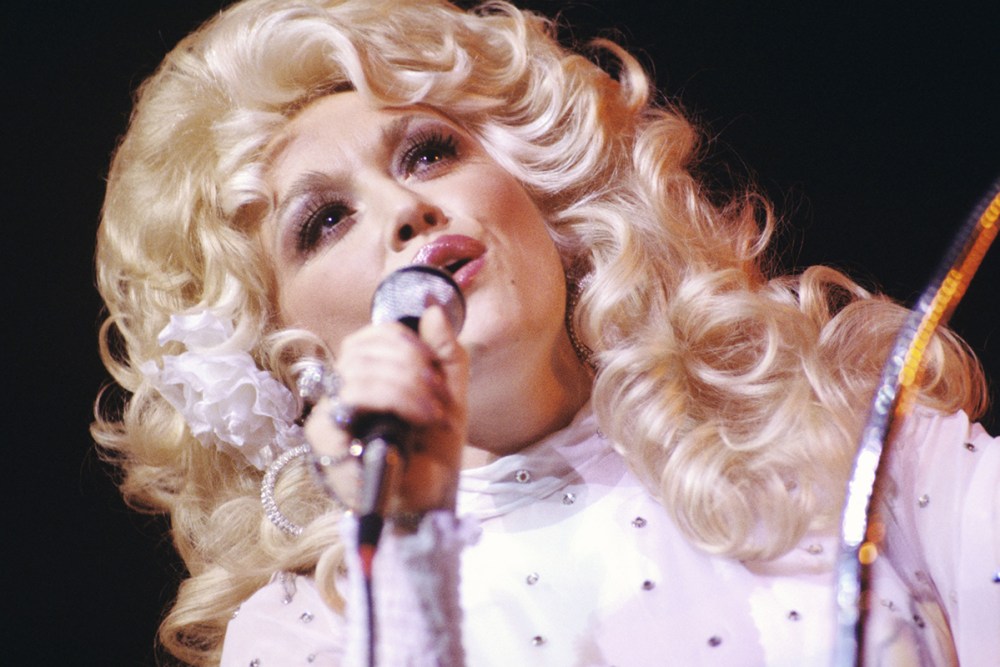
Country music legend and Hollywood star, Dolly Parton, has died at the age of 80, her family has announced.
Parton’s nephew, Brian Seaver, announced her death on Tuesday in a video shared on her social media account, describing the moment as one of “absolute pride and great sadness”. The family did not immediately disclose the cause of death.
The Tennessee-born singer, songwriter, actress and philanthropist enjoyed a career spanning more than six decades and became one of the most recognisable figures in American popular culture.
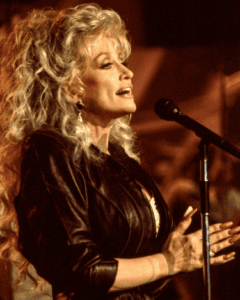
Late Dolly Parton
Known as the “Queen of Country”, Parton sold more than 100 million records worldwide and earned numerous honours, including multiple Grammy Awards. Her enduring hits included “Jolene”, “I Will Always Love You”, “9 to 5” and “Coat of Many Colors”.
Her death came after a period of health challenges. In May, Parton announced the cancellation of a Las Vegas performance, revealing that she had been undergoing treatment for kidney stones and was also dealing with problems affecting her immune and digestive systems.
Just days before her death, Parton had indicated that she was still determined to work despite acknowledging that she had slowed down following the death of her husband, Carl Dean, in March 2025.
“Even though I’m still healin’, I’m still workin’!” she said, insisting that she still had many things she wanted to accomplish.
Parton was born on January 19, 1946, in Locust Ridge, Tennessee, the fourth of 12 children in a poor family. She grew up in the Appalachian region, where her mother’s love for traditional music helped nurture her passion for singing and songwriting.
She began performing as a child and moved to Nashville shortly after graduating from high school in 1964. Her songwriting talent soon earned her recognition, before she established herself as a major recording artiste.
Parton’s breakthrough included “Jolene”, which became one of her signature songs. Her composition “I Will Always Love You” later became a global hit for Whitney Houston after the singer recorded it for the 1992 film The Bodyguard.
Beyond music, Parton built a successful acting career, starring in films including 9 to 5, Steel Magnolias and The Best Little Whorehouse in Texas. She also became a prominent businesswoman through Dollywood, the theme park she established in Tennessee in 1986.
Her influence extended well beyond entertainment. Parton founded the Dollywood Foundation and its Imagination Library initiative, which provides free books to children, making childhood literacy one of the major causes associated with her name.
She also donated $1 million to coronavirus research at Vanderbilt University in 2020, funding that contributed to research that later helped in the development of Moderna’s COVID-19 vaccine.
Parton’s personal life also attracted public interest. She married Carl Dean in 1966, and the couple remained together for nearly six decades until his death in 2025. They had no children.
Despite her global fame, Parton remained closely connected to her Tennessee roots and used her success to support communities, education, healthcare and other charitable causes.
Her death brings to an end the life of an entertainer whose influence crossed generations, musical genres and national boundaries, leaving behind a vast catalogue of songs and a philanthropic legacy that extended far beyond country music.
-
 News3 days ago
‘Fake agency’ boss, Nwabueze, fights back with appointment letter
-
News2 days ago
NDLEA arrests 101-year-old woman for selling cannabis in Ogun
-
News3 days ago
‘How fake federal agency tricked us’ – Anambra govt
-
News2 days ago
Terrorists abduct many worshippers from Niger Central Mosque
-
Entertainment5 hours ago
Dolly Parton, Queen of Country Music, dies at 80
-
News2 days ago
Insecurity: Nigeria must not become a killing field — Obi tells FGi
-
News3 days ago
Atiku breaks silence on FBI’s refusal to make Tinubu records public
-
News1 day ago
Atiku’s Subsidy Reversal: Desperation For Power Must Not Endanger Nigeria’s Economy-Yilwatda