News
Subsidy: FG allocates N50,000 to 1300 nano businesses across the nation


• Makes economic plans to help students, farmers, workers, and businesses
President Bola Ahmed Tinubu has announced that plans by the Federal Government of Nigeria to allocate N50 billion conditional grant to one million businesses, N50,000 each to 1300 nano-businesses across 774 local governments between now and March, 2024,

Bola Tinubu revealed this economic intervention among other plans, during a live national broadcast, Monday, 31st July, 2023.
Tinubu stated that his administration is rolling out these economic interventions to reduce the burden the current economic situation has imposed on all Nigerians, especially businesses, the working class and the most vulnerable persons.
“What I can offer in the immediate future is to reduce the burden our current economic situation has imposed on all of us, most especially on businesses, the working class and the most vulnerable among us.

“Already, the Federal Government is working closely with states and local governments to implement interventions that will cushion the pains of our people across socio-economic brackets,” he stated.
The President that the economic difficulty results from the wasteful fuel subsidy and multiple exchange rate systems, which puts the national wealth in the hands of a few persons.
Tinubu maintained that removing the fuel subsidy, despite the hardship it brings to the nation’s people, is an action in the right direction, beneficial to Nigeria’s future and economic growth.
“The subsidy cost us trillions of Naira yearly. Such a vast sum of money would have been better spent on public transportation, healthcare, schools, housing and even national security. Instead, it was being funneled into the deep pockets and lavish bak accounts of a select group of individuals.”
“Also, the multiple exchange rate system that had been established became nothing but a highway of currency speculation. It diverted money that should have been used to create jobs, build factories and businesses for millions of people.
“Our national wealth was doled on favourable terms to a handful of people who have been made filthy rich simply by moving money from one hand to another. This too was extremely unfair,” Tinubu revealed.
Tinubu restated his commitment to revitalising the nation’s economy by working with state governments to offer interventions for businesses, workers and vulnerable persons to prosper amidst the hardship.



News
Adeboye Ordered Refund of Billions in Suspected Illicit Donations to RCCG, EFCC Chairman Reveals
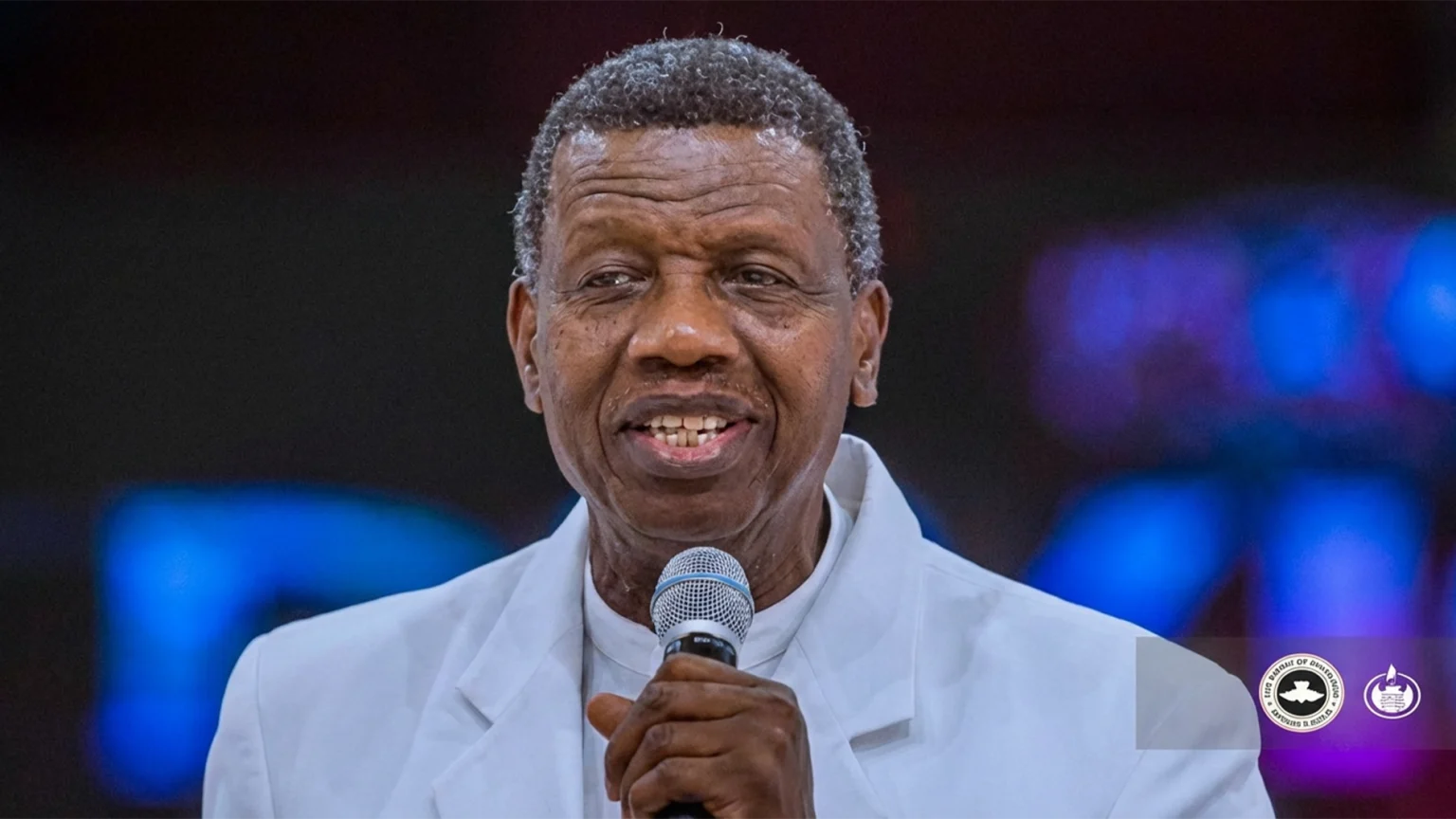
The Chairman of the Economic and Financial Crimes Commission (EFCC), Ola Olukoyede, has revealed how the General Overseer of the Redeemed Christian Church of God (RCCG), Pastor Enoch Adeboye, directed the church to refund billions of naira traced to it as suspected proceeds of crime.
Olukoyede disclosed this on Saturday while speaking at a public event on corruption and the church, where he raised concerns over the alleged use of religious institutions by wealthy individuals and politicians to conceal illicit funds.
According to the EFCC chairman, investigations by the commission uncovered instances where some wealthy Nigerians and politicians allegedly used churches to channel or conceal money suspected to have been obtained through illegal activities.
He said the commission discovered some of the funds in the RCCG and subsequently wrote to Adeboye to inform him of its findings.
Olukoyede said the cleric’s response was immediate, as he neither attempted to defend the donors nor challenged the commission’s findings. Instead, he reportedly instructed church officials to return the money.
Quoting the RCCG leader, the EFCC chairman said Adeboye simply told his officials: “Return the money.”
He added that the cleric insisted that the church would not retain any funds suspected to have been obtained through illicit means.
“He said, if the money is not clean, the church will not keep it. He said, return it. Let the government do what it wants with it,” Olukoyede recounted.
The EFCC chairman said the church complied with the directive and returned the funds to the commission, disclosing that the amount involved ran into billions of naira.
Olukoyede cited the incident as an example of the responsibility expected of religious institutions in preventing the use of their platforms to legitimise or conceal proceeds of crime.
He stressed the need for churches and other religious organisations to exercise due diligence in accepting donations, irrespective of the financial standing, political influence or social status of donors.
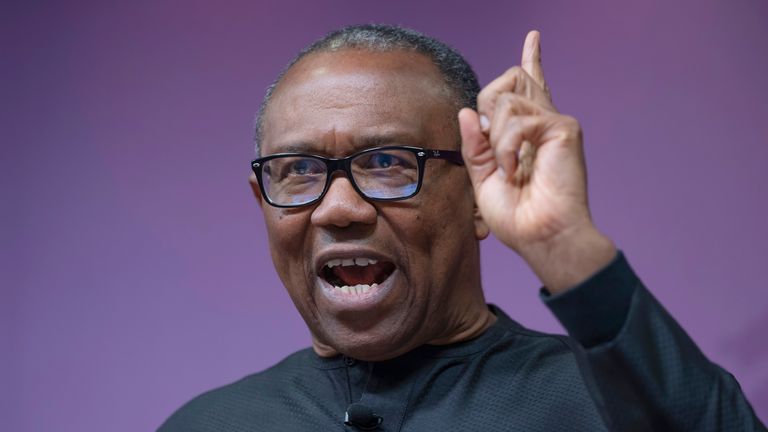
The Presidential Candidate of the Nigeria Democratic Congress (NDC), Peter Obi, has condemned reported attacks on members and coordinators of the party and the Obidient Movement in Delta State, describing the incidents as unacceptable and a threat to democratic participation.
Obi called on the government and security agencies to immediately investigate the attacks, identify those responsible and ensure they are brought to justice, irrespective of their political affiliations.
In a press statement, the former Anambra State Governor said the victims were exercising their democratic rights, stressing that political violence, intimidation and destruction of property had no place in a democratic society.
He maintained that no political ambition was worth the life of any Nigerian, insisting that political authority should be earned through persuasion and the confidence of the electorate rather than violence, thuggery or fear.
Obi also assured affected party members and coordinators that the NDC would not be intimidated or surrender its democratic space to violence, adding that the party’s response would remain peaceful, lawful and determined.
Reaffirming the constitutional rights of Nigerians to organise, assemble, express their opinions and freely choose their political leaders, regardless of party affiliation, Obi called for a political environment driven by constructive ideas, responsible leadership, justice, liberty and respect for human dignity.
He further expressed solidarity with those affected by the reported attacks, urging political actors to embrace peaceful engagement and democratic principles.
News
Marriage Under Threat: Has Love Disappeared? Why Many Marriages Are Crashing and Young Men Are Afraid to Marry

ADVOCATE SUNDAY DISCOURSE
By Tony Edike
Marriage was traditionally regarded as one of life’s most beautiful institutions. It represented love, companionship, commitment, sacrifice and the coming together of two people who had chosen to build a future together.
For generations, marriage was not necessarily about how much money a man had, the type of car he drove, the house he lived in or the social status he commanded. It was about finding someone with whom to share life’s journey, confront challenges, raise children and grow old together.
But something appears to be changing.
Across society, conversations about marriage are increasingly dominated by divorce, infidelity, domestic violence, financial expectations, emotional neglect, betrayal and irreconcilable differences.
Many marriages that began with elaborate wedding ceremonies, expensive receptions, beautiful photographs and public declarations of undying love are ending in bitterness, disappointment and separation.
Even more disturbing is the growing number of young men who openly express fear of marriage.
Some say they are not financially ready. Others believe marriage has become too expensive, emotionally demanding and financially risky. Some point to failed marriages around them as reasons to remain single, while others fear entering relationships where their financial capacity may determine how much love and respect they receive.
This raises an important question: Has genuine love disappeared from modern relationships, or have we simply changed what we understand love and marriage to mean?
When money becomes more important than love
One of the issues generating serious debate among young people today is the growing emphasis on financial status when choosing a marriage partner.
For some women, a man’s financial standing appears to have become a major, sometimes decisive, consideration in marriage.
A prospective husband is assessed by his monthly income, business interests, political connections, properties, cars, lifestyle and ability to provide a comfortable life.
Questions such as whether he owns a house, drives a luxury vehicle, has a stable business or can afford an expensive wedding and honeymoon have become important considerations in some relationships.
There is nothing fundamentally wrong with a woman desiring a financially stable husband. Marriage comes with responsibilities, and financial security is an important consideration when planning a family.
Women have every right to seek responsible, hardworking and economically stable partners.
However, there is a difference between seeking a responsible man who can provide for his family and making wealth the primary qualification for love.
When a man’s financial position becomes the most important measure of his suitability for marriage, what happens when his business collapses, he loses his job, suffers a financial setback or experiences difficult times?
Will the love survive?
Will the woman remain committed when the luxury lifestyle disappears?
Will she still see him as the man she chose to spend the rest of her life with?
These are important questions because marriage is not a permanent holiday in which everything goes according to plan. There are seasons of abundance and seasons of difficulty.
A woman who marries a wealthy man must understand that wealth can disappear. Equally, a man who marries a beautiful woman must understand that physical beauty changes with age.
Marriage requires something deeper than the things that initially attract two people to each other.
Why are young men becoming afraid of marriage?
It is becoming increasingly common to hear young men say they would rather remain single than enter a marriage that could destroy their peace, finances and emotional well-being.
Some have witnessed their fathers struggle in troubled marriages. Others have watched friends lose their properties, businesses and savings following bitter separations.
There are also men who believe that the expectations placed on husbands have become overwhelming.
A man is expected to provide accommodation, pay bills, finance the children’s education, meet household needs, support extended family members and maintain a comfortable lifestyle.
In some relationships, these responsibilities are accompanied by demands for expensive gifts, holidays, luxury shopping and a standard of living that may be beyond his financial capacity.
When he struggles to meet these expectations, he may be described as irresponsible, incapable or unworthy of being a husband.
But the question is: Must a man be wealthy before he deserves genuine love?
Should a young man who is hardworking, honest, responsible and committed to building his future be dismissed simply because he has not yet achieved financial success?
There are men who are genuinely afraid of marriage because they believe they are being assessed more by what they possess than by who they are.
Nevertheless, men must also accept responsibility for some of the problems affecting modern marriages. Some enter relationships without emotional maturity, financial discipline or a genuine understanding of commitment.
Others expect their wives to provide emotional support, loyalty and respect while failing to demonstrate the same qualities.
Some are unfaithful, abusive, controlling and unwilling to take responsibility for their families.
Marriage cannot succeed when one partner expects everything and contributes little.
The biblical standard: Love is a responsibility, not just a feeling
The Bible provides a powerful explanation of what marriage should represent.
In Ephesians 5:28–29, Apostle Paul writes:
“In this same way, husbands ought to love their wives as their own bodies. He who loves his wife loves himself. After all, no one ever hated his own body, but he feeds and cares for it, just as Christ does the church.”
This passage presents a profound standard for husbands.
A husband is not merely expected to provide money and accommodation. He is expected to care for his wife, protect her dignity, consider her feelings and treat her with the same concern he gives himself.
The Bible further states in Ephesians 5:33:
“However, each one of you also must love his wife as he loves himself, and the wife must respect her husband.”
This is a relationship built on mutual responsibility.
The husband is instructed to love, while the wife is instructed to respect her husband. Neither instruction should be used as an excuse for abuse, intimidation, oppression or the denial of the other’s dignity.
Colossians 3:19 is even more direct:
“Husbands, love your wives and do not be harsh with them.”
This means a man cannot claim to be a good Christian husband while constantly humiliating, intimidating, insulting or physically abusing his wife.
Similarly, 1 Peter 3:7 instructs husbands to live with their wives considerately and treat them with respect as fellow heirs of the gift of life.
In other words, Christianity does not present marriage as an arrangement in which a man acquires ownership of a woman. It is a partnership in which both individuals have responsibilities before God.
What does the Bible expect from wives?
The Bible also speaks clearly about the responsibilities of women in marriage.
First Peter 3:1–4 encourages wives to demonstrate respect for their husbands and emphasises the importance of inner beauty, a gentle and quiet spirit, and godly character.
The passage teaches that a woman’s worth should not be measured merely by her physical appearance, expensive jewellery, fashionable clothing or elaborate hairstyles.
Rather, character, humility, wisdom and a godly disposition are presented as qualities of lasting value.
This is particularly relevant in an age where social media has created enormous pressure to maintain expensive lifestyles and compete with other couples.
Some people appear to measure the success of marriage by the quality of photographs they post, the destinations they visit, the gifts they receive and the material possessions displayed online.
But a beautiful wedding does not guarantee a successful marriage.
A luxurious home does not automatically produce a peaceful family.
And expensive gifts cannot permanently replace affection, understanding, loyalty and emotional support.
However, biblical submission and respect must never be interpreted as permission for a woman to endure violence or abuse. Respect in marriage must exist alongside love, safety and dignity.
The danger of social media and unrealistic expectations
Social media has also contributed to the changing perception of marriage.
Young people are constantly exposed to photographs and videos of couples travelling abroad, celebrating anniversaries in expensive restaurants, exchanging luxury gifts and living in beautiful houses.
What is often missing from these pictures is the reality behind the camera.
The financial struggles, disagreements, sacrifices, disappointments and personal challenges that accompany marriage are rarely displayed.
As a result, some young people have developed unrealistic expectations about what marriage should look like.
A young woman may begin to believe that a successful marriage must involve a husband who can provide everything she sees other women displaying online.
A young man may conclude that marriage is only for wealthy people who can afford expensive weddings, houses and luxury lifestyles.
Both perceptions are dangerous.
Marriage is not a competition, and a couple should not destroy their financial future trying to impress people who have no responsibility for their household.
Where has companionship gone?
Perhaps one of the biggest problems with modern relationships is that people are increasingly interested in what they can get from marriage rather than what they can contribute to it.
Some women want husbands who can provide everything but are unwilling to support their partners through difficult times.
Some men want obedient and supportive wives but are unwilling to listen, compromise, show affection or share domestic responsibilities.
Some people enter relationships with the intention of changing their partners into the individuals they have always imagined.
Others marry because of pressure from parents, age, pregnancy, financial convenience or the desire to avoid being described as unmarried.
But marriage built on pressure, convenience or material expectations may struggle when the initial excitement disappears.
A successful marriage requires friendship.
A husband and wife should be able to communicate freely, laugh together, disagree without destroying each other emotionally, make plans and support one another’s ambitions.
They should be able to discuss financial difficulties without humiliation and resolve disagreements without involving every member of their extended families.
Most importantly, they must understand that marriage is not a contest to determine who has greater authority.
It is a partnership in which both individuals must be willing to make sacrifices.
Men must also rethink their understanding of marriage
While much attention is often directed at women’s financial expectations, men must equally examine their attitudes towards marriage.
Some men want wives who will respect them but do not understand that respect is strengthened by responsible leadership, honesty, kindness and consistency.
A man cannot demand loyalty while being unfaithful.
He cannot demand peace while creating an atmosphere of fear in his home.
He cannot expect his wife to support his ambitions while deliberately frustrating hers.
Providing money is important, but financial provision alone does not make a good husband.
A woman also needs companionship, affection, emotional security, communication and the assurance that her husband values her beyond her domestic responsibilities.
Similarly, women must understand that a husband is human. He can experience failure, disappointment, unemployment and financial difficulties.
A man should not be reduced to his bank balance, just as a woman should not be reduced to her physical appearance or ability to bear children.
What should young people look for before marriage?
Before entering marriage, young men and women should look beyond physical attraction and financial status.
They should examine character, emotional maturity, honesty, temperament, financial discipline, family values, religious convictions and the ability to resolve disagreements.
They should discuss expectations concerning children, careers, finances, extended family responsibilities, religion and household management.
Young people must also learn that love does not mean ignoring warning signs.
A person who is violent, dishonest, manipulative or consistently irresponsible does not automatically become a good spouse because a wedding ceremony has taken place.
Marriage should be entered into with preparation, understanding and a willingness to build a future together.
There is also no shame in taking time to establish oneself financially before getting married. But there is danger in allowing the pursuit of wealth to become an endless condition for loving or being loved.
Is marriage still worth it?
Despite the growing number of failed marriages, marriage remains a valuable institution.
There are still husbands who sacrifice for their families, wives who stand firmly beside their husbands, and couples who have built lasting relationships through love, patience, faith, understanding and mutual respect.
Their marriages may not always be perfect, but they understand that commitment means remaining willing to work through challenges together.
The problem, therefore, is not necessarily that marriage has lost its value. It is that some people have lost sight of the values that make marriage work.
We cannot continue to celebrate extravagant weddings while neglecting the preparation required to sustain marriages.
We cannot demand that men demonstrate financial strength while ignoring their emotional needs.
We cannot demand that women submit while excusing men who refuse to love.
And we cannot continue to preach about family values while tolerating domestic violence, infidelity, dishonesty and selfishness.
The greatest question should not be how much a man has before marriage or how beautiful a woman looks on her wedding day. It should be whether both individuals possess the character, maturity and willingness to build a home together.
A final reflection
Perhaps it is time for society to return to the fundamental understanding that marriage is not a business transaction.
A man should not marry a woman simply because she is beautiful, and a woman should not marry a man simply because he is wealthy.
Beauty fades. Wealth fluctuates. Businesses collapse. Careers change. Children grow up. Life presents unexpected challenges.
What remains important is the character of the people involved and their willingness to honour the promises they made to each other.
To young men who are afraid of marriage, do not allow the failures of other people’s marriages to convince you that genuine love no longer exists. But do not rush into marriage without preparation and discernment.
To young women, it is perfectly reasonable to desire financial security, but do not allow the pursuit of a wealthy husband to blind you to the value of character, kindness, responsibility and genuine affection.
And to married couples, remember that your home is not a competition. It is a partnership.
Perhaps the words of Ephesians 5:25 offer the most important reminder to husbands:
“Husbands, love your wives, just as Christ loved the church and gave himself up for her.”
If husbands truly understood this responsibility, and wives equally embraced the values of respect, faithfulness and partnership, many of the problems threatening marriages today could be addressed.
The question is not whether love still exists. The question is whether we are still willing to love beyond money, beauty, convenience and personal gratification.
Because marriage should be about building a life together, not merely finding someone who can finance the lifestyle we desire.
-
 News2 days ago
PSC Appoints Fidelis Ogarabe Enugu Police Commissioner, Deploys Three Others
-
News1 day ago
‘I Had Lost Hope, But Prayed To Receive My Gratuity Alive’ – Enugu Retirees Thank Mbah After Years Of Waiting
-
News2 days ago
Enugu Gratuity: ‘It’s Wrong to Retire Without Gratuity for Years’ – Mbah Releases ₦10bn, Pays 1,893 Retirees in First Batches
-
Entertainment1 day ago
Diewait Ikpechukwu Dies at 71: Nollywood Veteran, Former Footballer, Husband and Father
-
News2 days ago
10 Key Things to Know about Justice Lifu’s Judgment Affecting ADC, Atiku, By Abdulrahman Abdulaziz
-
News1 day ago
Mbah Inaugurates 68 Development Centre Administrators, Tasks them on Grassroots Governance
-
News2 days ago
Enugu Pensioners Rejoice as Mbah Pays Gratuities After Over 30 Years of Delay – Salaries Director
-
News2 days ago
2027 Elections: IPC Trains Online Publishers on Fact-Checking, Accountability, Inclusive Reporting