News
NAFDAC takes war against bleaching cream to South-East, warns on increase in cancer

The National Agency for Food and Drug Administration and Control (NAFDAC) has urged journalists and entertainers within the South-East to join the agency in its current war against use of bleaching cream.
The Director-General of NAFDAC, Prof. Moji Adeyeye, made the call on Wednesday in Enugu during an address at the South-East Media Sensitisation Workshop on Dangers of Bleaching Creams and Regulatory Controls.

Adeyeye, who was represented by Dr Leonard Omokpariola, Director of Chemical Evaluation and Research, noted that there was an imperative to warn people of South-East and Nigerians in general to the harmful effects of bleaching creams including cancer and damage to organs.
According to her, other dangers are skin irritation and allergy, skin burn and rashes, wrinkles, premature skin ageing and prolonged healing of wounds.
“Last year, the Secretary to the Government of the Federation, Mr Boss Mustapha, acting on the resolutions of the Senate wrote to NAFDAC stressing the need to take stringent regulatory actions to stem the dangerous tide of rampant and pervasive cases of Nigerians using bleaching creams.

“We immediately took some decisive steps such as sensitisation of the public through different media outlets, enforcement through intelligence and raids in trade fair complexes that have resulted in large seizures and destruction of violative products.
“One of such sensitisation actions was the flag-off of Media Sensitization Workshops organised for journalists in Abuja, Lagos, Kano, Ibadan, Port-Harcourt and today in Enugu.
“Today’s sensitisation workshop is therefore a fulfillment of my promise to cascade it to the six geo-political zones in the country.
“This is a deliberate strategy of mobilising, educating, sensitising, and challenging Nigerian Health Journalists to play a frontline role in our concerted efforts to eradicate the menace of bleaching creams and needless waste of scarce resources in Nigeria,” he said.
Adeyeye noted that the sensitization workshop is a training the trainers’ programme with the great expectation that participants would assume the role of champions in the vanguard of the campaign against use of bleaching creams.
She said that a World Health Organization (WHO, 2018) study revealed that use of skin bleaching creams was prevalent among 77 per cent of Nigerian women which was highest in Africa compared to 59 per cent in Togo, 35 per cent in South Africa and 27 per cent women in Senegal.
“This scary statistic has shown that the menace of bleaching creams in Nigeria has become a national health emergency that requires a multi-faced regulatory approach.
“Part of the multi-pronged approach is consultative/sensitisation meetings such as this and heightened raids on distribution outlets of bleaching creams,” he said.
In a goodwill message, the Enugu State Commissioner for Health, Dr Ikechukwu Obi, said that the state government and her institutions would continue to collaborate with NAFDAC in its mandate to safeguard the health of the nation.
Obi, who was presented by Mr Monday Obetta, Director of Pharmaceutical Services, said: “We want our people to join hands with NAFDAC to protect the skin which is an important organ, protecting other organs in the body”.
Speaking, Dr Abubakar Jimoh, Director of Public Affair in NAFDAC, said that NAFDAC wants to use human face to tackle the menace of bleaching cream by engaging the media practitioners in order to get Nigerians rightly informed against bleaching cream.
Jimoh noted that the agency wanted individual Nigerians, who are in the demand side of bleaching cream, to know the serious danger and negative consequences of using bleaching cream.
“We thank the media for their sustained support all these years; however, we want media practitioners to do more for us in this era of war against bleaching cream nationwide,” he said.
The President, Association of Nigeria Health Journalists, Mr Hassan Zaggi, urged health journalists to put the advocacy against use of bleaching creams to the front burner of media discourse and engineering public thoughts toward it.
“Media practitioners should do more by creating time to talk one-on-one to people around them on the dangers of bleaching cream,” Zaggi said.
The workshop featured paper presentation on: “An Overview of Skin Bleaching: The NAFDAC Perspective”; “Role of Mass Media in Promoting Public Health in Nigeria”; “Safe Handling of Chemicals and Ingredients in the Cosmetics Industry” and “The Cosmovigillance Best Practices” among others.



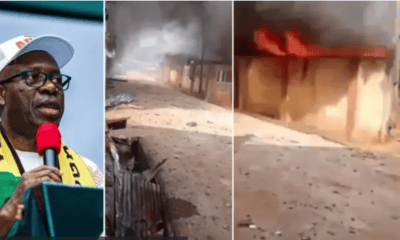
Suspected political thugs have attacked the secretariat of the Nigeria Democratic Congress (NDC) in Ikpoba-Okha Local Government Area of Edo State, destroying property at the facility.
The attack, reported on Wednesday, October 14, comes barely a week after NDC complained of a similar incident in Enugu.
A video circulating on social media showed damage to property within the Edo secretariat, although no casualties had been reported as of the time of filing this report.
In the footage, a woman accused the ruling All Progressives Congress (APC) of being responsible for the attack, linking the incident to the earlier violence in Enugu, which is being investigated by the police.
“The last one happened in Enugu, where one person allegedly died. Now they have brought it to Edo. APC, your end is here,” she said.
Her allegation against the APC has not been independently verified, while the identities of those responsible for the attack remain unknown.
The reported incident follows growing concerns over political violence ahead of the 2027 general elections.
The earlier incident in Enugu had prompted Governor Peter Mbah to demand an impartial police investigation, warning that anyone found responsible would face prosecution regardless of political connections.
It was not immediately clear whether security agencies had commenced an investigation into the Edo attack or identified any suspects.
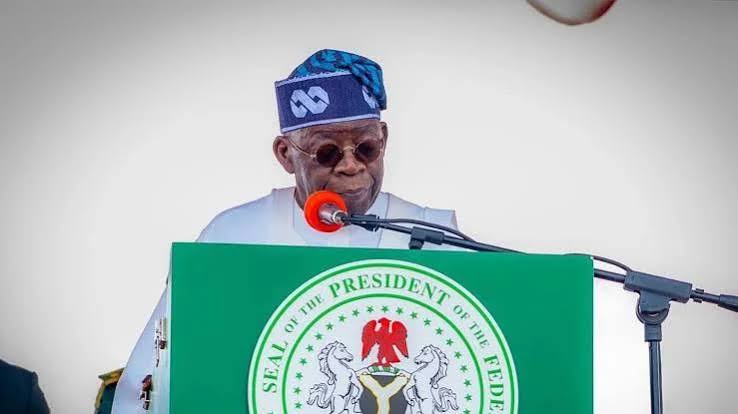
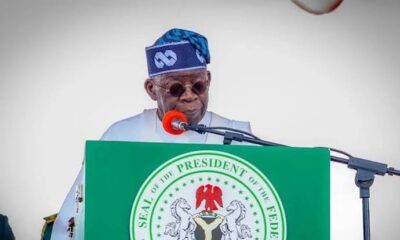
President Bola Tinubu has explained why he will not accompany members of the All Progressives Congress (APC) Presidential Campaign Council to every campaign event ahead of the 2027 general election, saying he must balance the demands of the re-election campaign with the responsibilities of governance.
Tinubu spoke on Wednesday in Abuja during the inauguration of the APC Presidential Campaign Council, where he charged members to take the party’s message to Nigerians across the states and local government areas while he concentrated on running the country.
The President said he agreed with concerns that the rigours of campaigning should not distract him from governance, insisting that Nigeria required his attention at a time when the administration was managing economic responsibilities and international financial obligations.
“You’ve warned me not to allow the rigour of the campaign to distract me from governance, I hear you. I am in full agreement with your decision. Nigeria needs more attention now,” he said.
Explaining further, Tinubu asked campaign council members to excuse him from attending every campaign event, pointing to the need to meet the country’s financial obligations.
“So, you will excuse me from going everywhere with you, we have bills to pay. The American creditors cannot wait,” the President said.
He also emphasised the importance of attracting investors willing to make long-term commitments to Nigeria, arguing that investment was necessary to secure a better future for the country’s children.
“We want those investors to come in, be here to stay, to invest for the future of our children,” he said.
Tinubu, however, assured Nigerians that his decision not to attend every campaign event would not prevent him from engaging directly with voters.
“However, I will still make time to speak directly with Nigerians, even as you lead the campaign in the states and local government areas,” he added.
Describing the inauguration as more than a routine political gathering, the President said the council represented a renewed commitment to Nigerians and the responsibilities entrusted to the APC as the governing party.
“We have not gathered merely to inaugurate a council. We have gathered to renew a covenant. A covenant with Nigerian people and the historic responsibility they have entrusted to us as Nigeria’s governing party,” he said.
He charged council members to communicate the administration’s vision, record and agenda to Nigerians nationwide, expressing confidence in their ability to take the party’s message to every ward.
“This council will carry our vision, our records and our agenda to every Nigerian, and it will carry them to victory every ward of this country,” Tinubu said.
The President also commended APC members for successfully completing the party’s congresses, recalling predictions that the exercise would trigger an internal crisis.
According to him, the party had overcome the challenges and emerged united, with members participating in the process from the ward level to the national leadership.
“They said there will be implosion. We passed through it. We did not fail. You didn’t let us down. We got here together,” he said.
Tinubu’s remarks place governance and economic management at the centre of his stated approach to the coming campaign, while assigning the campaign council the responsibility of coordinating the party’s nationwide mobilisation ahead of the 2027 election.
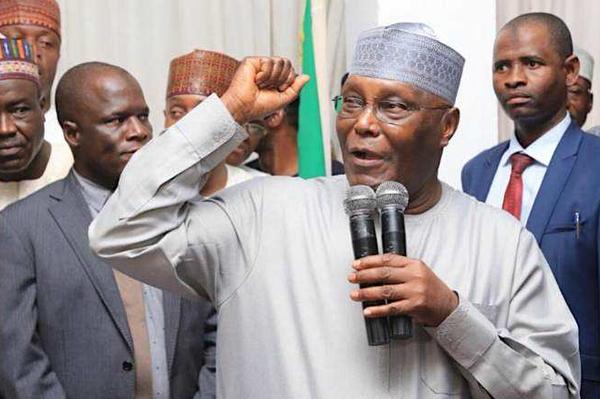
The Economic and Financial Crimes Commission (EFCC) has reopened an investigation into allegations involving former Vice-President Atiku Abubakar following a petition by a former member of the House of Representatives, Hon. Ehiozuwa Johnson Agbonayinma.
The commission acknowledged receipt of the petition, dated August 27, 2026, and received on September 1, 2026, confirming that investigation has commenced.
The former lawmaker through his lawyer, Chief Hannibal Uwaifo (SAN), is seeking a review of the allegations arising from an earlier investigation involving the former vice-president.
As part of the process, the EFCC invited Agbonayinma to its headquarters in Jabi, Abuja, on October 12, where he adopted his petition and responded to questions from investigators.
He arrived at about 9:58 a.m. and left at approximately 4:07 p.m. after the interview.
The commission’s acknowledgement letter, referenced CR:3000/EFCC/HQ/SDC-2/VOL.3/398, forms part of the ongoing investigative process.
He told newsmen that his petition sought to revisit an investigation conducted by the former EFCC chairman, Mallam Nuhu Ribadu, involving Atiku.
He argued that the matter deserved renewed attention in the interest of accountability and the rule of law.
“I want to thank Nigerians, the EFCC and those praying for me in this struggle. The laws are meant for both the rich and the poor. After the EFCC has done a fantastic job, it should not be kept under the table,” he said.
Agbonayinma added that he considered reporting alleged wrongdoing a constitutional responsibility, insisting that nobody was above the law.
He also disclosed that he had written a petition on the matter to United States President Donald Trump, calling for attention to the allegations.
-
 News19 hours ago
2027: Why I wont attend every campaign rally – Tinubu
-
Features1 day ago
Aguleri/Umuoba Anam Crisis: The Bloody Battle Between Close Neighbours
-
News20 hours ago
EFCC probes Atiku over alleged corruption committed as Vice President
-
News3 days ago
Mbah orders impartial Police Probe into Enugu political violence, vows accountability
-
News24 hours ago
‘Anyone who attempts suicide and fails will go to jail,’ says Akpabio
-
Features2 days ago
Enugu Political Flashpoint: Mbah orders Impartial Probe as NDC Incidents Trigger Controversy
-
News2 days ago
BREAKING: Soludo, Wike, Adeleke, others appointed member of APC Presidential Campaign Council
-
News2 days ago
Rochas Okorocha arrested, released after one-hour Interrogation — Police