


Connect with us

News

ISWAP kills over 200 Boko Haram terrorists, women, children in Borno

Published

on

Spread the love

No fewer than 200 Boko Haram fighters, including women and children, were killed by the Islamic State of the West Africa Province (ISWAP) in a deadly rivalry clash in the Gudumbali Local Government Area of Borno State.

It was gathered that the ISWAP insurgents targeted hundreds of the Boko Haram terrorists and their families at Choliye village, located in the northern part of the state, while fleeing ISWAP attacks.

Zagazola Makama, a Counter-Insurgency Expert and Security Analyst in Lake Chad, reported how the terrorists fled their enclaves between February 26 and 27, 2023, amidst deadly attacks targeting their enclaves in Gaizuwa, otherwise known as Mantari, Gabchari, Kashimiri, and Maimusari in Bama Local Government Area of the state.

A military source familiar with the development told Makama that the sustained attacks had led to the dislodgement of hundreds of the fighters.

The sources said the Boko Haram terrorists, who scampered to safety, ran towards the Mandara Mountains in the Gwoza axis to seek refuge. In contrast, others fled towards Konduga, Mafa, Dikwa, Gajiram, and the Lake Chad shores.

Maduka College Advert

Some of the surviving Boko Haram leaders who fled the attack due to the ISWAP’s superior fighting capacity included Abbah Tukur, the Khaid of Mantari and Maimusari; Abu Isa, Khalid of Ngauri; Alhaji Ali Hajja Fusami, the newly appointed Khalid of Garin Abu Ikliima and Abu Ali, among others.

According to multiple sources, ISWAP immediately mobilised more fighters to go after the fleeing Boko Haram, who were later intercepted at Choliye village, where they opened fire and killed 200 of them, including their family members, mostly women and children.

The source said that the onslaught against Boko Haram continued in the Asinari, Ashanari, and Masarmari areas in Konduga, where scores of the fighters were killed in the attacks coordinated on March 1 by one Ba’ana Chingori of the ISWAP.

In Yale, a village in Konduga LGA, ISWAP Commander Modu Bashir Okocha led another team of ISWAP to attack another Boko Haram position and, as a result, killed 15 of them, seizing their weapons and motorcycles.

The fierce onslaught had forced hundreds of the Boko Haram fighters and their families to surrender to the troops of Operation Hadin Kai in Mafa, Konduga, and other parts of the theatre while some of them managed to flee through Mafa to Dikwa, Abadam, as well as the Niger Republic in the Lake Chad region.

Some of the fighters escaped to the camp of Bakura Wulgo, a.k.a Abou Oumaymah, in the axis of Marte and Krenowa. In contrast, others ran to the Mandara Mountains in Gwoza to seek refuge and protection from Ali Ngulde.

The ongoing rivalry clash between JAS and ISWAP seems unending as several efforts by the groups to merge forces against the Nigerian military, and Multinational Joint Task Force (MNJTF) appear impossible.

So far, ISWAP and Boko Haram have failed to increase the workforce and equipment needed to sustain their nefarious activities as they attacked each other, inflicting heavy casualties among themselves.

On December 6, 2022, Boko Haram carried out one of the most devastating attacks, killing 33 wives of Islamic State West African Province (ISWAP) militants in Sambisa Forest.

On December 31, a faction of Boko Haram attacked an armory base of the ISWAP at Toumbum Allura Kurnawa and Kangar by the shores of Lake Chad. Bakoura led the attack, resulting in the killing of several ISWAP terrorists and the seizure of a large number of weapons.

Against this backdrop, the ISWAP leadership led by its IMAM Abu Mosab Albarnawi fled Nigeria to Somalia, Mali, and Burkina Faso to seek the support of other terrorist partners to save their self-acclaimed Daula from collapsing.

Due to its in-house leadership crisis, the Boko Haram faction has been on the receiving end within the past few weeks. The sack of Mallam Ibrahim Shuwa, aka IKIRIMA, and the appointment of Alhaji Ali Hajja Fusami by Ali Ngulde as a commander did not go well with many fighters within Sambisa Forest who were believed to be undermining the JAS groups.

The task ahead of the newly elected president of Nigeria will focus on a full-time military offensive around the shores of the Lake Tchad sub-region, including part of the Niger Republic and Cameroon.

(THISDAY)

News

Alleged $1bn arms fraud: Funds given to Defence Ministry, not military — Gen. Buratai

Published

on

Spread the love

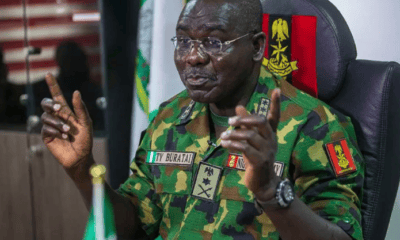
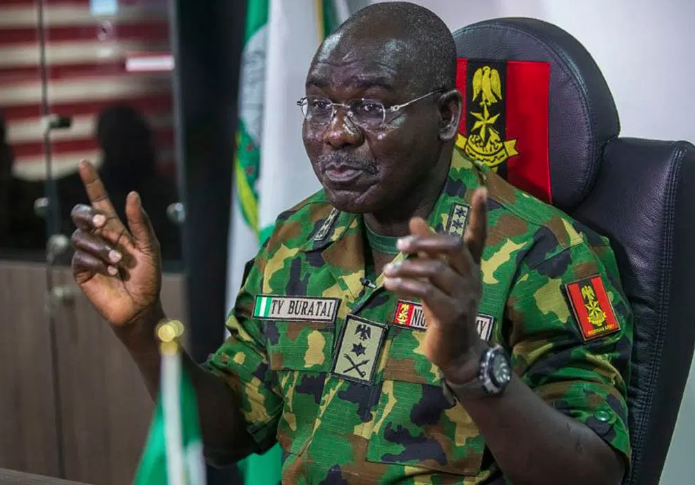
Former Chief of Army Staff, COAS, Lt. Gen Yusuf Buratai, retd., disclosed yesterday that the $1bn approved for defence procurement during his tenure as Army Chief by the federal government was released to the Ministry of Defence and not the services.

Gen Buratai disclosed that the funds, which were approved by the National Economic Council, NEC, did not pass through his hands or the accounts of the Nigerian Army, Navy and Air Force.

He said allegations surrounding the funds turned out to be “political and malicious,” noting that “they first emerged during the 2019 election period when the opposition alleged that the money had been diverted for electoral purposes”

His words:  The $1 billion was approved by the National Economic Council, NEC, for defence procurement. Not a single dollar of that fund passed through my hands or through the accounts of the Nigerian Army, Navy, or Air Force.

“The funds were released to the Ministry of Defence, and the entire procurement process was handled by that ministry. The Army, Navy, and Air Force never had a single dollar from that fund to make procurement directives.

Maduka College Advert

“I have described these allegations as political and malicious. They first surfaced during the 2019 election period when the opposition alleged the funds had been diverted for electoral purposes, a claim the federal government publicly refuted. Yet the stain remained, attached to the service chiefs, rather than the institution that managed the funds.”

The former COAS said the federal government publicly refuted the allegation at the time but lamented that the controversy continued to affect the reputation of service chiefs.

He faulted the ministry for not publicly explaining how the funds were disbursed or how contracts were awarded.

“The ministry, since then on its own, had not publicly explained how the funds were disbursed or contracts awarded. Accountability must be properly located,”he said.

While calling for greater transparency in military procurement, Buratai recommended the establishment of a defence procurement transparency portal to publish information on contracts awarded, contracting entities and delivery timelines, subject to national security considerations.

“The Ministry of Defence must own procurement record. The $1 billion arms procurement controversy festered because the institution that managed the funds, the Ministry of Defence, remained silent while service chiefs absorbed criticism.

“I recommend a Defence Procurement Transparency Portal that publishes, within national security limits, broad categories of contracts awarded, contracting entities, and delivery timelines.

“When the media asks where the money went, the answer should come from the ministry that spent it, not from military officers who never touched it,” he said.

Furthermore, Buratai proposed quarterly accountability bulletins summarising court martial outcomes relating to human rights violations and operational conduct, provided the publications did not compromise the rights of accused personnel or ongoing military operations.

Speaking on alleged human rights violations by members of the Nigerian security forces, Buratai said credible claims should be investigated and, where substantiated, prosecuted.

“I have always maintained that where credible allegations exist, they must be investigated and, where substantiated, prosecuted. The military is not above the law,” he said.

He acknowledged the need for the military to demonstrate that its disciplinary processes were credible, transparent and capable of addressing allegations at all levels.

He said that improved communication by the military and the Ministry of Defence would help address public concerns and ensure that media reports reflected the full context of security operations.

In his remarks, Former Senate President and Chairman Senate Committee on Defence Senator Ahmed Lawan, called  for a dedicated percentage of Nigeria’s revenue to funding of the Armed Forces of Nigeria and other security agencies to procure more platforms.

He noted that the National Assembly had been supporting the Armed forces and other security agencies by way of budgetary approvals.

He said:  “For us in the National Assembly, it is our duty to support the arm of government, to ensure that whatever resources are available and are required, are requested by the arm of government, we support that and we even give more.

‘’As at today, I am over 27 years as a member of the National Assembly, I have not seen any request sent by the executive for the armed forces and other security agencies that has not been approved. In fact, in most cases, they were always approved because we believe that security is first.’’

The Minister of Defence, General Christopher Musa, in his remarks, said:  ‘Today’s security threats are increasingly complex, adaptive and interconnected. Terrorist groups, criminal networks and other adversaries exploit information, technology, financial systems and gaps in coordination to pursue their objectives.

Represented by Air Commodore Steven Ogunmodede, retd., Senior Special Assistant on Foreign Relations, the minister said:  “Consequently, our response must combine effective combat operations with timely intelligence, technological capability, sound planning and cooperation among relevant security institutions.

“This is the essence of intelligence-led operations. The ability to identify a threat early, understand its networks, anticipate its intentions and act with precision can make the difference between preventing an attack and responding after lives have been lost.

“Technology can strengthen our surveillance, reconnaissance, communications and analytical capabilities, but it must be supported by trained personnel, reliable systems, effective doctrine and sound operational judgement.

“Technology is a force multiplier, it does not replace the human judgement, discipline and professional competence upon which military effectiveness ultimately depends.

“At the Ministry of Defence and across the Armed Forces of Nigeria, we recognise the importance of these capabilities and continue to pursue approaches that improve situational awareness, intelligence coordination and operational effectiveness.

“We must remain willing to learn, adapt and innovate, while ensuring that investments in technology translate into practical improvements in our ability to protect lives, defend our territorial integrity and respond to emerging threats.

“Equally important is the need to strengthen cooperation across our security architecture, because no single institution possesses all the information or capabilities required to address today’s security challenges.’’
Continue Reading

News

Rochas Okorocha arrested, released after one-hour Interrogation — Police

Published

on

Rochas Okorocha
Spread the love

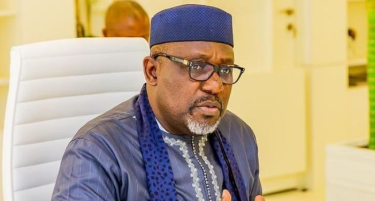
Former Imo State Governor, Senator Rochas Okorocha, was arrested by the Nigeria Police Force (NPF) on Monday night.

The Nigeria Police Force Public Relations Officer, CSP Aniete Iniedu, confirmed the development to Channels Television.

Okorocha, who was arrested at REIZ Continental Hotel in central Abuja, was, however, released on bail by the NPF following an hour of interrogation over allegations of criminal conspiracy, forgery and impersonation.

CSP Iniedu, who confirmed the arrest and subsequent release on bail to our correspondent, noted that the former governor was asked to return to the Force Headquarters on Tuesday for further interrogation as investigations into the allegations continue.

The arrest reportedly followed Okorocha’s failure to honour previous police invitations in connection with the ongoing investigation.

Maduka College Advert

He was initially invited to the Force Headquarters on September 2, but the appointment was rescheduled to September 8 at the request of his lawyers, a date he reportedly failed to honour.

Continue Reading

News

BREAKING: Soludo, Wike, Adeleke, others appointed member of APC Presidential Campaign Council

Published

on

Anambra Gov, Prof Chukwuma Soludo
Spread the love

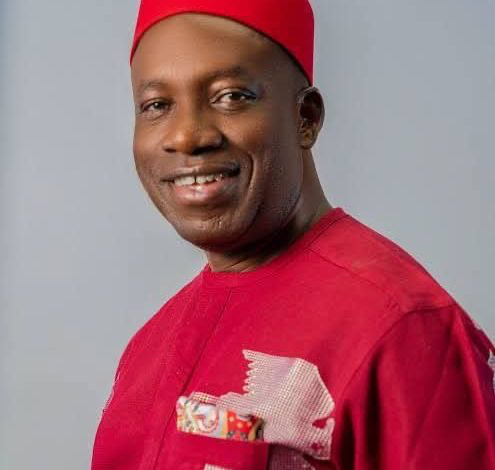
Anambra State Governor, Prof. Chukwuma Soludo, has been appointed a member of the All Progressives Congress (APC) 2027 Presidential Campaign Council list released last night.

This is despite the fact that he is the National Leader of the opposition All Progressives Grand Alliance (APGA).

Similarly, Federal Capital Territory (FCT) Minister Nyesom Wike, the National Leader of the opposition Peoples Democratic Party (PDP) and Osun State Governor, Senator Ademola Adeleke of the opposition Accord Party (AP), are on the expanded and all-inclusive team headed by President Bola Ahmed Tinubu.

Other members include Presidential Adviser on Policy and Coordination, Hadiza Bala Usman, former Ogun State Governor Ibikunle Amosun, former Lagos State Governor Akinwunmi Ambode, Aviation Minister Festus Keyamo, and former House of Representatives member Patrick Obahiagbon.

Also named as members are former Osun APC governorship candidate Bola Oyebamiji, former National Legal Advisers Dr. Muiz Banire and Babatunde Ogala, Chief Ayiri Emami, Victor Giadom, Magnus Abe, and former Ogun State Governor Gbenga Daniel.

Maduka College Advert

The list, according to a report by The Nation, reflects inter-party cooperation and harmony based on the shared vision of propelling the country to the horizon of progress.

The report quoted a statement by APC National Secretary, Senator Ajibola Basiru, as saying that the campaign council will be inaugurated tomorrow in Abuja.

Continue Reading

Trending

Maduka College Advert