Connect with us

Sports

Brazilian football legend Pele is dead

Published

on

Spread the love

Brazilian football icon Pele, widely regarded as the greatest player of all time and a three-time World Cup winner who masterminded the “beautiful game,” has died at the age of 82, his family said Thursday.

“Everything we are is thanks to you. We love you infinitely. Rest in peace,” daughter Kely Nascimento wrote on Instagram.

Named athlete of the century by the International Olympic Committee in 1999, Pele is the only footballer in history to win three World Cups — 1958, 1962 and 1970.

Nicknamed “O Rei” (The King), he scored more than 1,000 goals in one of the most storied careers in sport, before retiring in 1977.

He had been in increasingly fragile health, battling kidney problems and colon cancer — undergoing surgery for the latter in September 2021, followed by chemotherapy.

Maduka College Advert

– ‘Samba football’ –

Born October 23, 1940, in the southeastern city of Tres Coracoes, Edson Arantes do Nascimento — Pele’s real name — grew up selling peanuts on the street to help his impoverished family get by.

His parents named him for famed American inventor Thomas Edison.

But he was soon given the nickname Pele, for his mispronunciation of Bile, the name of a goalkeeper at Vasco de Sao Lourenco, where his footballer father once played.

Pele dazzled from the age of 15, when he started playing professionally with Santos. He led the club to a flurry of titles, including back-to-back Intercontinental Cups, against Benfica in 1962 and AC Milan in 1963.

Known for his genius with the ball, he epitomized the sublime style of play called “samba football” in Brazil, where he was declared a “national treasure.”

He scored an all-time record 1,281 goals in 1,363 matches for Santos (1956-74), the Brazilian national team, and the New York Cosmos (1975-77).

But beyond his records, he will be remembered for revolutionizing the sport, his ever-present number 10 on his back.

The first global football star, he played a lead role in the game’s transformation into a sporting and commercial powerhouse, tapping his preternatural athleticism despite his relatively small size — 1.70 meters (just under five-foot-seven).

He also played with heart, visible in the iconic black-and-white footage of the 17-year-old phenom bursting into tears after helping Brazil to its first World Cup title, in 1958.

Eight years earlier, seeing his father cry when Brazil lost the 1950 World Cup final at home to Uruguay, he had promised to bring the trophy home one day.

– Sports royalty –

Pele reached the pinnacle of his greatness at the 1970 World Cup in Mexico, the first broadcast in color, where he starred on what many consider the greatest team of all time, with talents such as Rivellino, Tostao and Jairzinho.

He was often welcomed like royalty when traveling abroad with Santos or the national team. Legend has it in 1969 his arrival in Nigeria was the occasion for a 48-hour truce in the bloody Biafra war.

Pele declined offers to play in Europe, but signed for a brief, lucrative swan song with the Cosmos at the end of his career, bringing his star power to the land of “soccer.”

His reign extended beyond the pitch, with gigs as a movie star, singer and later sports minister (1995-1998) — one of the first black cabinet members in Brazil.

But he faced criticism at times in Brazil for remaining quiet on social issues and racism, and for what some saw as his haughty, vain personality.

Unlike Argentine rebel Diego Maradona, his rival for the title of greatest of all time, Pele was seen as close to those in power — including Brazil’s 1964-1985 military regime.

– Final match –

Pele’s public appearances had grown increasingly rare, and he frequently used a walker or wheelchair.

He was hospitalized several times for urinary infections, then again in 2021 and 2022 for the colon cancer that marked the beginning of the end.

But he met his health problems with trademark humor.

“I will face this match with a smile on my face,” he posted on Instagram in September 2021, after surgery to remove his colon tumor.

He was deeply moved when Maradona, his longtime friend and rival, died of a heart attack in 2020 at age 60.

“The world has lost a legend,” he wrote.

“One day, I hope, we will play soccer together in the sky.”

Sports

‘The hills tested us, but Enugu carried me’, says Kipyego after winning Enugu Marathon

Published

on

Enugu marathon winner, Edwin Kipyego
Spread the love
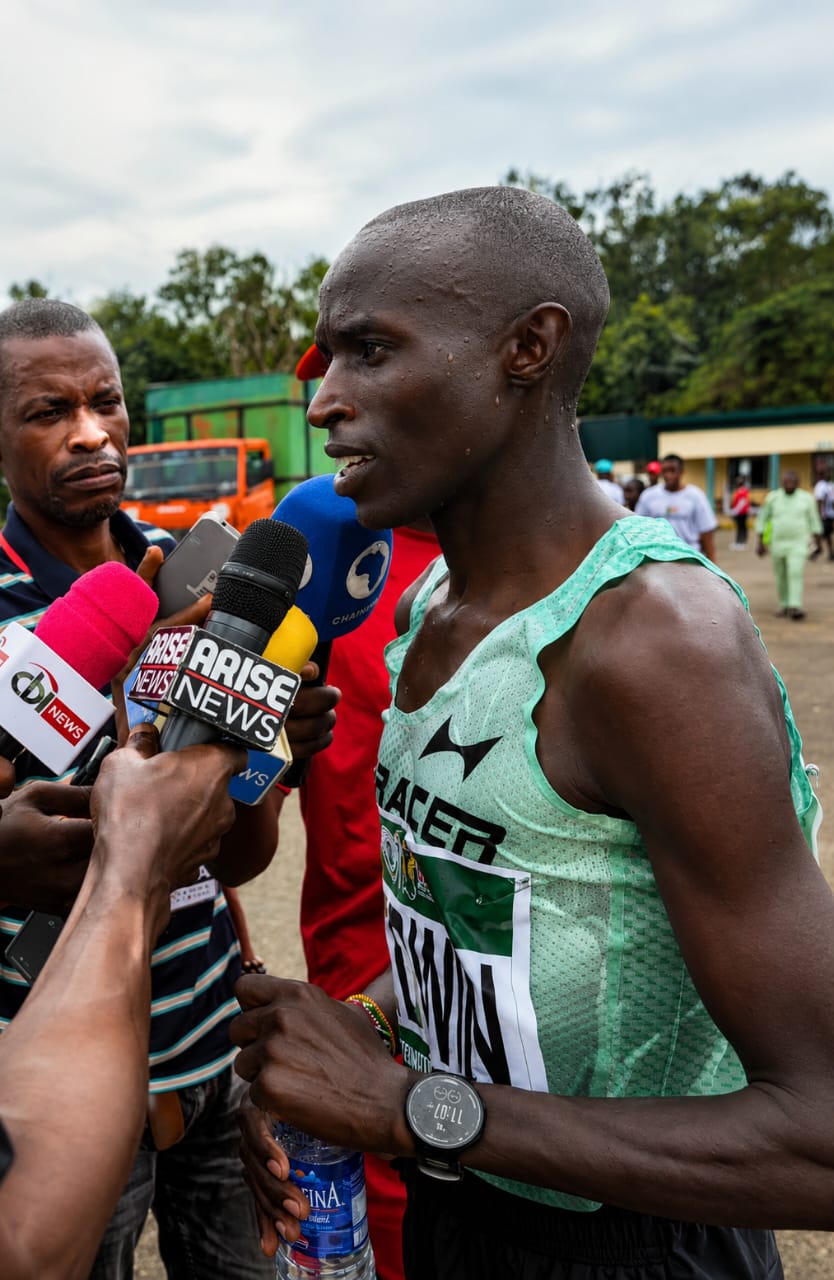
Kenyan long-distance runner Edwin Kipyego has emerged champion of the men’s 42-kilometre race at the second edition of the Enugu City International Marathon, producing a decisive late surge to conquer a demanding course and write his name into the history of the Coal City race.

Kipyego crossed the finish line in 2:20:38 after making his decisive move at about the 37-kilometre mark, breaking away from a four-man leading pack when the race entered its most demanding stage.

The victory earned the Kenyan $15,000, a gold medal and the honour of becoming the men’s 42km champion of the second edition of the Enugu City International Marathon.

Speaking after the race, Kipyego described the Enugu course as both demanding and beautiful, while praising the city’s enthusiastic spectators for helping him through the toughest moments of the competition.

“This was a tough but beautiful course. The hills tested us, but the people of Enugu carried us with their cheers. I will definitely return next year.”

The Kenyan’s victory came after a tactical battle involving four elite runners who stayed together deep into the race before Kipyego produced the decisive acceleration with just about five kilometres remaining.

Maduka College Advert

Having conserved enough energy for the closing stages, he pulled clear of the chasing pack and maintained his advantage until he reached the finish at Michael Okpara Square.

Kipyego’s winning performance came on a route that began at 6:30 a.m. from Shoprite on Abakaliki Road, taking the athletes through several parts of Enugu before the final stretch towards Okpara Square.

The challenging nature of the course, particularly its uphill sections, tested the endurance of the elite runners, but Kipyego’s ability to respond in the closing kilometres ultimately separated him from the field.

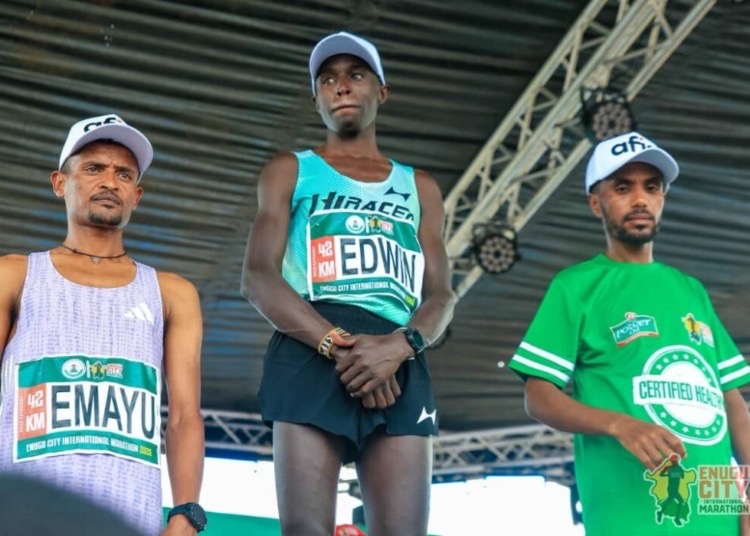
Ethiopian runners Habtamu Girma and Shiferaw Daltiemayu finished second and third respectively, with times of 2:23:39 and 2:23:41.

For Kipyego, however, the victory was not simply about overcoming his rivals. His post-race description of Enugu revealed how the atmosphere along the route became an important part of his experience.

His words captured the essence of a race in which physical endurance met the energy of thousands of spectators who lined the streets to cheer the athletes.

“The hills tested us, but the people of Enugu carried us with their cheers.”

After conquering the hills, the heat and the competition, Kipyego left Enugu with the biggest prize of the day — the 2026 men’s 42km title — and a promise to return.

The Kenyan came to race, conquered the Coal City and left promising to come back. (Sports247)

Continue Reading

Sports

Kipyego, Aberu win Enugu City International Marathon

Published

on

Spread the love

• Top three winners receive cash prizes of $15,000, $10,000 and $5,000 respectively

Kenya’s Edwin Kipyego and Ethiopia’s Zenebe Aberu emerged winners of the men’s and women’s 42km elite races respectively at the second edition of the Enugu City International Marathon on Saturday.

More than 3,000 runners took to the streets of Enugu for the event, organised by the Enugu State Government in partnership with Nilayo Sports Management, with the Athletics Federation of Nigeria (AFN) providing technical support.

Kipyego produced a tactical performance to win the men’s race in 2:20:38, making his decisive move at the 37km mark to break away from a leading pack of four runners.

The Kenyan crossed the finish line first to claim the $15,000 prize, gold medal and title of Enugu City International Marathon champion.

Ethiopia’s Habtamu Girma finished second in 2:23:39, while compatriot Shiferaw Daltiemayu took third in 2:23:41.

Maduka College Advert

The race was flagged off at 6:30am at Shoprite on Abakaliki Road by Enugu State Governor Peter Mbah, with the route passing through Independence Layout, Okpara Avenue and Nike Lake Road before finishing at Mike Okpara Square.

Kipyego described the course as challenging but praised the support of spectators along the route.

“This was a tough but beautiful course. The hills tested us, but the people of Enugu carried us with their cheers. I will definitely return next year,” he said.

Nigerian runners dominated the 10km event, with Gang James Boyi and Obadih Vivian winning the men’s and women’s races respectively.

Boyi clocked 29:59 to secure the ₦3 million first prize after making his decisive move with 3km remaining, while Vivian triumphed in 35:13.09.

Davwi Gyang and Mwantiyi Teyei finished second in the men’s and women’s races respectively, while Pam Joshua and Danjuma Agnes took third positions.

The 10km race, which was flagged off at 8:30am at Chris Tee Petrol Station on CIC Road, was designed to promote mass participation and identify emerging road-running talents.

Presenting prizes to the winners, the Deputy Governor of Enugu State, Mr Ifeanyi Ossai, congratulated all the athletes for participating in the competition.

Ossai said the state government was committed to making the state a welcoming destination for residents, businesses, visitors and tourists.

He said the marathon was an indication of the government’s determination to position Enugu as a major destination for sports, tourism and investment.

“When I arrived, they wanted me to do a symbolic crossing of the road, but I figured it would be disrespectful to those of you that participated in the race.

“I shouldn’t take your glory by simply jogging across your line. So, for all of you that took the pains and endured the marathon, I say a very big congratulations,” he said.

The deputy governor said the state government had, in the last three years, worked to restore Enugu’s position as a pivotal destination in the Southeast and Nigeria.

He said the marathon demonstrated the government’s readiness to welcome businesses, create opportunities for young people and expand the state’s tourism potential.

Ossai said the government would continue to improve the organisation and standards of the marathon to ensure greater comfort for participants.

He urged participants to return for subsequent editions and encourage their friends and colleagues to participate.

The deputy governor also commended the sponsors and other stakeholders who contributed to the success of the marathon.

Nilayo Sports Management chief executive officer Yetunde Olopade described the event as a world-class competition.

“Enugu has set the standard. From athlete welfare to security and crowd management, this marathon has shown that Nigeria can host international-label races,” she said.

Commissioner for Sports Lloyd Ike Ekweremadu commended the Local Organising Committee, sponsors, medical teams and security agencies for ensuring a successful event.

He also disclosed that the state had applied for World Athletics Road Race Label status for the 2027 edition.

The marathon attracted athletes from different parts of Nigeria and other African countries, with the 10-kilometre and 42-kilometre races commencing from the Mgbemena area of Enugu and ending at the popular Michael Okpara Square in Independence Layout.

MORE PHOTOS:

Enugu Marathon

Enugu Marathon

Athletes participate in the 2026 Enugu City International Marathon on August 29, 2026.
Enugu Marathon
Kenya’s Edwin Kipyogo (centre) reacts after winning the men’s 42-kilometre category at the 2026 Enugu City International Marathon on August 29, 2026

Enugu Marathon

Ethiopia’s Habtamu Girma (centre) reacts after winning the women’s 42-kilometre category at the 2026 Enugu City International Marathon on August 29, 2026
Enugu Marathon
An athlete receives assistance at the 2026 Enugu City International Marathon on August 29, 2026 (Channels)
Continue Reading

Sports

NFF Crisis: Tinubu orders comprehensive reform of Nigerian Football

Published

on

Tinubu won’t resign, Fed Govt replies PDP governors
President Bola Tinubu
Spread the love

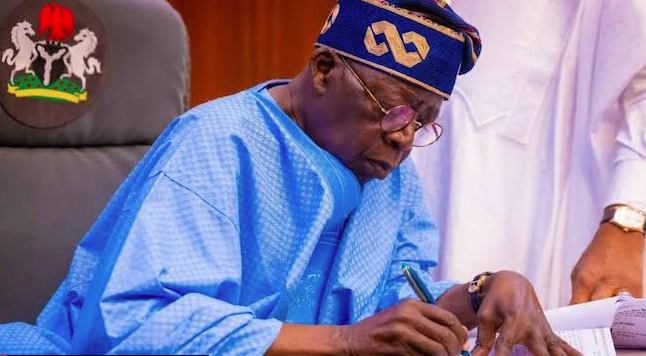
President Bola Tinubu has ordered a “comprehensive reform” of Nigerian football following a string of failures by the country’s national teams to qualify for major international competitions.

The directive came on Thursday, hours after Nigeria Football Federation (NFF) President Ibrahim Musa Gusau, General Secretary Mohammed Sanusi and members of the federation’s Executive Committee resigned amid mounting pressure over the state of Nigerian football.

The NFF confirmed the mass resignations in a statement on Thursday, saying Gusau’s decision was intended to pave the way for “a comprehensive and orderly reform process” to address longstanding institutional, governance and developmental challenges confronting the game.

Announcing the presidential directive, Special Adviser to the President on Information and Strategy, Bayo Onanuga, said Tinubu ordered the reform to enable Nigeria to overcome its repeated failures to qualify for major regional, continental and global competitions.

The President attributed the persistent decline in the fortunes of Nigerian football to what he described as “structural weaknesses” within the system, noting that other sports had recorded progress following the restructuring of the sports sector under the re-established National Sports Commission (NSC).

Maduka College Advert

“The reform must respond to a longstanding need to strengthen governance, administration, stakeholder representation, development pathways, domestic competitions and accountability across Nigerian football,” Tinubu said.

He added: “Football, Nigeria’s most popular sport and the greatest beneficiary of public support, investment and national attention, has continued to struggle basically due to structural deficits within the system.”

Continue Reading

Trending

Maduka College Advert