News
345 people murdered in Lagos, highest in one year – Police

• Lagos CP Alabi Abiodun
Three hundred and forty-five (345) people have been brutally murdered in Lagos State in the last one year, statistics from the police reveals.

This is the highest the state has recorded in couple of years.
Commissioner of Police, Abiodun Alabi disclosed this on Thursday at the 16th Town Hall Meeting on security organised by the Lagos State Security Trust Fund (LSSTF) at Civic Centre in Victoria Island.
He said 324 murder cases with 345 victims were recorded while 409 suspects were arrested.

Alabi also disclosed that in the last 12 months, the State recorded only 21 incidents of armed robbery.
He added that the Command arrested 146 armed robbers in 149 foiled attempts, saying that in the same year, Lagos recorded 52 cases of cultism-related attack, with 240 suspected cultists arrested and charged.
The police chief disclosed that 89 high-grade arms and 376 assorted ammunitions were recovered, while 280 dangerous weapons, including cudgels, were seized from criminals.
Alabi said: “In the period under review, Lagos Police Command recorded a remarkable feat in crime fighting when we began checkmating the activities of commercial motorcycle riders, following Mr. Governor’s proscription of Okada in the State. Crimes being committed using motorcycles have reduced. Out of 8,105 Okadas we impounded from last year, 4,815 were seized between June and September 2022.”
Speaking at the event, Governor Babajide Sanwo-Olu said his administration adopted a technology-driven strategy that enabled the security agencies respond proactively ahead of potential breaches at vulnerable spots, including a web of undercover operations to frustrate armed attacks on possible targets.
This, he said, has bolstered the confidence of the financial institutions to freely move their cash around the State with limited risks.
The governor said the collaborative security approach had yielded significant results in crime fighting, leading to a sharp reduction in rate of criminality across Lagos.
Sanwo-Olu said the State had not only boosted the morale of the security personnel with constant training and provision of equipment, but had also raised its capacity to contain emerging threats.
He said: “As a Government, our approach to security is holistic and collaborative. Our security policy is driven by the need to engender a wholly secure environment that enables the wellbeing, prosperity and fulfilment of all the residents.
‘We consider no amount of investment too big to be put forward in ensuring the progress we have achieved since inception is sustained. In the last three and a half years, we have continued to maintain the record of zero incident of robbery attack on banks or any other financial institution operating in our State.
“LSSTF has been at the forefront of these security efforts. Through the agency, we have continued to provide interventions to the police and other security agencies operating in Lagos in the areas that include operational capacity, training and logistics. Our efforts have yielded encouraging results in crime fighting, as Lagos remains largely safe for business and living.
“This relative peace and safety that we have been experiencing in this massive mega city will not be compromised. We will continue to strengthen the security operation to ensure the progress recorded is not reversed.”
Next week, the Governor said Divisional Police formations would get 25 new pick-up trucks to assist in quick response to security threats in their areas of operation.
Sanwo-Olu said the state government’s intention to employ digital surveillance in combating emerging crimes had started to take shape, given the phased rollout of technology tools, including high-definition cameras to monitor strategic locations across the State.
The governor sent a loud warning to criminals still operating in Lagos to vacate the State before the law caught up with them. He pledged not to spare any effort in making the State unsafe and inhabitable for criminals.
Provision of security, Sanwo-Olu said, should not be seen as a one-way process, urging residents to collaborate and provide information to security agencies whenever they notice suspicious activities within their communities.
He said: “I am sending a strong and loud message to all purveyors of crime and criminality in Lagos. We will stay ahead of your intentions and actions, and we will fight you with everything we have. There will be no room for actions that undermine our well-being and our capacity to achieve our dreams and aspirations.”
The governor said the LSSTF model adopted by the State in raising security standards had been effective, urging private sector donors to contribute their quota for the sustainability of the Fund.
LSSTF Executive Secretary, Dr. Abdur -Razaq Balogun, noted that the constraints necessitating the establishment of the Fund were far from being fully addressed, but said there was no alternative to the resource model in scaling up security response.
Since 2019, Balogun said LSSTF had provided 240 units of fully equipped operational vehicles to all security agencies in Lagos, in addition to provision of 230 units of motorbikes and security accessories, including 100 digital walkie-talkie, 167 cellular communication gadgets, 2,000 units of Level 4 bulletproof vests and ballistic helmets, among others.
Despite the successes achieved in the year, the LSSTF boss said the Fund had received the lowest public donation to the tune of N153 million, representing 6.3 per cent of public donations received in 2021.
Appealing for more funding from the private sector, Balogun said: “The necessity for crime-fighting agencies is continuous, as we must accept that crimes are still with us. As this is an election period, political violence is another clear danger we are facing. There is need to raise the capabilities of our security agencies to contain these threats as we approach general elections.




Former Deputy Speaker of the House of Representatives and Chairman of the Governing Board of the South-South Development Commission, SSDC, Chibudom Nwuche, has urged the Federal Government to grant amnesty to repentant cultists and militant youths in the Orashi area of Rivers State who are willing to lay down their arms and embrace peaceful and productive lives.
Nwuche also called for the rehabilitation, reorientation and reintegration of such youths into society, saying the initiative would help restore peace and security to the troubled communities.
The Orashi area comprises Ahoada East, Ahoada West, Abua/Odual and Ogba/Egbema/Ndoni local government areas of the state.
Nwuche made the appeal through his representative, Chief Kingdom Ajugo, at the commencement of the 2026 Upata Folklore, Ele, at Ula Upata, Ahoada East Local Government Area, on Tuesday.
He expressed concern over the deterioration of security in Ahoada and other parts of the Orashi region, saying the area had witnessed killings and various forms of criminality.
He recalled the gruesome killing of the then Divisional Police Officer, DPO, late CSP Bako Amgbashim, whom he described as a dedicated, intelligent and gallant police officer.
According to him, several appeals have been made to Rivers State government for an amnesty programme for repentant youths in the area, with no action taken.
Nwuche, therefore, appealed to the federal government, particularly the Office of the National Security Adviser, ONSA, headed by Mallam Nuhu Ribadu, to consider an amnesty programme for repentant cultists and violent youths.
He said the programme should include proper rehabilitation, reorientation and reintegration measures to enable beneficiaries become productive members of society.
He also appealed to youths still involved in cultism, kidnapping, robbery and other criminal activities to abandon violence and embrace legitimate livelihoods.
Related News
2027: APC govs divided over Wike, Uzodimma, AbdulRazaq’s feud
Nigeria must process agro commodities to boost export earnings — Stakeholders
Fish import bill drops 14% to N167bn in Q2’26 – NBS
“Those who are still carrying guns and killing our people indiscriminately should stop and accept amnesty and be ready to be reintegrated into society,” he said.
Nwuche said the predominantly farming and trading Ekpeye people should be able to carry out their legitimate businesses without molestation, harassment or fear.
He said hundreds of Ekpeye people had lost their lives to cultism and related violence over the years, declaring that the situation must end.
He urged traditional rulers, community leaders, government and the people to work together to restore peace, insisting that Ekpeye land could no longer be allowed to become a haven for criminals.
Urges Ekpeye unity
Nwuche also urged Ekpeye traditional rulers to provide exemplary leadership and work together to advance the interests of the people.
He appealed to the people of Upata to support their monarch, Eze (Dr.) Felix E. Otuwarikpo, Eze Igbu Upata III, and preserve the cultu ral heritage of the kingdom.
He described the annual Upata Folklore as an important platform for promoting unity, culture and hospitality among the people.
The monarch had earlier declared the 2026 celebration open, describing it as an enduring tradition through which the people celebrate their culture and heritage following the harvest season.
Use your votes wisely in 2027
On politics, Nwuche urged the people of Ekpeye to vote wisely in the 2027 general elections, saying they should support politicians who had demonstrated commitment to the development of the area.
“We have seen and known all those seeking our votes, and I will therefore urge you not to waste your votes but to support those who have shown attention and developed Ekpeye land,” he said.
Nwuche also spoke in support of President Bola Tinubu’s second-term bid and the political platform associated with FCT Minister and former Rivers State governor, Nyesom Wike.
He said he would, at the appropriate time, tour Ekpeye and the wider Orashi region to mobilise support for the political coalition led by Wike.
He recalled projects executed during Wike’s tenure as Rivers State governor, saying they remained significant to the development of Ekpeye land.
The event attracted traditional rulers, chiefs, community leaders, women and youth groups, students and representatives of Ahoada East and Ahoada West local governments. It featured cultural displays, traditional dances, goodwill messages and presentation of gifts to the monarch, chiefs and participants.

The Chairman of the Economic and Financial Crimes Commission (EFCC), Ola Olukoyede, on Wednesday alleged that some pilgrim boards have been involved in corrupt practices in the country.
Olukoyede stated this at the Inter-Religious Council meeting in Abuja and the public presentation of the commission’s inter-faith manual to religious bodies.
While speaking about past investigations carried out by the commission, the EFCC chairman spoke on how monies released by government for both Christian and Muslim pilgrimages were siphoned.
He urged Christian leaders to use their platforms to champion the anti-corruption fight, explaining that the moral dignity of honest living must return through preaching.
Olukoyede also underscored the importance of the inter-faith manual in addressing topical issues that affect religious adherents.
The EFCC, therefore, urged religious leaders to deploy their influence to sharpen the conscience of their faithful as part of Nigeria’s anti-corruption campaign.
The leaders of the two major religions in the country, Sultan of Sokoto, Muhammad Sa’ad Abubakar, and President of the Christian Association of Nigeria, Rev. Daniel Okoh, in their separate remarks, emphasis end the importance of fostering unity for a better Nigeria and leading the effort against corruption in the country.
The Executive Secretary of NIREC, Prof. Cornelius Omonokhua, said the second edition of the anti-corruption preaching and teaching manual was developed through the Interfaith Anti-Corruption Advisory Committee of the EFCC.
He said the manual and facilitators’ guides were designed to assist Christian and Muslim preachers in communicating authentic religious teachings against corruption while promoting peaceful coexistence.
Omonokhua said, “No nation can flourish in the face of corruption at all levels,” adding that a religious leader involved in corrupt practices could not claim to uphold the teachings of his faith.
Also speaking, the Secretary to the Government of the Federation, George Akume, who represented President Bola Tinubu, said religious leaders and other stakeholders had a role to play in addressing insecurity and other challenges confronting the country.
Akume said violence, banditry, kidnapping, communal clashes and terrorism had left many Nigerians afraid, including parents who were reluctant to send their children to school.
He said religious leaders, traditional rulers and the government must work together to counter narratives of division and conflict.
The event was attended by the President of the Christian Association of Nigeria, Rev. Daniel Okoh; the Sultan of Sokoto, Alhaji Muhammad Sa’ad Abubakar; former JAMB Registrar, Prof. Ishaq Oloyede; the Emir of Zazzau, Alhaji Ahmed Nuhu Bamalli; and the Shehu of Borno, Abubakar Umar El-Kanemi, among others.
The EFCC has previously identified engagement with faith-based organisations as part of its preventive anti-corruption strategy, including the development of interfaith manuals for Christians and Muslims.
• Enugu Air CEO: Enugu becoming a gateway
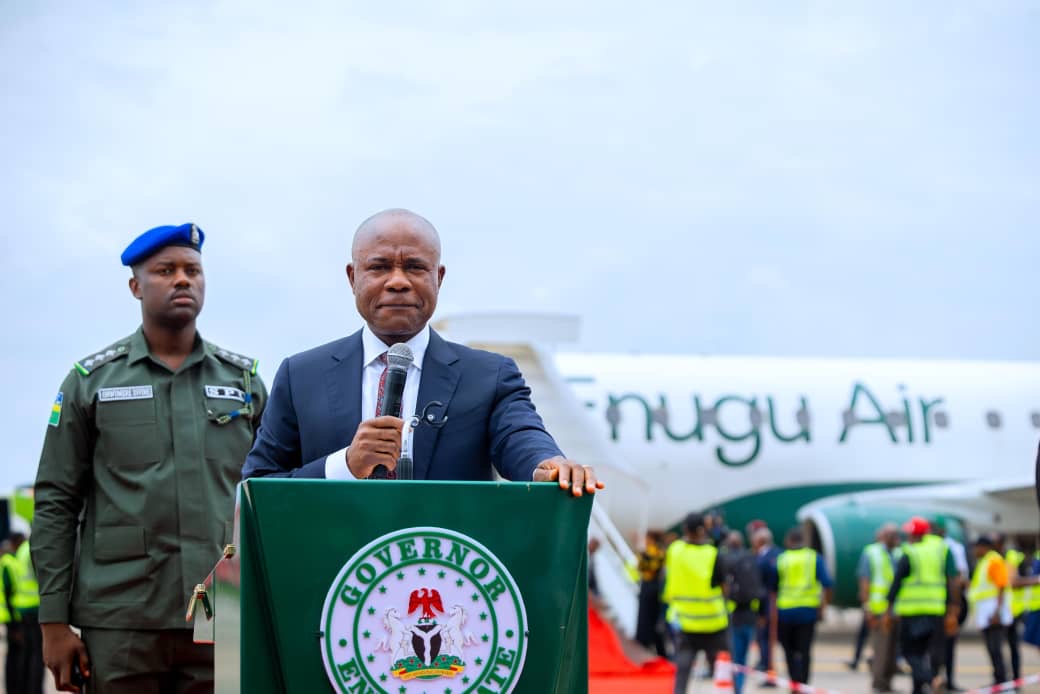
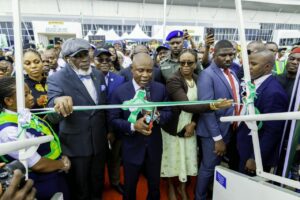
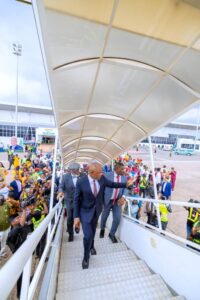
The Governor of Enugu State, Dr. Peter Mbah, has flagged off the first-ever international service by Enugu Air, describing it as a major milestone in his administration’s vision to grow Enugu State into a major aviation hub and make it the preferred destination for investment, business, tourism, and living.
Speaking at a brief ceremony at the Akanu Ibiam International Airport, Enugu, on Wednesday, Mbah, who heaped commendations on the leadership of the state-owned airline for the fast growth of Enugu Air, said it was not an isolated story, but a part of connecting the dots as his administration strives to grow Enugu State into a $30 billion economy.
“Months ago, right here, we watched Enugu take to the skies. In just barely six months after a rigorous regulatory process, Enugu Air obtained her Air Operator’s License. This is not a mean feat.
“Today, 14 months after, we can see that dream flying beyond our expectations, as Enugu Air is one of the fastest-growing airlines in Nigeria, without a doubt.
“But we did not conceive of Enugu Air as a bragging right or because of the clamour, or to gain some political acclaim. Enugu Air is part of the masterplan to make Enugu State the premier destination for investment, living, business and tourism. For us, Enugu Air is part of connecting the dots,” he stated.
Mbah described Enugu Air as a campaign promise kept, saying the Enugu–Douala service was the beginning of many more international flight operations to many parts of the world.
“What you are seeing here today is performance above promises. So, we ask you to judge us by the things we have promised and have delivered to you.
“Besides, today is Douala, but I am hoping tomorrow, we are not only going to be talking about the continent of Africa, we will be talking about Enugu to the world,” he added.
He thanked President Bola Tinubu “for consistently demonstrating his commitment to aviation infrastructure and for the support he is also giving to the states to enable us to create businesses like Enugu Air,” commending also the Minister of Aviation and Aerodrome Development, Festus Keyama, SAN; and the agencies under him such as the Federal Airports Authority of Nigeria (FAAN) and the Nigerian Civil Aviation Authority (NCAA) supporting Enugu Air’s growth and making Nigeria a standard bearer in the African aviation industry.

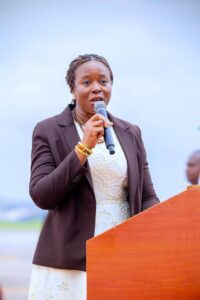
Speaking, Enugu Air CEO, Capt. Tolu Ita, said Enugu Air was not merely launching a flight, stressing, “we are launching a new chapter.”
“This is a chapter in which Enugu is no longer simply where a journey begins or ends. Enugu is becoming a gateway.
“Today, much bigger than an aircraft will be moving across our skies. Opportunity will be moving. Business will be moving. People will be moving. Ideas will be moving. And Enugu will be moving with them. This is what makes today so significant.
“Enugu Air was never built with the vision to simply put aircraft in the sky. The vision was to build an airline that connects people, connects markets and connects possibilities.
“We began by strengthening our domestic network — connecting Enugu with Lagos, Abuja, Port Harcourt, Kano, Owerri, Asaba, Benin City and Warri.
“Today, we take our first major step beyond Nigeria. Enugu to Douala. Nigeria to Cameroon. The Southeast to Central Africa. And this is only the beginning.
“Our ambition is to continue building a stronger regional network across Africa, while progressively opening the door to wider international markets,” she said.
In growing Enugu Air, Ita reaffirmed the airline’s responsibility and commitment to authorities, passengers, and all stakeholders, upholding the highest operational and ethical standards.
In her goodwill message, the Managing Director/CEO of the FAAN, Mrs. Olubunmi Onabanjo-Kuku, said Enugu Air’s inaugural international flight was “a strong statement of Nigeria’s growing capacity to connect7 people and businesses across West and Central Africa.”
Represented by Mrs. Onyeka Udenze, the7 FAAN DG said, “Akanu Ibiam International Airport now takes a firm step as a regional hub.”
While congratulating Enugu Air for the fast growth in 14 months, she assured that FAAN remained committed to providing the infrastructure, safety standards and support that make such services possible.
The DG of NCAA, represented by the Director of Air Transport Regulations, FAAN, Mrs. Olayinka Babaoye-Iruobe, said connecting Enugu to Douala directly represented would create opportunities for increased trade, investment, tourism, and movement of people, while strengthening social and economic ties between Nigeria and Cameroon.
In his welcome address, the Commissioner for Trade, Investment, and Industry, Dr. Sam Ogbu-Nwobodo, said the new service to Douala marked a monumental leap forward in the state’s trade, investment, and economic integration strategy.
“For decades, the vibrant traders, manufacturers, and entrepreneurs of Enugu and the broader region have navigated complex transit routes to access Central African markets.
“Today, that barrier is dismantled. This direct link directly advances our goal of transforming Enugu State into a premier regional hub for commerce and industrial development. We are now effectively bridging markets, shortening supply chains, and unlocking unprecedented opportunities for cross-border commerce across Central and West Africa,” he said.
The Maiden flight, which departed Akanu Ibiam International Airport in the early hours of the afternoon, touched down safely at the Douala International Airport where it was well received by the Cameroonian authorities in a brief ceremony before it returned to Enugu on the history trip.
-
 Politics2 days ago
WHEN PRIVACY BECOMES CONTENT: The Dangerous Normalisation of Leaked Private Conversations
-
News2 days ago
UK excludes Nigerian, Ghanaian-trained teachers from teaching qualification list
-
News3 days ago
BREAKING: Gov Mbah appoints 101 new aides
-
Opinion2 days ago
Who is in Charge of Nigeria?
-
News1 day ago
Nigerian cleric flees after body found buried in Cameroon church
-
Business2 days ago
Enugu Air Launches New Website
-
News3 days ago
Flood Alert: 8,000 communities, 4,500 schools at risk – FG
-
Politics3 days ago
APC’s 12.9m membership claim fraud, says ADC group