News
2023: Peter Obi, former Emir Sanusi Lamido Sanusi, meet in Uk

The presidential candidate of the Labour Party (LP), Peter Obi, on Saturday, held talks with the immediate past Emir of Kano, Lamido Sanusi, on his presidential aspiration and plans for Nigeria.
In a tweet on Saturday evening, Mr Obi announced, “I met with my dear friend and brother, HRH Sanusi Lamido Sanusi. We spent time exchanging views on matters pertaining to national interest, nation-building and broad concept of diversity, education, social inclusion, the economy, consumption and production patterns.

“Quite a constructive engagement. My sincere gratitude to him for the warm reception and insights.”
The LP candidate’s meeting with Mr Lamido comes barely two weeks after he met with the incumbent Emir of Kano, Aminu Ado Bayero in Kano. He also held talks with the Emir of Gaya, Aliyu Ibrahim.
The meetings are believed to be part of Mr Obi’s moves to make inroads into the core northern states.

Kano has a large voting population
While Mr Obi and members of his “Obidient” movement are making serious impacts in the southern part of the country and the North-central zone, the predominantly Muslim core northern states mainly in the North-west and the North-east geo-political zones of the country have remained their weak links.
The meeting with Mr Lamido and similar others in recent weeks, also appear to be part of the moves by the LP presidential flagbearer to break the ice in the two zones where he is still an unknown candidate or distrusted by many people.

Former Emir Lamido Sanusi and Peter Obi
Mr Obi, a former banker and Anambra State governor, is believed to have a chummy relationship with Mr Sanusi, a former Governor of the Central Bank of Nigeria (CBN).
He was among those who openly criticised the deposition of Mr Sanusi as emir of Kano, arguing it was an action that could rub off negatively on, not just the Kano emirate, but Nigeria at large.
He did so in a series of tweets on 11 March, 2020.
Mr Sanusi was controversially deposed as emir of Kano and banished to Nasarawa State by Governor Abdullahi Ganduje of Kano State on 6 March 2020.
The deposed traditional ruler later left Nasarawa and moved to Lagos State.
“The removal of Alhaji Sanusi Lamido Sanusi as Emir of Kano has impacted more negatively on Nigeria than on the former emir himself. His removal portrays clearly the recklessness of our country today.
“A few weeks ago, while speaking to investors in London, their primary concern about investing in Nigeria was the unceasing lawlessness and insecurity. The recent reckless executive action in Kano further validates their fears.
“We must be better and act better if we seriously plan to play on the global stage,” Mr Obi tweeted at the time.
There were speculations that Mr Obi wanted Mr Sanusi as his running mate for the 25 February election but the former CBN Governor was said not to be favourably disposed to the number two position due to the fact that he is more of spiritual and traditional leader than a politician.
It was also speculated that the former Kano governor and now NNPP presidential candidate, Rabiu Kwankwaso, was also proposed to be the running mate to the LP candidate ostensibly based on the high premium he (Obi) places on their populous state.
Mr Kwankwanso openly repudiated the offer as condescending.
He allegedly scorned the offer based on his reasoning that he was older and more experienced in governance than Mr Obi.
I met with my dear friend and brother, HRH Sanusi Lamido Sanusi. We spent time exchanging views on matters pertaining to national interest, nation-building and broad concept of diversity, education, social inclusion, the economy, consumption and production patterns. pic.twitter.com/z3xZDMT024
— Peter Obi (@PeterObi) October 8, 2022



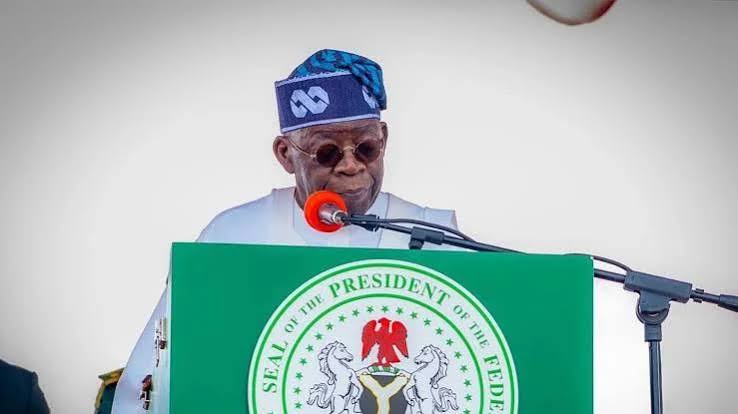
President Bola Tinubu has explained why he will not accompany members of the All Progressives Congress (APC) Presidential Campaign Council to every campaign event ahead of the 2027 general election, saying he must balance the demands of the re-election campaign with the responsibilities of governance.
Tinubu spoke on Wednesday in Abuja during the inauguration of the APC Presidential Campaign Council, where he charged members to take the party’s message to Nigerians across the states and local government areas while he concentrated on running the country.
The President said he agreed with concerns that the rigours of campaigning should not distract him from governance, insisting that Nigeria required his attention at a time when the administration was managing economic responsibilities and international financial obligations.
“You’ve warned me not to allow the rigour of the campaign to distract me from governance, I hear you. I am in full agreement with your decision. Nigeria needs more attention now,” he said.
Explaining further, Tinubu asked campaign council members to excuse him from attending every campaign event, pointing to the need to meet the country’s financial obligations.
“So, you will excuse me from going everywhere with you, we have bills to pay. The American creditors cannot wait,” the President said.
He also emphasised the importance of attracting investors willing to make long-term commitments to Nigeria, arguing that investment was necessary to secure a better future for the country’s children.
“We want those investors to come in, be here to stay, to invest for the future of our children,” he said.
Tinubu, however, assured Nigerians that his decision not to attend every campaign event would not prevent him from engaging directly with voters.
“However, I will still make time to speak directly with Nigerians, even as you lead the campaign in the states and local government areas,” he added.
Describing the inauguration as more than a routine political gathering, the President said the council represented a renewed commitment to Nigerians and the responsibilities entrusted to the APC as the governing party.
“We have not gathered merely to inaugurate a council. We have gathered to renew a covenant. A covenant with Nigerian people and the historic responsibility they have entrusted to us as Nigeria’s governing party,” he said.
He charged council members to communicate the administration’s vision, record and agenda to Nigerians nationwide, expressing confidence in their ability to take the party’s message to every ward.
“This council will carry our vision, our records and our agenda to every Nigerian, and it will carry them to victory every ward of this country,” Tinubu said.
The President also commended APC members for successfully completing the party’s congresses, recalling predictions that the exercise would trigger an internal crisis.
According to him, the party had overcome the challenges and emerged united, with members participating in the process from the ward level to the national leadership.
“They said there will be implosion. We passed through it. We did not fail. You didn’t let us down. We got here together,” he said.
Tinubu’s remarks place governance and economic management at the centre of his stated approach to the coming campaign, while assigning the campaign council the responsibility of coordinating the party’s nationwide mobilisation ahead of the 2027 election.
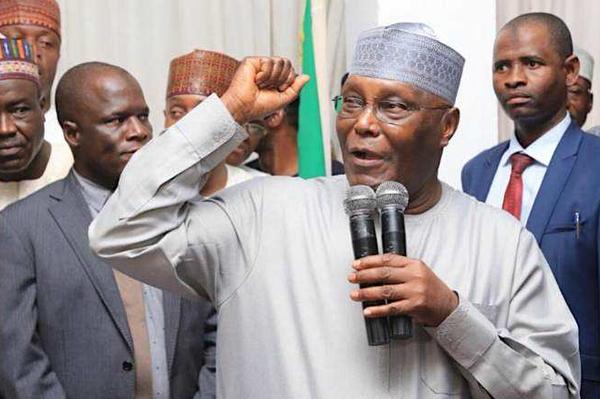
The Economic and Financial Crimes Commission (EFCC) has reopened an investigation into allegations involving former Vice-President Atiku Abubakar following a petition by a former member of the House of Representatives, Hon. Ehiozuwa Johnson Agbonayinma.
The commission acknowledged receipt of the petition, dated August 27, 2026, and received on September 1, 2026, confirming that investigation has commenced.
The former lawmaker through his lawyer, Chief Hannibal Uwaifo (SAN), is seeking a review of the allegations arising from an earlier investigation involving the former vice-president.
As part of the process, the EFCC invited Agbonayinma to its headquarters in Jabi, Abuja, on October 12, where he adopted his petition and responded to questions from investigators.
He arrived at about 9:58 a.m. and left at approximately 4:07 p.m. after the interview.
The commission’s acknowledgement letter, referenced CR:3000/EFCC/HQ/SDC-2/VOL.3/398, forms part of the ongoing investigative process.
He told newsmen that his petition sought to revisit an investigation conducted by the former EFCC chairman, Mallam Nuhu Ribadu, involving Atiku.
He argued that the matter deserved renewed attention in the interest of accountability and the rule of law.
“I want to thank Nigerians, the EFCC and those praying for me in this struggle. The laws are meant for both the rich and the poor. After the EFCC has done a fantastic job, it should not be kept under the table,” he said.
Agbonayinma added that he considered reporting alleged wrongdoing a constitutional responsibility, insisting that nobody was above the law.
He also disclosed that he had written a petition on the matter to United States President Donald Trump, calling for attention to the allegations.

The Senate has passed, for second reading, a bill seeking to establish a national framework for suicide prevention, decriminalise attempted suicide and provide rehabilitation for survivors, despite opposition from Senate President Godswill Akpabio, who insists that the act should remain punishable by imprisonment.
Sponsored by Senator Asuquo Ekpenyong, representing Cross River South, the bill seeks to address what he described as a contradiction in Nigeria’s laws.
Ekpenyong argued that while the National Mental Health Act recognises attempted suicide as a psychiatric emergency requiring treatment, Section 327 of the Criminal Code and Section 231 of the Penal Code still criminalise the act.
He said decriminalisation without accessible care would be incomplete, stressing that suicide has complex causes and requires a humane, health-focused response.
“At the heart of this bill is a simple question: when a Nigerian survives a suicide attempt, should the first response of the state be prosecution or protection?” he asked.
He warned that continued punishment could create a situation in which people experiencing distress feel compelled to ensure their attempts are fatal to avoid prosecution.
The bill proposes replacing imprisonment with mandatory assessment, referral, treatment and follow-up support. It also provides for crisis helplines, training for police officers, teachers and health workers, public education and a national data system for suicide prevention.
However, Akpabio maintained that attempted suicide should remain a criminal offence, arguing that removing the penalties could encourage the act.
“If you attempt suicide, make sure you die. Anyone who attempts and fails will go to jail,” the Senate President said.
Akpabio added that the issue involves both the Criminal Code and the Penal Code, requiring input from State Houses of Assembly during a public hearing to avoid legal conflicts.
The bill has been referred to the Senate Committees on Judiciary and Health for further legislative action and a public hearing.
-
 News2 days ago
Mbah orders impartial Police Probe into Enugu political violence, vows accountability
-
News2 days ago
BREAKING: Soludo, Wike, Adeleke, others appointed member of APC Presidential Campaign Council
-
Features2 days ago
Enugu Political Flashpoint: Mbah orders Impartial Probe as NDC Incidents Trigger Controversy
-
News2 days ago
Rochas Okorocha arrested, released after one-hour Interrogation — Police
-
News2 days ago
Enugu APC demands NDC apology over minute’s silence
-
News1 day ago
Alleged $1bn arms fraud: Funds given to Defence Ministry, not military — Gen. Buratai
-
News2 days ago
Enugu Governor’s Aide, Lucky Chukwu is dead
-
Features6 hours ago
Aguleri/Umuoba Anam Crisis: The Bloody Battle Between Close Neighbours